Distribución y estado de conservación de Dioon vovidesii (Zamiaceae), una cícada de Sonora, México
Karen Yoselin Jiménez-Cedillo a, Karla Fabiola Yescas-Romo b, c, José F. Martínez b, Francisco Molina-Freaner b, *
a Universidad Nacional Autónoma de México, Instituto de Ecología, Posgrado en Ciencias Biológicas, Circuito exterior s/n anexo al Jardín Botánico, Ciudad Universitaria, 04510 Mexico City, Mexico
b Universidad Nacional Autónoma de México, Instituto de Ecología, Departamento de Ecología de la Biodiversidad, Avenida Colosio S/N, Colonia Los Arcos, 83250 Hermosillo, Sonora, Mexico
c Secretaría de Ciencia, Humanidades, Tecnología e Innovación, Insurgentes Sur 1582, Col. Crédito Constructor, Alcaldía Benito Juárez, 03940 Mexico City, Mexico
*Corresponding author: freaner@unam.mx (F. Molina-Freaner)
Received: 06 April 2026; accepted: 22 June 2026
Abstract
Extinction is not a random process; certain traits make some species more vulnerable. Cycads face a high risk of extinction due to threats such as habitat loss, illegal trade, and invasive species. Dioon vovidesii, a recently described cycad species, has limited information available regarding its conservation status. To address this gap, we evaluated its vulnerability using IUCN Red List criteria and Mexico’s Extinction Risk Assessment Method (MER). Information on species distribution, habitat, life history, population size, demographic trends, and anthropogenic threats was obtained from fieldwork in Sierra de Mazatán and specialized sources. Eight populations were identified in Sonora, Mexico, with small sizes ranging from 2 to 120 individuals. Although demographic analyses suggested near-equilibrium population dynamics, low seedling survival and poor recruitment were observed. All populations were exposed to anthropogenic threats within a 5 km radius. Based on both assessments, D. vovidesii is proposed to be classified under a risk category. These results highlight the need for continuous monitoring, further research on life history and ecology, and the effects of land-use change and buffelgrass invasion. Effective conservation and management strategies require collaboration among local communities, academic institutions, and government agencies to ensure the long-term survival of the species.
Keywords: Cycadales; Endemic species; Endangered; Extinction risk; IUCN Red List; MER method; Mexican flora; Threatened plant
Resumen
La extinción no es un proceso aleatorio; ciertos rasgos hacen que algunas especies sean más vulnerables. Las cícadas enfrentan un alto riesgo de extinción debido a amenazas como la pérdida de hábitat, el comercio ilegal y las especies invasoras. Dioon vovidesii, una especie descrita recientemente, cuenta con información limitada sobre su estado de conservación. En este estudio evaluamos su vulnerabilidad utilizando los criterios de la Lista Roja de la UICN y el método de evaluación del riesgo de extinción (MER) de México. Se recopiló información sobre su distribución, hábitat, ciclo biológico, tamaño poblacional, tendencias demográficas y amenazas antropogénicas mediante trabajo de campo en la sierra de Mazatán y fuentes especializadas. Se identificaron 8 poblaciones en Sonora, con tamaños entre 2 y 120 individuos. Aunque las poblaciones mostraron una dinámica cercana al equilibrio, se observó baja supervivencia y escaso reclutamiento. Todas las poblaciones presentaron amenazas antropogénicas en un radio de 5 km. Con base en ambos métodos, se propone clasificar a D. vovidesii dentro de una categoría de riesgo. Estos resultados subrayan la necesidad de monitoreo continuo, mayor investigación biológica y la implementación de estrategias de conservación con participación comunitaria, académica e institucional.
Palabras clave: Cycadales; Especie endémica; Peligro de extinción; Riesgo de extinción; Lista Roja UICN; Método MER; Flora mexicana; Planta amenazada
Introduction
Extinction does not occur randomly among species; instead, certain traits or features, such as habitat specificity, generation time, or the size of the geographic range, predispose certain species to a higher vulnerability to extinction (Chichorro et al., 2022; Zhong et al., 2021). In plants, empirical evidence indicates that low population size, high habitat specificity (i.e., restricted to microhabitats) and small geographical distribution is associated with greater extinction risk (Fischer & Stöcklin, 1997; Guevara-Andino et al., 2024). From a theoretical perspective, small populations are especially vulnerable to demographic and environmental stochasticity, which can increase the probability of extinction even in the absence of deterministic decline (Lande, 1993; Shaffer, 1981). Species occurring in few localities and showing habitat specialization may therefore exhibit reduced resilience to habitat alteration and environmental change. Thus, implementing effective conservation actions for endangered species requires identifying the intrinsic traits that make them vulnerable to extinction and the threats they face (Lacher et al., 2025).
Cycads, in particular, have been singled out as a group with a high susceptibility to extinction (Mankga & Yessoufou, 2017). The order Cycadales is considered as one of the most primitive groups of seed plants that exist nowadays (Liu et al., 2022). This plant group faces a notable risk of extinction due to various threats, including habitat loss through land-use changes, over-collection for illegal trade, and the introduction of invasive species, among other factors (IUCN/SCC Cycad Specialist Group, 2003; Mankga & Yessoufou, 2017).
Currently, 380 cycad species have been globally described, with Australia, Mexico, and South Africa exhibiting the greatest species diversity (Calonje et al., 2026). Mexico has a total of 77 species of cycads, making it the second most diverse country in the world for cycad species (Calonje et al., 2026). Exceptional cycad conservation efforts have been identified in Mexico, including the establishment of live collections in botanical gardens and nurseries for commercial production and plant re-introduction into natural populations (Segalla et al., 2019; Vovides et al., 2010). Unfortunately, despite these conservation efforts, 81.8% of Mexican cycad species are under a category of extinction risk (IUCN, 2025; Semarnat, 2019). The primary threats to Mexican cycad species include habitat destruction resulting from forest exploitation and the expansion of agricultural activities (IUCN/SCC Cycad Specialist Group, 2003).
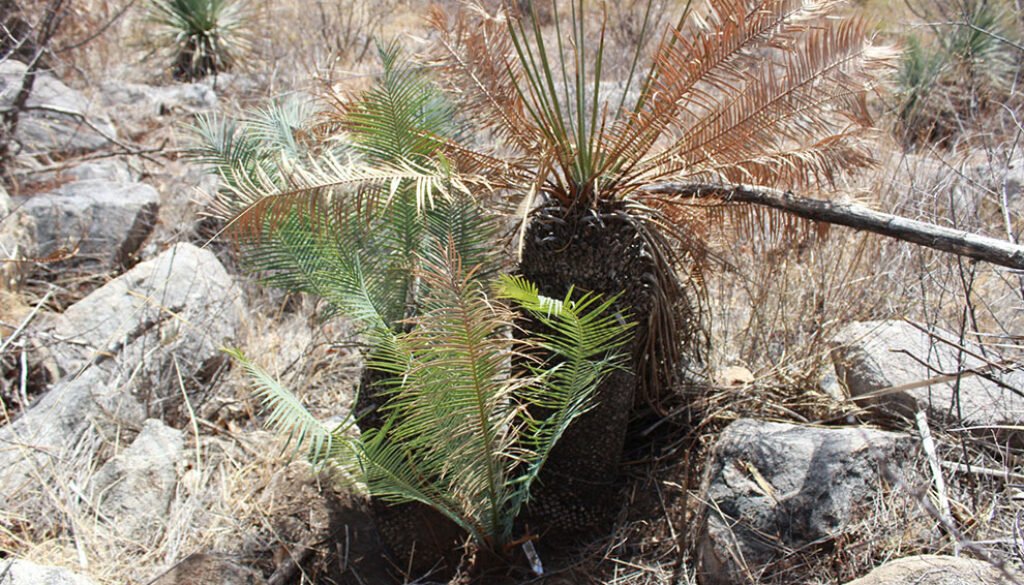
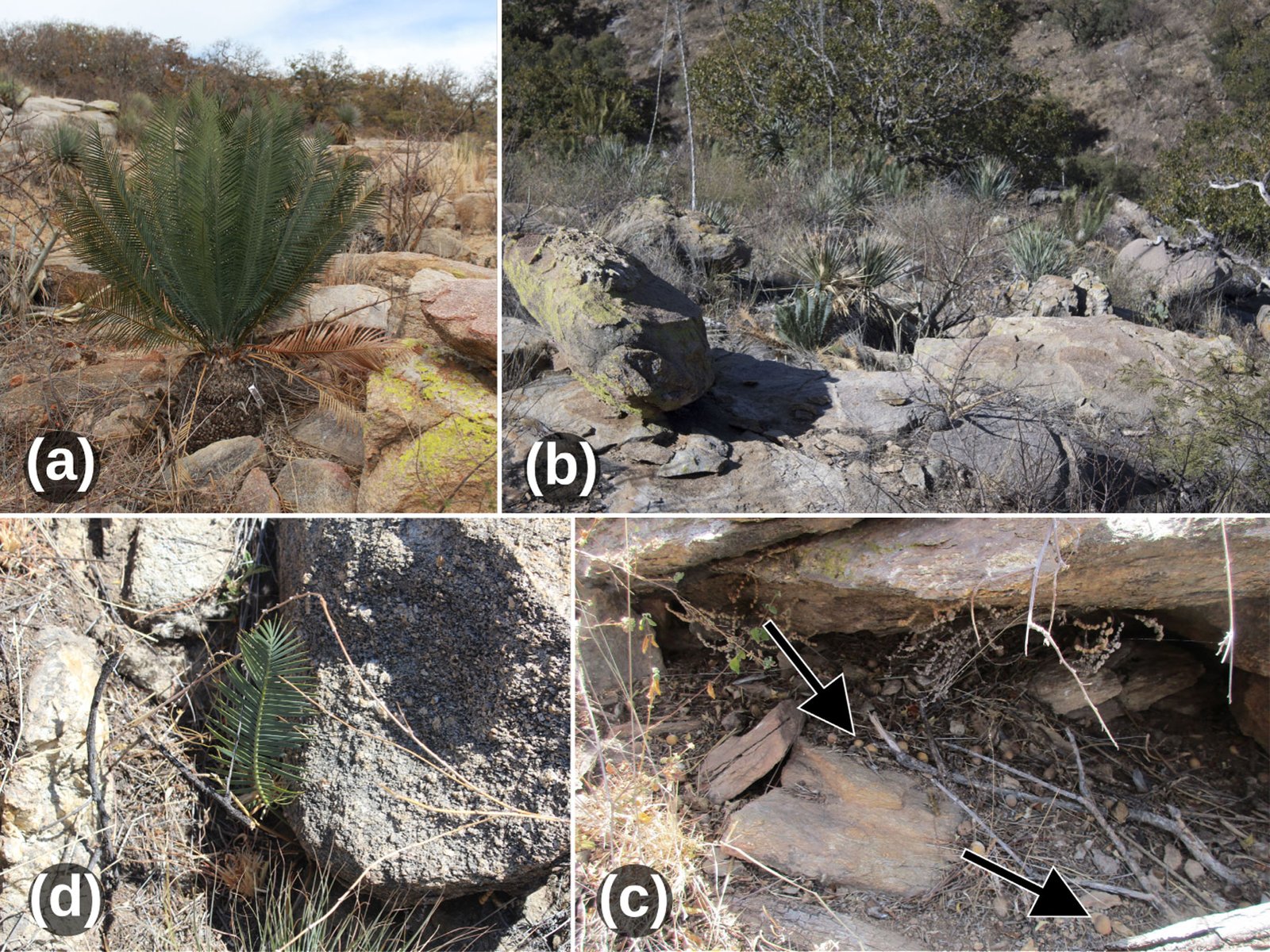
Over the last 2 decades, a great number of new species of cycads have been described in Mexico, as is the case of Dioon vovidesii (Gutiérrez-Ortega, Jiménez-Cedillo, Pérez-Farrera, Martínez et al., 2018; Martínez-Domínguez et al., 2023). Distributed in northwestern Mexico, D. vovidesii is an arborescent cycad (Fig. 1) inhabiting rocky granitic outcrops in oak forests, desert scrub, tropical deciduous forests, and transitional vegetation among them (Fig. 2a, b) (Gutiérrez-Ortega, Jiménez-Cedillo, Pérez-Farrera, Martínez et al., 2018). This species showcases anatomical adaptations to aridity, allowing it to occupy areas with greater seasonality than its sister species, D. sonorense, and granting it the status of the cycad species with the world’s northernmost distribution (Gutiérrez-Ortega, Jiménez-Cedillo, Pérez-Farrera, Vovides et al., 2018; Gutiérrez-Ortega et al., 2021). Despite these unique features, D. vovidesii is confronted with potential threats such as illegal collection and land-use change and consequently has been suggested as a threatened species (Gutiérrez-Ortega et al., 2014; Gutiérrez-Ortega, Jiménez-Cedillo, Pérez-Farrera, Martínez et al., 2018). However, due to the limited information available, no formal studies currently exist on the actual conservation status of D. vovidesii (Gutiérrez-Ortega, Jiménez-Cedillo, Pérez-Farrera, Martínez et al., 2018).
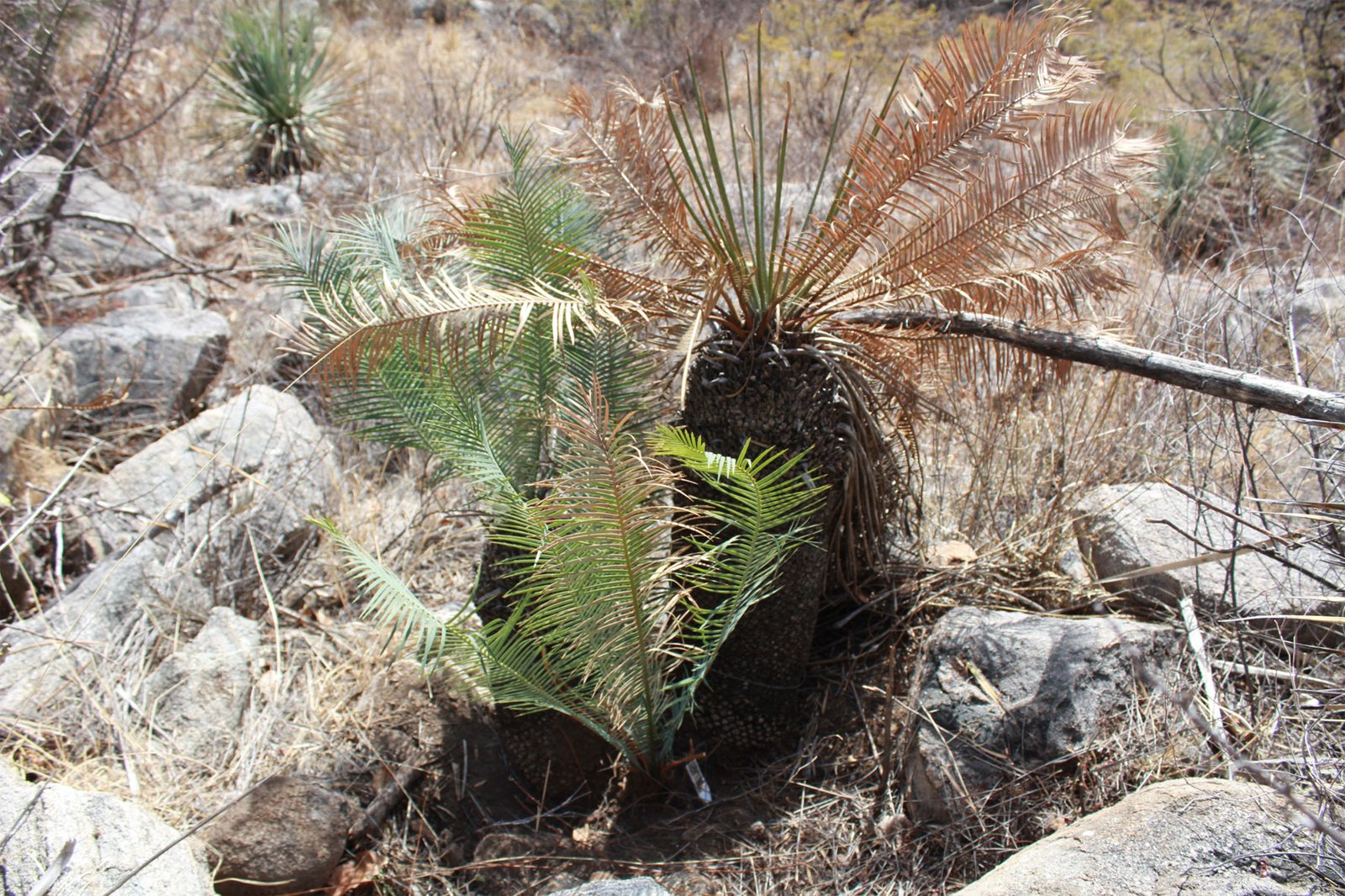
In order to fill the gap about the conservation status of D. vovidesii, its vulnerability to extinction was evaluated using criteria from the IUCN Red List and the Extinction Risk Assessment Method for wild species in Mexico (MER). We aimed to: 1) describe its distribution range through field visits and search of records in herbarium databases, 2) evaluate whether plants show habitat specificity, 3) measure the size and population trends of representative populations of the species, 4) identify anthropogenic threats surrounding populations, and 5) assign a risk category to this species. By integrating distributional, demographic, ecological, and threat information, this study provides the first comprehensive evaluation of the extinction risk of D. vovidesii and establishes a baseline for its conservation planning.
Materials and methods
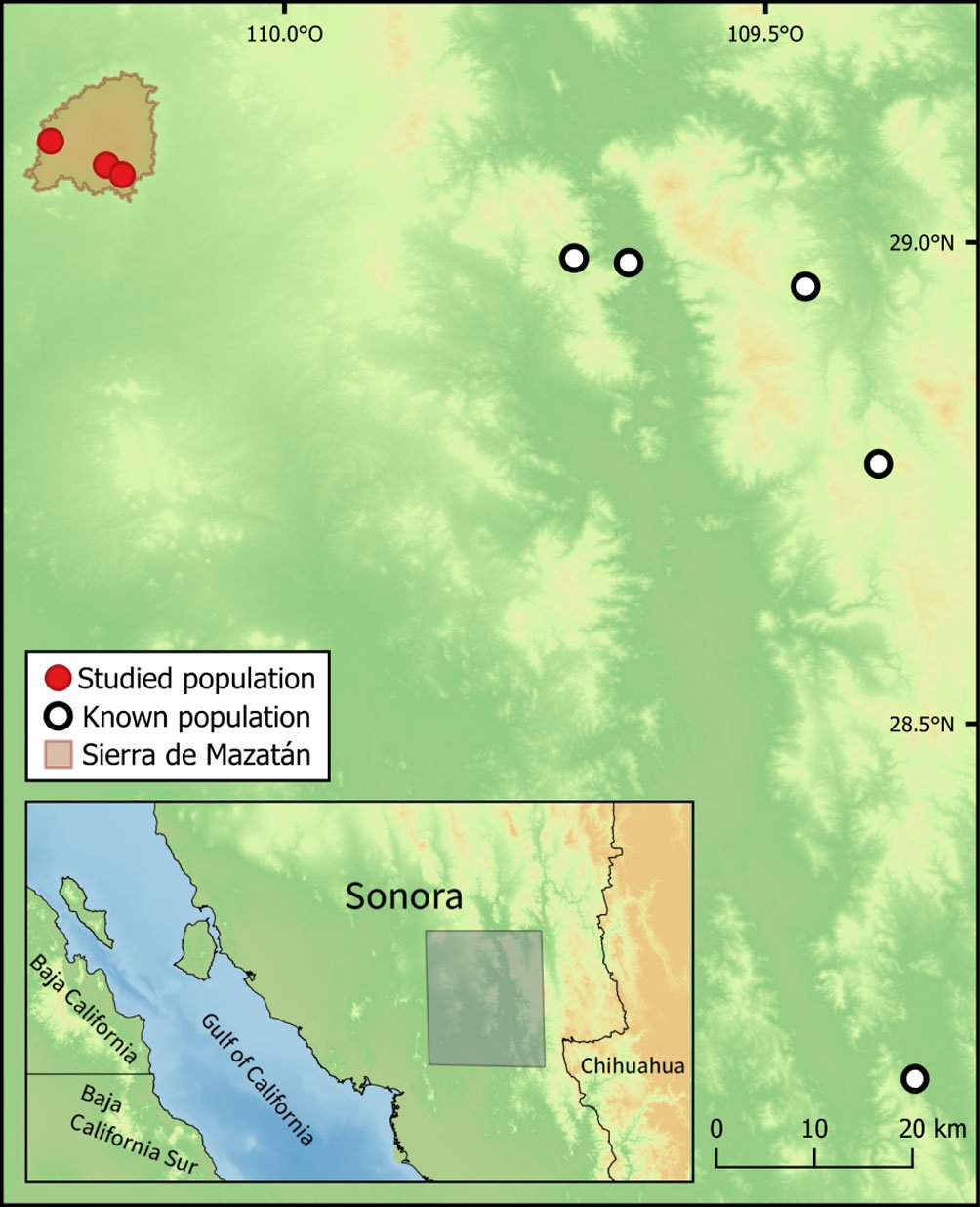
The state of Sonora, located in northwestern Mexico, shows a great diversity of climates and vegetation types due to factors such as an elevational gradient and its geographic position, among others (Brito-Castillo et al., 2010). The study area was in central Sonora, where D. vovidesii is distributed and 7 populations have been described (Gutiérrez-Ortega et al., 2021). The study focused on the Sierra de Mazatán (Fig. 3), which is considered as the southernmost sky island of the Madrean Archipelago, with an extension of 191 km² and an elevation ranging from 700 to 1,545 m asl (Arriaga et al., 2000; Conanp, 2012). This region has a semiarid climate of the temperate subtype (BS1k(x´)/(BS1h(x´)) and major vegetation types include desert scrub, oak forest, and aquatic and subaquatic vegetation (Rzedowski, 1978; Sánchez-Escalante et al., 2017). The Sierra de Mazatán has been recognized as a priority region for conservation as it functions as a biological corridor between biotas of the Sonoran Desert and the Sierra Madre Occidental (Arriaga, 2000).
Data collection
The distribution range of D. vovidesii was determined compiling evidence from specialized literature (i.e., Gutiérrez-Ortega, Jiménez-Cedillo, Pérez-Farrera, Martínez et al., 2018), Herbarium collections (Supplementary material: Table 1), consulting experts on the Flora of the Sonoran Desert, the genus Dioon, and regular field work during the period 2020-2021 through the Sierra de Mazatán, Sonora.
Habitat specificity was studied in the 3 populations from Sierra de Mazatán: Cañada de la Leona, Peñón de las Iglesias, and Rancho de la Cueva. Preliminary field observations suggested that individuals of D. vovidesii in populations from this area are mainly distributed in rock crevices. Therefore, to determine whether there is any type of microhabitat preference, the observed distribution of the location of plants on the ground in each population was compared with the distribution expected under the hypothesis of no preference. For each plant recorded in the field, data were collected on the substrate where it was found, using the substrate categories of rock, soil, or crevice, with crevice defined as small gaps or cracks between rocks. Using the linear transect method of Brower et al. (1997), 5 lines —50 m long— were established with a random starting point and direction within the area occupied by the population. The length intercepted by each substrate category was measured in each transect. Subsequently, the percentage represented by each category was calculated, and the values between transects were averaged. Using the above information, a goodness-of-fit test was performed to evaluate whether the observed distribution was consistent with the expected distribution if they were randomly distributed according to the frequency of each substrate.
Population size was determined through direct counting and conducting a census in the 3 known populations from the Sierra Mazatán. All plants in each population were tagged, georeferenced, and monitored over 1 year (2020-2021). The lengths of all the stems of each individual were summed, and plants were classified in 7 size categories, following the method of Lázaro-Zermeño et al. (2011). Size categories were: a) seedlings, plants without basal stem with 1-2 leaves of less than 30 cm in length (Fig. 2d); b) I, plants without basal stem with 2 or more leaves longer than 30 cm; c-f) 4 classes of 40-cm intervals in plants with basal stem length from 1 to 160 cm; and g) one class of plants whose total length was more than 160 cm. Census or field visits were not conducted in the rest of the populations from central Sonora due to difficult access or regional security problems. However, evidence about population size from those populations was obtained from Gutiérrez-Ortega et al. (2014), Gutiérrez-Ortega, Jiménez-Cedillo, Pérez-Farrera, Vovides et al. (2018).
Anthropogenic threats were identified by locating human constructions or settlements, water bodies, roads, and trails in proximity to D. vovidesii populations. A search and selection of geographic information layers was carried out, covering the geographic location of all populations (Supplementary material: Table 2). Once layers were obtained, they were imported to ArcMap v 10.5 for further analysis (ESRI, 2016). In addition, to obtain evidence of the illegal collection of plants, we searched for websites selling D. vovidesii, following the protocols suggested by Stringham et al. (2021). For evidence of invasive species, we searched SEINET (https://swbiodiversity.org/seinet/index.php), a database of herbarium records, for specimens of the invasive buffelgrass (Cenchrus ciliaris) close (< 5 km) to each population to identify populations potentially threatened by this species known to be affecting native plant species (Marshall et al., 2012).
Data analysis
Based on the information gathered about field localities, a map of the geographic range of D. vovidesii was generated using QGIS v 3.34.3-Prizren (QGIS, 2024). Additionally, the extent of occurrence (EOO) and area of occupancy (AOO) were estimated for D. vovidesii, following the methods dictated by IUCN (2024), using the geospatial conservation assessment tool GeoCAT (Backman et al., 2011).
Census data derived from the populations in Sierra de Mazatán were used to generate a histogram depicting population structure using the package ggplot2 v 3.4.4 (Wickham et al., 2016). To analyze differences in population structure among D. vovidesii populations in the Sierra de Mazatán, a chi-square test was performed. For this analysis, a contingency table was created with the frequencies of individuals in each size category for each population. Then, the R stats v 4.3.1 package (R Core Team, 2023) was used to perform the chi-square test.
Additionally, the demographic dynamics were analyzed through a Lefkovitch (L) transition matrix that was created using data from the 3 populations (Supplementary material: Table 3). This matrix contains the average probability of transition between size classes, stasis, and fertility categories from the data observed during the monitoring period (2020-2021). In this matrix, stasis values appear on the diagonal and correspond to individuals that survived and remained in the same size category after 1 year. Values below the diagonal refer to individuals that changed from one size class to the next in the same time period (Supplementary material: Table 3). Fertility values (Supplementary material 1), i.e., the production of new individuals, appear in the top row of the matrix. The population size after 1 year was determined by the equation Nt+1 = L * Nt, where Nt+1 is the population size in the following year, L is the Lefkovitch matrix, and Nt is the vector containing the initial number of individuals per size category. This process was repeated until the proportion of individuals per size category remained stable, represented by the right vector (w). The finite growth rate (λ) was obtained from the matrix model: (Nt+1/Nt), where Nt+1 is the total number of individuals at time t+1 and Nt is the number of individuals at time t (Caswell, 2001). Using the R package popbio (Stubben & Milligan, 2007), the finite population growth rate (λ) was estimated from the transition matrix, as well as the 95% confidence interval for this value (100,000 bootstrap samples) (Álvarez-Buylla & Slatkin, 1994; Caswell, 2001).
Anthropogenic threats near populations of D. vovidesii were identified using the ‘Generate Near Table’ tool in ArcMap v 10.5 (ESRI, 2016). A search radius of 5 km was applied for each population, with a maximum of 200 coincidences using the geodesic method. Anthropogenic threats were grouped according to the classification of direct threats of the IUCN v 4.0 (Salafsky et al., 2025).
Using life history and ecological data from specialized literature, layers of geographic information (Supplementary material: Table 2), alongside information on population size and structure, geographic range, and threats, the extinction risk of D. vovidesii was assessed. This evaluation employed criterion B from the Red List of IUCN (2024) and the method for evaluating extinction risk in wild species in Mexico (MER) (Sánchez et al., 2007; SEMARNAT, 2010).
Results
A total of 103 records of the genus Dioon were identified in the state of Sonora, sourced from 10 herbaria (Supplementary material: Table 1). These records were refined to select those specifically attributed to D. vovidesii, in accordance with the distribution proposed in the species description (Gutiérrez-Ortega, Jiménez-Cedillo, Pérez-Farrera, Martínez et al. 2018). Subsequently, a total of 47 records were classified as belonging to D. vovidesii. Finally, after elimination of entries with errors, duplications, or deficiencies in geographic references, a total of 8 populations of D. vovidesii were identified in Sonora, Mexico (Fig. 3). Using the population records as a basis, we estimated an extent of occurrence of 3,642 km² and an area of occupancy of 32 km².
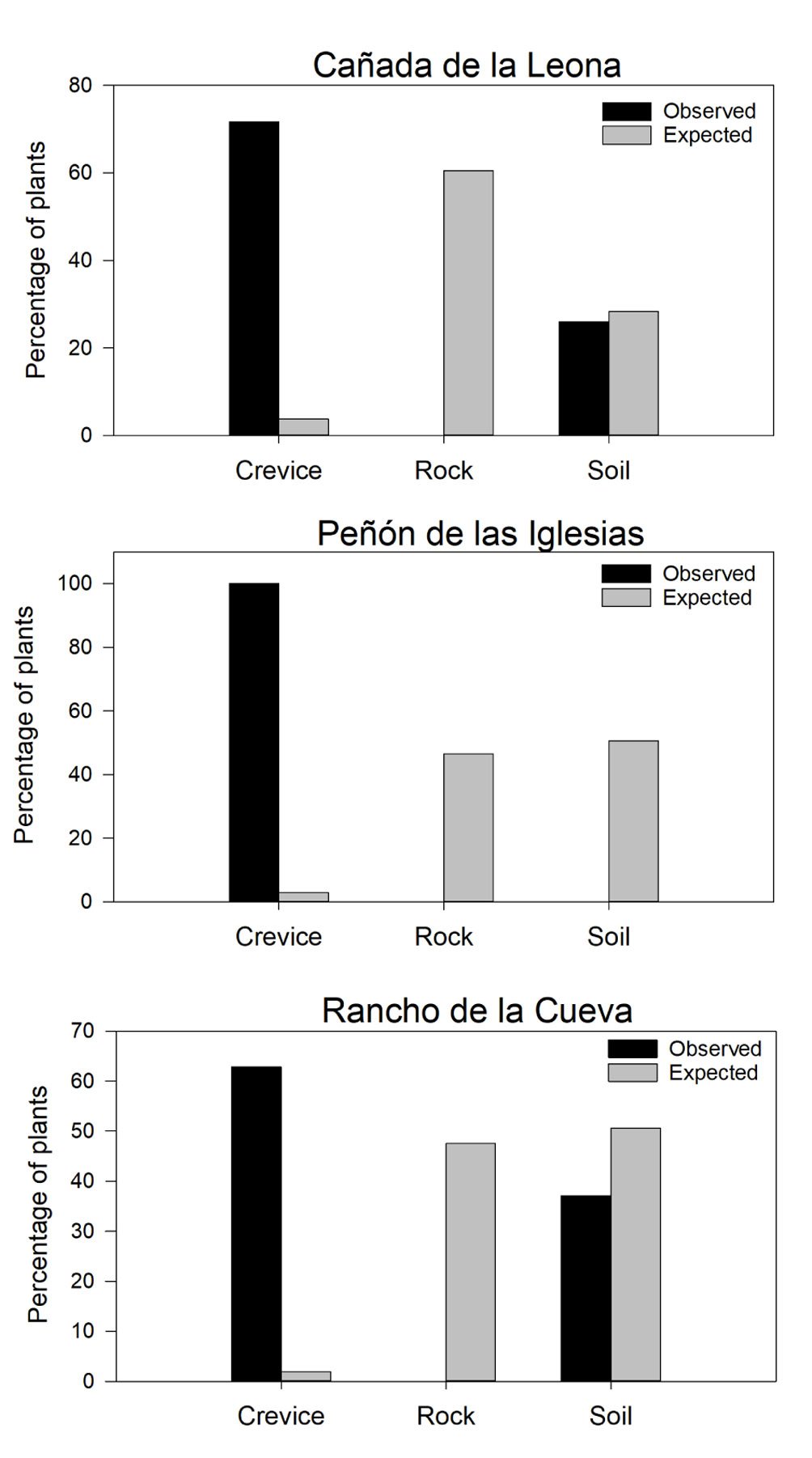
To evaluate whether individuals of D. vovidesii in Sierra de Mazatán show a microhabitat preference, the observed distribution of the location of plants was compared with the distribution expected if no preference existed. The null hypothesis of expected distribution according to the frequency of substrate types was rejected in Cañada de la Leona (χ² = 1534.01, p < 0.0001), Peñón de las Iglesias (χ² = 1163.18, p < 0.0001), and Rancho de la Cueva (χ² = 710.10, p < 0.0001). Between 60% and 100% of plants in each population were established in rock crevices, despite their relatively limited availability within the sampled area (Fig. 4). However, in the Cañada de la Leona, the expected and observed distributions in the ‘soil’ category are similar, suggesting that plants establish according to the frequency of this type of substrate. In contrast, in Peñón de las Iglesias, no plants were recorded growing on soil.
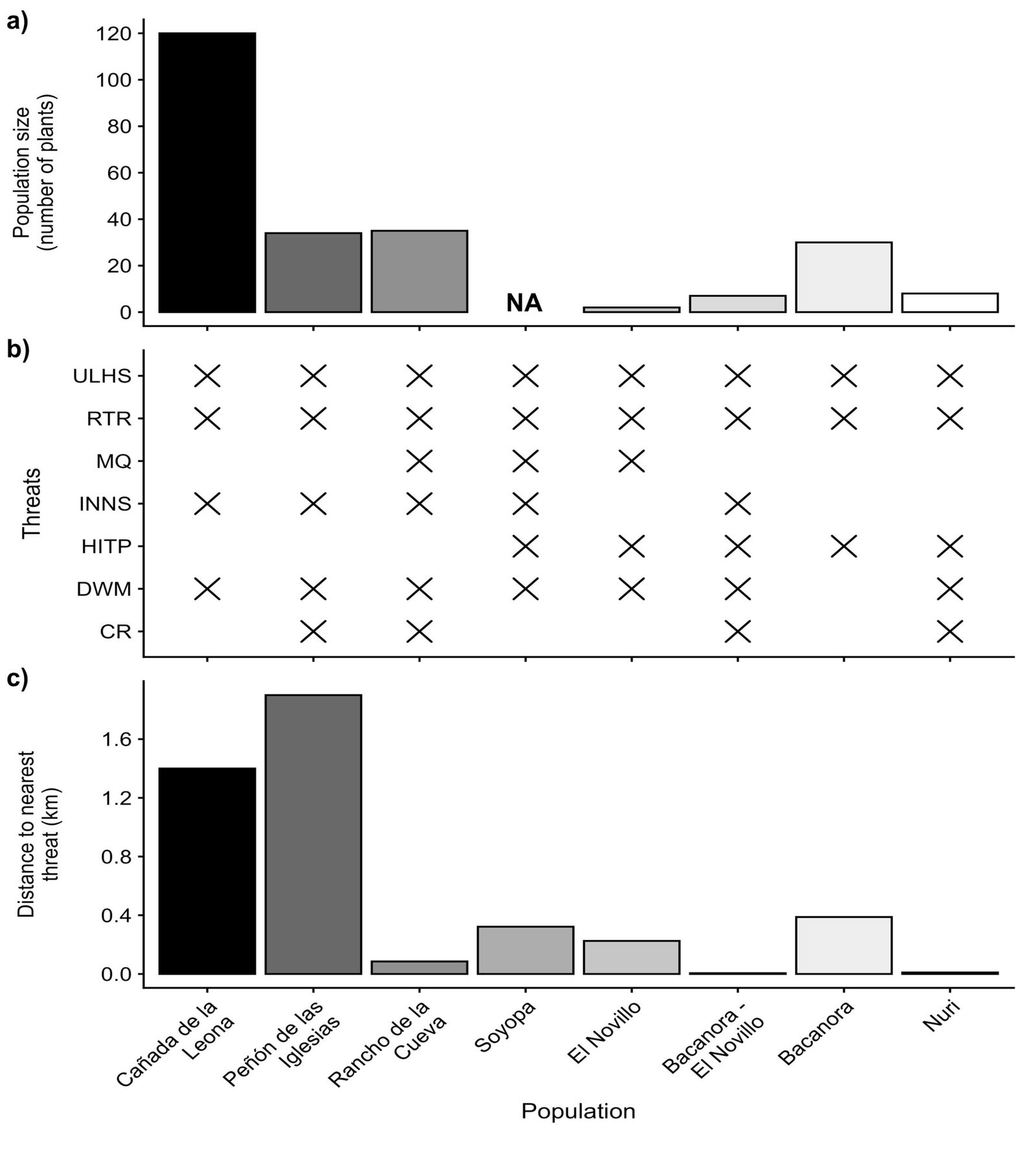
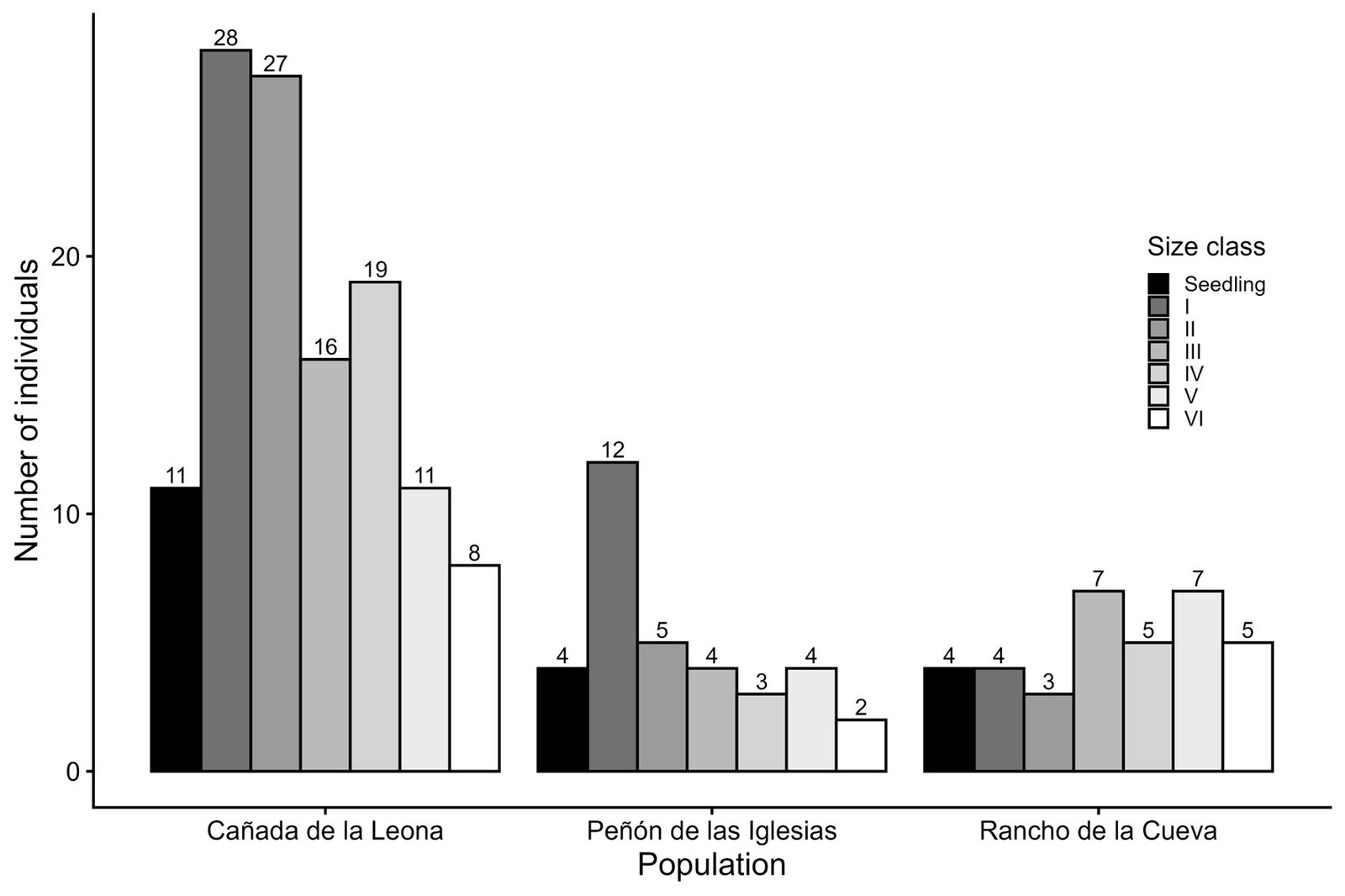
The population sizes found in the censuses conducted in the Sierra de Mazatán were 120, 34, and 35 individuals for Cañada de la Leona, Peñón de las Iglesias, and Rancho de la Cueva, respectively. Conversely, the sizes reported for the rest of the populations of the species vary in a range between 2 and 30 individuals (Fig. 5a). There are no reports of the number of individuals in the population known as ‘Soyopa’. Regarding the structure of the surveyed populations, both Cañada de la Leona and Peñón de las Iglesias exhibited a greater number of individuals in smaller size categories. In contrast, the Rancho de la Cueva population has a more balanced distribution, with a greater number of individuals in larger size categories (Fig. 6). However, the population structures do not differ significantly from each other (χ² = 14.516, p = 0.269).
For the demographic study, 189 individuals were used to construct a population matrix. A finite population growth rate slightly below equilibrium was estimated (λ = 0.94), with a 95% confidence interval ranging from 0.89 to 1.00. Although the point estimate suggests a modest population decline, the confidence interval includes unity, indicating that the available data do not provide conclusive evidence of either population decline or population equilibrium. Reproductive structures were observed across all size categories except seedlings. Recruitment was observed (2020-2021) (Fig. 2c), identifying 17 female cones in 2020 and 7 seedlings in 2021 (Fig. 2d). However, a low seedling survival rate and an effective recruitment were found (0.005).
All populations of D. vovidesii had evidence of anthropogenic threats within a 5 km radius, which were classified into 7 categories (Fig. 5b). Populations face different types of threats: Bacanora and Cañada de la Leona had the fewest number of threat types, whereas Rancho de la Cueva, Soyopa, and Bacanora – El Novillo had the most (Fig. 5b). Regarding distance to threats, Peñón de las Iglesias was the population with the greatest distance to a threat, while Bacanora-El Novillo and Nuri had the shortest distance (Fig. 5c). In general, populations of central Sonora are exposed to a greater number and types of anthropogenic threats than those located in the Sierra de Mazatán (excepting Rancho de la Cueva).
In the evaluation of the conservation status using both the IUCN Red List and the MER method of Mexico, D. vovidesii was assigned to a risk category. Considering the values obtained for extent of occurrence (3,642 km²) and area of occupancy (32 km²) and meeting the conditions of severely fragmented and a continuing decline of (i) area of occupancy and (v) number of mature individuals, D. vovidesii is within the Endangered category under criterion B (B1 and B2) of the IUCN Red List (2024). On the other hand, the assessment using the MER method resulted in a score of 0.73 for criterion A (Geographic distribution), 0.11 for criterion B (Habitat features), 0.48 for criterion C (Biological vulnerability), and 0.40 for criterion D (Impact of human activities), corresponding to the Threatened category for a total of 1.72 points (Supplementary material 2).
Discussion
This study provides the first comprehensive assessment of the conservation status of Dioon vovidesii, integrating distributional, demographic, ecological, and threat data. The evidence indicates that the species has a restricted geographic range, small and spatially isolated populations, marked habitat specialization, and widespread exposure to anthropogenic threats. Together, these factors place the species at high risk of extinction and support its classification as Endangered following IUCN criterion B and as Threatened following the MER framework.
The estimated extent of occurrence (3,642 km²) and area of occupancy (32 km²) are low relative to many other cycad species and fall within thresholds associated with elevated extinction risk (Carvajal-Hernández et al., 2020; Montalvo-Fernández et al., 2020). The species is known from only 8 confirmed populations, several of which contain fewer than 30 individuals. Small population size increases susceptibility to demographic stochasticity, environmental variability, and localized disturbance events (Lande, 1993; Shaffer, 1981). In addition, the spatial isolation of populations suggests limited connectivity, which may further reduce resilience to disturbance. Although the current number of documented populations is limited, the possibility that additional, undiscovered populations exist cannot be excluded. Nevertheless, given the rugged terrain and prior botanical exploration in the region, the likelihood of numerous large, unrecorded populations appears low. Therefore, the available evidence supports the conclusion that the species has a genuinely restricted distribution.
In Sierra de Mazatán, plants of D. vovidesii show clear evidence of habitat specificity as more than 60% of individuals in the 3 populations recruit in rock crevices (Fig. 4). This type of habitat specificity has been documented in other rare or endangered plant species (Laguna et al., 2016; Yates & Ladd, 2004). These microhabitats can be considered as safe sites for seedling recruitment as usually they offer a favorable microclimate with less thermal amplitude than in exposed conditions (García et al., 2020), greater soil nutrients and moisture (Zhao et al., 2023), and likely protection against disturbance. As seedlings of cycad species have greater survival under shade than under the sun (Álvarez-Yépiz et al., 2014), rock crevices may play a crucial role in the regeneration of D. vovidesii.
The population size of D. vovidesii in Sierra de Mazatán was smaller than previously reported and compared with other cycad species (Gutiérrez-Ortega et al., 2014; Octavio-Aguilar et al., 2017). However, the demographic analysis yielded a finite population growth rate slightly below equilibrium (λ = 0.94). Although the point estimate suggests a modest population decline, the associated confidence interval (0.89-1.00) includes unity, preventing a clear inference regarding whether the population is declining or remaining stable. Consequently, the available demographic evidence should be interpreted as indicating near-equilibrium dynamics with substantial uncertainty. Regardless of whether populations are currently stable or slowly declining, high seedling mortality and low effective recruitment (0.005) were observed. The population is primarily composed of individuals in smaller size categories, reflecting a Bongers type III population structure (Bongers et al., 1988; Supplementary material 1). Prioritizing the protection of larger individuals has been suggested in other cycad species (Álvarez-Yépiz et al., 2011; Lázaro-Zermeño et al. 2011) where stasis was the demographic process of greatest influence on the finite growth rate and the category of greatest influence. However, seedling production and protection are essential for ensuring the species’ long-term survival (Cabrera-Toledo et al., 2019). These findings should be interpreted with caution due to the uncertainty caused by the fact that we only have 1 year of study, as the population could be declining despite finding a trend to equilibrium in population size (Supplementary material 1, Raimondo & Donaldson, 2003).
All populations of D. vovidesii are located within 5 km of some form of human activity. The evidence of nearby human activity is similar to the main threats facing other Mexican cycad species, such as habitat fragmentation and land use changes driven by agricultural and livestock activities (IUCN/SCC Cycad Specialist Group, 2003; Velasco-García et al., 2016). For cycads, low habitat quality, reduced area extent, and smaller population sizes have been related to greater anthropogenic impact in the vicinity of populations (López-Gallego, 2008; Velasco-García et al., 2016). As a result, D. vovidesii populations may be highly vulnerable to extinction due to these nearby human activities. Gutiérrez-Ortega et al. (2014) reported declining numbers of individuals in the populations of El Novillo, Bacanora – El Novillo, and Nuri, which they attributed to illegal collection and proximity to human settlements, findings that are consistent with our results (Fig. 5b). On the other hand, although the populations in Sierra de Mazatán are generally farther from human activity compared to those in central Sonora, the process of designating this mountain range as a natural protected area would provide greater protection against habitat destruction and illegal poaching for D. vovidesii populations (Conanp, 2012; Gutiérrez-Ortega et al., 2014). The presence of buffelgrass (Cenchrus ciliaris) near several populations is of particular concern. This invasive species alters fire regimes and dynamics in arid and semi-arid ecosystems, potentially increasing mortality and reducing recruitment in native species (Marshall et al., 2012). Given the low effective recruitment already observed in D. vovidesii, additional stressors could shift populations from near equilibrium to decline.
In conclusion, D. vovidesii combines several traits associated with elevated extinction risk: restricted range, habitat specialization, small and fragmented populations, and ongoing anthropogenic pressure. Although current demographic estimates suggest near-equilibrium dynamics, low effective recruitment and widespread disturbance indicate limited buffering capacity against future environmental or anthropogenic change.
Dioon vovidesii requires systematic and continuous monitoring, along with studies on its life history traits, ecology, and the impact of land use changes to design an effective management and conservation plan. To better understand long-term population trajectories and the role of demographic processes and environmental stochasticity, multi-year monitoring of populations is needed. Such monitoring would allow more robust estimation of population growth rates and determine whether the slight departure from equilibrium observed here reflects a true population decline or short-term demographic variation (Octavio-Aguilar et al., 2017; Raimondo & Donaldson 2003). Additionally, listing D. vovidesii as a threatened species at national and international levels could encourage its protection and further study. Systematic and continuous monitoring and collaboration between local communities, government, and academia is essential to ensure the long-term survival of D. vovidesii.
Acknowledgements
This paper is the result of KJ’s M.Sc. studies in the Posgrado en Ciencias Biológicas at the Universidad Nacional Autónoma de México. We thank the Consejo Nacional de Humanidades, Ciencias y Tecnologías for the fellowship (No. CVU: 892025) awarded to KJ to pursue their M.Sc. degree. We also thank José Said Gutiérrez-Ortega for providing information about populations of D. vovidesii. Lastly, we acknowledge Jesús Pablo Carrillo, Luis de la Fuente, Fernanda Núñez, Sharon Hernández, Tadeo Ruiz, and Javier Rosas for their invaluable assistance with field sampling.
References
Álvarez-Buylla, E. R., & Slatkin, M. (1994). Finding confidence limits on population growth rates: Three real examples revised. Ecology, 75, 255–260. https://doi.org/10.1016/0169-5347(91)90026-T
Álvarez-Yépiz, J. C., Búrquez, A., & Dovčiak, M. (2014). Ontogenetic shifts in plant–plant interactions in a rare cycad within angiosperm communities. Oecologia, 175, 725–735. https://doi.org/10.1007/s00442-014-2929-3
Álvarez-Yépiz, J. C., Dovčiak, M., & Búrquez, A. (2011). Persistence of a rare ancient cycad: Effects of environment and demography. Biological Conservation, 144, 122–130. https://doi.org/10.1016/j.biocon.2010.08.007
Arriaga, C. L., Espinoza, R. J. M., Aguilar, Z. C., Martínez, R. E., Gómez, M. L., & Loa, E.E. (2000). Regiones terrestres prioritarias de México. Ciudad de Mexico: Comisión Nacional para el Conocimiento y Uso de la Biodiversidad. https://doi.org/10.5962/bhl.title.118644
Bachman, S., Moat, J., Hill, A.W., de la Torre, J., & Scott, B. (2011). Supporting Red List threat assessments with GeoCAT: geospatial conservation assessment tool. Zookeys, 150, 117–126. https://doi.org/10.3897/zookeys.150.2109
Bongers, F., Popma, J., del Castillo, J. M., & Carabias, J. (1988). Structure and floristic composition of the lowland rain forest of Los Tuxtlas, Mexico. Vegetatio, 74, 55–80. https://doi.org/10.1007/BF00045614
Brito-Castillo, L., Crimmins, M. A., & Díaz, S. C. (2010). Clima. In F. E. Molina-Freaner, & T. R. Van Devender (Eds.), Diversidad biológica de Sonora (pp. 73–96). Ciudad de Mexico: Universidad Nacional Autónoma de México.
Brower, J. E., Zar, J. H., & Von Ende C. N. (1998). Field and laboratory methods for general ecology. Boston: WCB McGraw-Hill.
Cabrera-Toledo, D., González-Astorga, J., Vovides, A. P., Casas, A., Vargas-Ponce, O., Carrillo-Reyes, P. et al. (2019). Surviving background extinction: Inferences from historic and current dynamics in the contrasting population structures of two endemic Mexican cycads. Population Ecology, 61, 62–73. https://doi.org/10.1002/1438-390X.1008
Calonje, M., Stevenson, D. W., & Osborne, R. (2026). The World List of Cycads, online edition. Retrieved on March 17, 2026 from: https://doi.org/10.5281/zenodo.18940728
Caswell, H. (2001). Matrix population models: construction, analysis, and interpretation. Sunderland, Massachusetts: Sinauer Associates.
Carvajal-Hernández, C. I., Juárez-Fragoso, M. A., Armenta- Montero, S., Demeneghi-Calatayud, A. P., & Vázquez- Torres, M. (2020). Different criteria for evaluation of the conservation status of Ceratozamia miqueliana (Zamiaceae). Tropical Conservation Science, 13, 1–12. https://doi.org/10.1177/1940082920952682
Chichorro, F., Urbano, F., Teixeira, D., Väre, H., Pinto, T., Brummitt, N. et al. (2022). Trait-based prediction of extinc- tion risk across terrestrial taxa. Biological Conservation, 274, 1–8. https://www.conanp.gob.mx/datos_abiertos/DGCD/25.pdf
Fischer, M., & Stöcklin, J. (1997). Local extinctions of plants in remnants of extensively used calcareous grasslands 1950–1985. Conservation Biology, 11, 727–737. https://doi.org/10.1046/j.1523-1739.1997.96082.x
García, M. B., Domingo, D., Pizarro, M., Font, X., Gómez, D., & Ehrlén, J. (2020). Rocky habitats as microclimatic refuges for biodiversity. A close-up thermal approach. Environmental and Experimental Botany, 170, 1–10. https://doi.org/10.1016/j.envexpbot.2019.103886
Guevara-Andino, J. E., Navas-Muñoz, D., & Endara, M. J. (2025). High extinction risk of the endemic tree flora in a hyper-diverse region of the Amazon. Plants, People, Planet, 7, 998–1010. https://doi.org/10.1002/ppp3.10606
Gutiérrez-Ortega, J. S., Jiménez-Cedillo, K., Pérez-Farrera, M. A., Martínez, J. F., Molina-Freaner, F., Watano, Y. et al. (2018). Species definition of Dioon sonorense (Zamiaceae, Cycadales), and description of D. vovidesii, a new cycad species from northwestern Mexico. Phytotaxa, 369, 107– 114. https://doi.org/10.11646/phytotaxa.369.2.4
Gutiérrez-Ortega, J. S., Jiménez-Cedillo, K., Pérez-Farrera, M. A., Vovides, A. P., Martínez, J. F., Molina-Freaner, F. et al. (2018). Considering evolutionary processes in cycad conservation: Identification of evolutionarily significant units within Dioon sonorense (Zamiaceae) in northwestern Mexico. Conservation Genetics, 19, 1069–1081. https://doi.org/10.1007/s10592-018-1079-2
Gutiérrez-Ortega, J. S., Kajita, T., & Molina-Freaner, F. E. (2014). Conservation genetics of an endangered cycad, Dioon sonorense (Zamiaceae): implications from variation of chloroplast DNA. Botanical Sciences, 92, 441–451. https://doi.org/10.17129/botsci.112
Gutiérrez-Ortega, J. S., Molina-Freaner, F., Martínez, J. F., Pérez- Farrera, M. A., Vovides, A. P., Hernández-López, A. et al. (2021). Speciation along a latitudinal gradient: the origin of the Neotropical cycad sister pair Dioon sonorense–D. vovidesii (Zamiaceae). Ecology and Evolution, 11, 6962– 6976. https://doi.org/10.1002/ece3.7545
IUCN (International Union for the Conservation of Nature). (2024). Red List Categories and Criteria. Version 16. Retrieved on October 28, 2025 from: https://www.iucnredlist.org/es/resources/redlistguidelines
IUCN (International Union for the Conservation of Nature). (2025). The IUCN Red List of Threatened Species 2023- 1. Retrieved on November 19, 2025 from: https://www.iucnredlist.org/
IUCN/SCC Cycad Specialist Group. (2003). Cycads: status survey and conservation action plan. Gland, Switzerland and Cambridge, UK: IUCN. Lacher, Jr. T. E., Butchart, S. H., Gumbs, R., Long, B., López- Gallego, C., Raimondo, D. et al. (2025). The status, threats and conservation of critically endangered species. Nature Reviews Biodiversity, 1, 421–438. https://doi.org/10.1038/s44358-025-00059-4
Laguna, E., Navarro, A., Pérez-Rovira, P., Ferrando, I., & Ferrer-Gallego, P. P. (2016). Translocation of Limonium perplexum (Plumbaginaceae), a threatened coastal endemic. Plant Ecology, 217, 1183–1194. https://doi.org/10.1007/s11258-016-0643-4
Lande, R. (1993). Risks of population extinction from demographic and environmental stochasticity and random catastrophes. The American Naturalist, 142, 911–927. https://doi.org/10.1086/285580
Lázaro-Zermeño, J. M., González-Espinosa, M., Mendoza, A., Martínez-Ramos, M., & Quintana-Ascencio, P. F. (2011). Individual growth, reproduction and population dynamics of Dioon merolae (Zamiaceae) under different leaf harvest histories in Central Chiapas, Mexico. Forest Ecology and Management, 261, 427–439. https://doi.org/10.1016/j.foreco.2010.10.028
Liu, Y., Wang, S., Li, L., Yang, T., Dong, S., Wei, T. et al. (2022). The Cycas genome and the early evolution of seed plants. Nature Plants, 8, 389–401. https://doi.org/10.1038/s41477-022-01129-7
López-Gallego, C. (2008). Demographic variation in cycad populations inhabiting contrasting forest fragments. Biodiversity and Conservation, 17, 1213-1225. https://doi.org/10.1007/s10531-007-9263-6
Mankga, L.T., & Yessoufou, K. (2017). Factors driving the global decline of cycad diversity. AoB Plants, 9, 1–10. https://doi.org/10.1093/aobpla/plx022
Marshall, V. M., Lewis, M. M., & Ostendorf, B. (2012). Buffel grass (Cenchrus ciliaris) as an invader and threat to biodiversity in arid environments: a review. Journal of Arid Environments, 78, 1–12. https://doi.org/10.1016/j.jaridenv.2011.11.005
Martínez-Domínguez, L., Nicolalde-Morejón, F., Vergara- Silva, F., & Stevenson, D.W. (2023). A review of taxonomic concepts and species delimitation in Cycadales. The Botanical Review, 90, 33–66. https://doi.org/10.1007/s12229-023-09293-x
Montalvo-Fernández, G., Carnevali, G., Vovides, A. P., Muñoz- López, J., & Martínez-Castillo, J. (2020). Evaluación del riesgo de extinción de Zamia prasina en la Provincia Biótica Península de Yucatán. Revista Mexicana de Biodiversidad, 91, 1–9. https://doi.org/10.22201/ib.20078706e.2020.91.3012
QGIS Development Team. (2024). QGIS Geographic Infor- mation System. (Version 3.34.3-Prizren). Open Source Geospatial Foundation Project. http://qgis.org
Octavio-Aguilar, P., Rivera-Fernández, A., Iglesias-Andreu, L. G., Vovides, P. A., & de Cáceres-González, F. F. N. (2017). Extinction risk of Zamia inermis: a demographic study in its single natural population. Biodiversity and Conservation, 26, 787–800. https://doi.org/10.1007/s10531-016-1270-z
R Core Team. (2023). R: a language and environment for statistical computing. R Foundation for Statistical Computing, Vienna, Austria. Retrieved on February 29, 2026 from: https://www.R-project.org/
Raimondo, D. C., & Donaldson, J. S. (2003). Responses of cycads with different life histories to the impact of plant collecting: Simulation models to determine important life history stages and population recovery times. Biological Conservation, 111, 345–358. https://doi.org/10.1016/S0006-3207(02)00303-8
Rzedowski, J. (1978). Vegetación de México. Ciudad de México: Editorial Limusa. Sánchez, Ó., Medellín, R. Aldama, A., Goettsch, B., Soberón, J., & Tambutti, M. (2007). Método de evaluación del riesgo de extinción de las especies silvestres en México (MER). Ciudad de México: Secretaría de Medio Ambiente y Recursos Naturales/ Instituto Nacional de Ecología/ Instituto de Ecología de la Universidad Nacional Autónoma de México/ Comisión Nacional para el Conocimiento y Uso de la Biodiversidad.
Sánchez-Escalante, J. J., Reina-Guerrero, A. L., & Van Devender, T. R. (2017). Lista anotada de la flora vascular de la sierra de Mazatán (Huérfana), centro de Sonora, México. Phytoneuron, 2017, 1–44.
Salafsky, N., Relton, C., Young, B. E., Lamarre, P., Böhm, M., Chénier, M. et al. (2025). Classification of direct threats to the conservation of ecosystems and species 4.0. Conservation Biology, 39, 1–19. https://doi.org/10.1111/cobi.14434
Segalla, R., Telles, F. J., Pinheiro, F., & Morellato, P. (2019). A review of current knowledge of Zamiaceae, with emphasis on Zamia from South America. Tropical Conservation Science, 12, 1–21. https://www.dof.gob.mx/nota_detalle.php?codigo=5578808&fecha=14/11/2019
Shaffer, M. L. (1981). Minimum population sizes for species conservation. Bioscience, 31, 131–134. https://doi.org/10.2307/1308256
Stringham, O. C., Toomes, A., Kanishka, A. M., Mitchell, L., Heinrich, S., Ross, J. V. et al. (2021). A guide to using the internet to monitor and quantify the wildlife trade. Conservation Biology, 35, 1130–1139. https://doi.org/10.1111/cobi.13675
Stubben, C. J., & Milligan, B. G. (2007). Estimating and analyzing demographic models using the popbio package in R. Journal of Statistical Software, 22, 1-23. https://doi.org/10.18637/jss.v022.i11
Wickham, H. (2016). ggplot2. Elegant graphics for data analysis. New York: Springer Cham. https://doi.org/10.1007/978-0-387-98141-3
Velasco-García, M. V., Valdez-Hernández, J. I., Ramírez- Herrera, C., Hernández-Hernández, M. L., López-Upton, J., López-Mata, L. et al. (2016). Structure, heterogeneity of stages and spatial dispersion pattern of Dioon holmgrenii (Zamiaceae). Botanical Sciences, 94, 75–87. https://doi.org/10.17129/botsci.258
Vovides, A. P., Pérez-Farrera, M. A., & Iglesias, C. (2010). Cycad propagation by rural nurseries in Mexico as an alternative conservation strategy: 20 years on. Kew Bulletin, 65, 603–611. https://doi.org/10.1007/s12225-010-9240-1
Yates, C. J., & Ladd, P. G. (2004). Breeding system, pollination and demography in the rare granite endemic shrub Verticordia staminosa ssp. staminosa in south-west Western Australia. Austral Ecology, 29, 189–200. https://doi.org/10.1111/j.1442-9993.2004.01336.x
Zhao, M., Pu, W., Du, J., Liu, W., Zhang, Q., Liu, Y. et al. (2023). Effect of crevice density on biological soil crust development on rock cut slope in mountainous regions, Sichuan, China. Ecological Processes, 12, 1–18. https://doi.org/10.1186/s13717-022-00416-7
Zhong, Y., Chen, C., & Wang, Y. (2021). Biological and extrinsic correlates of extinction risk in Chinese lizards. Current Zoology, 68, 285–293. https://doi.org/10.1093/cz/zoab040