Extensión del intervalo geográfico de Vallonia pulchella y primer registro de Vallonia cf. excentrica (Gastropoda: Valloniidae) en Chile continental
Marta E. Araya a, Juan A. Aliaga b, Gonzalo Collado c, Juan Francisco Araya d, *
a Sin adscripción, Los Gladiolos 520, Caldera, Chile
b Universidad Tecnológica Metropolitana, Departamento de Química, Las Palmeras 3360, Ñuñoa, Santiago, Chile
c Universidad del Bío-Bío, Facultad de Ciencias, Departamento de Ciencias Básicas, Avenida Andrés Bello 720, Chillán, Chile
d Universidad de Concepción, Programa de Doctorado en Sistemática y Biodiversidad, Barrio Universitario s/n, Concepción, Chile
*Corresponding author: jfaraya@u.uchile.cl (J.F. Araya)
Received: 12 November 2024; accepted: 14 November 2025
Abstract
Non-native mollusk species can have significant ecological and economic impacts on invaded habitats. In recent decades, the number of non-native mollusks in Chile has steadily increased. This study reports the range expansion of Vallonia pulchella (Müller, 1774) and the first record of Vallonia cf. excentrica Sterki, 1893 in the country, using optical microscopy, scanning electron microscopy, and statistical analysis. The first species was found in Caldera (northern Chile) and in La Florida (Santiago, central Chile), while the latter was found only in the last locality. Vallonia pulchella is a potential intermediate host for parasitic worms that can affect local livestock, highlighting the need for sanitary control measures. The discovery of Vallonia cf. excentrica represents the first record of this species in South America.
Keywords:Alien species; Microgastropods; Morphological identification; New records; Terrestrial snails
Resumen
Las especies de moluscos no nativos pueden tener impactos ecológicos y económicos significativos en los hábitats invadidos. En las últimas décadas, el número de moluscos no nativos en Chile ha aumentado de manera constante. Este estudio documenta la expansión del rango de Vallonia pulchella (Müller, 1774) y el primer registro de Vallonia cf. excentrica Sterki, 1893 en el país, utilizando microscopía óptica, microscopía electrónica de barrido y análisis estadístico. La primera especie se encontró en Caldera (norte de Chile) y en La Florida (Santiago, centro de Chile), mientras que la segunda solo en esta última localidad. Vallonia pulchella es un huésped intermediario potencial para gusanos parásitos que pueden afectar al ganado local, lo que resalta la necesidad de medidas de control sanitario. El descubrimiento de Vallonia cf. excentrica representa el primer registro de esta especie en América del Sur.
Palabras clave: Especies exóticas; Microgasterópodos; Identificación morfológica; Nuevos registros; Caracoles terrestres
Introduction
Non-native mollusk species can cause significant ecological and economic impacts on invaded habitats (Darrigran et al., 2020; Lowe et al., 2000; Robinson, 1999; Sylvester & Sardiña, 2015). These species often disrupt local ecosystems by outcompeting native species for resources, altering food webs, and causing declines in biodiversity (Alonso et al., 2025; Collado et al., 2025; Vaughn, 2018). Their ability to rapidly colonize new areas can lead to changes in habitat structure and function, sometimes resulting in the loss of native species that are unable to compete with or adapt to the invaders. In addition, invasive mollusks can introduce new pathogens or parasites that harm local wildlife, livestock, and even humans (Cádiz et al., 2013; Collado et al., 2025).
During the last few decades, the introduction of non-native mollusks in Chile has steadily increased, with recent records of terrestrial and freshwater species on Easter Island and especially in the central region of the country (e.g., Cádiz & Gallardo, 2007; Cádiz et al., 2013; Collado, 2014, 2017; Darrigran et al., 2020; Kirch et al., 2009; Letelier et al., 2007). The number of non-native mollusks in Chile has grown from 13 species (Valdovinos-Zarges, 1999) to 34 species (Araya, 2015), including marine, freshwater, and terrestrial species. Of these, 20 are ground-dwelling terrestrial mollusks, making this the largest informal group of invasive species in any South American country, with numbers similar to those found in Argentina (Virgillito & Miquel, 2013). Most of these introduced species have a European origin, and some are known to negatively impact endemic biota, often by competing with or preying on native species, or acting as hosts for various parasites (Cádiz et al., 2013). Prevention and continuous monitoring are therefore essential to avoid the introduction and establishment of additional non-native species in new ecosystems.
In the present study, as part of an ongoing investigation on the diversity of terrestrial mollusks in Chile (Araya, 2016; Araya & Aliaga, 2015; Miquel & Araya, 2013, 2015), we report the range extension of Vallonia pulchella (Müller, 1774) and the first record of Vallonia cf. excentrica Sterki, 1893 in continental Chile. The Global Biodiversity Information Facility (GBIF, 2024) database had previously reported V. pulchella in Easter Island, as well as in Caldera and Coquimbo in continental Chile (unpublished data). Vallonia pulchella, the lovely Vallonia, is Holarctic in origin (Hotopp et al., 2013) and has been documented as an introduced species in South Africa, Madagascar, Australia, New Zealand and several other Asian countries (Gerber, 1996; Herbert, 2010; Mitra et al., 2005; Robinson, 1999; Roll et al., 2009; Stanisic, 1998), as well as in Argentina, Brazil, Peru, and Uruguay in South America (Rumi et al., 2010; Virgillito & Miquel, 2013). In Chile, the species was first reported as introduced by Philippi (1885) from the area surrounding Santiago. Later, Lataste (1896, fide Porter, 1926) found this species in Linderos, south of Santiago. More recently, it was reported by PNUD (2014), although the specific location was not detailed. On the other hand, V. cf. excentrica, another Holartic species (Metcalf, 1984; Nekola, 2002), is reported here for the first time as an introduced species in the country and in South America.
Materials and methods
Snail specimens were hand-collected from wet soil in 2017 in 2 urban areas of continental Chile: Caldera in the north and La Florida in Santiago City, in the central region of the country. Snails were sorted out from 2 soil samples of about 500 g in each location. Adult specimens were photographed using a Motic SMZ-168 stereomicroscope equipped with a Moticam 2000 digital camera and measured with a millimeter ruler. Specimens were also examined using a Hitachi SU3500 scanning electron microscope (SEM). Prior to observation, the snails were immersed in a dilute sodium hypochlorite solution for 3 minutes, rinsed in distilled water, and air-dried.
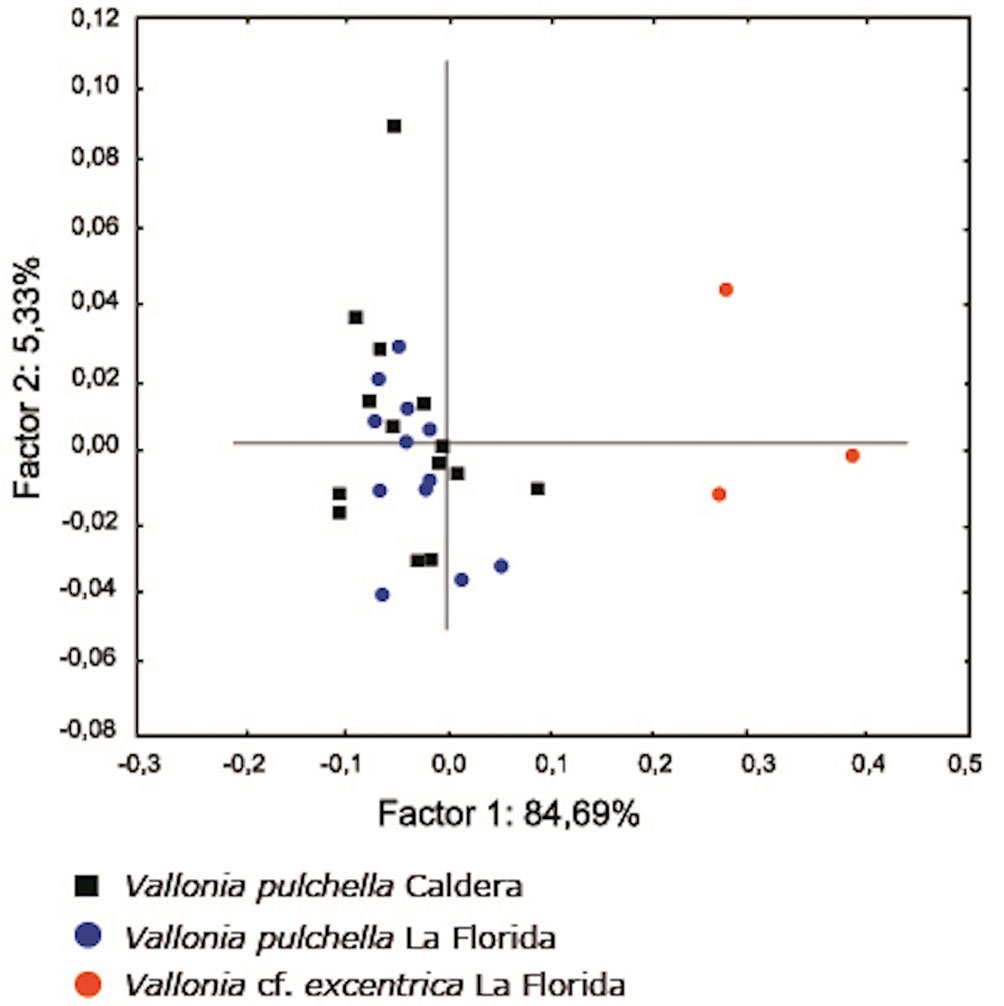
Species identification was based on original descriptions and additional literature (Burch & Jung, 1988; Herbert, 2010; Sterki, 1893). To assess morphometric variation among introduced populations, we measured 6 shell variables: shell length (SL), shell width (SW), shell height (SH), aperture height (AH), aperture width (AW), and the distance from the umbilicus to the last body whorl (UBW). The data were log-transformed to assess normality and homoscedasticity. Since some variables did not meet these assumptions, we applied the nonparametric Mann-Whitney U test (M-W U) using PAST software V. 4.13 (Hammer et al., 2001). Additionally, we performed a principal component analysis (PCA) in PAST to investigate whether shell shape variation could distinguish between the 2 morphologically similar species in morphometric space. This analysis included 14 individuals from Caldera and 13 from La Florida assigned to V. pulchella, and 3 individuals assigned to V. cf. excentrica. Specimens from Caldera and La Florida smaller than 2 mm were excluded from the analysis. Voucher specimens were deposited in the Museo de Ciencias Naturales Profesor Pedro Ramírez Fuentes (MCNPPRF), Chillán, Chile, and the Laboratorio de Malacología y Sistemática Molecular, Universidad del Bío-Bío, Chillán, Chile (LMSM) (see Results).
Results
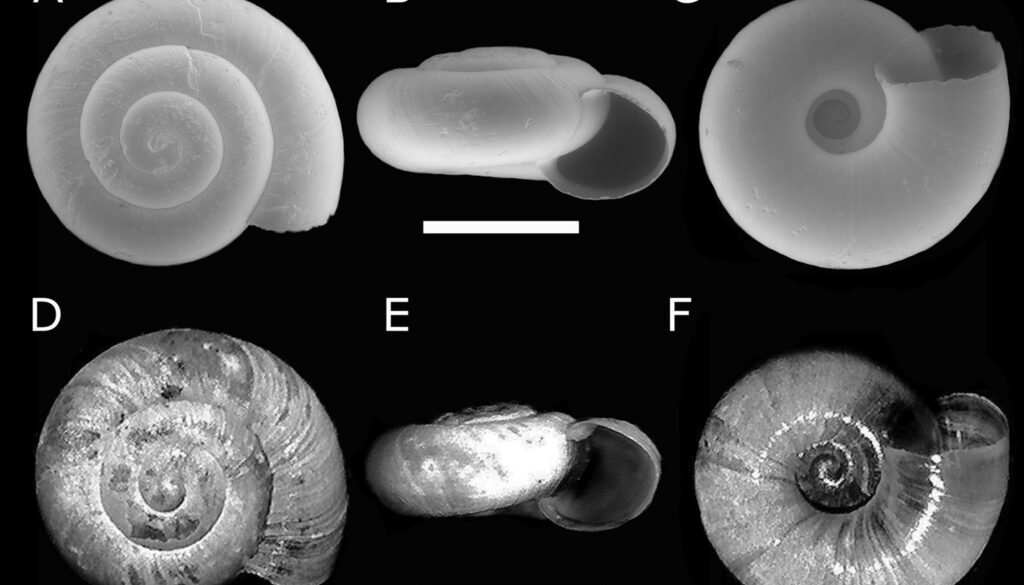
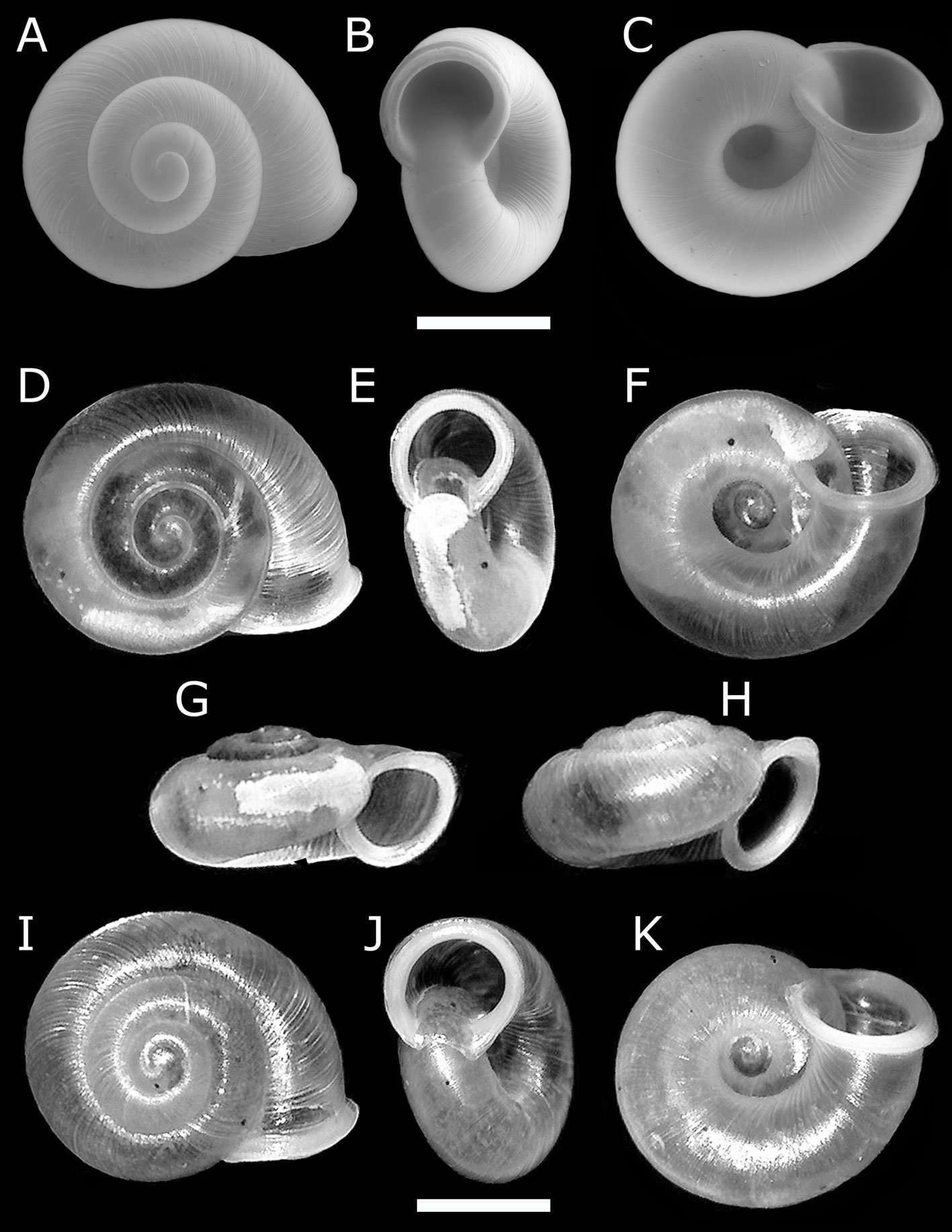
Stereomicroscope and SEM observations revealed the presence of 2 non-native species of the genus Vallonia in continental Chile (Figs. 1-4).
Phylum Mollusca Linnaeus, 1758
Class Gastropoda Cuvier, 1797
Superfamily Pupilloidea W. Turton, 1831
Family Valloniidae E. S. Morse, 1864
Genus Vallonia Risso, 1826
Vallonia pulchella (Müller, 1774)
Figs. 1A-K, 3A
Material examined. 17 specimens from Caldera (27°04’ S, 70°49’ W) (LMSM 1-17), 18 specimens from La Florida (33°27’ S, 70°40’ W) (MCNPPRF 139–24, MCNPPRF 139-25, LMSM 3-18).
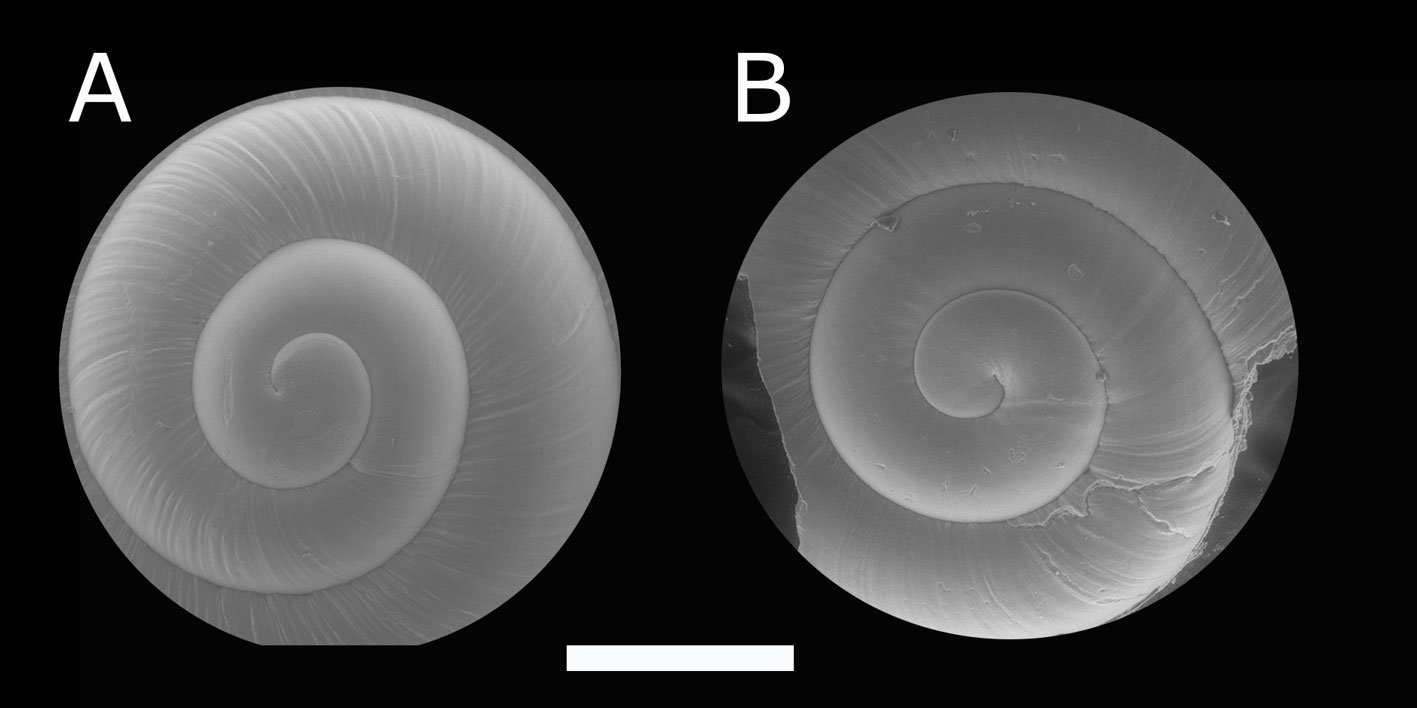
Morphology. Shell with 3 1/8 whorls, fine axial striae (Fig. 1A, D, I), depressed, umbilicated, gray-white or corneous, translucent with a matte gloss. Adult shell diameter: 1.6-2.6 mm (Caldera), 1.3-2.4 mm (La Florida). Protoconch smooth (620 µm), with 1 1/8 whorls and a clear transition to the teleoconch (Fig. 3A). Round umbilicus (Fig. 1C, F, K), about 1/4 of the shell diameter. Near-circular aperture, slightly oblique (Fig. 1B, E, G, H, J), translucent peristome with a thickened lip in adults.
Remarks
Vallonia pulchella resembles Vallonia excentrica. Some authors consider V. excentrica to be a form of V. pulchella (Adams, 1906; Hubendick, 1950). Korte and Armbruster (2003) suggest that V. excentrica is paraphyletic, within the same clade as V. pulchella. However, V. pulchella can be distinguished by a higher spire, a less elongated umbilicus, and a translucent, thickened lip (in contrast, the lip of V. excentrica is white) (Sterki, 1893).
Vallonia cf. excentrica Sterki, 1893
Figs. 2A-F, 3B
Material examined. 3 specimens from La Florida (33°27’ S, 70°40’ W) (LMSM 1-3).
Morphology. Shell with about 3 1/8 whorls, fine axial striae (Fig. 2A-F), highly depressed, widely umbilicated, whitish or corneous, translucent. Adult size: 1.8-2.1 mm. Protoconch smooth (810 µm), 1 1/4 whorls (Fig. 3B), with clear transition to teleoconch. Round umbilicus (Fig. 2C, F), ~ 1/4 shell diameter. Subcircular to crescentic aperture, slightly oblique (Fig. 2B, E, J), thin lip.
Remarks
Vallonia excentrica is distinguished from V. pulchella by its larger protoconch (Fig. 3), lower spire, and sharp, smooth aperture lip (thickened in V. pulchella). The crescentic aperture and the absence of radial sculpture of ribs distinguishes this species from all other Vallonia species.
No statistical differences were found between V. pulchella populations from Caldera and La Florida in any shell variable (M-W U test: p > 0.05) (Table 1). The first 2 principal components (PCAs) explained 90.02% of the variation (PC1: 84.7%, PC2: 5.3%). Populations of V. pulchella exhibited substantial overlap in morphometric space but were clearly separated from V. cf. excentrica specimens (Fig. 4).
Discussion
In the present study, we report a range extension of V. pulchella and the first documented occurrence of V. cf. excentrica in Chile and South America. The statistical analyses confirmed our typological assignment of snails from Caldera and La Florida to V. pulchella. There were no significant differences in any shell variables between the 2 samples, and in morphometric space, individuals from both localities clustered as a single group. Moreover, the analysis revealed that these specimens are clearly separated from those assigned to V. cf. excentrica, supporting their distinction as separate species.
Previous records of V. pulchella from Chile refer to preserved specimens from Bosque de Ceibos, Anakena, housed in the Field Museum of Natural History (FMNH 312411 and 312412), Arlington, Virginia (unpublished data). In addition, samples from Coquimbo were identified by Bernhard Hausdorf (iNaturalist 42089250), and those from Caldera are preserved in the Museu de Ciències Naturals de Barcelona (MCNB-Malac MZB 89-0910) (GBIF, 2024).
Although Vallonia species have low vagility, they can be dispersed by birds, fish, water and human activities (Altaba, 2015; Boycott, 1934), in the latter case through the unintentional transport of plants, soil, or leaf litter (Schembri & Lanfranco, 1996). However, the means of introduction of Vallonia species to Chile remains unknown, as does the origin of the samples from Easter Island, Caldera, and Coquimbo. Their introduction into the country is most likely associated with human activity, given that both Caldera and Coquimbo are very active ports and Easter Island has a high influx of tourism. Due to the species’ wide distribution in Chile, a single introduction event seems unlikely.
Although we did not estimate the abundance of V. pulchella at the sampled sites, previous studies have reported densities ranging from fewer than 10 individuals/m² (Čejka & Hamerlik, 2009; Koralewska-Batura & Błoszyk, 2007) to up to 588 individuals/m² (Hermida et al., 1993). While we recorded only 3 individuals of V. cf. excentrica, this would represent the first record of the species as introduced in South America. However, this species has already been introduced to South Africa, Australia, and a great part of New Zealand (Barker, 1999).
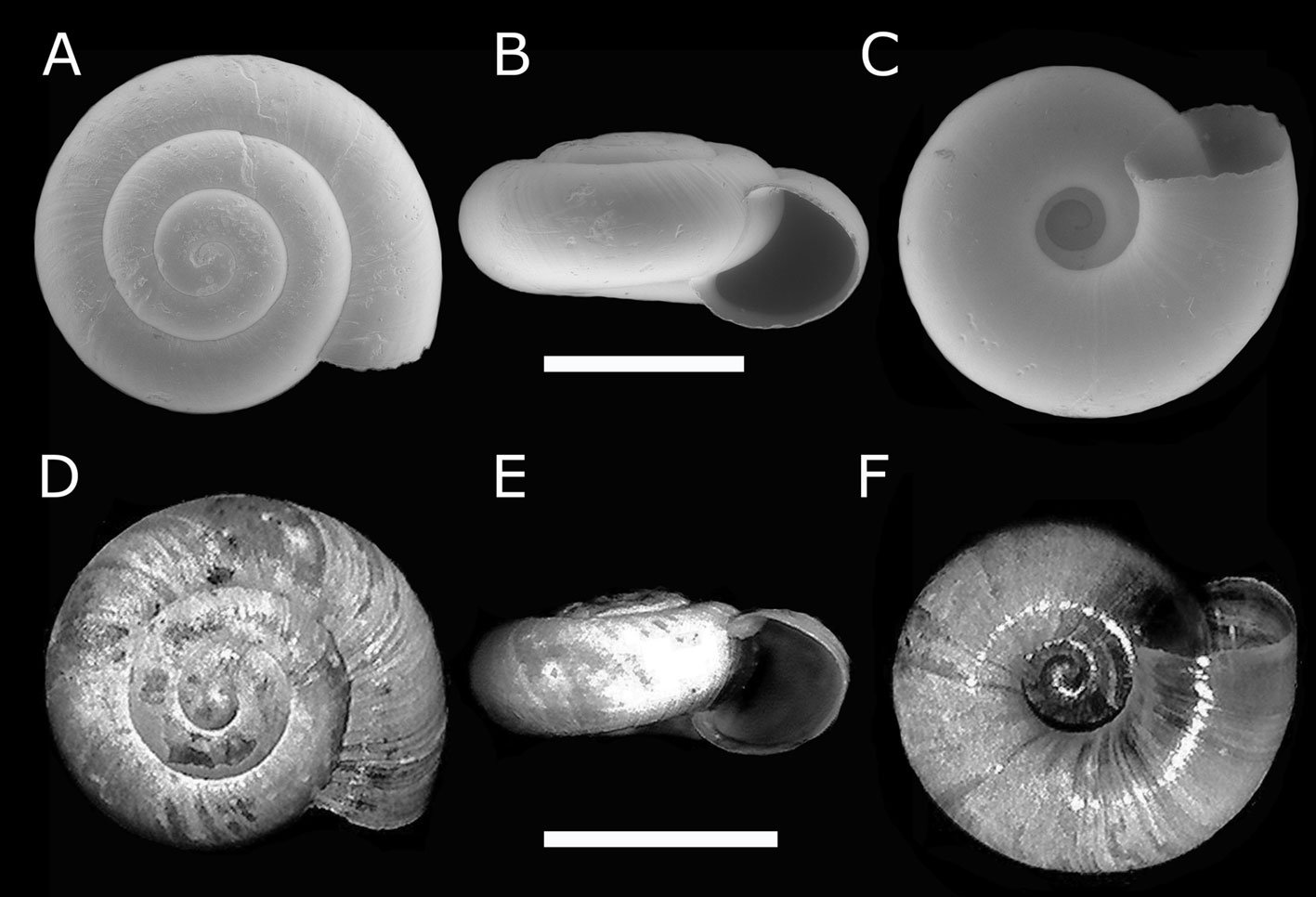
Vallonia species are similar in size and shape (Gerber & Bössneck, 2009; Sterki, 1893). However, although V. pulchella and V. cf. excentrica are morphologically similar, they differ in the shape of the peristome lip, reflected and thickened in V. pulchella, but thin in the present V. excentrica specimens, and in protoconch size, which is larger in the latter species.
As an invasive species, V. pulchella could threaten livestock, particularly sheep and rabbits, as an intermediate host for nematodes such as Protostrongylus boughtoni (Goble & Dougherty, 1943), P. hobmaieri (Schulz et al., 1933), P. rufescens (Leuckart, 1865), and Varestrongylus pneumonicus (Bhalerao, 1932) (Grewal et al., 2003; Samson & Holmes, 1985). Continuous monitoring is essential to assess its spread. Due to its small size, adults, juveniles, and eggs, V. pulchella can be easily transported in soil and potted plants. Its iteroparous mode of reproduction and ability to self-fertilize could further contribute to its dispersal (Kuźnik-Kowalska & Proćków, 2016; Whitney, 1941). Given that most specimens were collected from plant litter and pots, the nursery trade could act as a dispersal vector, as seen with other small invasive snails (Forsyth, 2015).
The small size of Vallonia species may explain the limited number of records, as small non-native snails are often recognized only long after they have arrived (Hutchinson et al., 2014). The new records presented in this study extend the known distribution of V. pulchella in South America and provide the first documented record of V. cf. excentrica in Chile and South America. However, these species are probably present elsewhere in the country, especially in the central region, where human population density is higher.
Table 1
Mann-Whitney U test results between Vallonia pulchella specimens collected in Caldera (northern Chile) and La Florida (central Chile). Shell length (SL), shell height (SH), shell width (SW), aperture height (AH), aperture width (AW), body whorl length (BWL), and the distance from the umbilicus to the last body whorl (UBW). Standard deviation: S.D.
| Shell variable | Caldera (n) | Mean (±S.D.) | La Florida (n) | Mean (±S.D.) | U | p-value |
| SL | 14 | 2.3 (± 0.2) | 13 | 2.2 (± 0.1) | 72.0 | 0.3549 |
| SH | 14 | 1.8 (± 0.1) | 13 | 1.8 (± 0.1) | 87.5 | 0.8736 |
| SW | 14 | 1.1 (± 0.1) | 13 | 1.0 (± 0.1) | 79.0 | 0.5483 |
| AH | 14 | 1.0 (± 0.1) | 13 | 1.0 (± 0.1) | 79.0 | 0.5358 |
| AW | 14 | 1.0 (± 0.1) | 13 | 1.0 (± 0.1) | 75 | 0.4097 |
| UBW | 14 | 1.3 (± 0.1) | 13 | 1.2 (± 0.1) | 73 | 0.3453 |
It is also important to note that, although V. pulchella and V. cf.excentrica have been considered conspecific by some authors (e.g., Sterki, 1893), our study demonstrates that they are distinct species, based on clear morphological differences, particularly in the form of the lip and protoconch. Nevertheless, a comprehensive and integrative taxonomic revision of both species is still needed to fully resolve their relationship.
Acknowledgments
We thank Cristian Suárez for assistance with the SEM observations. We also thank FONDEQUIP Program (No. EQM-140088) and the anonymous reviewers. JFA also acknowledges the ANID doctoral fellowship 21180344, which supported the first 2 years of his doctoral studies.
References
Adams, L. E. (1906). Vallonia costata + excentrica. Journal of Conchology, 11, 364–365.
Alonso, Á., Collado, G. A., Gérard, C., Levri, E. P., Salvador, R. B., & Castro-Díez, P. (2025). Effects of the invasive aquatic snail Potamopyrgus antipodarum (Gray, 1853) on ecosystem properties and services. Hydrobiologia, 852, 1339–1357. https://doi.org/10.1007/s10750-022-05116-z
Altaba, C. R. (2015). Once a land of big wild rivers: specialism is context-dependent for riparian snails (Pulmonata: Valloniidae) in central Europe. Biological Journal of the Linnean Society, 115, 826–841. https://doi.org/10.1111/bij.12546
Araya, J. F. (2015). Current status of the non-non-native molluscs in Chile, with the first record of Otala punctata (Müller, 1774) (Gastropoda, Helicidae) in the country and new records for Cornu aspersum (Müller, 1774) and Deroceras laeve (Müller, 1774). Journal of Natural History, 49, 1731–1761. https://doi.org/10.1080/00222933.2015.1006703
Araya, J. F. (2016). On some land snails (Mollusca: Gastropoda) of Los Molles, central Chile. Revista Mexicana de Biodiversidad, 87, 1365–1368. https://doi.org/10.1016/j.rmb.2016.10.002
Araya, J. F., & Aliaga, J. A. (2015). A new species of Lilloiconcha Weyrauch,1965 (Pulmonata: Charopidae) from central Chile. Zootaxa, 4007, 295–297. https://doi.org/10.11646/zootaxa.4007.2.13
Barker, G. M. (1999). Naturalised terrestrial Stylommato-phora (Mollusca: Gastropoda). Fauna of New Zealand,
38, 1–253. https://doi.org/10.7931/J2/FNZ.38
Boycott, A. E. (1934). The habitats of land Mollusca in Britain. Journal of Ecology, 22, 1–38. https://doi.org/10.2307/2256094
Burch, J. B., & Jung, Y. (1988). Land snails of the University of Michigan Biological Station area. Walkerana, 3, 1–177.
Cádiz, F. J., & Gallardo, C. S. (2007). Arion intermedius (Gastropoda: Stylommatophora); first record of this introduced slug in Chile, with notes on its anatomy and natural history. Revista Chilena de Historia Natural, 80, 99–108.
Cádiz, F. J., Cádiz, D. G., & Grau, J. H. (2013). An invasive predatory snail Oxychilus alliarius (Miller, 1822) (Stylommatophora: Zonitidae) threatens the native malacofauna of continental Chile: a morphological and molecular confirmation. Studies on Neotropical Fauna and Environment,48, 119–124. https://doi.org/10.1080/01650521.2013.843910
Čejka, T., & Hamerlik, L. (2009). Land snails as indicators of soil humidity in Danubian woodland (SW Slovakia). Polish Journal of Ecology, 57, 741–747.
Collado, G. A. (2014). Out of New Zealand: molecular identification of the highly invasive freshwater mollusk Potamopyrgus antipodarum (Gray, 1843) in South America. Zoological Studies, 53, 70. https://doi.org/10.1186/s40555-014-0070-y
Collado, G. A. (2017). Unraveling cryptic invasion of a fresh-water snail in Chile based on molecular and morphological data. Biodiversity and Conservation,26, 567–578. https://doi.org/10.1007/s10531-016-1255-y
Collado, G. A., Cristina, D., Darrigran, G., & Alonso Á. (2025). Attributes and effects of the invasive air-breathing freshwater snail Physa acuta on ecosystem properties and services. Marine and Freshwater Research, 76, MF25023. https://doi.org/10.1071/MF25023
Darrigran, G., Agudo-Padrón, I., Baez, P., Belz, C., Cardoso, F., Carranza, A. et al. (2020). Non-native mollusks throughout South America: emergent patterns in an understudied continent. Biological Invasions, 22, 853–871. https://doi.org/10.1007/s10530-019-02178-4
Forsyth, R. G. (2015). First record of Carychium minimum Müller, 1774 in New Brunswick, Canada (Mollusca: Gastropoda: Ellobioidea). Check List, 11, 1511. https://doi.org/10.15560/11.1.1511
Gerber, J. (1996). Revision der Gattung Vallonia Risso, 1826 (Mollusca: Gastropoda: Valloniidae). Schriften zur Malakozoologie aus dem Haus der Natur-Cismar, 8, 1–227.
Gerber, J., & Bössneck, U. (2009). The genus Vallonia in Nepal: (Gastropoda: Pulmonata: Valloniidae). Archiv für Molluskenkunde, 138, 43–52. https://doi.org/10.1127/arch.moll/0003-9284/138/043-052
GBIF (2024). Global Biodiversity Information Facility. Retrieved November 10, 2024 from: https://www.gbif.org/es/species/2296010
Grewal, P. S., Grewal, S. K., Tan, L., & Adams, B. J. (2003). Parasitism of molluscs by nematodes: types of associations and evolutionary trends. Journal of Nematology, 35, 146–156.
Hammer, Ø., Harper, D. A. T., & Ryan, P. D. (2001). PAST: paleontological statistics software package for education and data analysis. Palaeontologia Electronica, 4, 9.
Herbert, D. G. (2010). The introduced terrestrial Mollusca of South Africa. SANBI Biodiversity Series 15. Pretoria: South African National Biodiversity Institute.
Hermida, J., Outeiro, A., & Rodríguez, T. (1993). Aspectos ecológicos de Vallonia pulchella (Muller, 1774) (Gastropoda, Pulmonata). Nova Acta Científica Compostelana (Bioloxía), 4, 129–135.
Hotopp, K. P., Pearce, T. A., Nekola, J. C., Slapcinsky, J., Dourson, D. C., Winslow, M. et al. (2013). Land snails and slugs of the Mid-Atlantic and Northeastern United States. Pittsburgh, PA: Carnegie Museum of Natural History. Retrieved November 10, 2024 from: https://www.carnegiemnh.org/science/mollusks/index.html
Hubendick, B. (1950). The validity of Vallonia excentrica Sterki. Proceedings of the Malacological Society of London, 28, 75–78. https://doi.org/10.1093/oxfordjournals.mollus.a064569
Hutchinson, J., Reise, H., & Robinson, D. (2014). A biography of an invasive terrestrial slug: the spread, distribution and habitat of Deroceras invadens. NeoBiota, 23, 17–64. https://doi.org/10.3897/neobiota.23.7745
Kirch, P., Christensen, C., & Steadman, D. (2009). Subfossil land snails from Easter Island, including Hotumatua anakenana, new genus and species (Pulmonata: Achatinellidae). Pacific Science,63, 105–122. https://doi.org/10.2984/15346188(2009)63[105:SLSFEI]2.0.CO;2
Koralewska-Batura, E., & Błoszyk, J. (2007). Stability of malacocoenoses in an ash-elm forest based on two-year observations. Folia Malacologica, 15, 175–180. https://doi.org/10.12657/folmal.015.015
Korte, A., & Armbruster, G. F. J. (2003). Apomorphic and plesiomorphic ITS-1 rDNA patterns in morphologically similar snails (Stylommatophora: Vallonia), with estimates of divergence time. Journal of Zoology, 260, 275–283. https://doi.org/10.1017/S0952836903003741
Kuźnik-Kowalska, E., & Proćków, M. (2016). Reproductive biology and growth of two Vallonia species in laboratory conditions (Gastropoda: Eupulmonata: Valloniidae). Folia Malacologica, 24, 265–273. https://doi.org/10.12657/folmal.024.022
Lataste, F. (1896). L’ Helix pulchella dans les vignes de Linderos. Santiago: Actes de la Societé Scientifique du Chili. Tome VI.
Letelier, S., Ramos, A., & Huaquín, L. (2007). Moluscos dulceacuícolas exóticos en Chile. Revista Mexicana de Biodiversidad, 78, 9–13. https://doi.org/10.22201/ib.20078706e.2007.002.301
Lowe, S., Browne, M. & Boudlejas, S. (2000). 100 of the world’s worst invasive alien species. A selection from the Global Invasive Species Database. The Invasive Species Specialist Group (ISSG), a specialist group of the Species Survival Commission (SSC) of the World Conservation Union (IUCN), Auckland, New Zealand.
Metcalf, A. L. (1984). Distribution of land snails of the San Andres and Organ Mountains, Southern New Mexico. The Southwestern Naturalist, 29, 35–44. https://doi.org/10.2307/3670767
Miquel, S. E., & Araya, J. F. (2013). A new Charopidae from Chile and Argentina, Stephacharopa calderaensis n. gen. and n. sp., with remarks on the taxonomy of the genus Stephadiscus Hylton Scott 1981 (Mollusca: Gastropoda Pulmonata). Archiv für Molluskenkunde, 142, 227–235. https://doi.org/10.1127/arch.moll/1869-0963/142/227-235
Miquel, S. E., & Araya, J. F. (2015). New records of terrestrial molluscs of the Juan Fernández Archipelago (Chile), with the description of a new genus and species of Charopidae (Gastropoda Stylommatophora). Archiv für Molluskenkunde, 144, 155–167. https://doi.org/10.1127/arch.moll/1869-0963/144/155-167
Mitra, S. C., Dey, A., & Ramakrishna. (2005). Pictorial handbook. Indian land snails. Kolkata: Zoological Survey of India.
Nekola, J. C. (2002). Large-scale terrestrial gastropod community composition patterns in the Great Lakes
region of North America. Diversity and Distributions, 9, 55–71. https://doi.org/10.1046/j.1472-4642.2003.00165.x
Philippi, R. A. (1885). Zoolojía. Sobre los animales introducidos en Chile desde su conquista por los españoles. Anales de la Universidad de Chile, 67, 319–335.
PNUD (Programa de las Naciones Unidas para el Desarrollo). (2014). Moluscos invasores de Chile. Documento del Taller Moluscos exóticos invasores en Chile: efectos en la biodiversidad. Santiago de Chile: Programa de las Naciones Unidas para el Desarrollo.
Porter, C. (1926). Los estudios malacológicos en Chile. Revista Chilena de Historia Natural, 30, 26–39.
Robinson, D. G. (1999). Alien invasions: the effects of the global economy on non-marine gastropod introductions into the United States. Malacologia, 41, 413–438.
Roll, U., Dayan, T., Simberloff, D., & Mienis, H. K. (2009). Non-indigenous land and freshwater gastropods in Israel. Biological Invasions, 11, 1963–1972. https://doi.org/10.1007/s10530-008-9373-4
Rumi, A., Sánchez, J., & Ferrando, N. S. (2010). Theba pisana (Müller, 1774) (Gastropoda, Helicidae) and other alien land molluscs species in Argentina. Biological Invasions, 12, 2985–2990. https://doi.org/10.1007/s10530-010-9715-x
Samson, J., & Holmes, J. C. (1985). The effect of temperature on rates of development of larval Protostrongylus spp. (Nematoda: Metastrongyloidea) from bighorn sheep, Ovis canadensis canadensis, in the snail Vallonia pulchella. Canadian Journal of Zoology, 63, 1445–1448. https://doi.org/10.1139/z85-215
Schembri, P. J., & Lanfranco, E. (1996). Introduced species in the Maltese Islands. In A. E. Baldacchino, & A. Pizzuto (Eds.), Introduction of alien species of flora and fauna. Proceedings of a seminar held at Qawra, Malta (pp. 29–54). Floriana, Malta: Environment Protection Department.
Stanisic, J. (1998). Family Valloniidae. In P. L. Beesley, G. J. B. Ross, & A. Wells (Eds.), Mollusca: the southern synthesis. Part B. Fauna of Australia, Vol. 5 (pp. 1085–1086). Melbourne: CSIRO Publishing.
Sterki, V. (1893). Observations on Vallonia. Proceedings of the Academy of Natural Sciences of Philadelphia, 45, 234–279.
Sylvester, F., & Sardiña, P. (2015). Relationships of Limnoperna fortunei with benthic animals. In D. Boltovskoy (Ed.), Limnoperna fortunei: the ecology, distribution and control of a swiftly spreading invasive fouling mussel (pp. 191–210). Cham: Springer International Publishing.
Valdovinos-Zarges, C. (1999). Biodiversidad de moluscos chilenos: base de datos taxonómica y distribucional. Gayana, 63, 111–164.
Vaughn, C. C. (2018). Ecosystem services provided by fresh-water mussels. Hydrobiologia, 810, 15–27. https://doi.org/10.1007/s10750-017-3139-x
Virgillito, M., & Miquel, S. E. (2013). New records of exotic land snails and slugs in Argentina. Revista del Museo Argentino de Ciencias Naturales, Nueva Serie, 15, 295–303.
Whitney, M. E. (1941). The hermaphrodite gland and germ cells of Vallonia pulchella Müll. Michigan Academy of Science, 26, 311–338.