Revisión de los Elmidae (Coleoptera: Dryopoidea) de Chile
Marcos Ferrú a, b, *, William Shepard c
a Universidad Católica de la Santísima Concepción, Alonso de Ribera 2850, Concepción, Chile
b Centro de Muestreo y Análisis Biológico, Luis Acevedo 456 Chiguayante Bíobío-Concepción, Chile
c University of California, Essig Museum of Entomology, 1101 Valley Life Sciences Bldg., Berkeley, California, 94720 USA
*Corresponding author: marcos.ferru@gmail.com (M. Ferrú)
Received: 12 August 2025; accepted: 17 December 2025
Abstract
The family Elmidae is one of several families of aquatic beetles in the superfamily Dryopoidea. The Elmidae occur throughout the world (except Antarctica), with approximately 150 genera and 1,500 species. Elmidae have been studied as part of the taxa used to assess water quality. There are no keys to identify larvae of Chilean species, and to identify adults it is necessary to remove the male genitalia. Research carried out in Chile has included Elmidae in descriptions, lists and reviews of aquatic beetles in general. Until now, there has been no review dedicated entirely to Chilean Elmidae. In Chile, after this review there are 2 subfamilies, 7 genera and 18 species currently recognized. The species Austrelmis woytkowskii (Hinton), which has been cited in error for Chile, is eliminated from the Chilean list and the species Austrelmis sp. 1 is included, as is Austrolimnius elatus Hinton. Expanded distributions of some species are included.
Keywords: Elmidae; Elminae; Larainae; Diversity; Distribution
Resumen
La familia Elmidae es una de varias familias de escarabajos acuáticos perteneciente a la superfamilia Dryopoidea. Los Elmidae se encuentran en todo el mundo (excepto en la Antártida), con aproximadamente 150 géneros y 1,500 especies. Los Elmidae han sido estudiados como parte de los taxones utilizados para evaluar la calidad del agua. No existen claves para identificar larvas de las especies chilenas y para identificar adultos es necesario extraer los genitales de los machos. Investigaciones realizadas en Chile han incluido a los Elmidae en descripciones, listas y revisiones de escarabajos acuáticos en general. Hasta ahora, no había una revisión dedicada completamente a los Elmidae chilenos. En Chile, después de esta revisión hay 2 subfamilias, 7 géneros y 18 especies actualmente reconocidas. La especie Austrelmis woytkowskii (Hinton), que ha sido citada por error para Chile se elimina de la lista chilena y se incluye la especie Austrelmis sp. 1, al igual que Austrolimnius elatus Hinton. Se incluyen la ampliación de distribuciones de algunas especies.
Palabras clave: Elmidae; Elminae; Larainae; Diversidad; Distribución
Introduction
The family Elmidae (Coleoptera: Dryopoidea) colloquially known as riffle beetles is a group of globally distributed beetles (except for Antarctica) found in clean, permanent waters. Elmidae is divided into 2 subfamilies (Elminae and Larainae), with approximately 150 genera and 1,500 species Jäch et al. (2016) and more taxa are described every year. In Chile, the Elmidae have 2 large faunal divisions. This is a fauna with continental characteristics that shares genera, such as Heterelmis Sharp and Microcylloepus Hinton, with other South American countries. The other faunal area is the Southern Cone, which contains genera shared with New Zealand and Australia, or has genera only shared with Argentina, as is the case of the genera Hydora Anon. [Broun], Luchoelmis Spangler and Staines and Stethelmis Hinton. The different species of Elmidae have similar life cycles. Eggs are laid on submerged substrates such as stones or wood, with hatching occurring in approximately 2 weeks. Pupation lasts about 2 weeks. After about 2 weeks of pupation, the adults emerge, some fly to find new habitats before re-entering the water, while others just re-enter the stream from which they came. Adults can live approximately 10 years (Brown, 1974). Larvae and adults of Elmidae often co-occur in appropriate microhabitats, such as sand, gravel, leaf bundles, aquatic macrophytes, wood, and rocks in clear water, etc. The main requirement for Elmidae is uncontaminated water with high levels of dissolved oxygen, up to moderately polluted environments González-Córdoba et al. (2020). Most Elmidae consume fine particulate organic matter that they browse from the surface or find in the interstitial spaces between gravel particles. This material is usually algae, fungal hyphae, and crushed leaves or wood. The few species that feed on decaying and submerged wood take several years to develop due to the low levels of nutrients wood presents. Reviews of elmid biology are in Brown (1987) and Elliott (2008). Elmidae breathe with tracheal gills (larvae) or plastrons (adults). Both systems require relatively high levels of dissolved oxygen (Brown, 1987; Kodada et al., 2016). Elmidae have been found to be very susceptible to contaminants such as surfactants in soap, petroleum products, accordiong to Brown (1984), Elliott (2008), Lafuente et al. (2019) and anything that removes oxygen from the water. Therefore, their presence in a stream is a sign of uncontaminated water during the lifespan of the Elmidae. Thus, Elmidae are often targeted during water quality assessment programs, along with Ephemeroptera, Plecoptera and Trichoptera, all of which are also susceptible to contaminants (Fierro et al., 2012). When these studies are carried out, it is very important that the sampling considers the microhabitat requirements of the different species. The new global catalog of Elmidae has helped to understand generic and species distributions (Jäch et al., 2016). An identification key for adult genera of South American Elmidae has been developed by Manzo (2005) and an identification key for most larvae of South American Elmidae genera has been developed by Manzo and Archangelsky (2008), Pasos et al. (2018). These have been important scientific advances since Elmidae are an integral part of the ecology of streams and rivers and are often collected during sampling (Fierro et al., 2012). None the less despite its importance there are no keys to identify the larvae to species, and generally to identify the adults it is necessary to extract the male genitalia. The first Elmidae described in Chile are found in 2 articles by Germain (1854, 1892). This was followed by articles published by Champion (1918), Hinton (1941, 1945), Janssens (1957), Spangler and Brown (1981) and Spangler and Staines (2002). Some of the species described in these papers are now found in different genera. Other papers dealing with Chilean dryopoid beetles include authors like Lataste (1897 a, b), Dajos (1974), Solervicens (1974), Shepard (2016) and Shepard and Barr (2023). Nonetheless, the information is scattered and Elmidae continues to be a relatively unknown group. This study will facilitate further efforts on Chilean Elmidae by bringing together information and providing new distribution data.
Materials and methods
The collection of elmid larvae and adults usually involves aquatic nets that are placed downstream of the sampling area where the substrates are disturbed. Elmidae then drifts in the current and into the net. The specimens are collected from the net and preserved in 70% or 95% ethyl alcohol. Some of the net contents collected by WDS were entirely preserved in 95% alcohol bottles and then processed in the laboratory. This makes it easier to collect smaller adults (such as Austrolimnius) and younger larvae. After collecting at each site, ecological characteristics were recorded on field data sheets. Collection locality maps were produced with QGIS and used all known localities, published and new. Locality data are presented primarily as they occur on the specimen labels. A forward slash “/” indicates separate lines in a label and a double forward slash “//” indicates separate labels. Information included by “( )” is below the locality labels. Additional data provided here, but not in the labels, is indicated by brackets “[ ]”. The “WDS-A- ____” numbers refer to WDS data sheets. Collection locality maps were made using ArcGIS and used all known localities, published and new. Additional records of the specimens were obtained from the collections: National Museum of History of Chile (Santiago) and the Museum of the Department of Zoology of the University of Concepción, as well as from published literature on the Elmidae. Abbreviations cited in the text include the following: National Museum of Natural History, Washington, DC, USA (USNM); Natural History Museum, London, England (NHML); Royal Belgian Institute of Natural Sciences, Brusseels, Belgium (RBINS); William D. Shepard (WDS).
Results
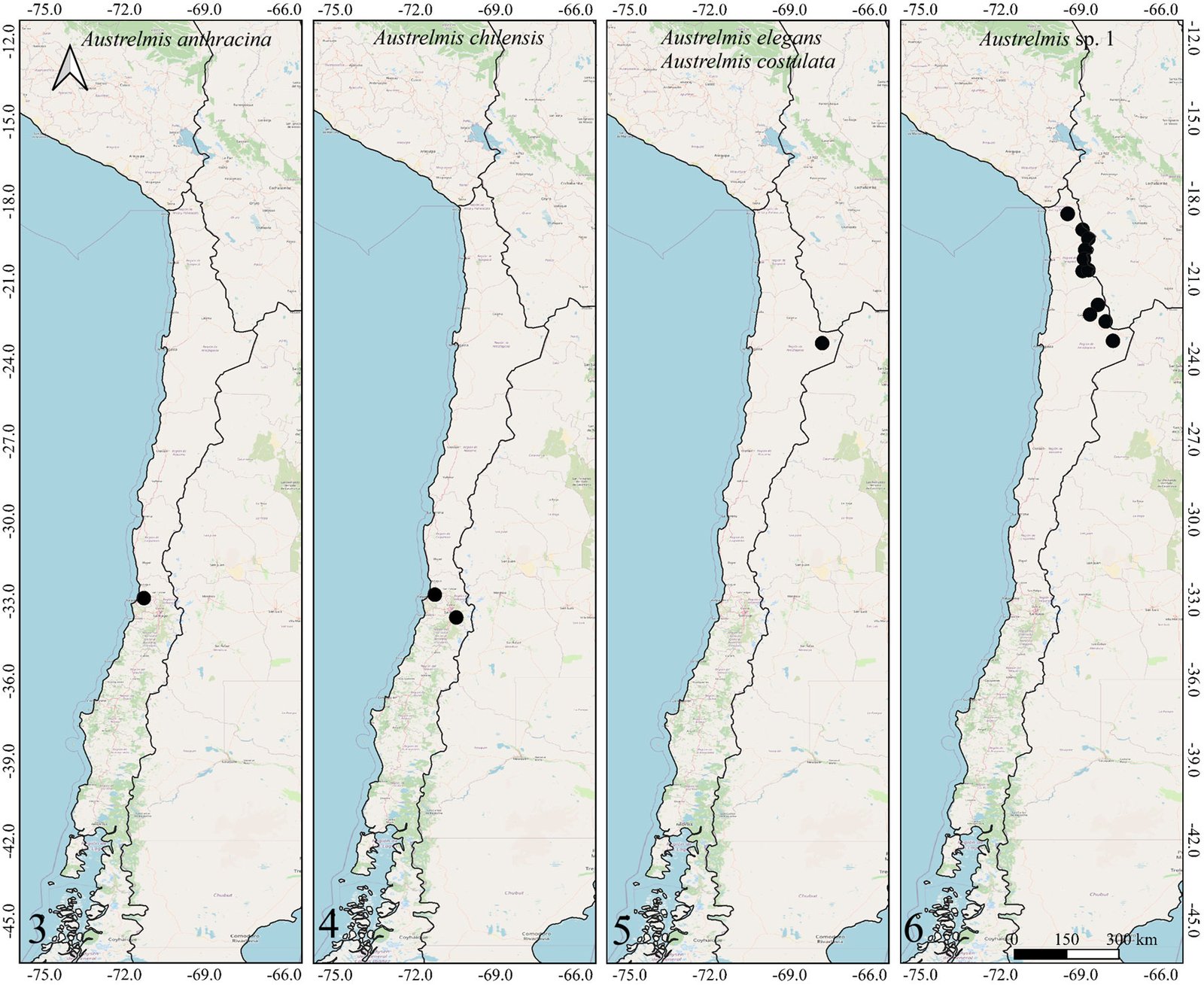
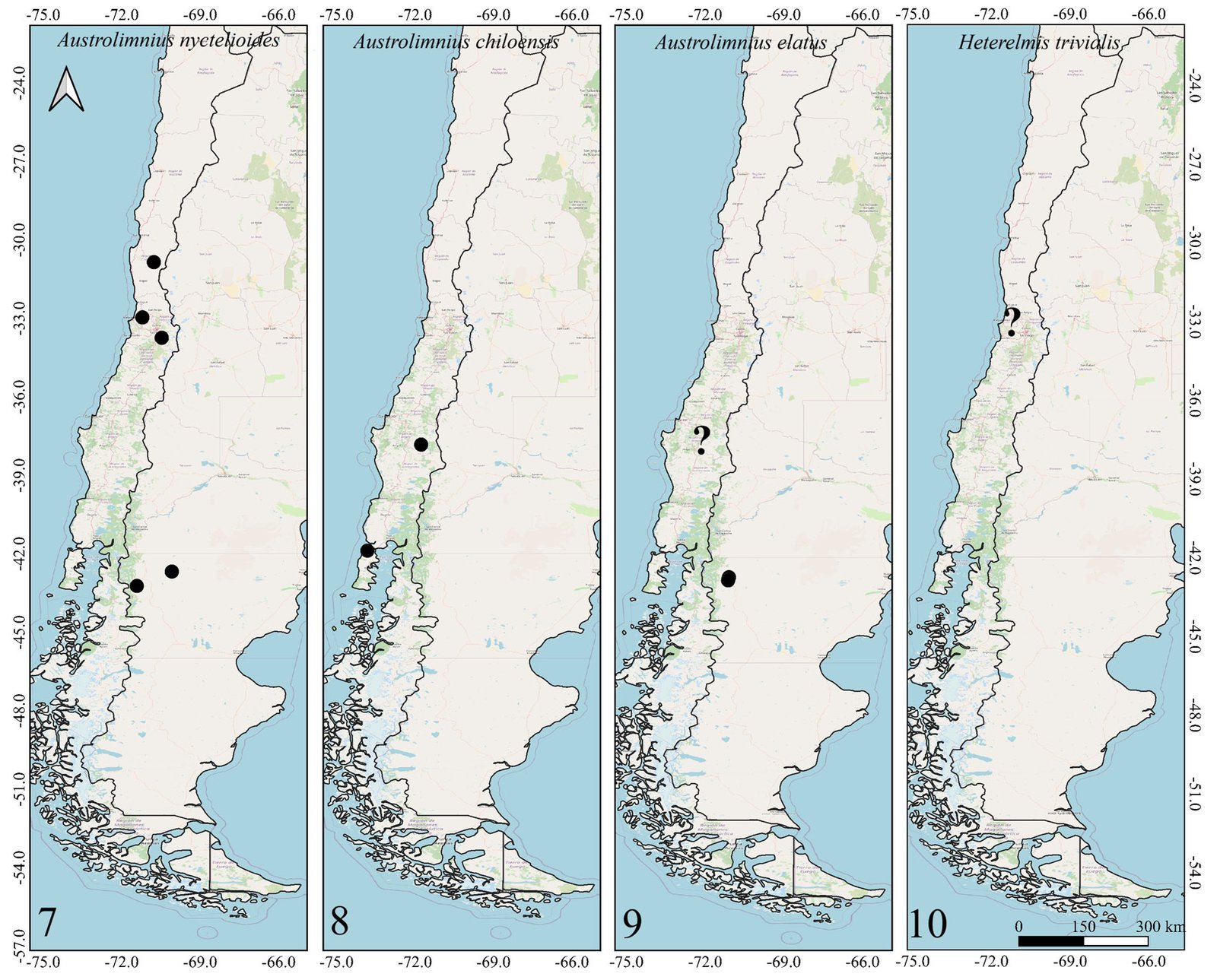
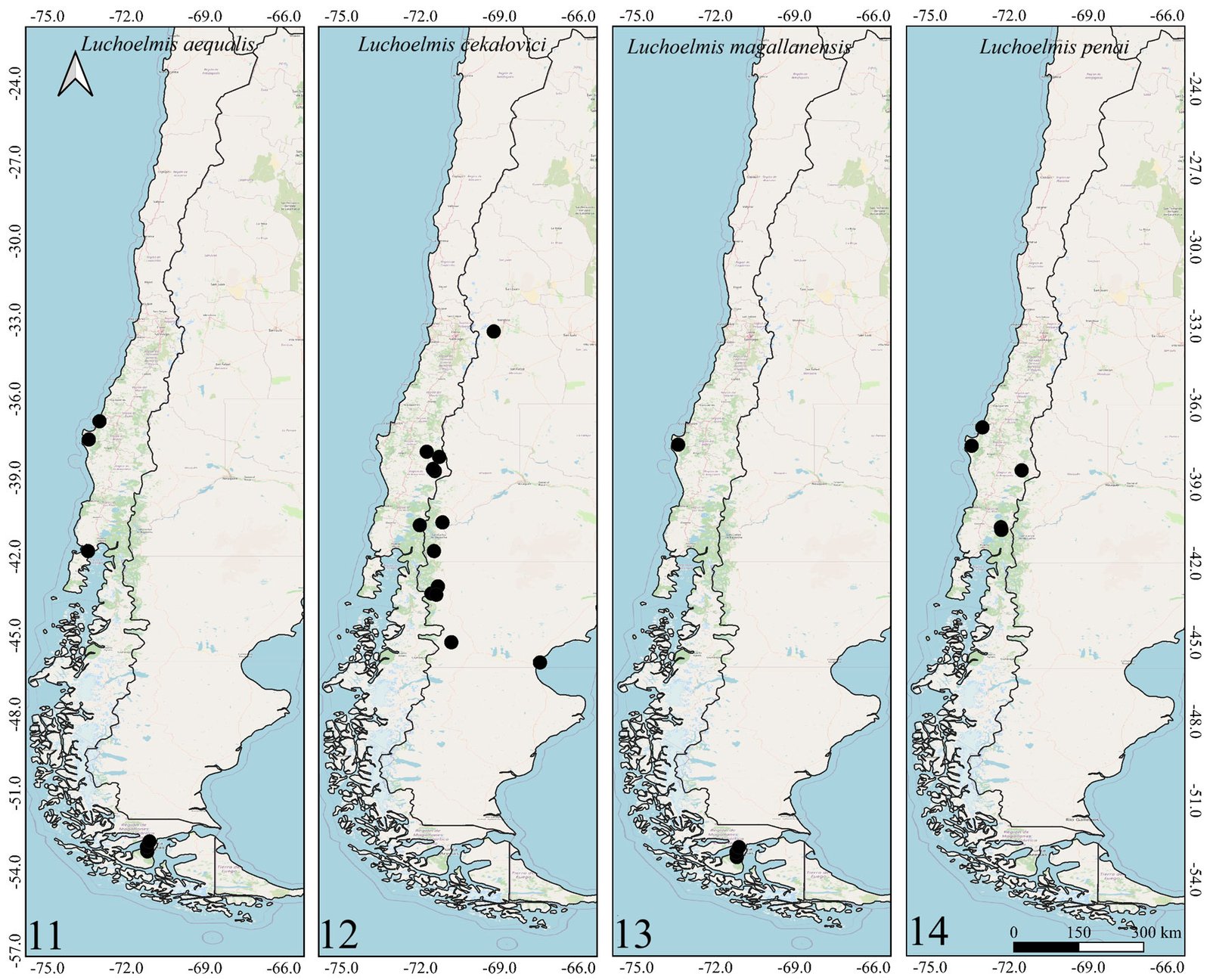
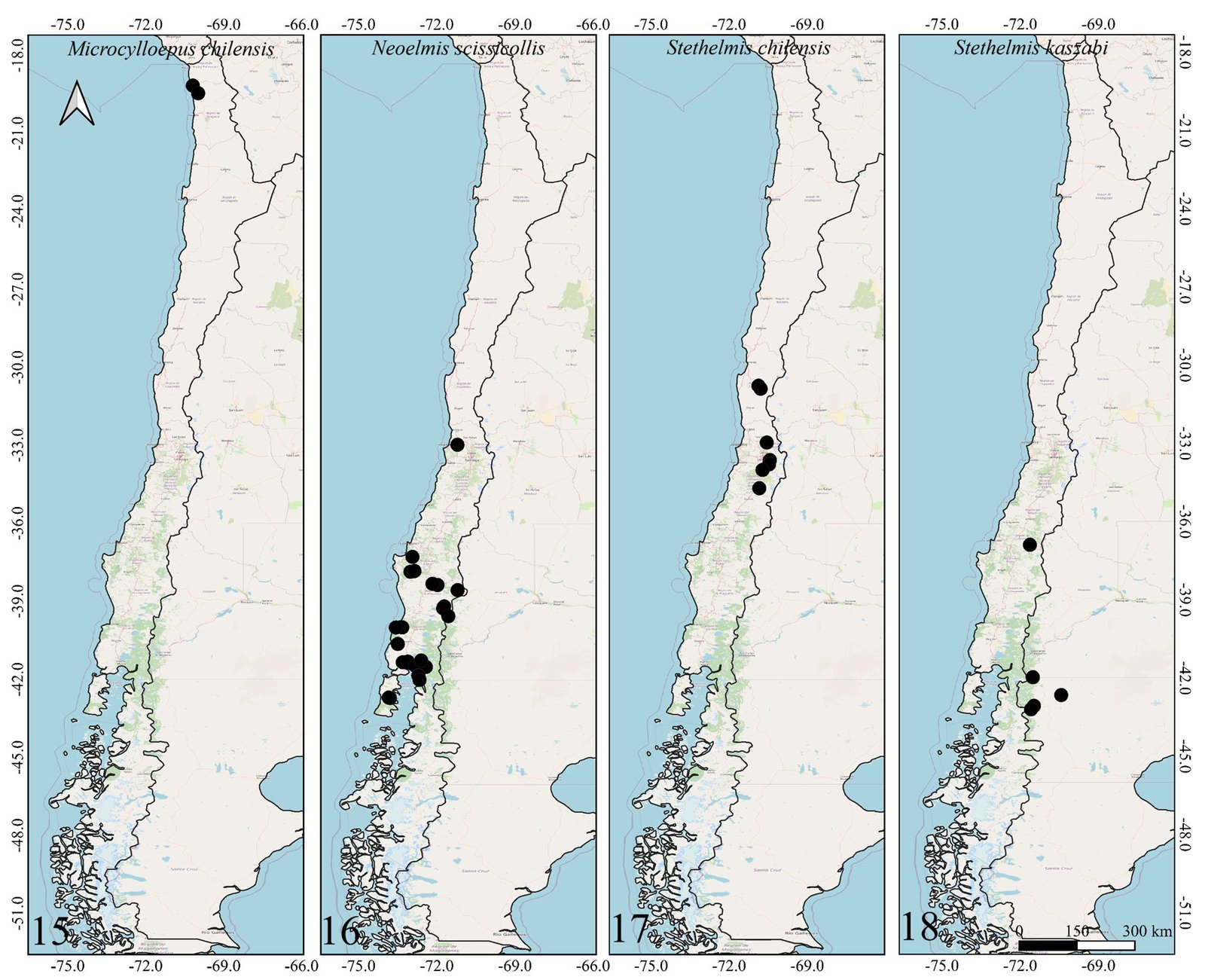
As a result of this work, we can consider the diversity of Elmidae to include 18 species, 7 genera and 2 subfamilies. The species Austrelmis woytkowskii (Hinton, 1937) is eliminated because the analysis of samples collected from various streams in northern Chile shows no evidence of its presence. The species Heterelmis trivialis (Germain, 1892) is also eliminated. One of the reasons for this decision is the loss of the type material. Another reason is the fragility of the stream where it was cited; this stream is small and urbanized and tends to have a considerable decrease in its water flow in summer. This species was searched for at the type locality on 2 occasions, thus corroborating its presence in Chile, but it has not been found or reported since its description. In these samplings, the other species described by Germain and cited for the area were found. In this work, the species Austrolimnius elatus, eliminated by Elgueta and Arriagada (1989), is reestablished; this is supported by the type material found. Finally, it is important to mention that despite the limited progress in species richness shown in this work, there are numerous new localities for the different species present in Chile. A list of the Elmidae known from Chile is provided (Table 1).
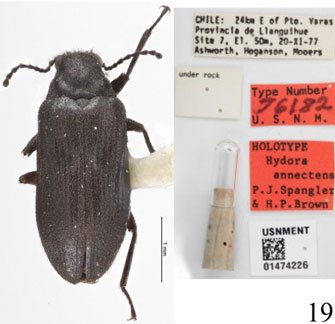
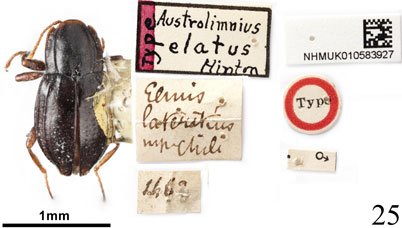
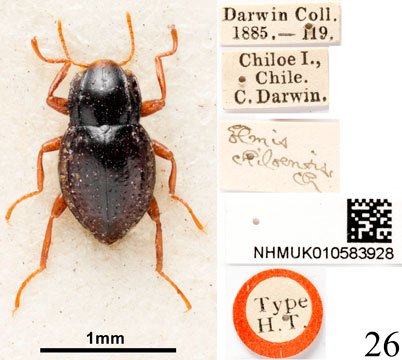
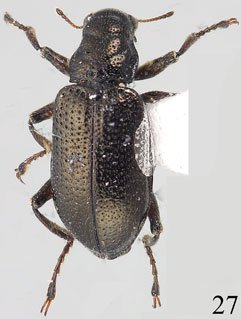
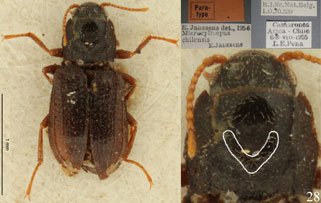
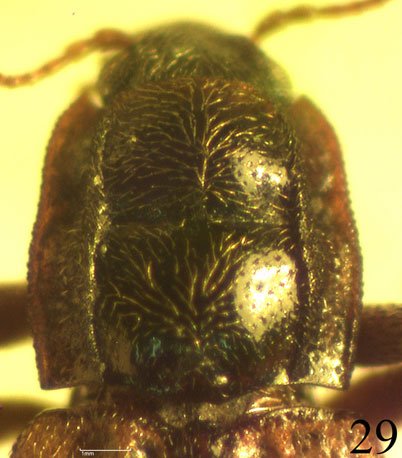
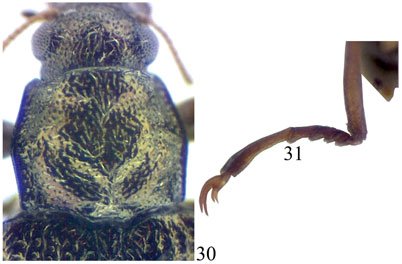
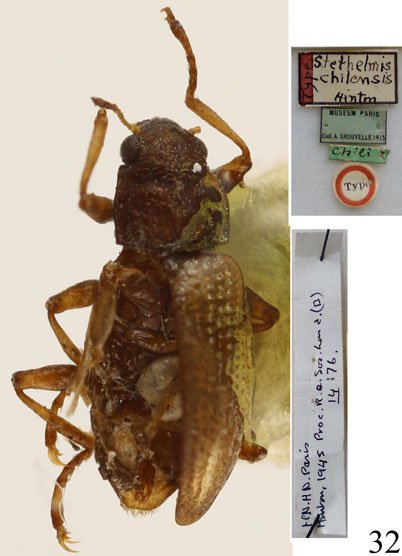
Key to the genera of adult Elmidae known from Chile extracted from Manzo and Archangelsky (2008) and Passos et al. (2018). 1 Body densely pubescent, without plastron; transverse procoxae, with exposed trochantins; adults fly easily from water or net — Larainae Hydora (Fig. 19). 1’ Body not pubescent, with plastron; procoxa globosa, with unexposed trochantins; adults do not fly from water or net — Elminae (2). 2 Thorax without sublateral carinae (Figs. 27, 30, 32) — 3. 2’ Thorax with sublateral carinae — 4. 3 Tarsal claws with basal teeth (Fig. 31) — Stethelmis. 3’ Tarsal claws without basal teeth — Luchoelmis. 4 Epipleura with 1 or 2 longitudinal lines of granules — Austrolimnius. 4’ Epipleura without longitudinal lines of granules — 5. 5 Pronotum with complete deep transverse groove (Fig. 29) — Neoelmis. 5’ Pronotum without deep transverse groove complete — 6. 6 Pronotum with circular anterior depression, with V-shaped carina in ½ basal, with sublateral elevation (Fig. 28) — Microcylloepus. 6’ Pronotum without depressions; sublateral carina restricted to anterior half (Figs. 25, 26) — Austrelmis.
| # | Species | Original generic placement | Author | Endemic |
|---|---|---|---|---|
| Subfamily Elminae Curtis, 1830 | ||||
| 1 | Austrelmis anthracina | Elmis | (Germain, 1892) | Yes |
| 2 | Austrelmis chilensis | Elmis | (Germain, 1854) | Yes |
| 3 | Austrelmis costulata | Macrelmis | (Janssens, 1957) | Yes |
| 4 | Austrelmis elegans | Macrelmis | (Hinton, 1937) | No |
| 5 | Austrelmis sp. | Macrelmis | (Janssens, 1957) | Yes |
| 6 | Austrolimnius chiloensis | Elmis | (Champion, 1918) | Yes |
| 7 | Austrolimnius elatus | Austrolimnius | Hinton, 1941 | No |
| 8 | Austrolimnius nycteloides | Elmis | (Germain, 1854) | No |
| 9 | Luchoelmis aequalis | Luchoelmis | Spangler & Staines 2002 | Yes |
| 10 | Luchoelmis cekalovici | Luchoelmis | Spangler & Staines 2002 | No |
| 11 | Luchoelmis magallanensis | Luchoelmis | Spangler & Staines 2002 | Yes |
| 12 | Luchoelmis penai | Luchoelmis | Spangler & Staines 2002 | Yes |
| 13 | Microcylloepus chilensis | Microcylloepus | Janssens, 1957 | Yes |
| 14 | Neoelmis scissicollis | Elmis | (Germain, 1892) | Yes |
| 15 | Stethelmis chilensis | Stethelmis | Hinton 1945 | Yes |
| 16 | Stethelmis kaszabi | Stethelmis | Hinton, 1970 | No |
| Subfamily Larainae LeConte, 1861 | ||||
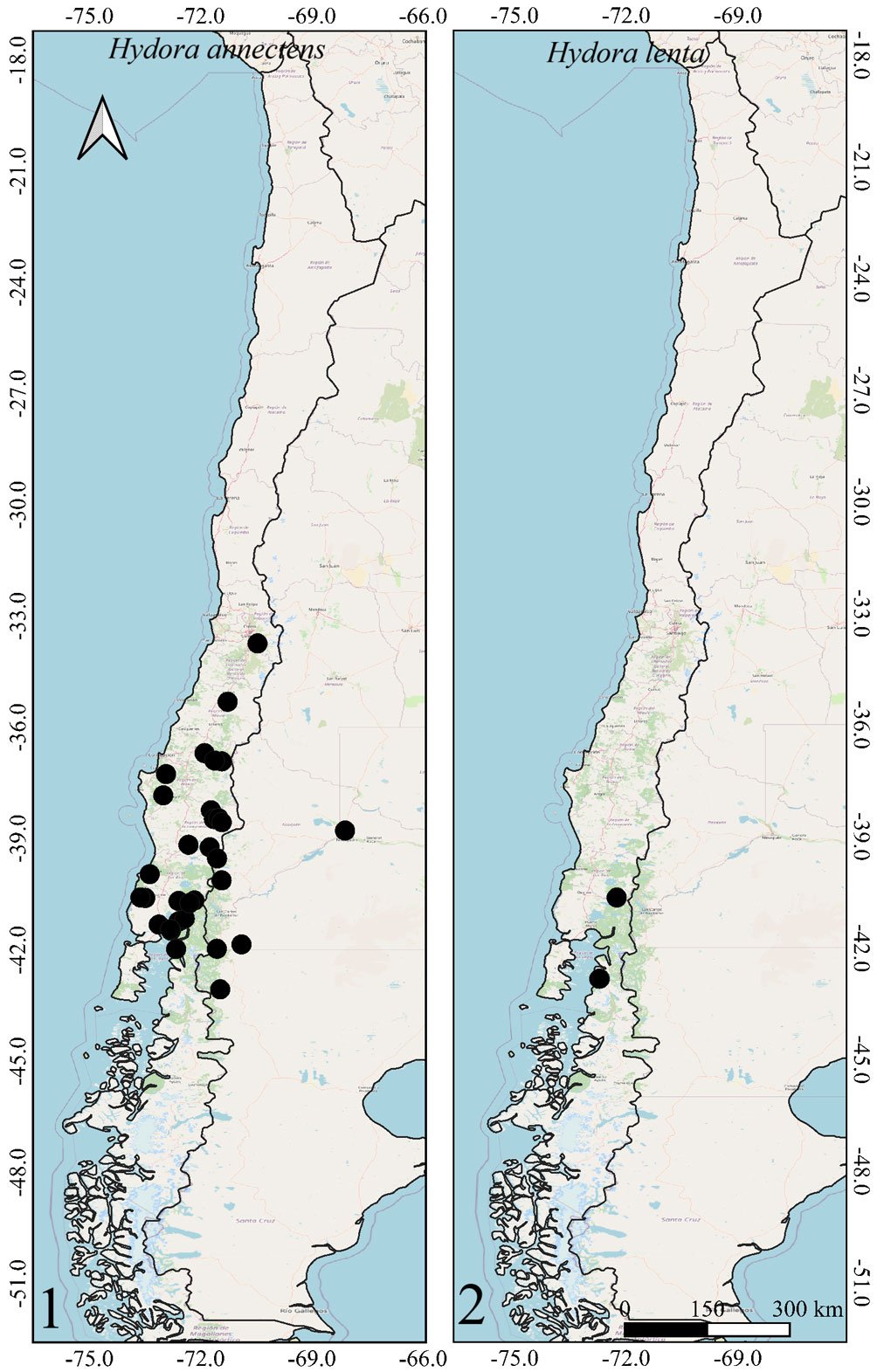
| 17 | Hydora annectens | Hydora | Spangler & Brown, 1981 | No |
| 18 | Hydora lenta | Hydora | Spangler & Brown, 1981 | Yes |
Generic reviews
This section is reproduced from the article PDF; the genus-by-genus accounts (with new distributional records and material examined) are available in full in the linked PDF.
Discussion
The Chilean Elmidae include 2 subfamilies, 7 genera and 17 species. However, many additional species are known but not yet described. Many geographic areas remain unexplored, so additional species are likely to be found. Endemism is relatively high in the Chilean Elmidae, 82.3% (14 of 17 species) of the species are endemic to Chile. The only Chilean Elmidae not endemic to Chile are Austrolimnius elatus, A. nycteloides, and Hydora annectens.
The number of genera and species present in the South American countries on the Pacific slope decreases from north to south (Ecuador to Chile) (Table 2). Partly this is because the northernmost areas are closer to the equator, where temperatures are more favorable to elmid evolution. Also, partly this is due to Ecuador and Peru having areas located on the east front of the Andes near to the Amazon where the evolution of the Elmidae has gone in a different direction (Shepard unpublished data). Chile lacks an Amazonian component.
In Chile, the elmid fauna has been negatively impacted by coastal and Andean orogenies, especially in the north. This is mainly due to the isolation and desertification that characterizes this area (Shepard unpublished data). The only 2 genera present there are Austrelmis and Microcylloepus. Microcylloepus elsewhere has been able to maintain populations in desert environments where small springs or seeps occur, so it is not surprising that it would be found here, while Austrelmis is a very typical inhabitant of high mountain habitats throughout the Andes.
The Southern Cone area of Chile has genera that were thought to be restricted to this area, such as Austrolimnius, Luchoelmis, and Stethelmis. However, Austrolimnius and Stethelmis have now been collected somewhat farther north, Coquimbo in the case of Austrolimnius and Atacama in the case of Stethelmis, nonetheless their diversity remains in the Southern Cone area.
Two collection attempts in the type locality of Heterelmis trivialis failed to find extant populations. It is not known why this population might have disappeared. Likewise, attempts to find populations of Austrelmis woytkowskii were unsuccessful. These findings reinforce the necessity to amplify sampling focused on aquatic coleoptera and Elmidae specifically, in order to determine if these populations are truly extinct or only minimally abundant.
| Country | Area (km²) | Number of genera and species | Reference |
|---|---|---|---|
| Colombia | 916,445 | 31 genera and 65 especies | Hincapié-Montoya, 2023 |
| Ecuador | 276,841 | 19 genera and 59 especies | Monte and Mascani, 2012 |
| Perú | 1,285,216 | 17 genera and 51 especies | Shepard and Chaboo, 2015 |
| Chile | 756,950 | 7 genera and 18 especies | This review |
| Bolivia | 1,098,581 | 12 genera and 33 especies | Manzo and Moya, 2010 |
| Argentina | 2,780,400 | 14 genera and 21 especies | Manzo and Archangelsky, 2014 |
Acknowledgements
We thank all the people who made this work possible: Walter Sielfeld, for the support on the ground and collection of specimens; Mario Elgueta (National Museum of Natural History); Margarita Ruiz de Gamboa (CEMABIO); Pablo Fierro (Universidad del Valdivia) for his help, contribution of copies and ideas; the specialists Verónica Manzo (University of Tucumán, Argentina) and María Passos (Federal University of the State of Rio de Janeiro, Brazil) for their bibliography. And, finally, the Laboratory of Water Quality Bioindicators EULA-Chile, for their contribution in specimens and land. Additionally, we thank the following people for providing photographs of type specimens and labels under their care: Pol Limbourg (RBINS), Keita Matsumoto (NHML) and Charyn Micheli (USNM).
References
Archangelsky, M., & Brand, C. (2014). A new species of Luchoelmis Spangler & Staines (Coleoptera: Elmidae) from Argentina and its probable larva. Zootaxa, 3779, 563–572. https://doi.org/10.11646/zootaxa.3779.5.6
Archangelsky, M., & Manzo, V. (2006). The larva of Hydora annectens Spangler and Brown (Coleoptera: Elmidae, Larainae) and a key to New World Larainae larvae. Zootaxa, 1204, 41–52. https://doi.org/10.11646/zootaxa.1204.1.4
Archangelsky, M., & Manzo, V. (2007). Descripción de las larvas maduras de los géneros Stethelmis Hinton y Luchoelmis Spangler and Staines (Insecta: Coleoptera, Elmidae). Revista del Museo Argentino de Ciencias Naturales, 9, 79–87.
Archangelsky, M., Martínez-Román, N. R., & Manzo, V. (2016). Description of mature larvae of the genus Austrelmis Brown from Argentina (Insecta: Coleoptera, Elmidae). Annales de Limnologie, 52, 343–353. https://doi.org/10.1051/limn/2016024
Artigas, J. (1963). Descripción de la larva de un Psefenido chileno (Coleoptera-Psephenidae). Gayana Zoología, 8, 3–9.
Brown, H. P. (1974). Survival records for elmid beetles, with notes on laboratory rearing of various dryopoids (Coleoptera). Entomological News, 84, 278–284.
Brown, H. P. (1984). Neotropical Dryopoids, III. Major nomenclatural changes affecting Elsianus Sharp and Macrelmis motschulsky, with checklists of species (Coleoptera: Elmidae: Elminae). The Coleopterists Bulletin, 38, 121–129.
Brown, H. P. (1987). Biology of riffle beetles. Annual Review of Entomology, 32, 253–273. https://doi.org/10.1146/annurev.ento.32.1.253
Champion, G. C. (1918). Notes on various South American Coleoptera collected by Charles Darwin during the voyage of the “Beagle” with descriptions of new genera and species. Entomologists’ Monthly Magazine, 54, 43–54.
Dajos, R. (1973). Description du Coléoptere Chiloea chilensis, n. g., n. sp., type d’une nouvelle familie: Chiloeidae. Annals de la Societe Etomologique de France (N. S.), 9, 173–179. https://doi.org/10.1080/21686351.1973.12278133
Elgueta, M., & Arriagada, G. (1989). Estado actual del conocimiento de los coleópteros de Chile (Insecta: Coleoptera). Revista Chilena de Entomología, 17, 5–60.
Elliott, J. M. (2008). The ecology of riffle beetles (Coleoptera: Elmidae). Freshwater Reviews, 1, 189–203. https://doi.org/10.1608/FRJ-1.2.4
Emmerich, D., Manzo, V., & Morelli, E. (2025). Lista comentada y actualizada de los escarabajos acuáticos de la familia Elmidae (Insecta: Coleoptera) de Uruguay. Revista de la Sociedad Entomológica Argentina, 84, e0210. https://doi.org/10.25085/rsea.840210
Ferrú, M., & Elgueta, M. (2011) Lista de coleópteros (Insecta: Coleoptera) de las regiones de Arica y Parinacota y de Tarapacá, Chile. Boletín del Museo Nacional de Historia Natural, Chile, 60, 9–61. https://doi.org/10.54830/bmnhn.v60.2011.178
Fierro, P., Bertrán, C., Mercado, M., Peña-Cortés, F., Tapia, J., Hauenstein, E. et al. (2012). Benthic macroinvertebrate assemblages as indicators of water quality applying a modified biotic index in a spatio-seasonal context in a coastal basin of southern Chile. Revista de Biología Marina y Oceanografia, 47, 23–33. https://doi.org/10.4067/S0718-19572012000100003
Fierro, P., Ferrú, M., & Lara, C. (2020). Effects of forest conversion on the aquatic Coleoptera assemblage in Mediterranean-climate streams. Ecological Indicators, 111, 106043. https://doi.org/10.1016/j.ecolind.2019.106043
Germain, P. (1854). Descripción de 21 especies nuevas de coleópteros de Chile. Anales de la Universidad de Chile, 1854, 324–336.
Germain, P. (1892). Notes sur les coléopteros du Chili. Actes de la Société Scientifique du Chile, 2, 241–261.
González-Córdoba, M., Zúñiga, M. C., Giraldo, L. P., Ramírez, Y. P., & Chará, J. (2020). Sensibilidad de Elmidae (Insecta: Coleoptera) a la perturbación del hábitat y la calidad fisicoquímica del agua en ambientes lóticos de los Andes colombianos. Revista de Biología Tropical, 68, 601–622. https://doi.org/10.15517/rbt.v68i2.36702
Hincapié-Montoya, D. M. (2023). Nuevos registros para Elmidae (Coleoptera: Byrrhoidea) en Colombia. Acta Biológica Colombiana, 28, 345–349. https://doi.org/10.15446/abc.v28n2.103984
Hinton, H. E. (1940). The Percy Sladen Trust Expedition to Lake Titicaca in 1937. VII. The Peruvian and Bolivian species of Macrelmis Motsch. (Coleoptera, Elmidae). The Transactions of the Linnean Society of London (Ser. 3), 1, 117–147.
Hinton, H. E. (1941). A synopsis of the American species of Austrolimnius Carter (Coleoptera, Elmidae). Entomologists’ Monthly Magazine, 77, 156–163.
Hinton, H. E. (1945). Stethelmis chilensis, new genus and species of Elmidae from Chile (Coleoptera). Proceedings of the Royal Entomological Society of London (B), 14, 73–76. https://doi.org/10.1111/j.1365-3113.1945.tb00022.x
Jäch, M. A., Kodada, J., Brojer, M., Shepard, W. D., & Čiampor, Jr. F. (2016). World catalogue of insects, Vol. 14. Coleoptera: Elmidae and Protelmidae. Leiden, The Netherlands: Koninklijke Brill.
Janssens, E. (1957). Contribution à l’étude des coléoptères torrenticoles. V. Elmidae de la cordillère des Andes. Bulletin de l’Institut royal des Sciences Naturelles de Belgique, 33, 1–8.
Jerez, V., & Moroni, J. (2006). Diversidad de coleópteros acuáticos en Chile. Gayana, 70, 72–81. https://doi.org/10.4067/S0717-65382006000100012
Lafuente, W., Soto L. M., López C., & Domínguez-Granda, L. (2019). Efectos de un derrame de petróleo crudo en la comunidad de macroinvertebrados bentónicos de un río amazónico ecuatoriano. Revista de Ciencias Ambientales, 53, 1–22. https://doi.org/10.15359/rca.53-1.1
Lambert, P., Maier, C. A., & Leschen, R. A. B. (2015). A new species and lectotype designations for New Zealand Hydora (Elmidae: Larainae) with a world checklist. New Zealand Entomologist, 38, 38–57. https://doi.org/10.1080/00779962.2014.963910
Lataste, F. (1897a). Présentation d’une larve de Pseudo-Névroptère d’aspect crustacéen. Actes de la Société Scientifique du Chili, 7, 103–106.
Lataste, F. (1897b). La larve crustacéiforme de Peñaflor est de Coléoptère et non de Pseudo-Névroptère. Actes de la Société Scientifique du Chili, 7, 107–108.
Manzo, V. (2005). Key to South America genera of Elmidae (Insecta: Coleoptera) with distributional data. Studies on Neotropical Fauna and Environment, 40, 201–208. https://doi.org/10.1080/01650520500140619
Manzo, V. (2007). Cinco citas nuevas de Elmidae (Coleoptera) para la Argentina, con la redescripción de Austrolimnius (Telmatelmis) nyctelioides. Revista de la Sociedad Entomológica Argentina, 66, 11–20.
Manzo, M. V., & Archangelsky, M. (2008). A key to the known larvae of South American Elmidae (Coleoptera: Byrrhoidea), with a description of the mature larva of Macrelmis saltensis Manzo. International Journal of Limnology, 44, 63–74. https://doi.org/10.1051/limn:2008023
Manzo, M. V., & Moya, N. (2010). Description of the first South American species of Neocylloepus Brown (Coleoptera: Elmidae): N. chaparensis sp. nov. from Bolivia. Studies on Neotropical Fauna and Environment, 45, 129–138. https://doi.org/10.1080/01650521.2010.520210
Martínez-Román, N. M., & Archangelsky, M. (2017). Description of the mature larva of Austrolimnius nyctelioides (Germain, 1892) and A. elatus Hinton, 1941 (Coleoptera: Elmidae). Zootaxa, 4216, 585. https://doi.org/10.11646/zootaxa.4216.6.5
Martínez-Román, N. R., Manzo, V., & Archangelsky, M. (2019). A new species of Stethelmis Hinton (Coleoptera: Elmidae) from Argentina and description of its larva. Anais da Academia Brasileira de Ciências, 91, 1–13. https://doi.org/10.1590/0001-3765201920180954
Martínez-Román, N., Manzo, V., & Archangelsky, M. (2025). Descriptions of the mature larvae of the genera Austrelmis and Macrelmis (Coleoptera: Elmidae) from Argentina. Zoosystematica Rossica, 34, 181–207. https://doi.org/10.31610/zsr/2025.34.1.181
Monte, C., & Mascagni, A. (2012). Review of the Elmidae of Ecuador with the description of ten new species (Coleoptera: Elmidae). Zootaxa, 3342, 1–38. https://doi.org/10.11646/zootaxa.3342.1.1
Passos, M. I. S., Manzo, V., & Maier, C. A. (2018). Families Dryopidae, Elmidae and Psephenidae. In J. Thorp, & A. Covich (Eds.), Thorp and Covich’s freshwater invertebrates. Fourth Edition, Volume 3 (pp. 583–598). Salt Lake City: Elsevier. https://doi.org/10.1016/B978-0-12-804223-6.00027-5
Polizei, T. T. S. (2018). A new species and a key for the Brazilian species of the genus Heterelmis Sharp, 1882 (Coleoptera: Elmidae, Elminae). Papéis Avulsos de Zoologia, 58, e20185820. https://doi.org/10.11606/1807-0205/2018.58.20
Polizei, T. T. S., Costa, L. S. M., & Bispo, P. C. (2020). Austrolimnius cleidecostae, a new species of riffle beetle (Coleoptera: Elmidae) from Brazil. Papéis Avulsos de Zoologia, 60, 1–20. https://doi.org/10.11606/1807-0205/2020.60.special-issue.12
Shepard, W. D. (2016). Notes on the endemic Chilean terrestrial dryopoid Sosteamorrphus verrucatus Hinton 1936 (Coleoptera: Dryopidae). Boletín del Museo Nacional de Historia Natural, Chile, 65, 175–183. https://doi.org/10.54830/bmnhn.v65.2016.93
Shepard, W. D., & Barr, C. B. (2023). A revision of the Chilean water penny beetle genus Tychepsephus Waterhouse, 1876 (Coleoptera, Psephenidae, Eubriinae). Zookeys, 1164, 23–61. https://doi.org/10.3897/zookeys.1164.103184
Shepard, W. D., & Chaboo, C. S. (2015). Beetles (Coleoptera) of Peru: a survey of the families Elmidae. Journal of the Kansas Entomological Society, 88, 167–168. https://doi.org/10.2317/kent-88-02-167-168.1
Solervicens, J. (1974). Observaciones biológicas y de distribución acerca de Chiloea chilensis Dajos 1973. Anales del Museo de Historia Natural, 7, 234–240.
Spangler, P. J., & Brown, H. P. (1981). The discovery of Hydora, a hitherto Australian-New Zealand genus of riffle beetles in Austral South America (Coleoptera; Elmidae). Proceedings of the Entomological Society of Washington, 83, 596–606.
Spangler, P. J., & Staines, C. L. (2002). Luchoelmis, a new genus of Elmidae (Coleoptera) from Chile and Argentina. Insecta Mundi, 16, 215–220.