Fernando M. Contreras-Moreno a, b, *, Khiavett Sánchez-Pinzón c, Daniel Jesús-Espinosa c, Jose Mauricio Méndez-Tun c, Jesus Lizardo Cruz-Romo d, Pedro Bautista-Ramírez c
a World Wildlife Fund Inc., Av. Insurgentes Sur No. 1216, 03100 Ciudad de México, Mexico
b Universidad Tecnológica de Calakmul, Carretera Xpujil-Dzibalchen Km. 2+260, 24640 Calakmul, Campeche, Mexico
c Grupo de Monitoreo Socioambiental, Calle 27 de febrero No. 127, 86930 Balancán, Tabasco, Mexico
d Espacios Naturales y Desarrollo Sustentable, A.C., Miguel Hidalgo No. 143, Alcaldía Tlalpan, 14090 Ciudad de México, Mexico
Received: 14 April 2024; accepted: 28 October 2024
Abstract
The scarcity of available surface water affects ungulates inhabiting sites where the effects of climate change are more evident, especially for endangered species such as the Central American tapir (Tapirus bairdii). The objective of this study was to estimate tapir water use in artificial water troughs in the Calakmul Biosphere Reserve (CBR), Mexico. Between January 2019 and August 2021, 8 digital camera traps were placed in 8 artificial watering holes. The Photographic Index of Visits (PIV) was obtained, and occupancy (Psi), detectability (p), and activity patterns were calculated, and analyzed. A sampling effort of 4,672 nights/camera, and 289 grouped records of T. bairdii were obtained. The PIV, occupancy, and detectability obtained in the present study were similar to those reported in natural water bodies in the Maya Forest, which supports the idea that the water troughs could temporarily supply maintenance functions for tapirs during the dry season or in periods when water is scarce in the landscape, being this the only source of water available to satisfy their requirements for this resource in the CBR.
Uso de fuentes de agua artificiales por tapires en la selva Maya, México
Resumen
La falta de agua superficial disponible afecta a los ungulados que habitan sitios en los que los efectos de cambio climático son más evidentes, sobre todo en especies en peligro de extinción como el tapir centroamericano (Tapirus bairdii). El objetivo de este estudio fue analizar el uso que el tapir hace del agua en bebederos artificiales en la Reserva de la Biosfera Calakmul (RBC), México. Entre enero de 2019 y agosto de 2021 se colocaron 8 cámaras trampas digitales en 8 bebederos artificiales. Se obtuvo el índice fotográfico de visita (PIV) y se estimó la ocupación (Psi), la detectabilidad (p) y los patrones de actividad. Con un esfuerzo de muestreo de 4,672 noches/cámara se obtuvieron 289 registros de T. bairdii. El PIV, la ocupación y la detectabilidad obtenidos en el presente estudio fueron similares a lo reportado en cuerpos de agua naturales en la selva Maya; ésto apoya la idea de que los bebederos podrían suplir temporalmente funciones de manutención de los tapires durante la época seca o cuando el agua escasea en el paisaje, esta sería la única fuente de agua disponible para satisfacer sus requerimientos en la RBC.
People have been supplying water to wildlife since a century ago in the old West, to mitigate the consequences of its scarcity (Leopold, 1933). The implementation of artificial water troughs for wildlife has been reported as a successful strategy (Epaphras et al., 2008). These have been conceived as a strategy that can contribute to the maintenance of wildlife populations in the short term, allowing access to hydric resources during the dry season (Borges-Zapata et al., 2020; Contreras-Moreno, Jesús-Espinosa, Sánchez et al., 2024; Mandujano-Rodríguez & Hernández-Gómez, 2019a; Pérez-Flores et al., 2021). Water is a limiting factor for large herbivores living in desert environments (Eliades et al., 2022; Krausman et al., 2006; Nagy & Gruchacz, 1994; Villarreal-Espino & Marín, 2005). But also in tropical ecosystems, lack of water is a serious threat to ungulates (Contreras-Moreno & Torres-Ventura, 2018; Contreras-Moreno, Jesús-Espinosa, Cruz-Romo et al., 2024), adding to the long list of threats faced by large herbivores (Ripple et al., 2015).
When water becomes scarce, some mammals change their usual behavior (Pacifici et al., 2015), concentrating on available water sources (Redfern et al., 2003). Although forage can compensate for some of the hydric needs, it is sometimes not sufficient to cover total metabolic functions and thermoregulatory processes (Morgart et al., 2005; Simpson et al., 2011). The Central American tapir (Tapirus bairdii) is the largest terrestrial herbivore in the Neotropics and plays an important role in ecosystems as a seed disperser (Brooks et al., 1997; Contreras-Moreno et al., 2020, 2022). It is estimated that its distribution has been drastically reduced, possibly by up to 50% in the last 30 years (García et al., 2016), largely due to habitat loss, fragmentation, and poaching (Naranjo et al., 2015). Both in Mexico and globally, it is listed as an endangered species according to Mexican environmental laws (Semarnat, 2010: NOM-059-SEMARNAT-2010) and the Red List of Threatened Species of the International Union for Conservation of Nature (García et al., 2016).
The Maya Forest is the largest tropical forest massif in Mesoamérica, located in southeastern Mexico, northern Guatemala, and northeastern Belize, with more than 30,000 km2 under some category of protection (Reyna-Hurtado et al., 2022). This region concentrates the largest population of tapirs in Mexico (Naranjo et al., 2015). In recent years, it has been documented that temperatures in the Yucatán Peninsula have become extremely high and have longer periods (Mardero et al., 2020), which forces wildlife to resort to water sources to thermoregulate (Contreras-Moreno, Jesús-Espinosa, Cruz-Romo et al., 2024; Contreras-Moreno, Jesús-Espinosa, Sánchez et al., 2024; Hidalgo-Mihart et al., 2024). This is accentuated in the Maya Forest where natural water bodies are restricted to “aguadas” (i.e., small ponds that fill with rainwater; Reyna-Hurtado et al., 2022) and “sartenejas” (i.e., hollows that form in rocky soil because of erosion and accumulated rainwater; Delgado-Martínez et al., 2018).
In this region, ungulates may be seriously affected by the effects of climate change, particularly drought (Contreras-Moreno & Torres-Ventura, 2018), as it has been shown that habitat selection of these mammals is strongly influenced by water availability (Pérez-Cortéz et al., 2012; Reyna-Hurtado et al., 2019). This close relationship could be accentuated in the coming years, as an imbalance in precipitation patterns has been recorded throughout the region (Mardero et al., 2020). Droughts are expected to reduce the available surface water and could lead to changes in population dynamics (Reyna-Hurtado et al., 2022), as well as in the behavior of species in the Maya Forest region (Contreras-Moreno & Torres-Ventura, 2018). It has recently been recorded that there is a growing conflict between tapirs and rural producers (farmers, beekeepers). In the Maya Forest, beekeepers put water in the apiaries for the bees to drink, and so that the ants do not climb on the boxes and eat them, however, during the dry season, tapirs enter the apiaries, drink the water and throw the boxes of bees, which causes the annoyance of the people, in the same way when people cultivate trees, tapirs break the young species trees to eat the leaves of (i.e., Bursera simaruba and Brosimum alicastrum), which could increase with the effects of climate change in the Maya Forest region (Pérez-Flores et al., 2021).
In Mexico, the water troughs strategy has been used for decades in northern Mexico, in UMAs (Wildlife Management Units) mostly in semi-desert and xerophytic scrub sites (Mandujano-Rodríguez & Hernández-Gómez, 2019b; Villarreal, 2006). Since 2018 placing water in artificial water troughs in the Maya Forest has been conceived as a measure that can contribute to the maintenance of wildlife populations in the short term, allowing access to hydric resources during the low water season (Contreras-Moreno, Jesús-Espinosa, Cruz-Romo et al., 2024; Contreras-Moreno, Jesús-Espinosa, Sánchez et al., 2024).
This study describes for the first time the supplementation of water in artificial drinking troughs for the Central American tapir. Understanding the functionality of water supply for tapirs in artificial drinking troughs, as well as the patterns of use, would contribute to improve conservation programs (Fulbrigth & Ortega, 2007), therefore the objective of this study was to analyze the use that tapirs make of water in artificial drinking troughs placed in the Maya Forest region of Campeche, in southeastern Mexico.
Materials and methods
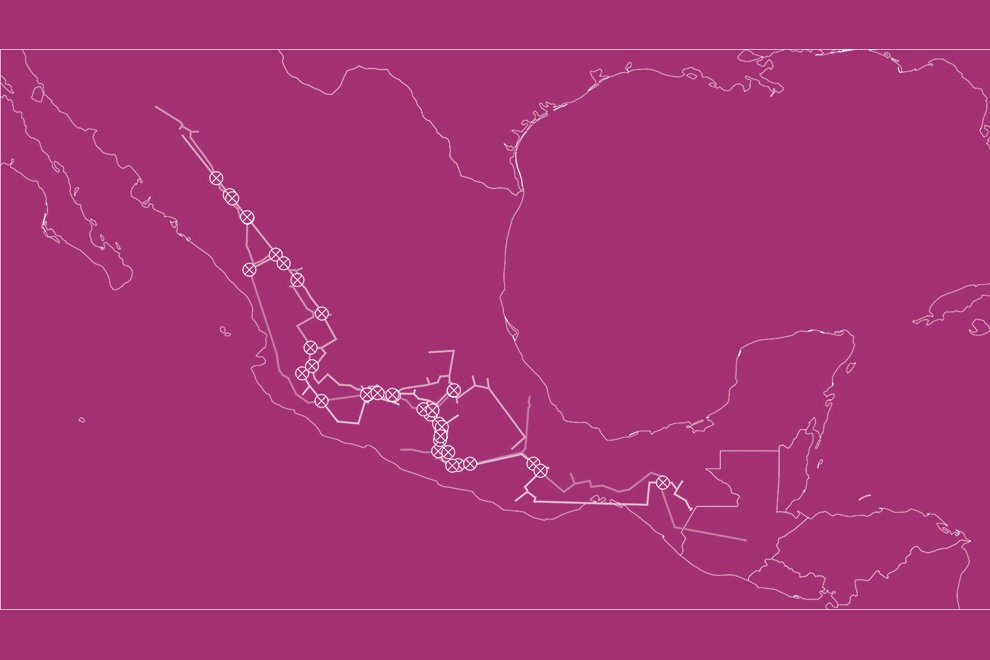
The Calakmul Biosphere Reserve (CBR) is located within the Yucatán Peninsula in the southeastern part of the state of Campeche (Fig. 1). It has an area of 728,908.58 ha (Reyna-Hurtado et al., 2022). The CBR has a warm and sub-humid climate (Aw), with a mean annual temperature of 24.6 °C. The maximum altitude is found at Cerro Champerico at 390 m asl and the minimum altitude varies from 100 to 150 m. The dominant vegetation in the area are medium sub-evergreen forests, medium, and low sub-deciduous forests (Martínez & Galindo, 2002; Martínez-Kú et al., 2008).
As part of the efforts made by the CBR in collaboration with the Global Environmental Facility (GEF) Species at Risk Project and World Wildlife Fund (WWF Mexico), to counteract the effects of climate change in the region, artificial water troughs were installed in 2018, establishing a water supply network of about 105 water troughs, of which 42 are located within the core areas of the CBR. The artificial water troughs placed in the CBR correspond to black plastic structures (Rotoplas® brand), with a capacity of 300 L each. The troughs were distributed along the access road to the CBR, with a minimum distance of 2 km between each trough (Fig. 1). The water supply at the beginning of the dry season was generally maintained twice a month (every 15 days); however, as the dry season progressed (became more severe) the supply could even be every 7 days.
Camera-trapping for mammals’ recording has been a widely used and efficient method in southeastern Mexico and particularly for the Calakmul region (Borges-Zapata et al., 2020; Contreras-Moreno, Simá-Pantí, Zúñiga-Morales et al., 2019; Contreras-Moreno et al., 2020, 2021; Delgado-Martínez et al., 2021; Hidalgo-Mihart et al., 2017). Between January 2019″ and August 2021, 8 digital camera traps Bushnell HD119876c (Tropy Cam; Outdoor Operations LLC.), Browning Strike force 850 (Browning Trail Cameras), or Cuddeback IR-20 (Cuddeback IR; Non-Typical Inc.) were placed in 8 artificial water troughs, distributed along the study area (Fig. 1) to detect and perform the analyses related to the presence of tapirs. The study area corresponds to zones adjacent to the road that leads to the archaeological zone of Calakmul (from km 20 to km 47).
The placement site of the camera traps corresponded to the same site where the water troughs were established (Fig. 1). At each site the number of days that they remained active varied depending on the operation of each device, on which the minimum sampling effort was 143 days. The cameras were placed 50 cm above the ground, in trees adjacent to the drinking trough, and were programmed to take photographs 24 hours a day, with 5-second intervals between each picture. A minimum distance of 2 km was maintained between cameras and after the placement of the cameras, they were checked for 3 weeks. In each revision, the photographs were downloaded, which were assigned a registration key. Finally, the proper functioning of the cameras was verified, and the batteries were replaced if necessary. Species identification was performed manually, generating a spreadsheet with the following data: station, camera name, date, time, species, image name, and number of individuals. After obtaining the photographs, a database was constructed using the CamtrapR package in the R 3.4.0 program (Niedballa et al., 2019; R Core Team, 2017).
Figure 1. Map showing the location of the monitored watering places in the Calakmul Biosphere Reserve, Mexico, where the study was carried out. Map by F.M. Contreras-Moreno.
To estimate the Photographic Index of Visit (PIV) the formula: PIV = C/SE*100 trap-days was used, where C = recording events, SE = sampling effort (number of camera traps per monitoring day) and 100 trap-days (standard unit) (Hernández-Pérez et al., 2020). To avoid overestimating the number of individuals recorded we grouped photographs of individuals of the same species recorded in the same site within 24 h periods. When more than 1 individual was recorded in the same picture, it was classified as a single record. Kruskall-Wallis tests were performed to compare species visitation rates by season. A Mann-Whitney test was used to compare records by year (Contreras-Moreno et al., 2020), analyses were performed in R 3.4.0 (R Core Team, 2017).
The activity pattern was evaluated for Central American tapir in the study. To compare the statistical differences between the hours of greatest activity a Kernel density analysis we used the activity and overlap packages in R 3.4. 0. (R Core Team, 2017; Ridout & Linkie, 2009; Rowcliffe, 2016).
The probability of tapir occupancy (Psi) and detection (p) were modeled with standard error (SE) estimates following the methodology proposed by MacKenzie et al. (2006). Fifteen-day capture histories with a total of 22 sampling occasions were created using a single-station occupancy model without covariates using R software (R Core Team, 2019). Models were evaluated using Akaike’s Information Criterion corrected for small sample size (AICc) and Akaike’s weights (w) (Burnham & Anderson, 2002), with 95% confidence intervals.
Results
With a sampling effort of 4,672 camera-trap days, 289 independent tapir records were obtained, and a PIV of 61.21 records/1,000 trap days in artificial water troughs in the CBR (Table 1). Regarding tapir records, highly significant differences were observed when comparing the 3 sampling years (H = 17.78, df = 2, p < 0.001; Fig. 2a), with the use of the troughs in 2019 being significantly higher than in 2020 and 2021. When comparing tapir records between sampling stations, no significant statistical differences were observed (H = 4.73, df = 7, p = 0.69).
Tapir records showed a circular mean obtained at 21:25 h. and an angular dispersion that goes from approximately 20:00 to 21:00 h. Tapirs were found to be mainly nocturnal, with peaks of activity approximately 3 hours after sunset, the number of nocturnal records in contrast was lower (Fig. 3). Tapirs showed an occupancy (Psi) at water troughs of 0.601 and a probability of detection (p) of 0.304 (ES = 0.0688).
Table 1
Independent tapir records and the photographic index of visitation (PIV) for the 3 years of sampling in the Maya Forest, Mexico.
2019
2020
2021
Total
Records
PIV
Records
PIV
Records
PIV
Records
PIV
Tapirus bairdii
242
85.45
43
31.64
1
2.08
286
61.21
Figure 2. The independent records obtained from the tapir for the 3 years of sampling in artificial watering holes in the Maya Forest are shown.
Discussion
The water troughs are constantly used by the tapirs, which is demonstrated by the number of records obtained (Table 1). The PIV showed a clear difference in records between sampling years, the number of records in 2019 was notably higher than 2020 and 2021 (Table 1), this could be related to the accumulated precipitation rate that was reflected in 2019, nationally this year presented extreme drought conditions both in intensity and prolongation (Pérez-Flores et al., 2021; SMN, 2019). The year 2019 was one of the most difficult for tapirs (in terms of lack of water) in the Maya Forest region (Fig. 4), as dehydrated tapirs were recorded on roads, entering livestock ranches and apiaries and in some cases the reports referred to dead animals near communities, so it was considered an environmental crisis (Contreras-Moreno et al., 2020).
Figure 3. Graphical representation of tapir activity patterns in the Maya Forest between 2019 and 2020.
Later analyses showed that 2019 was the year in which more cases of dehydrated tapirs were recorded in the Maya Forest; necropsies, although not conclusive, pointed to organ damage due to lack of water (dehydration; Cervantes, 2021). The greater presence of tapirs during 2019 at the watering holes could be due to the need for thermoregulation through water as happened with other ungulates that year (Contreras-Moreno, Jesús-Espinosa, Cruz-Romo et al., 2024), so that tapirs visited the watering holes more frequently to satisfy their water needs (Pérez-Flores et al., 2021). It has been mentioned that, for large species, such as the Central American tapir (Fig. 2), the lack of water can create serious imbalances in their metabolism, since they need between 10 and 15 L of water per day (MacFarlane & Howard, 1972).
Figure 4. Example of a photographic record of Tapirus bairdii collected in the Maya forest, Mexico.
In arid regions, water is a limiting resource for several vertebrate species (McKee et al., 2015). The PIV recorded in the Maya Forest showed a large variation in the number of records per year, our PIV for artificial watering holes was higher (61.21) than that recorded by Delgado-Martínez et al. (2018) in “sartenejas”. Variation in PIV across years is something previously recorded in natural water bodies (“aguadas”) in the Maya Forest (Pérez-Cortez et al., 2012; Reyna-Hurtado et al., 2019). Pérez-Cortez et al. (2012) recorded that the tapir was present in 14 of 15 “aguadas” with an estimated relative abundance of 37.57, in contrast, Reyna-Hurtado et al. (2019) estimated an average relative abundance of 27.6 and added that the values per year exhibited a decreasing trend between sampling periods. The PIV recorded in Maya Forest in troughs was higher than that recorded in Los Chimalapas Forest in Oaxaca where the relative abundance was 6.77 (Lira-Torres et al., 2014).
Reyna-Hurtado et al. (2019) in a multi-year study found that tapir populations in the Calakmul Biosphere Reserve remained stable but decreased slightly, and in parallel, there was a drastic decrease in the availability of water in the “aguadas”, likewise the authors found that the detailed analysis on the visitation rate of each pond provided evidence that tapirs are becoming stressed due to water scarcity and that this may have important consequences at the population and behavioral level. The fact that the PIV recorded in artificial water troughs is higher than that recorded in the natural watering holes supports the idea that water troughs could temporarily supply maintenance functions for tapirs during the dry season in the Maya Forest. Placing water in water troughs in the Maya Forest has been controversial to various groups, recently studies have shown that in addition to the “aguadas” in the Maya Forest there are other natural water bodies, the “sartenejas” (Delgado-Martínez et al., 2018), and that these are of great importance for wildlife, given the constant use of tapirs, it is likely that the artificial water troughs are providing the species with real sustenance, simulating in functions a “sartenejas” (with an average capacity of 100 L; Delgado-Martínez & Mendoza, 2020).
For this study in Maya Forest, the visitation rate of tapirs decreased notably for the last 2 years (2020 and 2021), very similar to that recorded for deer (Odocoileus virginianus, Mazama temama, and M. pandora) in the same period in Maya Forest (Contreras-Moreno, Jesús-Espinosa, Cruz-Romo et al., 2024). Contrary to what has been suggested that herbivores over time recognize water troughs as an alternative water source and resort more to them once they have located them (Berbert & Fagan, 2012). The high availability of water in the natural reservoirs of the Maya Forest for the years 2020 and 2021, could have influenced the decrease in tapir records at the artificial water troughs, as 2020 was a relatively rainy year where the first rains occurred in April (Hernández-Cerda et al., 2021), followed by tropical storm systems in May (Arthur and Bertha); ending with tropical storm Cristóbal (June 1-8) which flooded much of the region (NOAA, 2020), so natural water bodies held water until the middle of 2021 (Contreras-Moreno pers. comm.).
Regarding the estimated values of occupancy (Psi = 0.601) and detection probability (p = 0.304) for T. bairdii in watering holes are like values obtained in other studies in the Maya Forest. Reyna-Hurtado et al. (2019) obtained an occupancy rate of 0.70 and a detection probability of 0.40 in watering holes in the Calakmul Biosphere Reserve. In Belize, Martínez et al. (2021) obtained an occupancy of 0.97 and a detection probability of 0.14 in water bodies and in Guatemala in the Naatchun Dos Lagunas Protected Biotope, García et al. (2019) obtained an occupancy of 1.0 and a detection probability of 0.35. As for the PIV, the values obtained for occupation and detention in drinking troughs are very similar to those obtained in watering holes in the CBR, which corroborates the use that this species makes of these artificial water bodies and their functionality, especially in the dry season or in periods when water is scarce in the landscape, being this the only source of water available to meet their requirements for this resource in the CBR.
The activity pattern of the tapirs during the visits to the water troughs was mainly nocturnal (Fig. 3), something that has been recorded in several studies, particularly the activity peaks between 21:00 and 22:00 are very similar to those recorded in the “aguadas”of the Maya Forest (Sánchez-Pinzón et al., 2020), and in Los Chimalapas forest in Oaxaca by Lira-Torres et al. (2014), in this regard, it has been suggested that tapirs tend to become more nocturnal in response to human disturbance (Naranjo, 2009). The activity schedule of tapirs is not strictly static in the different locations, for example, in El Triunfo Biosphere Reserve tapirs recorded an average tapir mean angular mean at 18:00 (Carbajal-Borges et al., 2014), in Costa Rica that diurnal activity levels represented 20.2% and nocturnal activity 80.4%, coupled with this, during the wet season more diurnal and less nocturnal activity was observed compared to the dry season (Foerster & Vaughan, 2002). Several studies have documented that mammalian prey makes various behavioral adjustments to minimize the risk of predation by their natural predators (Mukherjee & Heithaus, 2013), in some cases noting that hunting may force ungulates to change their visits to watering holes from diurnal to nocturnal, but that the magnitude of this change may be limited by the risk of predation imposed by large nocturnal carnivores (Crosmary et al., 2012).
It was observed that the water troughs, besides allowing access to fresh water, make it possible for individuals from different populations to interact with each other, which could be considered as a site for socialization and predation, which needs a specific approach to understand these behaviors. Likewise, more studies are needed to examine both the consumption patterns of tapirs in all seasons, and ways to improve the efficiency of the current network of water troughs for large species such as tapirs.
The environmental contingency that happened in the Maya Forest in 2019 (Contreras-Moreno, 2020), could be an indicator of the effects that tapirs are suffering from climate change in the Yucatán Peninsula, several models indicate a disruption in precipitation patterns (Mardero et al., 2020) and it is considered that ungulates will be directly affected by these alterations derived from climate change (Contreras-Moreno & Torres-Ventura, 2018). Models suggest that temperature will increase, and precipitation will decrease in the Maya Forest soon (O’Farrill et al., 2014). It has been proposed that water scarcity could lead to increased negative intra- and interspecific interactions between fauna and increased metabolic costs (as animals face the need to move further to find water supplies; Delgado-Martínez et al., 2018). Added to this, the tapir has been identified as one of the species that has increased its level of conflict with people in the Maya Forest because of drought linked to climate change in the region (Pérez-Flores et al., 2021). This is of concern for the species, as climate change is considered a critical amplifier of human-wildlife conflict, as it exacerbates resource scarcity, alters human and animal behaviors and distributions, and increases human-wildlife encounters (Abrahms et al., 2023).
Artificial water troughs could play a key role in mitigating the negative effects of drought on tapirs in the Maya Forest, as they complement the functions of natural water bodies such as “aguadas” and “sartenejas”. However, further research is needed to understand and rule out possible negative effects on tapir populations, as it has been suggested that being artificial structures arbitrarily introduced into a natural system, could lead to alterations in the behavior, ecology, and health of tapirs (i.e., they could act as a focus of zoonosis).
The use of water troughs has been little analyzed in Mexico, however, in some parts of the world such as the arid western USA people have been providing water to wildlife for more than 70 years (Leopold, 1933), and mammals have been reported to respond positively (Mandujano-Rodríguez & Hernández-Gómez, 2019a, b; Borges-Zapata et al., 2020; Contreras-Moreno, Jesús-Espinosa, Cruz-Romo et al., 2024; Contreras-Moreno, Jesús-Espinosa, Sánchez et al., 2024), and within wildlife conservation management units in Mexico it is a common practice (UMA; Gastelum-Mendoza et al., 2014). This study documents for the first time the implementation of artificial drinking troughs for water supply for tapirs, thus providing relevant information for the understanding of new strategies to maintain populations of large species such as the tapir and opens the door for further studies to develop strategies to mitigate the effects of climate change in tropical environments.
Acknowledgements
To the United Nations Development Program (UNDP) project 00092169: “Strengthening the management of the Protected Areas System to improve the conservation of species at risk and their habitats”, implemented by the National Commission of Natural Protected Areas (Conanp) and financed by the Global Environment Facility (GEF). To the colleagues of the Calakmul Biosphere Reserve, who were always willing to support the monitoring project. To the World Wildlife Fund (WWF-Mexico) for the funding granted through the Monitoring of Water Bodies in the Calakmul Biosphere Reserve Program, within the framework of the project “Saving the jaguar: ambassador of America”.
References
Abrahms, B., Carter, N. H., Clark-Wolf, T. J., Gaynor, K. M., Johansson, E., McInturff, A. et al. (2023). Climate change as a global amplifier of human-wildlife conflict. Nature Climate Change, 13, 224–234. https://doi.org/10.1038/s41558-023-01608-5
Berbert, J. M., & Fagan, W. F. (2012). How the interplay between individual spatial memory and landscape persistence can generate population distribution patterns. Ecological Complexity, 12, 1–12. https://doi.org/10.1016/j.ecocom.2012.07.001
Borges-Zapata, J. Y., Contreras-Moreno, F. M., Serrano-MacGregor, I., Sima-Pantí, D. E., Coutiño-Cal, C., Zúñiga-Morales, J. A. et al. (2020). Uso de bebederos artificiales por el sereque centroamericano (Dasyprocta punctata) en la reserva de la biosfera de Calakmul, México. Agro Produc- tividad, 13, 51–58. https://doi.org/10.32854/agrop.vi0.1575
Brooks, D. M., Bodmer, R. E., & Matola, S. (1997). Tapirs: status survey and conservation action plan. IUCN/SSC Tapir Specialist Group. Gland, Switzerland and Cambridge, UK: UICN.
Burnham, K., & Anderson, D. (2002). Model selection and multimodal inference: a practical information-theoretic approach. London: Springer.
Carbajal-Borges, J. P., Godínez-Gómez, O., & Mendoza, E. (2014). Density, abundance and activity patterns of the endangered Tapirus bairdii in one of its last strongholds in southern Mexico. Tropical Conservation Science, 7, 100–114. https://doi.org/10.1177/194008291400700102
Cervantes, A. (2021). Reporte de prácticas profesionales en la Reserva de la Biosfera Calakmul, Campeche, durante los meses de febrero a agosto de 2019: tapir centromaericano (Tapirus bairdii), estudio de caso (Tesis). Universidad Nacio- nal Autónoma de México, México D.F.
Contreras-Moreno, F. M. (2020). Crisis de los tapires en Calakmul, un efecto del cambio climático. Revista Hypatia, 53, 10–14.
Contreras-Moreno, F. M., Hidalgo-Mihart, M. G., Reyna-Hurtado, R., López-González, C. A., & Cruz, A. J. D. L. (2021). Seasonal home-range size of the white-tailed deer, Odocoileus virginianus thomasi, in a tropical wetland of southeastern Mexico. Revista Mexicana de Biodiversidad, 92, e923660. https://doi.org/10.22201/ib.20078706e.2021.92.3660
Contreras-Moreno, F. M., Jesús-Espinosa, D., Cruz-Romo, L., Sánchez-Pinzón, K. G., Méndez-Tun, J. M., Pérez-Méndez, F. et al. (2024). Water supply in artificial troughs: a strategy to mitigate the impacts of climate change in the Maya forest. Agro Productividad, 17, 69–77. https://doi.org/10.32854/agrop.v17i4.2647
Contreras-Moreno, F. M., Jesús-Espinosa, D., Sánchez, K., Méndez-Tun, J., & Cruz-Romo, L. (2024). Use of artificial water troughs by deer in the Maya forest, México. Therya, 15, 103–111. https://doi.org/10.12933/therya-24-5947
Contreras-Moreno, F. M., Reyna-Hurtado, R., Méndez-Saint Martin, G., & Simá-Pantí, D. (2022). El tapir, un vecino poco conocido. Therya ixmana, 1, 36–37. https://doi.org/10.12933/therya_ixmana-22-195
Contreras-Moreno, F. M., Sima-Pantí, D. E., Coutiño-Cal, C., & Zúñiga-Morales, J. (2020). Registro del coyote (Carnivora: Canidae) en la Reserva la Biosfera de Calakmul, México. UNED Research Journal, 12, e2890-e2890. https://doi.org/10.22458/urj.v12i1.2890
Contreras-Moreno, F. M., Simá-Pantí, D., Cruz-Romo, L., Méndez-Saint Martin, G., Petrone, S., Jesús-Espinosa, D. et al. (2022). Interacciones de dos mamíferos medianos con el olor del puma en la Reserva de la Biosfera de Calakmul, México. Mammalogy Notes, 7, 286–286. https://doi.org/ 10.47603/mano.v7n2.286
Contreras-Moreno, F. M., Simá-Pantí, D., Zúñiga-Morales, J. A., Coutiño-Cal, C., Borges-Zapata, J. Y., & Serrano-MacGregor, I. (2019). Registro fotográfico de un murciélago capturado por Leopardus pardalis (Carnivora: Felidae) en la Reserva de la Biosfera de Calakmul, México. Mammalogy Notes, 5, 6–9. https://doi.org/10.47603/manovol5n2.6-9
Contreras-Moreno, F. M., & Torres-Ventura, Y. (2018). El cambio climático y los ungulados silvestres. Desde el Herbario CICY, 10, 144–150.
Crosmary, W. G., Valeix, M., Fritz, H., Madzikanda, H., & Coté, S. (2012). African ungulates and their drinking problems: hunting and predation risks constrain access to water. Animal Behaviour, 83, 145–153.
Delgado-Martínez, C. M., Alvarado, M. F, Mendoza, E., Flores-Hernández, S., Navarrete, A., Navarrete, E. et al. (2018). An ignored role of sartenejas to mitigate water shortage hazards for tropical forest vertebrates. Ecology, 99, 758–760. https://doi.org/10.1002/ecy.2078
Delgado-Martínez, C. M., & Mendoza, E. (2020). La importancia de las sartenejas como fuente de agua para la fauna silvestre en la región de Calakmul, Campeche. Biodiversitas, 151, 2–6.
Delgado-Martínez, C. M., Spaan, D., Contreras-Moreno, F. M., Simá-Pantí, D. E., & Mendoza, E. (2021). Spider monkey use of natural and artificial terrestrial water sources in Calakmul, Mexico. Behaviour, 158, 161–175.
Eliades, N. G. H., Astaras, C., Messios, B. V., Vermeer, R., Nicolaou, K., Karmiris, I. et al. (2022). Artificial water troughs use by the mountain ungulate Ovis gmelini ophion (Cyprus Mouflon) at Pafos Forest. Animals, 12, 3060. https://doi.org/10.3390/ani12213060
Epaphras, A. M., Gereta, E., Lejora, I. A., Ole Meing’ataki, G. E., Ng’umbi, G., Kiwango, Y. et al. (2008). Wildlife water utilization and importance of artificial waterholes during dry season at Ruaha National Park, Tanzania. Wetlands Ecology and Management, 16, 183–188. https://doi.org/10. 1007/s11273-007-9065-3
Foerster, C. R., & Vaughan, C. (2002). Home range, habitat use, and activity of Baird’s tapir in Costa Rica1. Biotropica, 34, 423–437.
Fulbright, T. E., & Ortega-Santos, J. A. (2007). Ecología y manejo de venado cola blanca. College Atation, TX: Texas A&M University Press.
García, M. J., Leonardo, R. S., González-Castillo, V. R., Guzmán-Flores, G. D., Jurado, N., Sandoval, M. A. et al. (2019). Primera aproximación al uso de la ocupación del tapir (Tapirella bairdii Gill, 1865) como indicador de la integridad ecológica en la Reserva de la Biosfera Maya, Guatemala. Ciencia, Tecnología y Salud, 6, 120–131. https://doi.org/10.36829/63CTS.v6i2.780
García, M., Jordan, C., O´Farrill, G., Poot, C., Meyer, N., Estrada, R. et al. (2016). Tapirus bairdii, The IUCN Red List of Threatened Species 2016: e.T21471A45173340. https://doi.org/10.2305/IUCN.UK.2016-1.RLTS.T21471A45173340
Gastelum-Mendoza, F. I., Arroyo-Ortega, J. P., & León-López, L. I. (2014). Estimación de la abundancia poblacional de fauna silvestre, mediante el uso de cámaras-trampa. Agro Productividad, 7, 32–36.
Hernández-Cerda, M., Romero, E., & Barrié, C. (2021). Cristóbal, la tormenta tropical del 2020 que dejó precipitaciones atípicas en la Península de Yucatán. Entorno Geográfico, 21, 125–156.
Hernández-Pérez, E. L, Vela, G. C., García-Marmolejo, G., Hidalgo-Mihart, G., Contreras-Moreno, F. M., de la Cruz, A. J. et al. (2020). Relaciones ecológicas entre pecaríes de collar y cerdos asilvestrados en el sur de México: ¿evidencia de la división de nicho? Revista Mexicana de Biodiversidad, 91, e912977. https://doi.org/10.22201/ib20078706e.2020.91.2977
Hidalgo-Mihart, M. G., Contreras-Moreno, F. M., Jesús-de la Cruz, A., Juárez-López, R., de la Cruz, Y. B., Pérez-Solano, L. A. et al. (2017). Inventory of medium-sized and large mammals in the wetlands of Laguna de Términos and Pantanos de Centla, Mexico. Checklist, 13, 711–726. https://doi.org/10.15560/13.6.711
Hidalgo-Mihart, M. G., Jesús-de la Cruz, A., Bravata-de la Cruz, Y., & Contreras-Moreno, F. M. (2024). Activity patterns and use of artificial water ponds by white-tailed deer (Odocoileus virginianus) in western Campeche. Therya, 15, 123–131. https://doi.org/10.12933/therya-24-5705
Krausman, P. R., Rosenstock, S. S., & Cain, J. (2006). Developed waters for wildlife: science, perception, values, and controversy. Wildlife Society Bulletin, 34, 563–569. https://doi.org/10.2193/0091-7648(2006)34[563:DWFWSP]2.0.CO;2
Leopold, A. S. (1933). Game management. New York: Charles Scribner’s Sons.
Lira-Torres, I., Briones-Salas, M., & Sánchez-Rojas, G. (2014). Abundancia relativa, estructura poblacional, preferencia de hábitat y patrones de actividad del tapir centroamericano Tapirus bairdii (Perissodactyla: Tapiridae), en la Selva de Los Chimalapas, Oaxaca, México. Revista de Biología Tropical, 62, 1407–1419. https://doi.org/10.15517/rbt.v62i4.12584
MacFarlane, W. V., & Howard, B. (1972). Comparative water and energy economy of wild and domestic mammals. Symposium of the Zoological Society of London, 31, 261–296.
MacKenzie, D. L., Nichols, J. D., Royle, J., Pollock, K., Bailey, L., & Hines, J. (2006). Occupancy estimation and modeling. Burlington, USA: Academic Press.
Mandujano-Rodríguez, S., & Hernández-Gómez, C. (2019a). Use of artificial drinking containers by collared peccary during the dry season in a semi-arid tropical habitat in Central Mexico. Suiform Soundings, 18, 11–19.
Mandujano-Rodríguez, S., & Hernández-Gómez, C. (2019b). Uso de bebederos artificiales por el venado cola blanca en una UMA extensiva en la Reserva de la Biosfera Tehuacán-Cuicatlán, México. Agro Productividad, 12, 37–42. https://doi.org/10.32854/agrop.v0i0.1406
Mardero, S., Schmook, B., Christman, Z., Metcalfe, S. E., & De la Barreda-Bautista, B. (2020). Recent disruptions in the timing and intensity of precipitation in Calakmul, Mexico. Theoretical and Applied Climatology, 140, 129–144. https://doi.org/10.1007/s00704-019-03068-4
Martínez, E., & Galindo, C. (2002). La vegetación de Calakmul, Campeche, México: clasificación, descripción y distribución. Boletín de la Sociedad Botánica de México, 7, 7–32.
Martínez, W. E., Reyna-Hurtado, R. A., Naranjo, E. J., Thornton, D., Cal, R. N., & Figueroa, O. A. (2021). Occupancy rate and observations of Baird’s tapir (Tapirella bairdii) near waterholes in the Maya forest corridor, Belize. Therya, 12, 37–43. https://doi.org/10.12933/therya-21-969
Martínez-Kú, D. H., Escalona-Segura, G., & Vargas-Contreras, J. (2008). Importancia de las aguadas para los mamíferos de talla mediana y grande en Calakmul, Campeche, México. In C. Lorenzo, E. Espinoza, & J. Ortega (Eds.), Avances en el estudio de los mamíferos II. México D.F.: Asociación Mexicana de Mastozoología A.C.
McKee, C. J., Stewart, K. M., Sedinger, J. S., Bush, A. P., Darby, N. W., Hughson, D. L. et al. (2015). Spatial distributions and resource selection by mule deer in an arid environment: Responses to provision of water. Journal of Arid Environments, 122, 76–84. https://doi.org/10.1016/j.ja ridenv.2015.06.008
Morgart, J. R., Hervert, J. J., Krausman, P. R., Bright, J. L., & Henry, R. S. (2005). Sonoran pronghorn use of anthropogenic and natural water sources. Wildlife Society Bulletin, 33, 51–60. https://doi.org/10.2193/0091-7648(2005)33[51:SPUOAA]2.0.CO;2
Mukherjee, S., & Heithaus, M. (2013). Dangerous prey and daring predators: a review. Biological Reviews, 88, 550–563. https://doi.org/10.1111/brv.12014
Nagy, K. A., & Gruchacz, M. (1994). Seasonal water and energy metabolism of the desert-dwelling kangaroo rat (Dipodomys merriami). Physiological Zoology, 67, 1461–1478. https://doi.org/10.1086/physzool.67.6.30163907
Naranjo, E. J. (2009). Ecology and conservation of Baird’s tapir in Mexico. Tropical Conservation Science, 2, 140–158. https://doi.org/10.1177/194008290900200203
Naranjo, E. J., Amador-Alcalá, S. A., Falconi-Briones, F. A., & Reyna-Hurtado, R. A. (2015). Distribución, abundancia y amenazas a las poblaciones de tapir centroamericano (Tapirus bairdii) y pecarí de labios blancos (Tayassu pecari) en México. Therya, 6, 227–249. https://doi.org/10.12933/therya-15-246
Niedballa, J. A., Courtiol, A., Sollmann, R., Mathai, J., Wong, S. T., Nguyen T. T. A. et al. (2019). CamtrapR Package. Camera trap data management and preparation of occupancy and spatial capture-recapture Analyses. Methods in Ecology and Evolution, 7, 1457–1462. https://cran.r-project.org/web/packages/camtrapR/camtrapR.pdf
NOAA (Oficina Nacional de Administración Oceánica y Atmosférica). (2020). Hurricane season information. https://www.aoml.noaa.gov/hrd-faq/#hurricane-season
O’Farrill, G., Gauthier-Schampaert, K., Rayfield, B., Bodin, Ö., Calmé, S., & Sengupta, R. (2014). The potential connectivity of waterhole networks and the effectiveness of a protected area under various drought scenarios. Plos One, 9, e95049. https://doi.org/10.1371/journal.pone.0095049
Pacifici, M., Foden, W. B., Visconti, P., Watson, J. E., Butchart, S. H., Kovacs, K. M. et al. (2015). Assessing species vulnerability to climate change. Nature Climate Change, 5, 215–224. https://doi.org/10.1038/nclimate2448
Pérez-Cortez, S., Enríquez, P. L., Sima-Panti, D., Reyna-Hurtado, R., & Naranjo, E. J. (2012). Influencia de la disponibilidad de agua en la presencia y abundancia de Tapirus bairdii en la selva de Calakmul, Campeche, México. Revista Mexicana de Biodiversidad, 83, 753–761. https://doi.org/10.7550/rmb.25095
Pérez-Flores, J., Mardero, S., López-Cen, A., & Contreras-Moreno, F. M. (2021). Human-wildlife conflicts and drought in the greater Calakmul Region, Mexico: implications for tapir conservation. Neotropical Biology and Conservation, 16, 539–563. https://doi.org/10.3897/neotropical.16.e71032
R Core Team. (2017). R: a language and environment for statistical computing. Versión 3.4.3, Vienna, Austria, R Foundation for Statistical Computing. https://www.r-project.org/
Redfern, J. V., Grant, R., Biggs, H., & Getz, W. M. (2003). Surface-water constraints on herbivore foraging in the Kruger National Park, South Africa. Ecology, 84, 2092–2107. https://doi.org/10.1890/01-0625
Reyna-Hurtado, R., García-Anleu, R., García-Vetorazzi, M., Sánchez-Pinzón, K., Slater, K., Contreras-Moreno, F. M. et al. (2022). Aguadas de la selva Maya: santuarios de vida silvestre que unen esfuerzos de conservación internacional. Ciencia Nicolaita, 84, 71–80. https://doi.org/10.35830/cn. vi84.610
Reyna-Hurtado, R., Sima-Pantí, D., Andrade, M., Padilla, A., Retana-Guaiscon, O., Sánchez-Pinzón, K. et al. (2019). Tapir population patterns under the disappearance of free-standing water. Therya, 10, 353–358. https://doi.org/10.12933/therya-19-902
Ridout, M., & Linkie, M. (2009). Estimating overlap of daily activity patterns from camera trap data. Journal of Agricultural, Biological, and Environmental Statistics, 14, 322–337.
Ripple, W. J., Newsome, T. M., Wolf, C., Dirzo, R., Everatt, K. T., & Galetti, M. (2015). Collapse of the world’s largest herbivores. Science Advance, 1, e1400103. https://doi.org/10.1126/sciadv.1400103
Rowcliffe, M. J. (2016). Activity: animal activity statistics, No. R package version 1.1. https://cran.r-project.org/package=activity
Sánchez-Pinzón, K., Reyna-Hurtado, R., & Meyer, N. F. (2020). Moon light and the activity patterns of Baird’s tapir in the Calakmul region, Southern México. Therya, 11, 137–142. https://doi.org/10.12933/therya-20-654
Semarnat (Secretaría del Medio Ambiente y Recursos Naturales). (2010). Norma Oficial Mexicana NOM-059-SEMARNAT-2010, Protección ambiental – Especies nativas de México de flora y fauna silvestres – Categorías de riesgo y especificaciones para su inclusión, exclusión o cambio – Lista de especies en riesgo. Diario Oficial de la Federación. 30 de diciembre de 2010, Segunda Sección, México.
Simpson, N. O., Stewart, K. M., & Bleich, V. C. (2011). What have we learned about water developments for wildlife? Not enough! California Fish and Game, 97, 190–209.
Villarreal-Espino, O., & Marín, M. (2005). Agua de origen vegetal para el venado cola blanca mexicano. Archivos de Zootecnia, 54, 191–196.
Altagracia Guerrero-Marmolejo a, c, Diego R. Pérez-Salicrup a, *, Miguel Martínez-Ramos a, M. Isabel Ramírez b
a Universidad Nacional Autónoma de México, Instituto de Investigaciones en Ecosistemas y Sustentabilidad, Antigua Carretera a Pátzcuaro No. 8701, Exhacienda de San José de la Huerta, 58190 Morelia, Michoacán, Mexico
b Universidad Nacional Autónoma de México, Centro de Investigaciones en Geografía Ambiental, Antigua Carretera a Pátzcuaro No. 8701, Ex-Hacienda de San José de la Huerta, 58190 Morelia, Michoacán, Mexico
c Universidad Nacional Autónoma de México, Posgrado en Ciencias Biológicas, Edificio A, 1º piso, Circuito de Posgrados, Ciudad Universitaria, 04510 Ciudad de México, Mexico
Received: 5 September 2023; accepted: 5 November 2024
Abstract
Pinus and Quercus species face anthropogenic disturbances that affect their structure and distribution. Understanding the distribution patterns of these species is crucial for establishing appropriate management practices to conserve their diversity and the ecosystem services they provide. The aim of this study was to analyze pine and oak species’ distribution, dominance, and diversity patterns along an altitudinal gradient in the Monarch Butterfly Biosphere Reserve. We established 6 elevation transects (2,250 – 3,300 m asl) with 32 points every 150 m. At each site, 25 pine and oak trees located between 0 and 60 m from a central coordinate, with a diameter at breast height ≥ 10 cm, were recorded. Distribution patterns, dominance, and alpha and beta diversity were analyzed. The least abundant species were the most geographically restricted. Pinus pseudostrobus and Quercus laurina were the most dominant species. Alpha diversity was not associated with elevation, nor did it show a defined distribution pattern. Beta diversity was associated with elevation at the highest and lowest elevations, forming an inverted hump. These patterns may be the result of human activities, such as logging and agriculture, which have altered natural patterns of diversity and distribution.
Distribución altitudinal, diversidad y conservación de los pinos y los encinos en la Reserva de la Biosfera Mariposa Monarca, México
Resumen
Las especies de Pinus y Quercus son sometidas a actividades antropogénicas que afectan la estructura y distribución de sus poblaciones. Comprender sus patrones de distribución es crucial para establecer prácticas de manejo que permitan conservar su diversidad y los servicios ecosistémicos que proporcionan. Nuestro objetivo fue analizar los patrones de distribución y diversidad de especies de pino y encino a lo largo de un gradiente altitudinal en la Reserva de la Biosfera Mariposa Monarca. Trazamos 6 transectos altitudinales (2,250 – 3,300 m snm), donde establecimos 32 puntos de muestreo cada 150 m. En cada punto registramos 25 pinos y encinos ubicados entre 0 y 60 m de una coordenada central, con diámetros a la altura del pecho ≥ 10 cm. Analizamos los patrones de distribución, dominancia y diversidad alfa y beta. Las especies menos abundantes presentaron distribuciones restringidas. Pinus pseudostrobus y Quercus laurina mostraron alta dominancia. La altitud no influyó en la diversidad alfa. La diversidad beta fue explicada por la altitud en los puntos más altos y bajos, formando una joroba invertida. Estos patrones podrían ser consecuencia de actividades antropogénicas como la extracción forestal y agricultura, las cuales han alterado los patrones de diversidad y distribución natural.
Pinus (pine) and Quercus (oak) are 2 of the most ecologically and economically important genera in the mountainous regions of Mexico (Galicia et al., 2018). However, in Mexico, pine-oak forests experience constant anthropogenic activities that reduce and modify their populations (Galicia et al., 2015, 2018; Rzedowski, 2006), even in areas dedicated to conservation, such as natural reserves (Champo-Jiménez et al., 2012). Natural patterns of species distribution and diversity in mountainous areas are determined by environmental factors associated with altitudinal gradients (Callaway et al., 2002; Fontana et al., 2020; Rahbek, 2005; Whittaker, 1967). Therefore, analyzing the distribution patterns and diversity of pine-oak species along altitudinal gradients helps us understand the biotic (e.g., competition and predation) and abiotic (e.g., temperature and moisture) environmental factors associated with the altitudinal gradient that influence the processes that determine these patterns (McCain & Grytnes, 2010). This information is essential for the implementation of management strategies (e.g., restoration, forestry extraction) to ensure the long-term maintenance of these species (Martin et al., 2021; Ohdo & Takahashi, 2020).
In montane forests, where the pines and oaks are distributed, environmental conditions and resource availability vary across altitudinal gradients (Whittaker, 1956; Zhou et al., 2019). Temperature decreases and relative humidity increases at higher elevations (Barry, 2008). Slope orientation also influences these variables, as south-facing slopes receive more solar radiation in the Northern Hemisphere, making them relatively more xeric than north-facing slopes (González-Tagle et al., 2008). These different conditions determine the distribution of tree species and tree diversity across elevational gradients (Brambach et al., 2017; Martin et al., 2021; Toledo-Garibaldi & Williams-Linera, 2014; Whittaker, 1956).
In montane forests, elevation also affects alpha diversity (species richness at the local scale). Two contrasting patterns have been proposed. First, a hump-shaped pattern in which species diversity peaks in the middle parts of the elevation gradient, and second, a monotonic decline in which species diversity decreases with increasing elevation (Rahbek, 2005). In addition, the elevation gradient also influences patterns of beta diversity; these patterns include a change or substitution of species along the elevation gradient, and nesting, in which species are added or lost but not replaced (Baselga & Orme, 2012). In some Mountain environments, dissimilarity increases with elevation gradient, while in others it decreases with elevation (Fontana et al., 2020; Sabatini et al., 2017; Wang et al., 2002). However, alpha and beta diversity patterns along elevation gradients have been little evaluated in tropical montane forests dominated by pine and oak species in central Mexico.
Pine and oak forests are among the most vulnerable environments to the effects of global warming (Galicia et al., 2015). With increasing temperatures, the distribution and diversity of pines and oaks will be affected (Alfaro-Reyna et al., 2019), especially in montane areas. Therefore, it is essential to document the actual distribution patterns of species and their diversity, especially those with high ecological and economic relevance, such as pines and oaks (Galicia & Zarco-Arista, 2014). This information is essential for projecting the potential future distribution of species as global temperatures increase (Villers-Ruiz & Trejo-Vázquez, 1997). These data will also allow us to predict which species will be most vulnerable to such changes. Furthermore, this information is useful for improving management and conservation strategies at the local scale, especially in areas of high conservation importance where forest exploitation also occurs, as in the case of the Monarch Butterfly Biosphere Reserve (MBBR) located in the states of Mexico and Michoacán, Mexico.
The MBBR is an area of extreme importance for the conservation of the winter migration of Danaus plexippus L. (Monarch butterflies) from eastern Canada and the USA to Mexico. Conservation of this phenomenon is linked to the integrity of the tree community, particularly the Abies religiosa (Kunth) Schltdl. & Cham., trees on which these insects perch. The forests of the MBBR are also crucial for conservation due to the high biodiversity they contain, with approximately 694 plant species recorded in the core zone (Cornejo-Tenorio & Ibarra-Manríquez, 2017). Given that this Natural Protected Area has already been created, it should serve to preserve the pine and oak species present in the MBBR, as well as the environmental services they provide to the inhabitants of the region.
Within the MBBR, the highest number of oak species grow at elevations below 3,000 m, mainly in the buffer zone, where most legal and illegal human activities take place (Cornejo-Tenorio & Ibarra-Manríquez, 2017). These activities include logging and land use conversion to agriculture (Champo-Jiménez et al., 2012; Navarrete et al., 2011; Vidal et al., 2014). Recently, avocado plantations have been detected also at lower elevations (Sáenz-Ceja & Pérez-Salicrup, 2021). In the MBBR, most tree studies focus on Abies religiosa (Kunth) Schltdl. & Cham, the monarch butterfly host species, and Pinus pseudostrobus Lindl., the most economically important species in the zone (Gómez-Pineda et al., 2020; Sáenz-Ceja & Pérez-Salicrup, 2020). However, few studies have analyzed the distribution patterns and diversity of the remaining pine and oak species.
The main objective of this study was to document the distribution of pines and oaks in the MBBR along an elevation gradient from 2,250 to 3,300 m. In particular, we evaluated patterns of distribution, dominance, and alpha and beta diversity of pine and oak species. We expected to find alpha diversity patterns associated with elevation and a well-defined species turnover along the elevation gradient, with oaks dominating at lower elevations and pines at higher elevations.
Materials and methods
We conducted this study in the Monarch Butterfly Biosphere Reserve (MBBR), located between Estado de México and Michoacán, Mexico (19°44’27” and 19°18’32” N, 100°22’26” and 100°09’07” W). The MBBR covers 5.63 × 10³ ha, divided into 3 core zones (with a total area of 1.36 × 10³ ha) and 2 buffer zones (with a total area of 4.27 × 10³ ha; Conanp, 2001; Fig. 1). Seventy-seven percent of the MBBR area consists of mountains and hills, while the rest consists of small valleys. Eighty percent of the area belongs to 59 ejidos (a form of communal land ownership) and 13 indigenous communities, while the rest belongs to the federal or state governments (Conanp, 2001).
Elevations in the MBBR range from 2,030 to 3,640 m. Annual precipitation ranges from 800 to 1,500 m, while the mean annual temperature varies from 8 to 22 °C. It is a mountainous system where steep slopes, the altitudinal gradient, and the different slope orientations create microclimatic differences in humidity and precipitation (Carlón-Allende et al., 2015; Conanp, 2001; Giménez-de Azcárate et al., 2003).
Using satellite imagery from Google Earth, we identified the locations where 6 altitudinal transects of continuous forest cover could be established. These transects were located in the larger southern portion of the MBBR (Chincua-Campanario-Cerro Pelón corridor). We omitted Cerro Altamirano, a separate part of the MBBR, because it does not have a wide elevation gradient with continuous forest cover. Three transects were placed on north-facing slopes and 3 on south-facing slopes. Of these 6 transects, 2 were located in the southern area of the reserve, 2 in the central area, and 2 in the northern area, then, 32 circular points were established every 150 m within each transect, covering an elevation range from 2,250 to 3,300 m (Sáenz-Ceja & Pérez-Salicrup, 2019). At lower and higher elevations, the forest cover is very discontinuous, and not all transects reached the maximum or minimum elevation levels; therefore, the number of points in each transect ranges from 5 to 7.
At each point, a standardized sample of 25 trees of the dominant genera in the area (Pinus and Quercus) with diameter at breast height (DBH; 1.3 m) ≥ 10 cm located between 0 and 60 m from the central coordinate was selected. To estimate the area of each circular plot, we used the distance from the central coordinate to the furthest measured tree as the radius of the circle. These distances ranged from 12 to 60 m. In the field, we confirmed that the points were covered by natural pine and oak stands and were not forest plantations or agricultural fields. We identified all tree species in the field, except for some oak individuals for which we collected botanical samples. We then identified them in the laboratory of Ecología y Manejo de Recursos Forestales, UNAM, and with the help of experts in the vegetation of the MBBR.
To evaluate the dominance of pine and oak species along the altitudinal gradient, we used abundance rank-curves, for which we estimated the percentage of proportional abundance of each species (Magurran, 2004). To assess whether altitudinal gradient and slope orientation influence oak and pine density and basal area, we performed second-order Generalized Linear Models (GLMs) with gamma distributions using the MASS package (Venables & Ripley, 2002) in the open-source R software 4.3.2 (R Core Team, 2023).
Figure 1. The dotted grey line represents the most part of the Monarch Butterfly Biosphere Reserve (the Chincua-Campanario-Cerro Pelón block), excluding Cerro Altamirano. Polygons with dashed black lines represent the core zones of the MBBR. Black circular dots indicate the location of sampling points along the altitudinal gradient. Map by M.I. Ramírez.
To conduct diversity analyses, we first ensured that the sampling effort at each point was adequate by estimating sample coverage with upper and lower 95% confidence intervals to validate the alpha diversity comparisons we made (Chao & Jost, 2012: Chao et al., 2020, 2023). With this standardized approach, it is possible to quantify, estimate, and compare richness between communities, even if the sampling points are of different sizes (Chao et al., 2020, 2023; Moreno, et al., 2011). We then estimated alpha diversity at points of elevation and slope orientation as a function of species abundance distribution. We used Hill’s numbers (Hsieh et al., 2016; MacArthur, 1972), which analyze 3 orders of diversity. The first order (q0) estimates species richness or the number of species per unit area; the second order (q1; equivalent to the exponential of Shannon’s diversity index) estimates the number of common species; the third order (q2; equivalent to the inverse of Simpson’s diversity index) counts the number of dominant species. To perform this analysis, we used the iNEXT package (Hsieh et al., 2016). We conducted an analysis to determine if the area of the sampling point influenced the species diversity recorded. We estimated alpha diversity per hectare and determined its correlation with altitudinal gradient and slope orientation. We also analyzed whether the altitudinal gradient explained the order of diversity (q0, q1, q2). For all these analyses, we used second-order generalized linear models (GLMs) with gamma distributions (Venables & Ripley, 2002) in the open-source R software 4.3.2 (R Core Team, 2023). Next, we computed the average dissimilitude, turnover, and nesting of species along the altitudinal gradient to estimate beta diversity using the Jaccard index for every sampling plot. The standardized number of individuals recorded across the elevation gradient allows us to compare sampling sites even if we have different areas. Finally, we evaluated whether the elevation influences the average species turnover and nesting through a first and second-order linear model. We used the open-source R software (version 4.3.2) program to perform all analyses.
Results
Pine and oak species abundance and distribution. We measured 749 individuals on 10.4 ha; 466 individuals belonged to the genus Pinus, 423 individuals (91%) were Pinus pseudostrobus and the rest of the pine species had only 9% of the individuals (Table 1). The remaining 283 individuals belonged to the genus Quercus; 155 were Quercus laurina Bonpl, the rest 128 were from the other 4 species (Table 1). The individuals belonged to 10 species, 5 in each genus. Pinus pseudostrobus and Quercus laurina had the largest distribution ranges, the highest number of individuals, and the largest basal area (Fig. 2a, b). We recorded P. pseudostrubus and Q. laurina at most points along the altitudinal gradient and on the northern and southern slopes. Q. laurina showed the highest density values at 2,850 m. Pinus herrerae Martínez and Pinus leiophylla Schiede ex Schltdl. & Cham showed disjunct ranges, being absent at most elevations of the altitudinal gradient. Similarly, Pinus montezumae Lamb. was recorded at the lowest (2,250) and highest (3,330) elevations, but not at the intermediate elevations (Fig. 2a). Two pine species, P. leiophylla, and P. montezumae, were recorded only on south-facing slopes (Table 1). We did not find clear patterns of pine and oak being associated with a particular elevation range.
No single species was present across the entire elevation gradient, but 4 oak species had few individuals at almost all elevation points (Fig. 3). Pinus pseudostrobus was the dominant species (with the highest mean relative abundance),across most of the altitudinal gradient, except at the extremes, followed by Quercus laurina. The lowest altitudinal points (2,250 m) were dominated by the genus Quercus and the highest (3,300 m) by P. montezumae. Although Pinus dominated along the gradient, we found more oak species than pine species at most elevations (Fig. 3). The density of individuals was not associated with the elevation gradient (F2, 29 = 2.4, p > 0.05), nor with the orientation of the slopes (F1, 30 = 0.29, p > 0.05). Basal area was associated with the altitudinal gradient, showing a lower basal area at the extremes of the altitudinal gradient (2,250 and 3,300 m; F2, 31 = 3.95, p = 0.03).
Alpha diversity. According to the sample coverage analysis, the samples in the plots were equally complete, with values above 90% (Appendix). The species richness per ha did not differ significantly between the northern and southern slopes (F1, 30 = 0.25, p > 0.05). On the other hand, none of the diversity orders analyzed (q0, q1, q2) showed a defined distribution pattern, either hump-shaped or with a monotonic decrease (Fig. 4a, b). Diversity orders q0 (F1, 29 = 0. 46, p > 0.05) and q1 (F1, 29 = 0.16, p > 0.05) were not explained by altitudinal gradient. However, order q2, which focuses on dominant species, was associated with the altitudinal gradient (F1, 29 = 0.56, p = 0.001), showing higher dominance at higher and lower altitudinal points (Fig. 4a). The area of the sampled point did not influence the diversity patterns found (F1,28 = 0.02, p > 0.05).
Table 1
Number of individuals of each pine and oak species recorded on the north and south slopes of the MBBR.
Species
Northern slope
Southern slope
Total
Pinus pseudostrobus Lindl.
176
247
423
Pinus montezumae Lamb.
0
19
19
Pinus herrerae Martínez
11
1
12
Pinus leiophylla Schiede ex Schltdl. & Cham.
0
5
5
Pinus teocote Schied. ex Schltdl. & Cham.
1
6
7
Quercus laurina Bonpl.
70
85
155
Quercus obtusata Bonpl.
32
13
45
Quercus crassifolia Bonpl.
18
14
32
Quercus laeta Liebm.
8
23
31
Quercus rugosa Née
12
8
20
Total
328
421
749
Beta diversity. Pine and oak species did not show a pattern of increasing or decreasing species turnover across the elevation gradient. The pattern found was more similar to an inverted hump. The average floristic dissimilarity between sites was moderate 0.50 ± 0.27 (x̅ ± SE), and the model showed a quadratic effect of elevation explaining 65% of the residual variance (F5.2 = 7.77, p = 0.02; Fig. 5a). On average, the dissimilarity between sites due to species turnover was 0.32 (se = 0.1), and the elevation gradient explained 62% of this variance (F5.2 = 13, p = 0.01; Fig. 5b). The highest mean values of turnover occurred at the lowest elevation point, 2,250 m (0.56), and at the highest elevation zone, 3,300 m (0.76), with the lowest mean values at the 3,000 m point (0.33). Beta diversity associated with nesting was 0.18 (se = 0.1), and elevation explained 50% of the residual variance (F5.2 = 7.88, p = 0.03; Fig. 5c).
Figure 2. Abundance and distribution of pine and oak species in the MBBR: a, mean density of pine and oak species at different elevation points; b, mean basal area/ha of pine and oak species across the elevation gradient. No error bars are shown for species recorded in only one plot.
Discussion
Distribution patterns and alpha diversity of pines and oaks in the MBBR were not associated with the elevation gradient. The results suggest that the distribution and diversity of most of these species in the study area were not determined by environmental factors related to the elevation gradient (e.g., relative humidity and temperature). In other studies, conducted with pines and oaks in Michoacán and in Oaxaca, Mexico (Martin et al., 2021; Maza-Villalobos et al., 2014), pine and oak species diversity showed a clear pattern of distribution and alpha diversity associated with the altitudinal gradient. We consider that it is necessary to carry out more research in the MBBR to determine if the lack of association between the distribution patterns and diversity of pine and oak species with the environmental factors associated with the altitudinal gradient is related to anthropogenic disturbances (Champo-Jiménez et al., 2012; Navarrete et al., 2011).
Figure 3. Rank-abundance curves based on the percentage of mean relative abundance of pine and oak across the altitudinal gradient in the MBBR, Mexico. P. pse = Pinus pseudostrobus, P. teo = Pinus teocote, P. mon = Pinus montezumae, P. lei = Pinus leiophylla, Q. lau = Quercus laurina, Q. lae = Quercus laeta, Q. obt = Quercus obtusata, Q. rug = Quercus rugosa, Q. cra = Quercus crassifolia.
Pines and oak dominance and distribution. In the MBBR, the most dominant (abundant) species along the altitudinal gradient and between the northern and southern slopes was P. pseudostrobus. It should be taken into account that this species is the most commonly used in reforestation programs (Vicente, 2020), which could also favor its current high dominance. For example, between 2001 and 2012, the MBBR experienced an episode of massive illegal logging that affected approximately 2179 hectares of forest. Through intensive reforestation, a large part of the affected tree cover in the area has been restored (Ramírez et al., 2019; Vidal et al., 2014). These reforestations have used the most economically relevant species in the area and the species where the monarch butterfly roosts A. religiosa and P. pseudostrobus (Conanp, 2001; Vicente, 2020). These biases may have influenced the reduction of populations of less common pine species.
In contrast to P. pseudostrobus, we found that the less abundant pine species (subdominant), P. montezumae, P. herrerae, P. leiophylla, and P. teocote, have restricted distributions with few individuals. These species are widely distributed at the national level (Herrera-Hernández & Escobar, 2021), and large populations of P. herrerae have been recorded in regions surrounding the MBBR (Cornejo-Oviedo et al., 2004). There is also evidence that P. montezuame has very similar distributional niches to P. pseudostrobus in the Neovolcanic system of central Mexico, where the MBBR is located (Manzanilla-Quiñones et al., 2018). However, based on our results, populations of these subdominant less abundant pine species may be at risk of local extinction.
Figure 4. a, Species diversity at different altitudinal positions in the MBBR; b, species diversity at the different points and in the north- and south-facing slopes. q0 corresponds to the total number of species, q1 to the number of common species, and q2 to the number of dominant species. The sampling coverage was acceptable in the 32 points studied.
Although oak species richness was higher than pine species richness, oak species had fewer individuals at most points along the altitudinal gradient. The most dominant oak species was Quercus laurina, which has a wide altitudinal and distributional range in Mexico (Valencia, 2004). This higher diversity of oak species along the altitudinal gradient may be associated with the fact that oak wood is not as commercialized as pine wood in the MBBR and in Mexico (Semarnat, 2018), and in turn, may not be as heavily harvested as species of the genus Pinus. Most oak species in the MBBR, and Mexico, are used for firewood or charcoal, but they have several other non-timber-associated usages, which may promote their conservation (Luna-José et al., 2003).
We did not find an association between the density of individuals and the orientation of the slope, but we found 2 pine species distributed only on south-facing slopes, P. leiophylla and P. montezumae. This slope receives more solar radiation (González-Tagle et al., 2008). Due to the low number of individuals that we recorded for both species, we cannot conclude that both are naturally distributed only on slopes with southern orientation. It could be that their populations have been eliminated from the northern slopes by anthropogenic activities.
Pine and oak alpha diversity. Patterns of alpha diversity were not associated with the altitudinal gradient. We expected to find either one of the most commonly reported patterns, i.e., monotonic decreasing or hump-shaped (McCain & Grytnes, 2010; Rahbek, 2005). Therefore, in the area, variables associated with elevation (e.g., temperature and moisture) do not determine species alpha diversity patterns. Again, past human disturbances may be shaping these tree communities.
According to the list of tree species recorded in Michoacán by Cué-Bär et al. (2006), the MBBR harbors considerable oak species richness, with 12 species reported, representing about one third of the 35 oak species recorded for the entire state of Michoacán. In our study, we recorded only 5 of these 12 oak species. The lack of representation of the remaining 7 oak species could be because we did not sample in Cerro Altamirano, a detached part of the reserve located 27.4 km north of the main part of the reserve. We also did not sample at Cerro Pelón, located to the south of the MBBR, because the vegetation elevation gradient at this last site did not meet the sampling criteria for this study due to the lack of contiguous forest cover. The missing species include Q. candicans, Q. castanea, Q. crassipes, Q. desertícola, Q. glabrescens, Q. greggii, and Q. martinezii. The lack of representation of these oak species in our sample may indicate that they are located within sites with special conditions or that their current densities are very low.
Figure 5. Beta diversity of pines and oaks across the elevation gradient in the MBBR: a, species dissimilarity including species turnover and nesting; b) dissimilarity associated with species turnover only across the elevation gradient; c) dissimilarity associated with species nesting only across the elevation gradient.
Similarly, 7 pine species have been reported in the MBBR (Cornejo-Tenorio & Ibarra-Manríquez 2017; Marlès et al., 2015). Of the 5 pine species we recorded, P. teocote, P. montezumae, and P. herrerae had not been documented in the MBBR in previous studies (Cornejo-Tenorio & Ibarra-Manríquez, 2017). This may be because we sampled in the buffer zone of the reserve, where we recorded P. teocote and P. herrerae, and not only in the core zone where Cornejo-Tenorio & Ibarra-Manríquez (2017) conducted their study. We did not record 2 pine species previously reported in the MBBR, Pinus hartwegii (Cornejo-Tenorio & Ibarra-Manríquez, 2017) and P. devoniana (Marlès et al., 2015). The former species is distributed at elevations above 3000 m and was collected at Cerro Pelón, where we did not sample. The latter is distributed at elevations below 2,400 m, so its abundance may be very low at the elevations included in this study. Nevertheless, half of the pine species recorded in the state of Michoacán (15 spp.; Cué-Bär et al., 2006) have been reported to occur in the MBBR. As we suggested for the oak species not present in our sample, it is possible that these pine species are found in low-density sites of the MBBR under specific microsite conditions. It is important to note that current forest management strategies focus on reforestation and protection of economically important species (e.g., Pinus pseudostrobus), which could affect the distribution of the remaining species.
The richness of pine and oak species in this study was comparable to other studies that have evaluated the distribution and diversity of these genera in mountainous areas of Mexico. For example, we recorded species richness similar to that reported by Zavala et al. (2007) for a temperate forest in the Chiapas highlands of southern Mexico. The authors recorded 6 pine and 6 oak species along an altitudinal gradient of 1,100 m (1,500 to 2,600 m). However, they considered lower elevations than those we analyzed (< 2,250 m). In another study conducted in the Cuitzeo Lake basin in Michoacán, Mexico, closer to the MBBR, Aguilar-Romero et al. (2016) recorded 9 oak species in an altitudinal gradient from 1,768 to 3,428 m. The higher diversity of oaks in the Cuitzeo Lake basin compared to the MBBR could be explained by the fact that the former study covered a larger area (402,600 ha) and a wider altitudinal range than our study, including plots at lower elevations where oaks are dominant. Similarly, in a study conducted in Oaxaca, Mexico by Martin et al. (2021) on a 900 m gradient (2,300-3,200 m) in a managed area of 9,554 ha, the authors recorded 10 oak and 8 pine species. Although the MBBR is subject to constant anthropogenic disturbance, the area still supports a high diversity of pine and oak species.
Pine and oak beta diversity. Although we found that species dissimilarity was associated with the altitudinal gradient, it did not present an increasing or decreasing pattern along the altitudinal gradient as found in other studies (Nanda et al., 2021; Fontana et al., 2020; Sabatini et al., 2017; Wang et al., 2002). The most significant dissimilarity between sites was caused by the different species present at the lowest and highest points of the altitudinal gradient, with less dissimilarity at intermediate elevations, forming an inverted hump. This pattern of dissimilarity may be due to the high dominance of Pinus pseudostrobus and Quercus laurina at intermediate points and their low density at the extremes of the elevational gradient.
According to Socolar et al. (2016), when dissimilarity occurs due to species turnover, diversity can be conserved by maintaining landscape heterogeneity and conserving as much area as possible. In the case of the MBBR, dissimilarity is produced by both species turnover and nesting, so in order to preserve the biodiversity of the area, it is essential to conserve both the most diverse sites and the most distant sites where the greatest floristic turnover occurs.
Considering the conservation importance of the MBBR and the fact that most of the pine and oak species have restricted distributions with few individuals, it is necessary to re-direct the management and conservation strategies applied in the area. MBBR management plans do not consider the distribution and diversity patterns of plant species in the area because there is little information on these patterns. Without adequate planning, activities carried out in the biosphere reserve could affect the diversity and distribution of pine and oak species, resulting in the local extinction of less abundant (subdominant) species.
To protect and maintain the biodiversity found in the MBBR, it is essential that reforestation and management strategies not only focus on tree species that host the monarch butterfly (A. religiosa) or the most economically important pine species, such as P. pseudostrobus. It is also essential to consider sensitive species and other species that are also of high ecological, economic, and cultural importance. In particular, management strategies must assess the vulnerability of populations of subdominant pine and oak species in the area and design their management strategies on this basis. Maintaining the integrity of ecosystems is essential to sustain all the processes and ecosystem services they provide. For example, inventories of species and their abundance must be made to protect those with limited distribution and low densities. Forest plantations with different species are also needed to reduce the pressure of logging in natural forests (Ghazoul et al., 2019). These strategies must focus on sustainable development, seeking to ensure a stable economy and the well-being of the inhabitants of the MBBR, as well as protecting the biodiversity of ecosystems and the ecosystem services they provide.
Furthermore, it is necessary to determine the disturbance regimes occurring in the area, their dynamics, and their influence on the recruitment and regeneration processes of the different pine and oak species. For example, to preserve the natural dynamics of these ecosystems, anthropogenic disturbances should ideally simulate natural disturbances (North & Keeton, 2008). Finally, the lack of a well-defined distribution pattern and the alpha and beta diversity associated with elevation make it difficult to predict how species will respond to altered disturbance regimes in the future due to climate change.
Limitations and suggestions. Our study focused on 2 dominant genera in the vegetation of the MBBR, excluding other species, including A. religiosa. The distribution of that species has been evaluated in other recent studies (see Sáenz-Ceja & Pérez-Salicrup, 2020). The analysis was carried out at a local scale, which makes it difficult to determine whether the distribution and diversity patterns observed are inherent to subtropical montane forests or are exclusive to the MBBR, related to the forest management strategies implemented there. The lack of available information on the distribution patterns of pine and oak in Mexico has made it difficult for us to compare our results with other studies and, therefore, to draw solid conclusions about our findings. We believe it is essential to study the distribution patterns of pine and oak at the local and regional levels in other areas of the country to better understand their distribution in mountainous areas. Likewise, it is imperative to analyze the recruitment patterns of the subdominant species of the MBBR to assess their conservation status in the area.
In the MBBR, the distribution patterns and alpha diversity of pines and oaks did not show a well-defined pattern associated with the altitudinal gradient. These results suggest that variables associated with elevation (e.g., humidity and temperature) do not determine the distribution patterns and alpha diversity of the communities of these genera along the altitudinal gradient in the area. Anthropogenic factors, such as deforestation and inadequate reforestation strategies, must be evaluated in future studies because they are overriding the effect of evolutionary and biogeographic processes on the distribution of these species. In the area, P. pseudostrobus and Q. laurina were the dominant and most abundant species. The remaining pine and oak species showed restricted distributions with poorly defined patterns of species turnover. Activities such as logging, agricultural activities, and poor forest management may also influence the high dominance of P. pseudostrobus and the low density and restricted distribution patterns of the subdominant pine species.
Floristic dissimilarity is mainly due to species turnover, and although it is associated with the elevational gradient, it did not show an increase or decrease pattern as we expected, but rather a pattern in the form of an inverted hump, with more floristic dissimilarity at the extremes of the elevational gradient. The lack of well-defined species shifts along the elevational gradient makes it difficult for future studies to predict how species turnover will occur under the effects of climate change.
Acknowledgments
We are grateful to M.G. Cornejo-Tenorio and J.E. Sáenz-Ceja for their help in identifying the oak and pine species, to M.T. Oropeza-Sánchez for his help with the statistical analyses, to the people from the MBBR ejidos. To R. Ortiz-Mendoza and my colleagues from the Ecology and Forest Resources Laboratory of IIES for their support in the field. We thank Alternare AC for allowing us to use their facilities to carry out the fieldwork. We thank the support of Posgrado en Ciencias Biológicas, UNAM, as this work is part of the AGM doctoral dissertation. We appreciate the financial and logistical support of the Universidad Nacional Autónoma de México (UNAM) Project PAPIIT IN214820 and IN209716, the scholarship of the National Council of Humanities, Sciences and Technologies (Conahcyt), the Complementary Supports Program for Indigenous Women 2018 (Conahcyt).
Appendix. Sampling coverage analysis showed that sampling was equally complete at all points, with values exceeding 90%.
References
Aguilar-Romero, R., García-Oliva, F., Pineda-García, F., Torres, I., Peña-Vega, E., Ghilardi, A. et al. (2016). Patterns of distribution of nine Quercus species along an environmental gradient in a fragmented landscape in central Mexico. Botanical Sciences, 94, 471–482. https://doi.org/10.17129/botsci.620
Alfaro-Reyna, T., Martínez-Vilalta, J., & Retana, J. (2019). Regeneration patterns in Mexican pine-oak forests. Forest Ecosystems, 6, 50. https://doi.org/10.1186/s40663-019-0209-8
Barry, R. (2008). Mountain weather and climate(3rd Ed.). Boulder, Colorado: Cambridge University Press. https://doi.org/10.1017/CBO9780511754753
Baselga, A., & Orme, C. D. L. (2012). Betapart: an R package for the study of beta diversity. Methods in Ecology and Evolution, 3, 808–812. https://doi.org/10.1111/j.2041-210X.2012.00224.x
Brambach, F., Leuschner, C., Tjoa, A., & Culmsee, H. (2017). Diversity, endemism, and composition of tropical mountain forest communities in Sulawesi, Indonesia, in relation to elevation and soil properties. Perspectives in Plant Ecology, Evolution and Systematics, 27, 68–79. https://doi.org/10.1016/j.ppees.2017.06.003
Callaway, R. M., Brooker, R. W., Choler, P., Kikvidze, Z., Lortie, C. J., Michalet, R. et al. (2002). Positive interactions among alpine plants increase with stress. Nature, 417, 844–848. https://doi.org/10.1038/nature00812
Carlón-Allende, T., Mendoza, M. E., Villanueva-Díaz, J., & Pérez-Salicrup, D. R. (2016). Análisis espacial del paisaje como base para muestreos dendrocronológicos: El caso de la Reserva de la Biosfera Mariposa Monarca, México. Madera y Bosques, 21, 11–22. https://doi.org/10.21829/myb.2015.212442
Champo-Jiménez, O., Valderrama-Landeros, L., & España-Boquera, M. L. (2012). Pérdida de cobertura forestal en la Reserva de la Biósfera Mariposa Monarca, Michoacán, México (2006-2010). Revista Chapingo Serie Ciencias Forestales y del Ambiente, 18, 143–157. https://doi.org/10.5154/r.rchscfa.2010.09.074
Chao, A., & Jost, L. (2012). Coverage-based rarefaction and extrapolation: standardizing samples by completeness rather than size. Ecology, 93, 2533–2547. https://doi.org/ 10.2307/41739612
Chao, A., Kubota, Y., Zelený, D., Chiu, C. H., Li, C. F., Kusumoto, B. et al. (2020). Quantifying sample completeness and comparing diversities among assemblages. Ecological Research, 35, 292–314. https://doi.org/10.1111/1440-1703.12102
Chao, A., Thorn, S., Chiu, C. H., Moyes, F., Hu, K. H., Chazdon, R. L. et al. (2023). Rarefaction and extrapolation with beta diversity under a framework of H ill numbers: the iNEXT. beta3D standardization. Ecological Monographs, 93, e1588. https://doi.org/10.1002/ecm.1588
Conanp (Comisión Nacional de Áreas Naturales Protegidas) (2001). Programa de manejo de la Reserva de la Biosfera Mariposa Monarca. Comisión Nacional de Áreas Naturales Protegidas. Ciudad de México: Conanp.
Cornejo-Oviedo, E., Valencia-Manzo, S., & Flores-López, C. (2004). Índice de sitio para Pinus herrerae Martínez en Cd. Hidalgo, Michoacán. Revista Fitotecnia Mexicana, 27, 77–80. https://doi.org/10.35196/rfm.2004.Especial_1.77
Cornejo-Tenorio, G., & Ibarra-Manríquez, G. (2017). Flora of the core zones of the Monarch Butterfly Biosphere Reserve, Mexico: composition, geographical affinities and beta diversity. Botanical Sciences, 95, 103-129. https://doi.org/10.17129/botsci.803
Cué-Bär, E. M., Villaseñor, J. L., Arredondo-Amezcua, L., Cornejo-Tenorio, G., & Ibarra-Manríquez, G. (2006). La flora arbórea de Michoacán, México. Boletín de La Sociedad Botánica de México, 78, 47–81. https://doi.org/10.17129/botsci.1721
Fontana, V., Guariento, E., Hilpold, A., Niedrist, G., Steinwandter, M., Spitale, D. et al. (2020). Species richness and beta diversity patterns of multiple taxa along an elevational gradient in pastured grasslands in the European Alps. Scientific Reports, 10, 12516. https://doi.org/10.1038/s41598-020-69569-9
Galicia, L., Chávez-Vergara, B. M., Kolb, M., Jasso-Flores, R. I., Rodríguez-Bustos, L. A., Solís, L. E. et al. (2018). Perspectives of the socioecological approach in the preservation, utilization and the payment of environmental services of the temperate forests of Mexico. Madera y Bosques, 24, 1–18. https://doi.org/10.21829/myb.2018.2421443
Galicia, L., Potvin, C., & Messier, C. (2015). Maintaining the high diversity of pine and oak species in mexican temperate forests: A new management approach combining functional zoning and ecosystem adaptability. Canadian Journal of Forest Research, 45, 1358–1368. https://doi.org/10.1139/cjfr-2014-0561
Galicia, L., & Zarco-Arista, A. E. (2014). Multiple ecosystem services, possible trade-offs and synergies in a temperate forest ecosystem in Mexico: A review. International Journal of Biodiversity Science. Ecosystem Services and Management, 10, 275–288. https://doi.org/10.1080/21513732.2014.973907
Ghazoul, J., Bugalho, M., & Keenan, R. (2019). Plantations take economic pressure off natural forests. Nature, 570, 307–308. https://doi.org/10.1038/d41586-019-01878-0
Giménez-de Azcárate, J., Ramírez, M. I., & Pinto, M. (2003). Las comunidades vegetales de la Sierra de Angangueo (estados de Michoacán y México, México): clasificación, composición y distribución. Lazaroa, 24, 87–111. https://doi.org/10.5209/LAZAROA.10053
Gómez-Pineda, E., Sáenz-Romero, C., Ortega-Rodríguez, J. M., Blanco-García, A., Madrigal-Sánchez, X., Lindig-Cisneros, R. et al. (2020). Suitable climatic habitat changes for Mexican conifers along altitudinal gradients under climatic change scenarios. Ecological Applications, 30, e02041. https://doi.org/10.1002/eap.2041
González-Tagle, M. A., Schwendenmann, L., Pérez, J. J., & Schulz, R. (2008). Forest structure and woody plant species composition along a fire chronosequence in mixed pine–oak forest in the Sierra Madre Oriental, Northeast Mexico. Forest Ecology and Management, 256, 161–167. https://doi.org/10.1016/j.foreco.2008.04.021
Herrera-Hernández, R., & Escobar, A. S. (2021). Pinus montezumae Lambert (Pinaceae). In Rodríguez-Trejo, D. A. (Coord.). Semillas de especies forestales (pp. 201–207). División de Ciencias Forestales, Universidad Autónoma Chapingo. Chapingo, Estado de México.
Hsieh, T. C., Ma, K. H., & Chao, A. (2016). iNEXT: An R package for rarefaction and extrapolation of species diversity (Hill numbers). Methods in Ecology andEvolution, 7, 1451–1456. https://doi.org/10.1111/2041-210X.12613
Luna-José, A. D., Montalvo-Espinosa, L., & Rendón-Aguilar, B. (2003). Los usos no leñosos de los encinos en México. Boletín de la Sociedad Botánica de México, 72, 107–117. https://doi.org/10.17129/botsci.1671
MacArthur, R. H. (1972). Geographical ecology: patterns in the distribution of species. Princeton NJ: Princeton University Press. https://doi.org/10.2307/1934352
Magurran, A. E. (2004). Measuring biological diversity. Oxford: Blackwell Publishing.
Manzanilla-Quiñones, U., Delgado-Valerio, P., Hernández-Ramos, J., Molina-Sánchez, A., García-Magaña, J. J., & Rocha-Granados, M. D. C. (2018). Similaridad del nicho ecológico de Pinus montezumae y P. pseudostrobus (Pinaceae) en México: implicaciones para la selección de áreas productoras de semillas y de conservación. Acta Botanica Mexicana, 126, e1398. https://doi.org/10.21829/abm126.2019.1398
Marlès, M. J., Valor, I. T., Claramunt, L. B., Pérez-Salicrup, D. R., Maneja, Z. R., Sánchez M. S. et al. (2015). Análisis dendroclimático de Pinus pseudostrobus y Pinus devoniana en los municipios de Áporo y Zitácuaro (Michoacán), Reserva de la Biósfera de la Mariposa Monarca. Investigaciones Geográficas, 2015, 19–32. https://doi.org/10.14350/rig.43338
Martin, M. P., Peters, C. M., Asbjornsen, H., & Ashton, M. S. (2021). Diversity and niche differentiation of a mixed pine-oak forest in the Sierra Norte, Oaxaca, Mexico. Ecosphere, 12, e03475. https://doi.org/10.1002/ecs2.3475
Maza-Villalobos, S., Macedo-Santana, F., Rodríguez-Velázquez, J., Oyama, K., & Martínez-Ramos, M. (2014). Variación de la estructura y composición de comunidades de árboles y arbustos entre tipos de vegetación en la Cuenca de Cuitzeo, Michoacán. Botanical Sciences, 92, 243–258. https://doi.org/10.17129/botsci.104
McCain, C. M., & Grytnes, J. (2010). Elevational Gradients in Species Richness. In Encyclopedia of Life Sciences. Chichester: John Wiley & Sons. https://doi.org/10.1002/97 80470015902.a0022548
Moreno, C. E., Barragán, F., Pineda, E., & Pavón, N. P. (2011). Reanálisis de la diversidad alfa: alternativas para interpretar y comparar información sobre comunidades ecológicas. Revista Mexicana de Biodiversidad, 82, 1249–1261. https://doi.org/10.22201/ib.20078706e.2011.4.745
Nanda, S. A., Haq, M., Singh, S. P., Reshi, Z. A., Rawal, R. S., Kumar, D. et al. (2021). Species richness and β-diversity patterns of macrolichens along elevation gradients across the Himalayan Arc. Scientific Reports, 11, 20155. https://doi.org/10.1038/s41598-021-99675-1
Navarrete, J. L., Ramírez, M. I., & Pérez-Salicrup, D. R. (2011). Logging within protected areas: Spatial evaluation of the monarch butterfly biosphere reserve, Mexico. Forest Ecology and Management, 262, 646–654. https://doi.org/10.1016/j.foreco.2011.04.033
North, M. P., & Keeton, W. S. (2008). Emulating natural disturbance regimes: an emerging approach for sustainable forest management. In R. Lafortezza, J. Chen, G. Sanesi, & T. Crow (Eds.), Landscape ecology: sustainable management of forest landscapes (pp. 341–372). The Netherlands: Verlag Press.
Ohdo, T., & Takahashi, K. (2020). Plant species richness and community assembly along gradients of elevation and soil nitrogen availability. AoB Plants, 12, 1–10. https://doi.org/10.1093/AOBPLA/PLAA014
R Core Team (2023). R: A language and environment for statistical computing. Foundation for Statistical Computing, Vienna, Austria. URL https://www.R-project.org/
Rahbek, C. (2005). The role of spatial scale and the perception of large-scale species-richness patterns. Ecology Letters, 8, 224–239. https://doi.org/10.1111/j.1461-0248.2004.00701.x
Ramírez, M. I., López-Sánchez, J., & Barrasa, S. (2019). Mapa de vegetación y cubiertas del suelo, 2018. Reserva de la Biosfera Mariposa Monarca. Serie Cartográfica Monarca, Volumen II. Morelia: CIGA-UNAM.
Rzedowski, J., (2006). Vegetación de México. Edición digital. Comisión Nacional para el Conocimiento y Uso de la Biodiversidad. https://www.biodiversidad.gob.mx/publicaciones/librosDig/pdf/VegetacionMxPort.pdf
Sabatini, F. M., Jiménez-Alfaro, B., Burrascano, S., Lora, A., & Chytrý, M. (2017). Beta-diversity of central european forests decreases along an elevational gradient due to the variation in local community assembly processes. Ecography, 41, 1038–1048. https://doi.org/10.1111/ecog.02809
Sáenz-Ceja, J. E., & Pérez-Salicrup, D. R. (2019). Dendrochronological reconstruction of fire history in coniferous forests in the Monarch Butterfly Biosphere Reserve, Mexico. Fire Ecology, 15, 18. https://doi.org/10.1186/s42408-019-0034-z
Sáenz-Ceja, J. E., & Pérez-Salicrup, D. R. (2020). Modification of fire regimes inferred from the age structure of two conifer species in a Tropical Montane Forest. Forests, 11, 1193. https://doi.org/10.3390/f11111193
Sáenz-Ceja, J. E., & Pérez-Salicrup, D. R. (2021). Avocado cover expansion in the Monarch Butterfly Biosphere Reserve, Central Mexico. Conservation, 1, 299–310. https://doi.org/10.3390/conservation1040023
Semarnat (Secretaría de Medio Ambiente y Recursos Naturales). (2018). Anuario estadístico de la producción forestal 2018. Ciudad de México: Secretaría de Medio Ambiente y Recursos Naturales.
Socolar, J. B., Gilroy, J. J., Kunin, W. E., & Edwards, D. P. (2016). How should beta-diversity inform biodiversity conservation? Trends in Ecology and Evolution, 31, 67–80. https://doi.org/10.1016/j.tree.2015.11.005
Toledo-Garibaldi, M., & Williams-Linera, G. (2014). Tree diversity patterns in successive vegetation types along an elevation gradient in the Mountains of Eastern Mexico. Ecological Research, 29, 1097–1104. https://doi.org/10.1007/s11284-014-1196-4
Valencia, S. (2004). Diversidad del género Quercus (Fagaceae) en México. Botanical Sciences, 75, 33–53. https://doi.org/10.17129/botsci.1692
Venables, W. N., & Ripley, B. D. (2002) Modern applied statistics with S. Fourth edition. New York: Springer.
Vicente, H. J. C. (2020). Monitoreo de restauración activa y pasiva en un sitio perturbado dentro de la zona núcleo de la Reserva de la Biosfera Mariposa Monarca(Tesis de maestría). Posgrado en Ciencias Biológicas. Facultad de Biología. Universidad Michoacána San Nicolás de Hidalgo. Michoacán, México.
Vidal, O., López-García, J., & Rendón-Salinas, E. (2014). Trends in deforestation and forest degradation after a decade of monitoring in the Monarch Butterfly Biosphere Reserve in Mexico. Conservation Biology, 28, 177–186. https://doi.org/10.1111/cobi.12138
Villers-Ruiz, L., & Trejo-Vázquez, I. (1997). Assessment of the vulnerability of forest ecosystems to climate change in Mexico. Climate Research, 9, 87–93. https://doi.org/10.3354/cr009087
Wang, G., Zhou, G., Yang, L., & Li, Z. (2002). Distribution, species diversity and life-form spectra of plant communities along an altitudinal gradient in the northern slopes of Qilianshan Mountains, Gansu, China. Plant Ecology, 165, 169–181. https://doi.org/10.1023/A:1022236115186
Whittaker, R. H. (1956). Vegetation of the Great Smoky Mountains. Ecological Monographs, 26, 1–80. https://doi.org/10.2307/1943577
Whittaker, R. H. (1967). Gradient analysis of vegetation. Biological Reviews, 42, 207–264. https://doi.org/10.1111/j.1469-185X.1967.tb01419.x
Zavala, M. A., Galindo-Jaimes, L., & González-Espinosa, M. (2007). Models of regional and local stand composition and dynamics of pine-oak forests in the central highlands of Chiapas (Mexico): theoretical and management implications. In Biodiversity loss and conservation in fragmented forest landscapes: the forests of montane Mexico and temperate South America (pp. 223–243). Newton Oxford, England, United Kingdom: CAB International https://doi.org/10.1079/9781845932619.0223
Zhou, Y., Ochola, A. C., Njogu, A. W., Boru, B. H., Mwachala, G., Hu, G. et al. (2019). The species richness pattern of vascular plants along a tropical elevational gradient and the test of elevational Rapoport’s rule depend on different life-forms and phytogeographic affinities. Ecology and Evolution, 9, 4495–4503. https://doi.org/10.1002/ece3.5027
Jenny del Carmen Estrada-Montiel a, Liliana Ríos-Rodas b, Judith A. Rangel-Mendoza a, *, José Rogelio Cedeño-Vázquez c, J. Nicolas Urbina-Cardona d y Claudia Elena Zenteno-Ruiz a
a Universidad Juárez Autónoma de Tabasco, División Académica de Ciencias Biológicas, Carretera Villahermosa-Cárdenas Km 0.5 s/n, entronque a Bosque de Saloya, 86150 Villahermosa, Tabasco, México
b Universidad Popular de la Chontalpa, División de Ciencias Básicas e Ingeniería, Carretera Cárdenas-Huimanguillo Km. 2.5. R/a Paso y Playa, 86500 Cárdenas, Tabasco, México
c El Colegio de la Frontera Sur, Unidad Chetumal, Departamento de Sistemática y Ecología Acuática, Av. Centenario Km 5.5, 77014 Chetumal, Quintana Roo, México
d Pontificia Universidad Javeriana, Facultad de Estudios Ambientales y Rurales, Departamento de Ecología y Territorio, Carretera 7 N 40-62, Bogotá, Colombia
*Autor para correspondencia: judith.rangel@ujat.mx (J.A. Rangel-Mendoza)
Recibido: 20 enero 2023; aceptado: 27 septiembre 2024
Resumen
El objetivo de la investigación fue analizar la influencia de las variables bióticas y abióticas en los gradientes ambientales sobre la abundancia de 3 especies de renacuajos asociados a charcas permanentes y temporales en un arroyo tropical del sureste de México. La búsqueda de los individuos y el registro de variables ambientales se realizaron de marzo a julio de 2021. Se registraron un total de 975 renacuajos de 3 especies: Lithobates vaillanti, Incilius valliceps y Exerodonta bivocata; esta última se encontró exclusivamente en charcas ubicadas en vegetación primaria, concluyendo que es especialista de hábitats conservados. El análisis multivariante de varianza (Permanova), determinó que el tipo de vegetación tuvo un efecto significativo sobre las variables medidas en cada gradiente ambiental (pseudo-F = 3.46, p [perm] = 0.0015). El modelo lineal basado en distancias DistLM sugiere que la abundancia total de los renacuajos es explicada por la temperatura, la salinidad y el pH del agua. Este estudio proporciona información clave sobre cómo los gradientes ambientales influyen en la abundancia de los renacuajos, lo cual es fundamental para la conservación y manejo de organismos especialistas, de escaso conocimiento sobre sus modos reproductivos o que se encuentren en alguna categoría de riesgo.
Palabras claves: Anuros; Arroyo tropical; Tipo de vegetación; Variables abióticas; Variables bióticas
Environmental variables influencing three tadpole species’ abundance in temporary and permanent ponds
Abstract
The objective of the research was to analyze the influence of the biotic and abiotic variables in environmental gradients on the abundance of 3 tadpole species associated with permanent and temporary ponds in a tropical stream in southeastern Mexico. The search for individuals and the environmental variables records were carried out from March to July 2021. A total of 975 tadpoles of 3 species were recorded: Lithobates vaillanti, Incilius valliceps, and Exerodonta bivocata, and this last species was recorded exclusively in ponds located in primary vegetation, so this anuran is a specialist of conserved habitats. Permutational Multivariate Analysis of Variance (Permanova) determined that vegetation type had a significant effect on the variables recorded in each environmental gradient (pseudo-F = 3.46, p [perm] = 0.0015). Distance-based Linear Model (DistLM) of tadpole assemblage suggests that total tadpole abundance is explained by water temperature, salinity and pH. This study provides key information about how environmental gradients influence tadpole abundance. This is fundamental for the conservation and management of specialist organisms that are poorly known for their reproductive modes or are in some category of risk.
El hábitat es un espacio específico que reúne condiciones bióticas y abióticas indispensables para la presencia y distribución de una especie (Delfín-Alfonso et al., 2014), por lo cual, la selección del hábitat por parte de los individuos es crucial para asegurar su supervivencia en cualquiera de sus etapas de desarrollo (Ernst et al., 2012). En especies ovíparas, los adultos son quienes seleccionan el sitio para la puesta de sus huevos y de esta manera el hábitat en donde se desarrollan las crías (Both et al., 2011), algunas características extrínsecas que influyen en la selección del sitio para ovopositar son: 1) la cobertura del dosel, que influye en la regulación de la temperatura del agua; 2) el porcentaje de hojarasca utilizado como refugio y sitio de forrajeo; 3) las propiedades fisicoquímicas del agua como conductividad, pH y oxígeno disuelto, implicadas en el desarrollo de los individuos (Borges-Júnior y Rocha, 2013; Camacho-Rozo y Urbina-Cardona, 2021; Sah y Grafe, 2020; Thomas et al., 2019); 4) el tipo de sustrato, que puede afectar las condiciones microambientales, como la estabilidad, la temperatura y la oxigenación del agua, esenciales para el desarrollo de los huevos y larvas (Wiens, 1972; Melo et al., 2018). Un factor intrínseco que influye en la selección de los sitios de ovoposición es la duración de la metamorfosis, las especies con renacuajos que presentan un ciclo larvario largo seleccionan charcas permanentes, mientras que aquellas que tienen un periodo de metamorfosis corto utilizan charcas temporales (Borges-Júnior y Rocha, 2013; Peltzer y Lajmanovich, 2004).
Los renacuajos son herbívoros especializados, se nutren a través de la filtración de algas adheridas a diferentes sustratos, de plancton y de la materia orgánica presentes en los sedimentos de los cuerpos de agua. De esta manera evitan la eutrofización e intervienen en la dinámica de los nutrientes en los hábitats acuáticos (Jacobson et al., 2019; Mohneke y Rödel, 2009; Ranvestel et al., 2004). A pesar de la importancia ecológica de los renacuajos, la mayoría de los estudios realizados se enfocan en estudiar su ecología y describir la diversidad de anuros en sitios determinados (Leyte-Manrique et al., 2018; Martín-Regalado et al., 2016; Reyna-Bustos et al., 2022; Ríos-Rodas et al., 2020). Para el caso de los renacuajos, las investigaciones incluyen descripciones taxonómicas (Canseco Márquez et al., 2003; Canseco-Márquez y Gutiérrez Mayén, 2010; Kaplan y Heimes, 2015), estudios experimentales para conocer la supervivencia de los renacuajos expuestos a distintas concentraciones de salinidad (Woolrich-Piña et al., 2015, 2017), la tasa de malformaciones por exposición a contaminantes (Aguillón-Gutiérrez y Ramírez-Bautista, 2015), pero se han dejado de lado las investigaciones acerca de la influencia de los gradientes ambientales sobre la selección de las charcas para la ovoposición y el desarrollo de renacuajos.
Los gradientes ambientales se refieren a las variaciones espaciales y temporales en las condiciones abióticas y bióticas que influyen en la estructura y dinámica de las comunidades acuáticas (Ouchi-de Melo et al., 2017; Schalk et al., 2017). En este estudio, consideramos gradientes ambientales que incluyen las variables fisicoquímicas del agua (temperatura, salinidad y pH), la estructura de la vegetación circundante (vegetación primaria, secundaria y recién talada) y las características de las charcas (permanentes y temporales). Por lo cual, el objetivo de la presente investigación fue analizar la influencia de las variables bióticas y abióticas en los gradientes ambientales sobre la abundancia de 3 especies de renacuajos asociados a charcas permanentes y temporales en un arroyo tropical del sureste de México. Nuestra hipótesis indica que las variaciones en los factores bióticos y abióticos, así como los componentes del hábitat a lo largo de los gradientes ambientales, influyen significativamente en la abundancia relativa de las 3 especies de renacuajos en charcas permanentes y temporales del arroyo, y se registra una mayor abundancia de individuos en charcas permanentes debido a las condiciones más estables y favorables para su desarrollo.
Materiales y métodos
El trabajo de campo se realizó en el arroyo La Escalera en el ejido Villa de Guadalupe (17°21’38.23” N, 93°36’30.97” O), que forma parte del Complejo Ecoturístico Agua Selva, en el municipio de Huimanguillo, Tabasco, México (fig. 1). El área se ubica en la zona montañosa de la región fisiográfica Sierra Norte de Chiapas, con 200 a 1,000 m snm (Alejandro-Montiel et al., 2010; Montalvo-Vargas y Castillo-Ramiro, 2018). La temperatura media anual es de 20.6 °C, presenta un clima cálido húmedo (Af), con lluvias todo el año y una precipitación media anual de 3,638 mm, lo cual contribuye a la formación de más de 100 cascadas de aguas cristalinas (algunas permanentes y otras temporales), pozas de formación natural y arroyos permanentes continuos que son aprovechados por la comunidad local para realizar actividades cotidianas y ecoturísticas (Alejandro-Montiel et al., 2010; Carvajal-Hernández et al., 2018; Castillo-Acosta et al., 2019). A lo largo del arroyo se distinguen 3 tipos de ambientes de acuerdo con el tipo y estado de la vegetación circundante: 1) vegetación primaria (VP; fig. 2a), constituida por una selva alta perennifolia con árboles de hasta 45 m de altura como palo mulato (Bursera simaruba), caoba (Swietenia macrophylla), ramón (Brosimun alicastrum), ceiba (Ceiba petandra), zopo (Guatteria anomala), jobo (Spondias mombin) y una gran diversidad de epífitas como orquídeas, helechos y musgos (Palma-López et al., 2019); 2) vegetación secundaria de selva alta perennifolia (VS; fig. 2b), caracterizada por árboles de 10 a 20 m de altura como guarumo (Cecropia obtusifolia), ciruelillo (Trichilia havanensis) y naranjillo (Bernandia interrupta) (Carvajal-Hernández et al., 2018; Palma-López et al., 2011; Rodríguez y Banda, 2016); y 3) vegetación recién talada (VRT; fig. 2c), que se consideró como pequeños fragmentos (2.5 ha aproximadamente) de vegetación secundaria con arbustos menores a 4 m de altura inmersos en espacios abiertos generados por la tala, como resultado de la acción de las comunidades humanas para disponer de terrenos que les permitieran acceder a programas gubernamentales de desarrollo rural (Challenger y Soberano, 2018). De acuerdo con los pobladores, la tala en este sitio ocurrió aproximadamente 2 meses antes de iniciar el trabajo de campo.
Se realizaron muestreos diurnos de 10:00-15:00 h, iniciando la búsqueda en los transectos de menor altitud para evitar pseudoréplicas de individuos arrastrados por la corriente (Strauß et al., 2010); el trabajo de campo se llevó a cabo de marzo a julio de 2021, con un esfuerzo de muestreo de 5 h, por 5 personas durante 2 días, obteniendo un total de 250 horas/hombres para todo el muestreo. Para el registro de los renacuajos se establecieron 5 transectos a lo largo del arroyo, 1 en VP, y 2 en VS y VRT. Cada transecto midió 200 m de largo con un ancho que varió de 10 a 15 m, todos los transectos estuvieron separados por 50 m para asegurar la independencia de los datos, con una separación mínima de 200 m entre cada tipo de vegetación. En cada transecto se localizaron charcas permanentes y temporales. Las permanentes estuvieron conectadas a la corriente del arroyo o con algún tipo de filtración superficial; mientras que las temporales fueron aquellas que se quedan sin agua en la temporada seca y se encuentran separadas del afluente principal (arroyo) por un mínimo de 2 m (Eterovick y Souza, 2003). En cada charca se buscaron renacuajos que comprenden las etapas 24 a la 41, de acuerdo con la escala de Gosner (1960), en ellas aún no hay desarrollo de extremidades y, por lo tanto, no es posible su movimiento entre las charcas (Eterovick y Souza, 2003). Para determinar la abundancia relativa, se contabilizaron visualmente los renacuajos presentes en cada una de las charcas por 5 min.
La identidad taxonómica de los renacuajos se determinó in situ, utilizando las claves dicotómicas de Köhler (2011), Limbaugh y Volpe (1957), Mijares-Urrita (1998), Segura-Solís y Bolaños (2009), los individuos que no fue posible identificar de este modo, se colectaron bajo el permiso con oficio SGPA/DGVS/00962/22. La captura se realizó utilizando redes de inmersión de diferentes dimensiones (21.5 × 17.8 cm; 10 × 8 cm), se separaron por morfoespecie y se colocaron en contenedores de 500 ml, con agua de la charca. Los organismos se trasladaron al laboratorio de la Colección de Anfibios y Reptiles de Tabasco (CART), de la División Académica de Ciencias Biológicas, Universidad Juárez Autónoma de Tabasco para su posterior identificación.
Para definir los gradientes ambientales en el área de estudio, se consideró un conjunto de variables abióticas y bióticas en las charcas permanentes y temporales. Dentro de las variables abióticas se consideró la altitud, la cual se obtuvo con un sistema de geoposicionamiento global (GPS 64S, marca GARMIN); la temperatura, la conductividad, el oxígeno disuelto y la salinidad del agua se midieron con una sonda multiparamétrica Pro-230, marca YSI® Professional Series. Para medir el pH se utilizó un medidor de bolsillo marca pHep®5 de pH/temperatura con resolución 0.01, la profundidad de la hojarasca y de las charcas se midieron con una regla de 30 cm. En cada muestreo y en cada una de las charcas evaluadas se tomaron 3 medidas de las variables antes mencionadas, con el propósito de obtener un promedio para cada charca (Cruz-Ramírez et al., 2018). Posteriormente, se identificó el tipo de sustrato presente en cada una de las charcas: arenoso, limoso, arcilloso (Eterovick y Souza, 2003; Melo et al., 2018).
Figura 1. Área de estudio en la selva alta perennifolia de la Sierra Norte de Chiapas en el municipio de Huimanguillo, Tabasco, México. La figura superior muestra la ubicación del área de estudio dentro de México, la figura intermedia señala en el recuadro azul la ubicación del área de estudio dentro del estado de Tabasco y la figura inferior indica la distribución de los transectos de búsqueda de las charcas sobre el arroyo La Escalera. Mapa elaborado por Josué García León.
Las variables bióticas se calcularon en cada muestreo y en cada una de las charcas evaluadas, por ejemplo, la cobertura del dosel (CD), se midió con un densiómetro esférico cóncavo, para ello se realizaron 4 lecturas con dirección a los puntos cardinales a una altura de 1.30 m sobre el suelo, los valores se promediaron y, posteriormente, se multiplicaron por la constante 1.04 (Lemmon, 1956), dando como resultado el porcentaje de la CD. Además, se consideraron como presentes o ausentes los siguientes componentes del hábitat: rocas, vegetación acuática, pastos, raíces, troncos y corriente del agua (Strauß et al., 2010), así como los organismos acuáticos (peces, gasterópodos y decápodos).
Una vez en el laboratorio, los renacuajos se mantuvieron en acuaterrarios siguiendo las recomendaciones de Poole y Grow (2012), con algunas modificaciones para asegurar la supervivencia de los organismos, como utilizar agua purificada con baja concentración de sales. Los acuaterrarios se oxigenaron con bombas de aire para peceras y plantas acuáticas, como sustrato se utilizó grava para acuario. Los renacuajos se alimentaron cada 48 h con cantidades pequeñas de espinacas previamente desinfectadas; después de 15 min se retiraron los excedentes de mayor tamaño para evitar enfermedades en los organismos (La Marca y Castellanos, 2018). Una vez que los individuos completaron su metamorfosis, fueron identificados a nivel de especie con las claves antes mencionadas; posteriormente, fueron liberados en el sitio de captura. Para el caso exclusivo de Exerodonta bivocata, se colectaron 5 individuos para conservarlos en la CART, se sacrificaron con etanol al 4% y, posteriormente, fueron fijados con formol tamponado (neutro) al 10% por 2 semanas, transcurrido ese tiempo fueron preservados en alcohol etílico al 30% (Cortez et al., 2006).
Figura 2. Vista de los tipos de ambientes presentes en el sitio de estudio en la Sierra Norte de Chiapas, municipio de Huimanguillo Tabasco, México. a) Vegetación primaria de selva alta perennifolia, b) vegetación secundaria, c) vegetación recién talada.
Análisis de datos. El grado de asociación de cada especie con los tipos de vegetación y charcas, se analizó a través de un mapa de calor representado a partir del índice de asociación de Whittaker (Somerfield y Clarke, 2013). El mapa de calor es una herramienta gráfica que se utiliza para representar, en 2 dimensiones, una matriz de datos mediante un gradiente de colores. Cada color representa el valor numérico del índice de Whittaker, con colores que varían desde tonos fríos (como el azul), para indicar valores bajos de asociación de la abundancia de una especie por una charca, hasta tonos cálidos (como el rojo) para valores altos; lo que permite identificar visualmente patrones, agrupaciones o tendencias dentro de los datos, a partir de las abundancias de las especies en cada charca; adicionalmente, se realiza una clasificación, la cual se visualiza como un clúster de agrupamiento entre estos cuerpos de agua. Posteriormente, se aplicó un análisis Permanova para determinar el efecto del tipo de vegetación sobre las variables ambientales (factor fijo con 3 niveles: vegetación primaria, vegetación secundaria y vegetación recién talada), el tipo de charca (factor fijo con 2 niveles: permanente y temporal), la altitud y sus interacciones. Las variables ambientales fueron previamente estandarizadas y convertidas en una matriz de distancias euclidianas. El Permanova se realizó bajo una suma parcial de cuadrados (tipo III) y 9,999 permutaciones de los residuales bajo un modelo reducido (Anderson y Ter-Braak, 2003). Los valores significativos y sus interacciones se analizaron mediante una comparación a posteriori con el estadístico “t de student” y 9,999 permutaciones.
Para ver gráficamente los resultados del Permanova sobre el gradiente ambiental, se realizó un análisis de coordenadas principales (PCoA), donde se representa la asociación de las variables, solo se visualizaron las variables con valores de correlación de Pearson mayores de 0.5 con alguno de los 2 primeros ejes de ordenación. Adicionalmente, se realizó un gráfico de burbujas sobre el PCoA para representar gráfica y descriptivamente la relación entre las variables ambientales con la abundancia total de renacuajos, cuanto más grande fuera la burbuja, mayor sería el número de renacuajos (Clarke y Gorley, 2015).
Las diferencias entre la abundancia total de los renacuajos y por especie se evaluaron utilizando una matriz de abundancia la cual se transformó a raíz cuadrada y posteriormente se generó una matriz de distancias euclidianas; el diseño del Permanova siguió los parámetros descritos anteriormente para las variables ambientales. Finalmente, se realizó un análisis de correlación de Pearson con el fin de determinar la relación lineal entre las variables ambientales y descartar aquellas variables colineales con un coeficiente mayor a 0.7 para análisis posteriores. A fin de seleccionar los modelos que mejor explican la abundancia total de los renacuajos y de cada especie, en función de las variables ambientales, se usó un modelo lineal basando en distancias DistLM (Anderson et al., 2008). El DistLM, es una técnica estadística que permite analizar las relaciones entre una matriz de similitud como variable de respuesta (que en este caso son las abundancias de cada especie convertida en una matriz de distancia euclidiana entre charcas) y un conjunto de variables ambientales predictoras, previamente estandarizadas (que se agrupan a partir de una matriz de distancias euclidianas entre charcas). Se basa en descomponer la varianza de esta matriz de distancias euclidianas de las abundancias (como variable de respuesta) con respecto a las distancias euclidianas de las variables predictoras, permitiendo así identificar qué variables predictoras tienen una influencia sobre la abundancia total y de cada especie de anuro en etapa larval dado el mejor modelo ajustado. Adicionalmente, se empleó el procedimiento de selección de BEST que permite identificar las variables ambientales que mejor explican cambios en la variable de respuesta (la abundancia total y de cada especie) y de esta forma se seleccionaron los modelos con mejor ajuste a partir del criterio de información de Akaike para muestras pequeñas (AICc; McArdle y Anderson, 2001). Todos los análisis se realizaron utilizando el software PRIMER v 7.0.21 y Permanova add-on v 1.04 (Anderson et al., 2008). El uso del AICc enfoca la calidad de cada modelo relativo a los otros dentro de un conjunto de modelos candidatos, permitiendo una comparación basada en la parsimonia y la explicación de la variabilidad de la variable de respuesta, en lugar de usar pruebas de hipótesis individuales; lo que evita la dependencia en valores de p en los análisis de regresión y promueve un enfoque más integral en la selección de modelos (Anderson, 2007; Burnham y Anderson, 2004; Goodenough et al., 2012).
Resultados
Se registraron 975 renacuajos de 3 especies: Lithobates vaillanti, Incilius valliceps y Exerodonta bivocata. Lithobates vaillanti presentó la mayor abundancia con 60.51% de las observaciones, seguida de I. valliceps con 28.41% y E. bivocata con 11.08%. Se contabilizaron un total de 55 charcas, en 40 de ellas se encontraron renacuajos, 25 fueron charcas permanentes y 15 temporales. De acuerdo con el mapa de calor en cada tipo de charca y según el tipo de vegetación, se determinó que no están presentes 2 especies en la misma charca. Exerodonta bivocata fue asociada a charcas permanentes ubicadas en VP, I. valliceps a charcas temporales en VS y L. vaillanti a charcas temporales y permanentes en VS y VRT (fig. 3).
Figura 3. Mapa de calor que representa la asociación de las especies con los diferentes puntos de muestreo en el arroyo La Escalera en la selva alta perennifolia de la Sierra Norte de Chiapas en el municipio de Huimanguillo, Tabasco, México. El color de los pixeles representa el grado de asociación de cada especie con el estado de la vegetación y las charcas permanentes y temporales, donde los colores más cálidos representan el mayor grado de asociación. Las figuras geométricas representan el estado de la vegetación: ● vegetación secundaria; ▲ vegetación recién talada; ■ vegetación primaria. Las figuras con espacios internos sin color indican charcas temporales, mientras que las figuras rellenas de color, charcas permanentes.
El Permanova determinó que el tipo de vegetación tuvo un efecto significativo sobre las variables medidas en cada gradiente ambiental (pseudo-F = 3.46, p [perm] = 0.0015), dicho factor presentó el mayor porcentaje estimado de variación entre todos los factores evaluados (tabla 1). El PCoA muestra en el primer eje que las charcas permanentes en VP presentaron mayor profundidad, salinidad, conductividad y corriente del agua, mientras que las charcas en VS y VRT presentaron mayores valores de profundidad de hojarasca, y presencia de hojarasca y raíces. En el segundo eje, se puede observar que las charcas permanentes y temporales en VRT presentaron un sustrato más limoso, además de gasterópodos, lo que las hace totalmente diferentes a las charcas permanentes y temporales ubicadas en VS y VP (fig. 4a). La relación entre las variables ambientales con la abundancia total de renacuajos fue variada; sin embargo, el gráfico de burbuja muestra que cuando las charcas permanentes y temporales presentaron alta salinidad, conductividad y profundidad, se registró un número bajo de renacuajos (fig. 4b).
Con respecto a la abundancia total de los renacuajos, el Permanova no presentó diferencias entre el estado de la vegetación, el tipo de charca, la altitud o sus interacciones (tabla 2). No obstante, el componente estimado de variación muestra un tamaño del efecto elevado para los residuales (42%), la interacción entre el tipo de la vegetación y la altitud (tamaño del efecto = 19.1%), y la interacción entre el estado de la vegetación con el tipo de charca y la altitud (tamaño del efecto = 19%). El análisis de correlación de Pearson presentó una alta relación lineal entre suelo arenoso y limoso (-0.76), salinidad y conductividad (0.81) y oxígeno disuelto con porcentaje de saturación de oxígeno (0.84), estas variables fueron descartadas en los análisis posteriores. De acuerdo con el AICc, el modelo que mejor explica la abundancia total de los renacuajos en el arroyo incluyó un total de 8 variables predictoras, sin embargo, solo la temperatura del agua, la salinidad y pH son las variables con mayor peso y poder predictivo (AICc = 335.52, R^2 = 0.68, RSS = 17,911) (tabla 3; material suplementario).
Figura 4. a) Ordenación de las charcas muestreadas en el arroyo La Escalera en función de las variables ambientales medidas en la selva alta perennifolia de la Sierra Norte de Chiapas en el municipio de Huimanguillo, Tabasco, México. Las figuras geométricas representan el tipo de la vegetación: ● vegetación secundaria; ▲ vegetación recién talada; ■ vegetación primaria. Las figuras con espacios internos sin color indican charcas temporales, mientras que las figuras rellenas de color, charcas permanentes. b) Ordenación de las charcas muestreadas en el arroyo La Escalera en función de las variables ambientales medidas en la selva alta perennifolia de la Sierra Norte de Chiapas en el municipio de Huimanguillo, Tabasco, México y la abundancia total de los renacuajos. La ubicación de cada círculo representa la distancia euclidiana entre charcas dados los gradientes ambientales y el tamaño de los círculos representa la abundancia total de las 3 especies de renacuajos en cada charca, en donde círculos de menor tamaño representan alrededor de 30 individuos, mientras que el círculo de mayor tamaño representa aproximadamente 300 individuos.
El resultado del Permanova para L. vaillanti sugiere que no existen diferencias estadísticamente significativas entre la abundancia y el tipo de la vegetación, el tipo de charca, la altitud o sus interacciones (tabla 4), pero el componente estimado de variación indica un tamaño del efecto alto a nivel de los residuales (55%), la interacción entre los tipos de vegetación y la altitud (tamaño del efecto = 12.5%) y el estado de la vegetación (tamaño del efecto = 11.9%) (tabla 4). La abundancia de L. vaillanti fue explicada por 7 variables significativas al modelo y las que tuvieron un mayor poder explicativo, en orden descendente, son: la ausencia de corriente en las charcas, la profundidad de la hojarasca, la temperatura del agua de 24ºC y el sustrato limoso (AICc = 328.33, R^2 = 0.70, RSS = 16,542; tabla 3).
La abundancia de I. valliceps varió en función de la interacción entre el tipo de charca y la altitud (pseudo-F = 6.78, p [perm] = 0.0059, tamaño del efecto = 22.3%). También se presentó un componente de variación elevado en la interacción entre el estado de la vegetación, el tipo de charca y la altitud (tamaño del efecto = 26.3%) (tabla 4). La abundancia de I. valliceps fue explicada por un total de 6 variables las cuales fueron: la profundidad de la hojarasca, el sustrato limoso, la presencia de ramas y gasterópodos, la ausencia de corriente en charcas temporales, y el pH de 7.2; pero ninguna de estas variables fue significativa al modelo (AICc = 322.9, R^2 = 0.39, RSS = 15,745; tabla 3).
Por último, el bajo tamaño de la muestra para E. bivocata no permitió analizar la varianza. Sin embargo, se pudo evidenciar que el mayor componente de variación se encontró en los residuales (tamaño del efecto = 37%), seguido por la interacción entre el estado de la vegetación, el tipo de charca, la altitud (tamaño del efecto = 18%) y la interacción entre el tipo de vegetación y la altitud (tamaño del efecto = 12.4%) (tabla 4). La abundancia de E. bivocata estuvo determinada por 5 variables en el mejor modelo ajustado, las que fueron significativas y presentaron mayor poder predictivo son, en orden descendente: la presencia de decápodos, una altitud de 460 m snm, la presencia de corriente en las charcas permanentes, el pH de 7.2 y la temperatura del agua de 22 ºC (AICc = 328.33, R^2 = 0.70, RSS = 16,542; tabla 3).
Discusión
Los resultados de la presente investigación muestran que los renacuajos de L. vaillanti fueron más abundantes con respecto a E. bivocata e I. valliceps; ésto se debe a que la abundancia de los renacuajos está fuertemente influida por el tamaño de la puesta (Vogt, 1997). En el caso de L. vaillanti, se compone de alrededor de 850 huevos (Hernández-Guzmán e Islas-Jesús, 2014), mientras que para I. valliceps,el tamaño de puesta es aproximadamente de 100 huevos (Oliver-López et al., 2009), para E. bivocata se desconoce el número de huevos por puesta; sin embargo, para otras especies de la familia Hylidae se ha reportado que las puestas están conformadas de 9 a 80 huevos (Leonard et al., 1993; Luja-Molina, 2010; Luja-Molina y Rodríguez-Estrella, 2016; Stebbins, 1951). Aunado a lo anterior, las larvas de anfibios son más numerosas que los adultos y por estar confinados en las charcas, el conteo de los individuos es más preciso (Camacho-Rozo y Urbina-Cardona, 2021).
Tabla 1
Resultados del análisis del Permanova con respecto del gradiente ambiental en el arroyo La Escalera.
Variable
Respuesta
gl
SS
MS
Pseudo-F
p (perm)
Estimación de los coeficientes de variación
Raíz cuadrada del componente de variación estimado
Gradiente ambiental (Distancia euclidiana)
Tipo de vegetación (vgt)
1
64.942
64.9
3.47
0.0015
6.49
2.55
Tipo de charca (char)
1
25.437
25.4
1.36
0.1914
0.68
0.83
Altitud (alt)
2
40.228
20.1
1.07
0.3529
0.22
0.47
Interacción vgt-char
1
15.822
15.8
0.84
0.5516
0.70
-0.84
Interacción vgt-alt
2
36.267
18.1
0.97
0.4642
0.20
-0.44
Interacción char-alt
2
29.811
14.9
0.80
0.6881
0.92
-0.96
Interacción vgt-char-alt
1
14.717
14.7
0.79
0.614
1.94
-1.39
Residuales
43
805.18
18.7
18.73
4.33
Total
54
1,293.4
Tabla 2
Resultados del análisis del Permanova con respecto a la abundancia total de los renacuajos y el gradiente ambiental en el arroyo La Escalera.
Variable
Respuesta
gl
SS
MS
Pseudo-F
p (perm)
Estimación de los coeficientes de variación
Raíz cuadrada del componente de variación estimado
Abundancia total
Tipo de vegetación (vgt)
1
1,287.9
1,287.9
1.32
0.2641
43.82
6.62
Tipo de charca (char)
1
738.35
738.4
0.76
0.4216
24.10
-4.91
Altitud (alt)
2
1,931.1
965.5
0.99
0.3994
1.62
-1.27
Interacción vgt-char
1
41.63
41.6
0.04
0.9629
226.62
-15.05
Interacción vgt-alt
2
4,597.7
2,298.9
2.36
0.0735
442.04
21.03
Interacción char-alt
2
663.55
331.8
0.34
0.8093
155.1
-12.45
Interacción vgt-char-alt
1
67.502
67.5
0.07
0.9299
440.69
-20.99
Residuales
43
41,964
975.9
975.92
31.24
Total
54
56,767
La selección de las charcas por parte de los anuros adultos depende de su distribución espacial y temporal, el esfuerzo reproductivo y de diversos factores bióticos y abióticos que inciden en la dinámica de las poblaciones de renacuajos (Alford, 1999; Duellman y Trueb, 1986; Eterovick y Souza, 2003; Stebbins y Cohen, 1995). De acuerdo con nuestros resultados, la selección de las charcas permanentes y temporales difiere entre las especies estudiadas, en el caso de los renacuajos de L. vaillanti fueron registrados generalmente en charcas permanentes dentro de la VS y VRT; se ha observado que las especies que seleccionan este tipo de charcas es debido a que los renacuajos presentan periodos de desarrollo más largos (Dodd, 1992; Skelly, 1997) y que en el caso de la especie mencionada, se ha registrado un periodo de desarrollo de hasta 5 meses (Hernández-Guzmán e Islas-Jesús, 2014). Además, los adultos de esta especie están fuertemente asociados a charcas permanentes que se forman en los arroyos de la vegetación secundaria y de los potreros adyacentes a la selva (Hernández-Ordóñez et al., 2015; Ríos-Rodas et al., 2020; Urbina-Cardona et al., 2006), las cuales son utilizadas como sitio de forrajeo, reproducción y oviposición (Lee, 1996). Diversos estudios han observado que algunas especies de ranas utilizan tanto charcas permanentes como temporales para llevar a cabo su metamorfosis (Eterovick y Barata, 2006; Melo et al., 2018; Peltzer y Lajmanovich, 2004; Rodrigues et al., 2010), lo cual concuerda con lo observado en nuestro estudio, donde L. vaillanti utilizó ambos tipos de charcas. Incilius valliceps se observó solo en charcas temporales ubicadas en VS, el uso de estas charcas está relacionado con su rápido desarrollo larvario, el cual tiene una duración de 28 días (Aguilar-López, 2018; Volpe, 1957). Se conoce poco sobre la ecología y modo reproductivo de E. bivocata, sin embargo, los resultados muestran que los adultos eligen únicamente charcas permanentes en VP para la oviposición de su progenie durante los meses de mayo y junio; de acuerdo con nuestras observaciones en campo, el desarrollo embrionario de esta especie tiene una duración aproximadamente de 5 semanas. Además, se han registrado renacuajos en noviembre, lo que sugiere que esta especie puede tener más de un pico explosivo de reproducción durante las épocas de seca y lluvia (Comentario personal Ríos-Rodas). Dado estas condiciones, el seleccionar charcas permanentes les permite aumentar la probabilidad de que los renacuajos completen su metamorfosis, ya que presentan menores riesgos de desecación, incluso durante la época de seca (Alford, 1999; Torres-Orozco et al., 2002).
Tabla 3
Modelos mejor ajustados por el número de variables, ordenados de menor a mayor con respecto al número de AICc, dichos modelos explican la abundancia total y la abundancia de cada una de las especies encontradas en el arroyo La Escalera. El modelo mejor ajustado de acuerdo con el valor de AICc se muestra en negritas.
AICc
R^2
RSS
Núm. variables
Variables
Abundancia total
335.52
0.68169
17911
8
3,10,12,13,15,16,17,19
335.64
0.66341
18939
7
3,12,13,15-17,19
335.86
0.66206
19015
7
3,10,12,13,15,16,19
336.25
0.64173
20159
6
3,12,13,15,16,19
Lithobates vaillanti (abundancia)
328.33
0.70594
16542
7
2,3,4,7,15,16,20
328.38
0.69024
17425
6
2,3,4,7,15,16
328.76
0.67235
18431
5
2,3,4,15,16
328.89
0.67155
18476
5
2,3,7,15,16
Incilius valliceps (abundancia)
322.9
0.395
15745
6
2,3,7,12,15,17
324.32
0.40991
15357
7
2,3,7,8,12,15,17
324.44
0.40859
15391
7
1,2,3,7,12,15,17
324.99
0.40246
15550
7
2,3,7,12,15,17,21
Exerodonta bivocata (abundancia)
276.44
0.69424
6995.3
5
13,15,16,17,21
276.48
0.70867
6665.1
6
10,13,15,16,17,21
276.51
0.70853
6668.4
6
8,10,13,15,16,21
276.66
0.7077
6687.3
6
1,8,13,15,16,21
Variables: (1) profundidad de charca; (2) espesor de hojarasca; (3) sustrato limoso; (4) sustrato arcilloso; (5) rocas; (6) hojarasca; (7) ramas; (8) troncos; (9) raíces; (10) algas; (11) peces; (12) gasterópodos; (13) decápodos; (14) mosquitos; (15) agua corriente; (16) temperatura del agua; (17) pH; (18) oxígeno disuelto; (19) salinidad; (20) cobertura de dosel; (21) altitud.
El tipo de vegetación y la temperatura son las variables que caracterizan las charcas en las que fueron registrados los renacuajos de nuestro sitio de estudio. Estas variables, están íntimamente correlacionadas, ya que la variación de la temperatura en las charcas puede ser generada por los cambios en la cobertura de la vegetación circundante (Granados-Sánchez et al., 2006). De acuerdo con nuestros resultados y lo documentado en otros estudios, existen variables que condicionan el uso de las charcas como son: altos valores de la corriente, la profundidad del agua, el oxígeno disuelto, la conductividad y la salinidad, factores que intervienen en la selección de sitios de puestas, desarrollo de huevos y larvas (Borges-Júnior y Rocha, 2013; Eterovick y Sousa, 2003; Kopp y Eterovick, 2006; Strauß et al.,2010; Thomas et al., 2019)
Cada una de las especies de estudio ocupó charcas con características específicas que influyen en el desarrollo y supervivencia de los individuos. Los renacuajos de L. vaillanti utilizaron charcas permanentes y sin corriente durante todos los meses de muestreo, este tipo de charcas mantienen un nivel de agua adecuado aún en época de seca, permitiendo que la abundancia de los renacuajos sea constante a lo largo del tiempo. Incluso se ha observado que algunos anuros pueden ocupar estas charcas por varios meses para completar su desarrollo (Almeida-Gomes et al., 2012; Borgues-Júnior, 2007; Fatorelli et al., 2010). La hojarasca es otra variable importante en las charcas donde se encuentra esta especie, ya que es utilizada como refugio ante la presencia de depredadores (Melo et al., 2018), como son los peces del género Rhamdia, los cuales se encuentran en las mismas charcas que L. vaillanti.
Los renacuajos de I. valliceps se encontraron solo en abril en charcas temporales sin corriente ubicadas exclusivamente en VS. Los adultos de esta especie tienen preferencia por los hábitats que presentan algún tipo de perturbación antropogénica, en los cuales son más abundantes (Cedeño-Vázquez et al., 2006). Además, la selección de las charcas temporales por parte de esta especie se debe a que los adultos son estrictamente terrestres y utilizan las charcas únicamente para la oviposición (Oliver-López et al., 2009). Las charcas seleccionadas por esta especie en nuestro estudio se caracterizaron por un bajo porcentaje de hojarasca y ramas, un sustrato limoso y la ausencia de depredadores. Esta última característica permite un desarrollo larvario relativamente más rápido, ya que al no tener depredadores potenciales invierten más tiempo alimentándose (Aguilar-López. 2018; Eterovick y Sazima, 2000; Peltzer y Lajmanovich, 2004). Además, los valores altos de pH registrados para las charcas son adecuados para su supervivencia, ya que se ha demostrado que un pH ácido menor a 4 afecta el desarrollo de los renacuajos (Freda y Dunson, 1985; Rosenberg y Pierce, 1995; Thabah et al., 2018).
Tabla 4
Resultados del análisis del Permanova con respecto a la abundancia de cada una de las especies de renacuajos y el gradiente ambiental en el arroyo La Escalera.
Variable
Respuesta
gl
SS
MS
Pseudo-F
p (perm)
Estimación de los coeficientes de variación
Raíz cuadrada del componente de variación estimado
Lithobates vaillanti (abundancia)
Tipo de vegetación (vgt)
1
1,770.6
1,770.6
2.55
0.1074
150.99
12.29
Tipo de charca (char)
1
307.23
307.2
0.44
0.5682
39.40
-6.28
Altitud (alt)
2
586.14
293.1
0.42
0.6884
62.76
-7.92
Interacción vgt-char
1
668.79
668.8
0.96
0.3391
6.52
-2.55
Interacción vgt-alt
2
2,339.2
1,169.6
1.68
0.1954
158.36
12.58
Interacción char-alt
2
1,760
880.0
1.26
0.2817
44.38
6.66
Interacción vgt-char-alt
1
476.78
476.8
0.69
0.4385
106.19
-10.31
Residuales
43
29,914
695.7
695.67
26.38
Total
54
57,079
Incilius valliceps (abundancia)
Tipo de vegetación (vgt)
1
76.85
76.9
0.42
0.4541
14.86
-3.85
Tipo de charca (char)
1
106.41
106.4
0.58
0.4479
7.73
-2.78
Altitud (alt)
2
882.9
441.5
2.41
0.1267
40.35
6.35
Interacción vgt-char
1
801.04
801.0
4.39
0.0586
150
12.25
Interacción vgt-alt
2
1,506.4
753.2
4.12
0.0494
190.65
13.81
Interacción char-alt
2
2,476.6
1,238.3
6.78
0.0059
254.19
15.94
Interacción vgt-char-alt
1
801.04
801.0
4.39
0.06
300
17.32
Residuales
43
7,853.2
182.6
182.63
13.51
Total
54
26,845
Exerodonta bivocata (abundancia)
Tipo de vegetación (vgt)
1
-3.9E-11
-4E-11
N.A.
N.A.
40.14
-6.33
Tipo de charca (char)
1
-2.7E-11
-3E-11
N.A.
N.A.
28.99
-5.38
Altitud (alt)
2
-1.5E-11
-8E-12
N.A.
N.A.
44.55
-6.67
Interacción vgt-char
1
-2E-11
-2E-11
N.A.
N.A.
69.32
-8.33
Interacción vgt-alt
2
-2.9E-11
-1E-11
N.A.
N.A.
95.49
-9.77
Interacción char-alt
2
-5E-11
-2E-11
N.A.
N.A.
68.82
-8.30
Interacción vgt-char-alt
1
-2.6E-12
-3E-12
N.A.
N.A.
138.64
-11.78
Residuales
43
12,289
285.79
N.A.
N.A.
285.79
16.91
Total
54
22,933
A diferencia de las otras 2 especies de estudio, los renacuajos de E. bivocata solo ocuparon charcas permanentes ubicadas en VP, ésto concuerda con lo reportado por Ríos-Rodas et al. (2020) y Santos-Barrera (2004), quienes observaron a la especie en estado adulto en áreas de vegetación primaria, lo que indica que esta especiesolo se reproduce en sitios conservados. Alford (1999) menciona que los cuerpos de agua permanentes aumentan las probabilidades de que las especies completen su proceso de metamorfosis reduciendo así, el porcentaje de mortalidad. Otra particularidad específica de las charcas en las que se registró E. bivocata es la presencia de corriente; dadas estas condiciones, los renacuajos se registraron en el fondo de la charca, donde la corriente es menor y se encuentran adheridos a las rocas para evitar el arrastre (Thomas et al., 2019). Adicionalmente, E. bivocata necesita charcas que estén rodeadas de vegetación, lo cual permitirá que conserven una temperatura promedio de 22 ºC, en cambio las charcas con una cobertura de dosel abierto pueden ser de 2 a 5 ºC más cálidas, datos que coinciden con lo registrado por Skelly et al. (2002), Werner y Glennemeier (1999). Tomando en cuenta las características necesarias para el desarrollo de este hílido, se puede concluir que es una especie especialista en la selección de charcas para el desarrollo de su progenie.
La presente investigación es la primera que aborda la influencia de las variables ambientales sobre la abundancia de los renacuajos en las charcas presentes de un arroyo tropical en México. Las 3 especies registradas representaron solo una parte de la comunidad de anuros en la zona, las cuales presentan desarrollo indirecto; además, es importante señalar que cada una de las especies habitó exclusivamente un tipo de charca. De acuerdo con nuestros resultados, se acepta la hipótesis de que las charcas permanentes, en general, sí presentaron la mayor abundancia de renacuajos, sin embargo, las charcas permanentes en VP presentaron la menor abundancia de renacuajos, mientras que las charcas permanentes en VRT y VS obtuvieron la mayor abundancia. Las variables que influyeron directamente en la abundancia de las 3 especies de renacuajos fueron el pH, la temperatura y el oxígeno disuelto en el agua, lo que concuerda con nuestra hipótesis propuesta. Para el caso particular de E. bivocata, la presencia de gasterópodos en las charcas influyó en su abundancia, estos organismos pueden ser considerados competidores o depredadores ejerciendo una presión constante en la abundancia de esta especie. Por último, este estudio también reveló la importancia del tipo de vegetación circundante a las charcas; las charcas en VP presentaron condiciones adecuadas para que especies exclusivas de ambientes conservados lleven a cabo su reproducción y desarrollo; mientras que las charcas, rodeadas de VRT fueron aprovechadas por especies generalistas. Dado que la selección de las charcas por parte de los anuros adultos depende del tipo de vegetación y que en la zona de estudio se implementan actividades que modifican la estructura de la vegetación, es necesario continuar con el monitoreo de las especies ante los cambios en la cobertura vegetal y analizar la relación entre los cambios en la configuración del paisaje y la dinámica poblacional de los anuros, en particular, de especies especialistas, de escaso conocimiento en sus modos reproductivos o que se encuentren en alguna categoría de riesgo.
Agradecimientos
Al Conahcyt, por la beca de maestría otorgada al primer autor. A José del Carmen Gerónimo Torres, Perla Chuc, a la comunidad de Villa Guadalupe por el apoyo en cada uno de los recorridos y a los revisores anónimos por su contribución para mejorar significativamente el manuscrito.
Referencias
Aguilar-López, J. L. (2018). Una vida de sapo: obra en seis actos y 28 días. Ciencias, 69, 74–77.
Aguillón-Gutiérrez, D. R. y Ramírez-Bautista, A. (2015). Anomalías frecuentes en una población de Hyila plicata (Anura:Hylidae) expuesta a plomo y fierro durante el desarrollo postembrionario. Biología, Ciencia y Tecnología, 8, 515–529
Alejandro-Montiel, C., Galmiche-Tejeda, Á., Domínguez-Domínguez, M. y Rincón-Ramírez, A. (2010). Cambios en la cubierta forestal del área ecoturística de la reserva Ecológica de Agua Selva, México. Tropical and Subtropical Agroecosystems, 12, 605–617.
Alford, R. A. (1999). Ecology resource use, competition and predation. En R. W. McDiarmid y R. Altig (Eds.), Tadpoles. The biology of anuran larvae (pp. 240–278). Chicago, London: The University of Chicago Press.
Almeida-Gomes, M., Laila, R. C., Hatano, F. H., Sluys, M. y Rocha C. F. D. (2012). Population dynamics of tadpole of Crossodactylus guadichaudii (Anura: Hylodidae) in the Atlantic Rainforest of Ilha Grande, southeastern Brazil. Journal of Natural History, 46, 43–44. https://doi.org/10.1080/00222933.2012.717643
Anderson, D. R. (2007). Model based inference ins the life sciences: a primer on evidence. Nueva York, NY: Springer Nature. https://doi.org/10.1007/978-0-38774075-1
Anderson, M. J. y Ter-Braak, C. J. F. (2003). Permutation tests for multi-factorial analysis of variance. Journal of Statistical Computations and Simulation, 73, 85–113. https://doi.org/10.1080/00949650215733
Anderson, M. J., Gorley, R. N. y Clarke, K. R. (2008). Permanova+ for PRIMER. Guide to software and statistical methods. Plymouth: PRIMER-E: Plymouth. UK.
Both, C., Melo, A. S., Cechin, S. Z. y Hartz, S. M. (2011). Tadpole co-occurrence in ponds: When do guilds and time matter? Acta Oecologica, 37, 140–145. https://doi.org/10.1016/j.actao.2011.01.008
Borges-Júnior, V. T. T. (2007). Ecologia de girinos e adultos de Aplastodiscus eugenioi (Anura: Hyliade) na mata atlántica da Ilha Grande, Angra dos Reis, RJ (Tesis maestría). Instituto de Biologia, Universidade Federal do Rio de Janeiro, Brasil.
Borges-Júnior, V. N. T. y Rocha, C. F. D. (2013). Tropical tadpole assemblages: which factors affect their structure and distribution? Oecologia Australis, 17, 217–228. https://doi.org/10.4257/oeco.2013.1702.04
Burnham, K. P. y Anderson, D. R. (2004). Multimodel inference: understanding AIC and BIC in model selection. Sociological Methods and Research, 33, 261–304. https://doi.org/10.1177/0049124104268644
Camacho-Rozo, C. P. y Urbina-Cardona, N. (2021). Tadpoles inhabiting natural and anthropogenic temporary water bodies: which are the environmental factors that affect the diversity of the assemblages? Frontiers in Environmental Science, 9, 1–11. https://doi.org/10.3389/fenvs.2021.667448
Canseco-Márquez, L. y Gutiérrez-Mayén, M. G. (2010). Anfibios y reptiles del valle de Tehuacán-Cuicatlán. México D.F.: Comisión Nacional para el Conocimiento y Uso de la Biodiversidad.
Canseco-Márquez, L., Gutiérrez-Mayén, M. G. y Mendelson III, J. R. (2003). Distribution and natural history of the hylid frog Hyla xera in the Tehuacán-Cuicatlán Valley, Mexico, with a description of the tadpole. The Southwestern Naturalist, 48, 670–675. http://dx.doi.org/10. 1894/0038-4909(2003)048%3C0670:DANHOT%3E2.0.CO;2
Carvajal-Hernández, C. I., Silva-Mijangos, L., Kessler M. y Lehnert, M. (2018). Adiciones a la pteridoflora de Tabasco, México: la importancia del bosque mesófilo de montaña. Acta Botanica Mexicana, 124, 7–18. https://doi.org/10.21829/abm124.2018.1300
Castillo-Acosta, O., Zavala-Cruz, J., López-López, D. y Almeida-Cerino, C. (2019). El bosque mesófilo de montaña. En La biodiversidad de Tabasco. Estudio de Estado Vol. II. (pp. 21–27). México D.F.: Conabio.
Cedeño-Vázquez, J. R., Calderón-Mandujano, R. R. y Pozo. C. (2006). Anfibios de la región de Calakmul, Campeche, México. Chetumal, Quintana Roo: Conabio/ ECOSUR/ Conanp/ PNUD-GEF/ SHM, A.C.
Challenger, A. y Soberano, J. (2018). Los ecosistemas terrestres. En Capital natural de México, Vol I.Conocimiento actual de la biodiversidad. (pp. 87–108). Ciudad de México: Conabio.
Clarke, K. R. y Gorley, R. N. (2015). Getting started with PRIMER v7. En PRIMER-E: Plymounth (pp 1–18). Zeanland: Massey University Albany Campus.
Cortez, F. C., Suárez-Mayorga, A. M. y López-López, F. J. (2006). Preparación y preservación de material científico. En A. Ángulo, J. V. Rueda-Almonacid, Rodríguez-Mahecha, E. La Marca (Eds.), Técnica de inventario y monitoreo para los anfibios de la región tropical andina. Conservación internacional. Serie manuales de campo Núm. 2 (pp. 173–219). Bogotá D.C.: Panamericana Formas e Impresos, S.A.
Cruz-Ramírez, A. K., Salcedo, M. Á., Sánchez, A. J., Barba-Marcías, E. y Mendoza-Palacios, J. D. (2018). Relationship among physicochemical conditions, chlorophyll‑a concentration, and water level in a tropical river–floodplain system. International Journal of Environmental Science and Technology, 16, 3869–3876. https://doi.org/10.1007/s13762-018-2127-7
Delfín-Alfonso, C. A., Gallina-Tessaro, S. A. y López-González, C. A. (2014). El hábitat: definición, dimensiones y escalas de evaluación para la fauna silvestre. En S. A. Gallina y C. A. López (Eds.), Manual de técnicas para el estudio de la fauna (pp. 285–313). México D.F.: Instituto de Ecología, A.C/ Universidad Autónoma de Querétaro/ INE-Semarnat.
Dodd, C. K. (1992). Biological diversity of a temporary pons herpetofauna in north Florida sandhills. Biodiversity and Conservation, 1, 125–142. https://doi.org/10.1007/BF00695911
Duellman, W. E. y Trueb, L. (1986). Biology of amphibians. New York: McGraw-Hill.
Ernst, T., Keller, A., Landburg, G., Grafe, T. U., Linsenmail, K. E., Mark-Oliver, R. et al. (2012). Common ancestry or environmental trait filters: cross-continental comparisons of trait–habitat relationships in tropical anuran amphibian assemblages. Global Ecology and Biogeography, 21, 704–715. https://doi.org/10.1111/j.1466-8238.2011.00719.x
Eterovick, P. C. y Barata, I. M. (2006). Distribution of tadpoles within and among Brazilian streams: the influence of predators, habitat size and heterogeneity. Herpetologica, 64, 365–377. https://doi.org/10.1655/0018-0831(2006)62[365:DOTWAA]2.0.CO;2
Eterovick, P. C. y Souza, I. B. (2003). Niche occupancy in south-eastern Brazilian tadpole communities in montane-meadow streams. Journal of Tropical Ecology, 19, 439–448. https://doi.org/10.1017/S026646740300347X
Eterovick, P. C. y Sazima I. (2000). Structure of in a montane meadow in southeastern Brazil: effects of seasonality, habitat and predation. Amphibia-Reptilia, 21, 439–461. https://doi.org/10.1163/156853800300059331
Fatorelli, P. C. C., Costa, P. N., Laila, R. C., Almeida-Santos M., Van, S. M. y Rocha, C. F. D. (2010). Description, microhabitat and temporal distribution of the tadpole of Proceratophrys tupinamba Prando and Pombal, 2008. Zootaxa, 2684, 1–23. https://doi.org/10.11646/zootaxa.2684.1.6
Freda, J. y Dunson, W. A. (1985). Field and laboratory studies of ion balance and growth rates of ranid tadpoles chronically exposed to low pH. Copeia, 2, 415–423. https://doi.org/10.2307/1444853
Granados-Sánchez, D., Hernández-García, M. A. y López-Ríos, G. F. (2006). Ecología de las zonas ribereñas. Revista Chapingo. Serie Ciencias Forestales y del Ambiente, 12, 55–69.
Goodenough, A. E., Hart, A. G. y Stafford, R. (2012). Regression with empirical variable selection: description of a new method and application to ecological datasets. Plos One, 7, e34338. https://doi.org/10.1371/journal.pone.0034338
Gosner, K. L. (1960). A simplified table for staging anuran embryos and larvae with notes on identification. Herpetologica, 16, 183–190.
Hernández-Guzmán, J. e Islas-Jesús, R. E. (2014). Malformación en larvas y presencia de helmintos en la rana Lithobates vaillanti (Anura: Ranidae) de Tabasco, México. The Biologist, 12, 407–411.
Hernández-Ordóñez, O., Urbina-Cardona, N. y Martínez-Ramos, M. (2015). Recovery of amphibian and reptile assemblages during old-field succession of tropical rain forests. Biotropica, 47, 377–388. https://doi.org/10.1111/btp.12207
Jacobson, B., Cedeño-Vázquez, J. R., Espinoza-Avalos, J. y González-Solís, D. (2019). The effect of diet on growth and metamorphosis of Triprion petasatus (Anura: Hylidae) tadpoles. Herpetological Conservation and Biology, 14, 308–324.
Köhler, G. (2011). Amphibians of Central America. Offenbach, Alemania: Herpeton Verlag Germany.
Kaplan, M. y Heimes, P. (2015). The tadpole of the Mexican tree frog Charadrahyla taeniopus (Anura: Hylidae). Caldasia, 37, 399–396. https://doi.org/10.15446/caldasia.v37n2.53583
Kopp, K. y Eterovick, P. C. (2006). Factors influencing spatial and temporal structure of frog assemblages at ponds in southeastern Brazil. Journal of Natural History, 40, 29–31. https://doi.org/10.1080/00222930601017403
La Marca, E. y Castellanos, M. (2018). Formula alimenticia para criar renacuajos en cautiverio. Amphibian Ark, 48, 17–18.
Leonard, W. P., Brown, H. A., Jones, L. L. C., McAllister, K. R. y Storm, R. M. (1993). Amphibians of Washington and Oregon. Seatle Audubon Society, Trailside, Series, Washington.
Lee, J. C. (1996). The Amphibians and reptiles of the Yucatán Peninsula. Ithaca, NY: Comstock Publishing.
Leyte-Manrique, A., González-García, R. L. E., Quintero-Díaz, G. E., Alejo-Iturvide, F. y Berriozabal-Islas, C. (2018). Aspectos ecológicos de una comunidad de anuros en un ambiente tropical estacional en Guanajuato, México. Acta Zoológica Mexicana (nueva serie), 34, 1–14. https://doi.org/10.21829/azm.2018.3412138
Lemmon, P. (1956). A spherical densiometer for estimating forest overstory density. Forest Science, 2, 314–320.
Limbaugh, B. A. y Volpe, E. P. (1957). Early development of the gulf coast toad, Bufo valliceps Wiegmann. American Museum Novitates, 1842, 1–32.
Luja-Molina, V. H. (2010). Ecología, demografía y estado de conservación de poblaciones pequeñas y aisladas en oasis de Baja California, Sur, México: el caso de la rana arborícola Pseudacris hypochondriaca curta (Tesis de doctorado). Centro de Investigaciones Biológicas del Noroeste, S.C., México.
Luja-Molina, V. H. y Rodríguez-Estrella, R. (2016). La rana arborícola Pseudacris hypochondriaca curta. Historia natural y conservación de una especie dependiente de los oasis de Baja California Sur. Ciudad de México: Conabio/ CIBNOR.
Martín-Regalado, N., Lavariega, M. C., Gómez-Ugalde, R. M. y Rodríguez-Pérez, C. (2016). Anfibios y reptiles de la sierra de Cuatro Venados, Oaxaca, México. Arxius de Miscel·lània Zoològica, 14, 217–232. https://doi.org/10.32800/amz.2016.14.0217
McArdle, B. H. y Anderson, M. J. (2001). Fitting multivariate models to community data: a comment on distance-bases redundancy analysis. Ecology, 82, 290–297. https://doi.org/10.1890/0012-9658(2001)082[0290:FMMTCD]2.0.CO;2
Melo, L. S. O., Garey, M. V. y Rossa-Feres, D. C. (2018). Looking for a place: How are tadpoles distributed within tropical ponds and streams? Herpetology Notes, 11, 379–386.
Mijares-Urrita, A. (1998). Los renacuajos de los anuros (Amphibia) altoandinos de Venezuela: morfología externa y claves. Revista de Biología Tropical, 46, 119–143. https://dx.doi.org/10.15517/rbt.v46i1.19360
Mohneke, M. y Rödel, M. O. (2009). Declining amphibian populations and possible ecological consequences – a review. Salamandra, 45, 203–2010.
Montalvo-Vargas, R. y Castillo-Ramiro, J. (2018). Estimación de la capacidad de carga turística en Agua Selva (Tabasco, México). Base para la planificación y el desarrollo regional. Estudios y Perspectiva en Turismo, 27, 295–315.
Oliver-López, L., Woolrich-Piña, G. A. y Lemos-Espial, J. A. (2009). La familia Bufonidae en México. Facultad de Estudios Superiores-Iztacala, UNAM/ Comisión Nacional para el Conocimiento y Uso de la Diversidad. México D.F.
Palma-López, D. J., Vázquez, N. C. J., Chable, P. R., Rodríguez, O. L., Mata, Z. E. E., Morales, G. M. A. et al. (2019). Servicios ambientales brindados por los ecosistemas y agroecosistemas en la región de La Chontalpa. En La biodiversidad de Tabasco. Estudio de estado. Vol. III (pp. 297–307). México D.F.: Conabio.
Palma-López, D. J., Vázquez, N. C. J., Mata, Z. E. E., López, C. A., Morales, G. M. A., Chable, P. R. et al. (2011). Zonificación de ecosistemas y agroecosistemas susceptibles de recibir pagos por servicios ambientales en la Chontalpa, Tabasco. Colegio de Postgraduados-Campus Tabasco, Secretaría de Recursos Naturales y Protección Ambiental. Villahermosa, Tabasco, México.
Peltzer, P. M. y Lajmanovich, R. C. (2004). Anuran tadpole assemblages in riparian areas of the Middle Paraná River, Argentina. Biodiversity and Conservation, 13, 1833–1842. https://doi.org/10.1023/B:BIOC.0000035870.36495.fc
Poole, V. A. y Grow S. (2012). Amphibian husbandry resource guide, Edition 2.0. Silver Spring, MD: Association of Zoos and Aquariums.
Ranvestel, A. W., Lips, K. R., Pringle, C. M., Whiles, M. T. y Bixby, R. J. (2004). Neotropical tadpoles influence stream benthos: evidence for the ecological consequences of decline in amphibian populations. Freshwater Biology, 49, 274–285. https://doi.org/10.1111/j.1365-2427.2004.01184.x
Rosenberg, E. A. y Pierce, B. A. (1995). Effect of initial mass on growth and mortality at low pH in tadpoles of Pseudacris clarkii and Bufo valliceps. Journal of Herpetology, 29, 181–185. https://doi.org/10.2307/1564555
Reyna-Bustos, O. F., Huerta-Martínez, F. M. y Muñoz-Arias, A. (2022). Ecología de los anuros de la Sierra de Quila, Jalisco, México: un análisis en dos escalas espaciales. Caldasia, 44, 190–141. https://doi.org/10.15446/caldasia.v44n1.89182
Ríos-Rodas, L., Zenteno-Ruíz, C. E., Pérez-De la Cruz, M., Arriaga-Weiss, S. L., Jiménez-Pérez, N. C. y Bustos-Zagal, M. G. (2020). Anfibios riparios en dos ecosistemas tropicales del sureste de México. Ecosistemas, 29, 1–7. https://doi.org/10.7818/ECOS.2098
Rodríguez, O. L. y Banda, I. H. (2016). El ecoturismo en Agua Selva Tabasco, México: medios de promoción. International Journal of Scientific Managment Tourism, 2, 291–306.
Rodrigues, D. J., Lima, A. P., Magnuusson, W. E. y Costa, F. R. C. (2010). Temporary pond availability and tadpole species composition in Central Amazonia. Herpetologica, 66, 124–130. https://doi.org/10.1655/09-020R2.1
Ouchi-de Melo, L. S., Gonçalves-Souza, T., Varajão-Garey, M. y de Cerqueria, D. (2017). Tadpole species richness within lentic and lotic microhabitats: an interactive influence of environmental and spatial factors. Herpetological Journal, 27, 339–345. https://doi.org/10.1016/S0003-3472(72)80038-1
Sah, H. H. A. y Grafe, U. T. (2020). Larval anuran assemblages in tropical rainforest streams in Borneo. Herpetological Conservation and Biology, 15, 105–117.
Santos-Barrera, G. (2004). Exerodonta bivocata. The IUCN Red List of Threatened Species. E.T55414a11304478. Recuperado el 07 diciembre, 2022 de: https://www.iucnred list.org/species/55414/11304478
Schalk, C. M., Montaña, C. G., Winemiller, K. O. y Fitzgerald, L. A. (2017). Trophic plasticity, environmental gradients and food-web structure of tropical pond communities. Freshwater Biology, 62, 519–529. https://doi.org/10.1111/fwb.12882
Segura-Solís, S. y Bolaños, F. (2009). Desarrollo embrionario y larva del sapo Incilius aucoinae (Bufonidae) en Golfito, Costa Rica. Revista de Biología Tropical, 57, 291–299.
Skelly, D. K. (1997). Tadpole communities: pond permanence and predation are powerful forces shaping the structure of tadpole communities. American Scientist, 85, 36–45.
Skelly, D. K., Freidenburg, L. K. y Keisecker, J. M. (2002). Forest canopy and the performance of larval amphibians. Ecology, 83, 983–992. https://doi.org/10.1890/0012-9658 (2002)083[0983:FCATPO]2.0.CO;2
Somerfield, P. J. y Clarke, K. R. (2013). Inverse analysis in non-parametric multivariate analyses: Distinguishing groups of associated species which covary coherently across samples. Journal of Experimental Marine Biology and Ecology, 449, 261–273. https://doi.org/10.1016/j.jembe.2013.10.002
Strauß, A. M., Reeve, E., Randrianiaina, R. D., Vences, M. y Glos, J. (2010). The world’s richest tadpole communities show functional redundancy and low functional diversity: ecological data on Madagascar’s stream-dwelling amphibian larvae. BioMed Central, 10, 1–10. http://dx.doi.org/10.1186/1472-6785-10-12
Stebbins, R. C. (1951). Amphibians of Western North America. Berkely, California: University of California, Press.
Stebbins, R. C y Cohen, N. W (1995). A natural history of amphibians. Princeton, New York: Princeton University Prees.
Thabah, C. M., Devi, L. M., Hooroo, R. N. K. y Dey, S. (2018). Morphological alterations in the external gills of some tadpoles in response to ph. Journal of Morphological Sciences, 35, 142–152. https://doi.org/%2010.1055/s-0038-1669476
Thomas, A., Das, S. y Manish, K. (2019). Influence of stream habitat variables on distribution and abundance of tadpoles of the endangered Purple frog Nasikabatrachus sahyadrensis (Anura:Nasikabatrachidae). Journal of Asia-Pacific Biodiversity, 12, 144–151. https://doi.org/10.1016/j.japb.2019.01.009
Torres-Orozco, R. E., Jiménez-Sierra, C. L., Vogt, R. C. y Villarreal-Benitez, J. L. (2002). Neotropical tadpoles: spatial and temporal distribution and habitat in a seasonal lake in Veracruz, México. Phyllomedua, 1, 81–91. https://doi.org/10.11606/issn.2316-9079.v1i2p81-91
Urbina-Cardona, N., Olivares-Pérez, M. y Reynoso, V. H. (2006). Herpetofauna diversity and microenvironment correlates across a pasture-edge-interior ecotone in tropical rainforest fragments in the Los Tuxtlas Biosphere Reserve of Veracruz, Mexico. Biological Conservation, 13, 61–75. https://doi.org/10.1016/j.biocon.2006.03.014
Vogt, R. C. (1997). Las ranas de la Laguna del Zacatal. En E. González-Soriano, R. Dirzo y R. C. Vogt (Eds.), Historia natural de los Tuxtlas (pp. 500–503). México D.F.: UNAM.
Volpe, E. P. (1957). Embryonic temperature tolerance and rate of development in Bufo valliceps. Physiological Zoology, 30, 164–176. https://doi.org/10.1086/physzool.30.2.30155366
Werner, E. E. y Glennemeier, K. S. (1999). Influence of forest canopy cover on the breeding pond distributions of several Amphibian species. Copeia, 1, 1–12. https://doi.org/ 10.2307/1447379
Wiens, J. A. (1972). Anuran habitat selection: early experience and substrate selection in Rana cascadae Tadpoles. Animal Behaviour, 20, 218–220. https://doi.org/10.1016/S 0003-3472(72)80038-1
Woolrich-Piña, G. A., Smith, G. R. y Lemos-Espinal, J. A. (2015). Effects of salinity and density on tadpoles of two anurans from the Río Salado, Puebla, Mexico. Journal of Herpetology, 40, 17–22. https://doi.org/10.1670/13-127
Woolrich-Piña, G. A., Smith, G. R., Benítez-Tadeo, R. A., Lemos-Espinal, J. A. y Morales-Garza, M. (2017). Effects of salinity and density on tadpole of Incilius occidentalis from Oaxaca, México. Copeia, 105, 43–45. https://doi.org/10.1643/CH-16-495
A software program for undertaking track analysis named Panbiotracks is introduced. It aims to solve various issues that currently are present in similar software packages. Panbiotracks is intended: 1) to be a fast, accurate, and reliable tool to generate individual tracks, generalized tracks and panbiogeographical nodes; 2) to solve the dependency on old and obsolete software that other packages have; and 3) to be a free and open source program that can be used in a variety of environments and that can be updated, modified, and improved continuously.
In her 1945 study on the Tertiary fossil mollusks of northeastern Mexico, Gardner listed only 2 taxa of land snails: Holospira eva Gardner, 1945 and “Helix” sp. The latter is recognized here as a new species of Lysinoe Adams & Adams, 1855 (Helicoidea, Xanthonychidae). The new species can be diagnosed from its congeners by its flattened shell profile, a lower body whorl with a faint angulation on its median portion, a ridge-like angulation around the umbilicus, and a likely wide umbilicus. The species is known to occur in 2 nearby Upper Middle Oligocene outcrops in the eastern part of the state of Nuevo León.
Keywords: Mollusca; Land snail; Fossil; Nuevo León; Stylommatophora; Xanthonychidae
Una especie nueva de Lysinoe (Gastropoda: Helicoidea) del Oligoceno de México
Resumen
En su estudio de 1945 sobre los moluscos fósiles del Terciario del noreste de México, Gardner enumeró solo 2 taxones de caracoles terrestres: Holospira eva Gardner, 1945 y “Helix” sp. Esta última se reconoce aquí como una especie nueva de Lysinoe Adams et Adams, 1855 (Helicoidea, Xanthonychidae). La nueva especie se puede diagnosticar a partir de sus congéneres por el perfil aplanado de su concha, la vuelta del cuerpo es más baja y con una leve angulación en su porción media, una angulación en forma de cresta alrededor del ombligo y un ombligo probablemente ancho. La especie se encuentra en 2 afloramientos cercanos del Oligoceno Medio Superior en la parte oriental del estado de Nuevo León.
Palabras clave: Mollusca; Caracol terrestre; Fósil; Nuevo León; Stylommatophora; Xanthonychidae
Introduction
In 1945, Julia Gardner published an important paper describing the Tertiary fossil molluscan fauna of northeastern Mexico (Gardner, 1945), with information and specimens collected by the United States Geological Survey (USGS). Virtually all fossils were marine or freshwater, with 2 exceptions: the land snail taxa Holospira eva Gardner, 1945 (Urocoptidae) and “Helix” sp.
Gardner (1945) assigned the fossils the broad identity of “Helix” sp. to signify they were helicoid snails (superfamily Helicoidea). Still, she alluded to the possibility that those fossils were closely related to the Mexican and Central American genus Lysinoe Adams & Adams, 1855 (Helicoidea, Helminthoglyptidae). Later, Roth (1984) described a new species, Lysinoe breedlovei Roth, 1984, from the Vieja Group (Upper Eocene; Texas, USA) and included Gardner’s “Helix” sp. in that species. It is uncertain why Roth (1984) did that, as the morphological differences between his new species and Gardner’s “Helix” sp. are quite striking. Furthermore, the discrepancy in age between the 2, alongside the large geographical distance, would also have been good indicators that they were 2 separate species.
Herein, Gardner’s “Helix” sp. is recognized as a distinct species belonging to the genus Lysinoe and described as new.
Materials and methods
The single specimen representative of the new species is housed in the Paleobiology Collection of the National Museum of Natural History (NMNH, Smithsonian Institution, Washington D.C., USA) under the registration number USNM MO 497132. A historical background and further details regarding the USGS collection efforts in Mexico can be found in Gardner (1945).
Description
Family Xanthonychidae Strebel & Pfeffer, 1880
Genus Lysinoe Adams & Adams, 1855 (type species Helix ghiesbreghti Nyst, 1841)
Shell large (height 23.0 mm, width 41.3 mm), helicoid, of ca. 4 whorls, with a low spire. Whorls growing regularly in size, but final ½ whorl suddenly expands towards aperture. Body whorl slightly flattened, with faint angulation on its median portion and light ridge-like angulation around the umbilicus. Aperture seemingly rounded, prosocline. Umbilicus seemingly deep and relatively wide. The fossil is an internal mold, so not all shell structures can be observed; features such as the umbilicus’ width might be misleading.
Even though Gardner (1945: 18, 267) alludes to further material, no specimens beyond the holotype (Gardner’s figured specimens) were available for study at the NMNH. According to that author’s remarks, a few additional morphological features could be gleaned from the specimens then available (Gardner, 1945: 267): the number of whorls could grow a little beyond 4; shell moderately heavy (observed in fragments of shell adhered to some of the molds); the body whorl angulation in juvenile shells was more pronounced than in the adults.
Taxonomic summary
Type locality: Mexico, Nuevo León, General Bravo, USGS station 13517: “[a]t and just west of Rancho Paulino Ríos” (Gardner, 1945: 23, quadrant N-15 on map).
Type material: USNM MO 497132 (holotype).
Etymology: the specific epithet refers to the type locality.
Type stratum: base of Upper Middle Oligocene sandstone, described as a “hard conglomeratic, shaly, locally silicious sandstone” (Gardner, 1945: 18).
Age: Middle Oligocene.
Distribution: also known from nearby USGS station 14023: Nuevo León, General Bravo, Zacate, “[o]n a high hill 3,750 meters S. 68° W. from Zacate well No. 1” (Gardner, 1945: 32, quadrant N-13 on map).
Diagnosis: Shell large, helicoid with a flattened profile. Body whorl low, with faint median angulation. Ridge-like angulation around umbilicus. Umbilicus likely wide.
Previous mentions in the literature: “Helix” sp.: Gardner, 1945: 267, pl. 18, figs. 1-3. Helix s. l. near Lysinoe sp.: Gardner, 1945: 18. Lysinoe breedlovei [in part]: Roth, 1984: 203.
Remarks
Roth (1984, 1988) included Lysinoe and related forms in Helminthoglyptidae (Sei et al., 2017), while current classification (MolluscaBase, 2023; Thompson, 2011) places it in Xanthonychidae instead. That interpretation of Xanthonychidae was shown to be polyphyletic, with branches scattered throughout Helicoidea (Calcutt et al., 2020; Cuezzo, 1998; Zhang et al., 2024). The classification of Lysinoe in Xanthonychidae is maintained here, but it is noted that this could potentially change with new phylogenetic studies.
Considering the overall shell shape, the present fossil is consistent with helminthoglyptid snails, in particular with Lysinoe spp., which include animals with large helicoid shells with similar features, including the wide umbilicus and the periumbilical angulation (Schileyko, 2004; Zilch, 1960). Species in related genera, e.g., Leptarionta Fischer & Crosse, 1872 and Helminthoglypta Ancey, 1887, have smaller shells (Schileyko, 2004; Zilch, 1960). The shells of Helminthoglypta spp. are also much more globular. Leptarionta spp. often display a median angulation on the body whorl, but the shells typically have higher spires and a more conical profile.
Figure 1. Lysinoe bravoensis sp. nov., holotype USNM MO 497132. A, Apertural view; B, lateral view; C, apical view; D, umbilical view. Scale bar = 2 cm.
The holotype and only specimen available is an internal mold of the shell, so interpretations of the species systematics must be done with caution. While the classification in Lysinoe seems the best solution at the moment, it must remain tentative until better-preserved fossils are found. There are minor morphological differences observed in the fossil (more flattened shell, light median angulation of body whorl; Fig. 1) that are not seen in recent representatives of Lysinoe: L. eximia (Pfeiffer, 1844), L. ghiesbreghti (Nyst, 1841), L. sebastiana (Dall, 1897), and L. starretti Thompson, 1963. Those differences, alongside the old age of the fossil, could indicate that this species belongs to a still unrecognized and extinct genus. Nevertheless, only the discovery of additional material (both, of the new species and L. breedlovei), in a better state of preservation, can shed more light on this matter.
Therefore, the same shell features mentioned above (i.e., more flattened shell, light median angulation of body whorl) can be used to diagnose Lysinoe bravoensis sp. nov. from its extant congeners. Importantly, the more flattened shell, lower spire, the median angulation on the body whorl, the ridge-like angulation surrounding the umbilicus, and the larger umbilicus (Fig. 1) diagnose Lysinoe bravoensis sp. nov. from Roth’s Lysinoe breedlovei.
Discussion
Living Lysinoe spp. are distributed from central and southern Mexico to El Salvador and Honduras (Schileyko, 2004; Thompson, 2011; Zilch, 1960). As such, an occurrence in the Oligocene of northern Mexico is outside the genus’s current distribution but hardly surprising, particularly considering that Lysinoe breedlovei is from the Late Eocene of Texas, close to the border with Mexico (Roth, 1984).
Still, Lysinoe bravoensis sp. nov. represents the first fossil record of the genus in Mexico. The oldest record of the genus (and of other closely-related xanthonychid genera) is Lysinoe breedlovei. The superfamily Helicoidea, to which they belong, originated in North America, with its oldest records (family Labyrinthidae) dating from the Paleocene and Eocene (Calcutt et al., 2020; Roth, 1988).
Gardner (1945: 18) noted that in USGS station 14023, Lysinoe bravoensis sp. nov. was part of an assemblage with marine mollusks (both gastropods and bivalves) and the freshwater snail Hemisinusmiralejas Gardner, 1945. Thus, Gardner (1945) suggested an estuarine paleoenvironment for the area, such as the mouth of a stream where sea shells could have accumulated alongside freshwater and terrestrial snail shells. Further, fossil Hemisinus spp. are also common in other deltaic deposits of northeastern Mexico (e.g., Vega & Perrilliat, 1992), supporting Gadner’s (1945) interpretation. At the type locality USGS station 13517, no accompanying fauna was found (Gardner, 1945); however, considering the sedimentological similarity between the 2 stations (Gardner, 1945), a similar paleoenvironment could be expected.
An actualistic genus-level approach can be used to hypothesize further paleoenvironmental aspects (Rasser et al., 2019), though this must be done with caution considering the relatively old age of the fossil and its uncertain generic affinities. Based on the current distribution and habitats of living Lysinoe spp., a humid forest environment would have been expected for the region in the past (cf. Roth, 1984), contrary to today’s xeric shrublands of the Tamaulipan mezquital.
Acknowledgements
I am very grateful to Mark Florence and Jessica Nakano (NMNH) for the loan of the material; to Erik Kjellman and Andreas Altenburger (UiT) for the help with the photographs of the specimen; and to the two anonymous reviewers and the editor, Xochitl Vital, for their helpful comments.
References
Calcutt, J., Cuezzo, M. G., Jackson, M., & Salvador, R. B. (2020). Phylogenetic relationships and classification of Solaropsidae (Gastropoda: Stylommatophora). Archiv für Molluskenkunde, 149, 181–193. https://doi.org/10.1127/arch.moll/149/181-193
Cuezzo, M. G. (1998). Cladistic analysis of the Xanthonychidae (=Helminthoglyptidae) (Gastropoda: Stylommatophora: Helicoidea). Malacologia, 39, 93–111.
Gardner, J. (1945). Mollusca of the Tertiary formations of northeastern Mexico. Geological Society of America Memoir, 11, 1–332. https://doi.org/10.1130/MEM11-p1
Rasser, M. W., Höltke, O., & Salvador, R. B. (2019). Gastropod paleohabitats of Miocene Lake Randeck Maar and its hinterland defined by an actualistic genus-level approach. Lethaia, 53, 229–241. https://doi.org/10.1111/let.12353
Roth, B. (1984). Lysinoe (Gastropoda: Pulmonata) and other land snails from Eocene-Oligocene of Trans-Pecos Texas, and their paleoclimatic significance. The Veliger, 27, 200–218.
Roth, B. (1988). Camaenid land snails (Gastropoda: Pulmonata) from the Eocene of southern California and their bearing on the history of the American Camaenidae. Transactions of the San Diego Society of Natural History, 21, 203–220.
Schileyko, A. A. (2004). Treatise on recent terrestrial pulmonate molluscs. Part 12. Bradybaenidae, Monadeniidae, Xan- thonychidae, Epiphragmophoridae, Helminthoglyptidae, Elonidae, Humboldtianidae, Sphincterochilidae, Cochli- cellidae. Ruthenica, 2 (Suppl.), 1627–1763.
Sei, M., Robinson, D. G., Geneva, A. J., & Rosenberg, G. (2017). Doubled helix: Sagdoidea is the overlooked sister group of Helicoidea (Mollusca: Gastropoda: Pulmonata). Biological Journal of the Linnean Society, 122, 697–728. https://doi.org/10.1093/biolinnean/blx082
Thompson, F. G. (2011). An annotated checklist and bibliography of the land and freshwater snails of México and Central America. Florida Museum of Natural History Bulletin, 50, 1–299. https://doi.org/10.58782/flmnh.bnej7351
Vega, F. J., & Perrilliat, M. C. (1992). Freshwater gastropods from Early Eocene Difunta Group, Northeastern Mexico. Journal of Paleontology, 66, 603–609. https://doi.org/10. 1017/S002233600002446X
Zhang, G., Naggs, F., Andrus, P. S., & Wade, C.M. (2024). Phylogenetic insights into the terrestrial snails Helicoidei (Gastropoda: Stylommatophora) with special emphasis on the Camaenidae. Zoological Journal of the Linnean Society, 200, 1–13. https://doi.org/10.1093/zoolinnean/zlae027
Zilch, Α. (1960). Euthyneura. In O. H. Schindewolf (Ed.), Handbuch der Paläozoologie (pp. 1–835). Berlin: Gebrüder Borntraeger.
Jesús García-Jiménez a, Olivia Ayala-Vásquez a, b, Javier Isaac de la Fuente a, b, Roberto Garibay-Orijel c, Fortunato Garza-Ocañas d, Edgardo Ulises Esquivel-Naranjo e, Felipe Manuel Ferrusca-Rico e, Fidel Landeros e, *
a Tecnológico Nacional de México, Instituto Tecnológico de Ciudad Victoria, Boulevard Emilio Portes Gil #1301, 87010 Ciudad Victoria, Tamaulipas, Mexico
b Colegio de Postgraduados, Microbiología, Edafología, Km 36.5 Carretera México-Texcoco, Montecillo, 56230 Texcoco, Estado de México, Mexico
c Universidad Nacional Autónoma de México, Instituto de Biología, Circuito exterior s/n, Ciudad Universitaria, Coyoacán, 04510 Mexico City, Mexico
d Universidad Autónoma de Nuevo León, Campus Linares, Facultad de Ciencias Forestales, Carretera Nacional Km 145, 67700 Linares, Nuevo León, Mexico
e Universidad Autónoma de Querétaro, Facultad de Ciencias Naturales, Carretera a Chichimequillas s/n, 76140 Santiago de Querétaro, Querétaro, Mexico
Cyanoboletus abieticola is described as a new species to science. This species is characterized by the viscid pileus, cylindric to bacilliform basidiospores ([14.1] 16.2 ± 1.1 [17.5] × [5] 5.5 ± 0.3 [5.9] µm, Q [2.8] 3.0 ± 0.1 [3.2]), and its gregarious habit in mixed coniferous forests dominated by Abies religiosa or A. guatemalensis. Photographs, drawings, and the phylogenetic analysis of 3 genetic data sets (ITS, nucLSU, and RPB2) of the new species are presented.
Cyanoboletus abieticola (Boletaceae, Basidiomycota), una especie nueva de México
Resumen
Cyanoboletus abieticola es descrita como una especie nueva para la ciencia. Esta especie se caracteriza por el píleo víscido, basidiosporas cilíndricas a baciliformes ([14.1] 16.2 ± 1.1 [17.5] × [5] 5.5 ± 0.3 [5.9] µm, Q [2.8] 3.0 ± 0.1 [3.2]) y su hábito gregario en bosques mixtos de coníferas dominados por Abies religiosa o A. guatemalensis. Se presentan fotografías, dibujos y el análisis filogenético de 3 conjuntos de datos genéticos (ITS, nucLSU y RPB2) de la nueva especie.
The family Boletaceae comprises pileate-stipitate or sequestrate species, with poroid or lamellate hymenophore. Boletaceae species are an important component of ecosystems because most of them form ectomycorrhizal associations with a great diversity of angiosperms and gymnosperms (Binder & Hibbet, 2006; Ortíz-Santana et al., 2007). They are common in different vegetation types, such as deciduous, conifer, and mixed forest; mediterranean shrublands, tropical and montane cloud forests (Bessette et al., 2010; Gelardi, 2020; Leonardi et al., 2020; Wu et al., 2016). In addition to their ecological importance, many species are valued edibles in several regions of the world (Garibay-Orijel et al., 2009; Gelardi, 2020).
Wu et al. (2014) recognized 7 major clades at the subfamily level and 59 genus-level clades, placing Boletus pulverulentus within the “Pulveroboletus group”, which also includes the genera Butyriboletus D. Arora & J.L. Frank, Cacaoporus Raspé & Vadthanarat, Caloboletus Vizzini, Crocinoboletus N.K. Zeng, Zhu L. Yang & G. Wu, Gymnogaster J.W. Cribb, Lanmaoa G. Wu & Zhu L. Yang, Pulveroboletus Murrill, Rubroboletus Kuan, Rugiboletus G. Wu & Zhu L. Yang, Suillellus Murrill, and Sutorius Halling, Nuhn & N.A. Fechner. Members of the “Pulveroboletus group” share certain common characteristics such as poroid hymenium, usually yellowish, reddish or brown hymenophore, Boletus-type hymenophoral trama (Snell & Dick, 1958), and smooth spores.
Gelardi et al. (2014) proposed the new genus Cyanoboletus, within the “Pulveroboletus group”, for those species characterized mainly by their strong blue reaction of basidiomata and context to cutting. They included 3 species in this genus: C. pulverulentus (Opat.) Gelardi, Vizzini & Simonini, C. sinopulverulentus (Gelardi & Vizzini) Gelardi, Vizzini & Simonini, and C. rainisiae (Bessette & O.K. Mill.) Gelardi, Vizzini & Simonini. The latter one was transferred to the genus Xerocomellus, but without type studies, and is currently known as X. rainisiae (Bessette & O.K. Mill.) N. Siegel, C.F. Schwarz & J.L. Frank (see discussion in Frank et al. [2020]).
Later, 4 more species were transferred to this genus: C. cyaneitinctus (Murrill) A. Farid, A.R. Franck & J.A. Bolin (Farid et al., 2021), C. instabilis (W. F. Chiu) G. Wu & Zhu L. Yang (Wu et al., 2016), C. poikilochromus (Pöder, Cetto & Zuccherelli) M. Carbone, D. Puddu & P. Alvarado (Carbone et al., 2023), and C. flavosanguineus (Lavorato & Simonini) Pierotti (Pierotti, 2015). However, the latter species was placed in the genus Neoboletus in 2021: N. flavosanguineus (Lavorato & Simonini) Biketova, Wasser, Simonini & Gelardi (Biketova et al., 2021).
Additionally, 5 Cyanoboletus species have been recently described: C. brunneoruber G. Wu & Zhu L. Yang from China (Wu et al., 2016), C. hymenoglutinosus D. Chakr., K. Das, A. Baghela, S.K. Singh & Dentinger nom. inval. from India (Li et al., 2016), C. bessettei A.R. Bessette, L.V. Kudzma, & A. Farid from the USA (Farid et al., 2021), C. macroporus Sarwar, Naseer & Khalid from Pakistan (Sarwar et al., 2021), and C. mediterraneensis Biketova, A. Rinaldi & Simonini from Israel and Italy (Biketova et al., 2016, 2022). Therefore, 10 species are currently known for the genus. These species are distributed mainly in Asia, Europe and North America and associated with Abies, Arbutus, Buxus, Carya, Castanopsis, Cistus, Crataegus, Cryptomeria, Erica, Juniperus, Lithocarpus, Ostrya, Pinus, Pistacea,and Quercus trees, as well as with Halimium shrub (Biketova et al., 2022; Farid et al., 2021; García et al., 1998; Li et al., 2016; Wu et al., 2016).
This paper describes Cyanoboletus abieticola as a new species from Mexico associated with mixed conifer forests dominated by Abies religiosa (Kunth) Schltdl. & Cham. and A. guatemalensis Rehder.
Materials and methods
Collections were carried out in central and southern Mexico (Fig. 1), in mixed coniferous forests, during the rainy season from June to October (2000-2017). Morphological characteristics were described according to Largent (1977) and Lodge et al. (2004). Chemical reactions with KOH 5% and Melzer reagent were tested on pileus, hymenophore, and stipe surface. Photographs of basidiomata were taken on site, as well as data regarding plant species. The colors for the taxonomic description were based on Kornerup and Wanscher (1978). A light microscope (Carl Zeiss GmbH 37081, Germany) was used to observe the microscopic characteristics. Only structures from mature basidiomes were measured. Twenty basidiospores, basidia, pleurocystidia, cheilocystidia and caulocystidia were measured by specimen. If the specimen consisted of several basidiomes, only the structures of 2 of them were measured. The mean of each variable of every collection was computed. Dimensions are given according to the following format: (lower mean) mean of means ± standard deviation (upper mean), Q = (lower mean) mean of means ± standard deviation (upper mean).
Vouchers were deposited in the “Herbario Nacional de México” (MEXU), in the José Castillo Tovar herbarium (ITCV), and in the mycological herbarium of the Universidad Autónoma de Querétaro (MUAQ). Additional materials were obtained in loan from the following herbaria: Escuela Nacional de Ciencias Biológicas-Instituto Politécnico Nacional herbaria (ENCB-IPN), Instituto de Biología Universidad de Guadalajara (IBUG), Instituto Nacional de Ecología (INECOL) and Universidad Autónoma de Nuevo León (UNL). All acronyms of herbaria and mycological collections follow Index Herbariorum (Thiers, 2024).
Samples of dehydrated basidiomata were used for DNA extraction. The DNA was extracted using the DNeasy Power-Soil kit (QIAGEN). Cell lysis was performed by grinding in a mortar with liquid nitrogen. Three nuclear loci (ITS, LSU and RPB2) were amplified with Platinum Taq DNA Polymerase (Invitrogen-Thermo Fisher Scientific) or Taq & Load PCR Mastermix (MP Biomedicals) in a thermal cycler (BIO-RAD). The PCR parameters were as follows: 95 ºC initial denaturation 4 min; 35 cycles of denaturation at 94 ºC for 1 min, annealing at 54 ºC for 1 min, extension at 72 ºC for 1 min, and a final extension step at 72 ºC for 10 min. The primers ITS1/ITS4 (White et al., 1990) were used for the ITS region; LR0R/LR5 (Vilgalys & Hester, 1990) for nucLSU; and RPB2-B-F2/RPB2-B-R (Wu et al., 2014) for the RPB2 gene. The PCR products were examined by 1% agarose gel electrophoresis, the gel was stained with GelRed (Biotium) and observed under an UVP Multidoc-It transilluminator (Analytikjena). Successful PCR products were cleaned with diluted 1:1 ddH2O: ExoSAP-IT (Thermo Fisher Scientific) and incubated at 37 ºC for 45 min and 80 ºC for 15 min. Sanger sequencing of clean PCR products was performed in the “Laboratorio de secuenciación genómica de la biodiversidad y la salud” at Instituto de Biología, Universidad Nacional Autónoma de México. Samples were sequenced in both directions with PCR primers using BigDye Terminator v3.1 (Thermo Fisher Scientific). Sequences were edited in Chromas Pro Vers. 1.41 (Technelysium Pty, Ltd, Tewantin, Qld, Australia).
For phylogenetic analyses we used Cyanoboletus sequences from the ITS, nucLSU and RPB2 regions listed in the Table 1. A total of 32 concatenated sequences were used (Supplementary material 1). Two Lanmaoa species were chosen as an outgroup. The sequences of each locus were aligned separately using MacClade 4.0 (Maddison & Maddison, 2000) and concatenated in Mesquite 3.40 (Maddison & Maddison, 2018). The alignments were manually edited to eliminate ambiguous regions.
Table 1
List of DNA sequences used for Cyanoboletus phylogenetic analyses.
Species
Code
Country
GenBank
Reference
ITS
nucLSU
RPB2
Lanmaoa sublurida
USF 288426
USA
MW675740
MW662575
MW737499
Farid et al., 2021
L. sublurida
USF 300104
USA
MW675736
MW662572
MW737498
Farid et al., 2021
Cyanoboletus abieticola
MUAQ13 Paratype
Mexico
MW750332
MW750369
–
This study
C. abieticola
ITCV-1010 Paratype
Mexico
–
MW750367
–
This study
C. abieticola
MEXU-30111 Paratype
Mexico
MW209739
MW750366
PP108649
This study
C. abieticola
MEXU-30106 Paratype
Mexico
MW209740
MW750365
–
This study
C. abieticola
MEXU-30109 Holotype
Mexico
MW209738
MW750368
PP108650
This study
Table 1. Continued
Species
Code
Country
GenBank
Reference
ITS
nucLSU
RPB2
C. abieticola
MEXU-26275 Paratype
Mexico
KC152077
–
–
This study
C. abieticola
MEXU-26276 Paratype
Mexico
KC152076
–
–
This study
C. abieticola
MEXU-26278 Paratype
Mexico
KC152075
–
–
This study
C. bessettei
USF 301500 (A) Holotype
USA
MW675737
MW662571
MW737457
Farid et al., 2021
C. bessettei
USF 301500 (B) Holotype
USA
MW675738
–
MW737458
Farid et al., 2021
C. brunneoruber
HKAS63504
China
–
KF112368
KF112702
Wu et al., 2014
C. brunneoruber
HKAS80579 1
China
–
KT990568
KT990401
Wu et al., 2016
C. brunneoruber
HKAS80579 2
China
–
KT990569
KT990402
Wu et al., 2016
C. cyaneitinctus
USF 288424
USA
MW675739
MW662574
MW737461
Farid et al., 2021
C. cyaneitinctus
USF 301499 Epitype
USA
MW675744
MW662579
MW737503
Farid et al., 2021
C. cyaneitinctus
JAB184
USA
MW675731
MW662584
MW737467
Farid et al., 2021
C. cyaneitinctus
JAB324
USA
MW675732
MW662586
MW737469
Farid et al., 2021
C. cyaneitinctus
JAB325
USA
MW675733
–
MW737470
Farid et al., 2021
C. hymenoglutinosus
AB2016
India
KT907355
KT860060
–
Li et al., 2016
C. instabilis
FHMU1839
China
MG030473
MG030466
–
Chai et al., 2018
C. instabilis
HKAS59554
China
–
KF112412
KF112698
Wu et al., 2014
C. macroporus
DC21-02
India
OQ860238
OQ860239
ON364552
Das et al., 2023
C. macroporus
DC21-04
India
OQ860240
OQ860241
OQ876894
Das et al., 2023
C. mediterraneensis
K-M000265123 Holotype
Israel
–
OM801212
–
Biketova et al., 2023
C. mediterraneensis
K-M000265124 Paratype
Israel
OM801199
–
–
Biketova et al., 2023
C. mediterraneensis
TUR-A 209199
Italy
MZ265183
MZ265198
MZ277228
Carbone et al., unpublished
C. paurianus
KD22-008
India
–
OQ859920
OQ914389
Das et al., 2023
C. paurianus
KD22-009 Holotype
India
–
OQ859919
OQ914388
Das et al., 2023
C. poikilochromus
GS10070
Italy
KT157051
KT157060
KT157068
Gelardi et al., 2015
C. poikilochromus
GS11008
Italy
KT157050
KT157059
KT157067
Gelardi et al., 2015
C. poikilochromus
TO HG 100091987 Epitype
Italy
KT157047
KT157056
–
Gelardi et al., 2015
C. pulverulentus
MG126a
Italy
KT157053
KT157062
–
Gelardi et al., 2015
C. pulverulentus
MG 456a
Portugal
KT157054
KT157063
–
Gelardi et al., 2015
C. pulverulentus
MG 628a
Italy
KT157055
KT157064
KY157069
Gelardi et al., 2015
C. sinopulverulentus
HKAS59609
China
–
KF112366
KF112700
Wu et al., 2014
C. sinopulverulentus
HMAS266894
China
KC579402
–
–
Gelardi et al., 2015
Cyanoboletus. sp.
HKAS76850
China
–
KF112343
KF112697
Wu et al., 2014
Phylogenetic analyses were partitioned for both Maximum Likelihood (ML) and Bayesian Inference (BI) analyses. Best evolutionary models were selected with jModelTest 2.1.10 (Darriba et al., 2012), using the Akaike information criteria. Table 2 summarizes the evolutionary model of each region. The ML analysis was performed in RAxML 7.2.6 (Stamatakis, 2006), with 1,000 bootstrap replicates. The BI analysis was performed in MrBayes 3.2.5 (Ronquist & Huelsenbeck, 2003) with 5,000,000 generations, 4 Monte Carlo chains and sampling every 100 trees, chain convergence was determined using Tracer 1.7.2 (Rambaut et al., 2018), we discarded the first 25% of trees as burning. ML bootstrap support (BS) over 50% and Bayesian posterior probability (PP) values exceeding 0.90 are reported in the resulting tree.
Table 2
Nucleotide substitutions models by each partition obtained from jModelTest with the corrected Akaike information criterion.
Gene/Partition
Length
Evolutifon model
Nst-rates
nucLSU
747 pb
TIM1+G
6 – Gamma
ITS
603 pb
TPM3ef+G
6 – Gamma
RPB2
688 pb
TIM3ef+G
6 – Gamma
Results
The phylogenetic analyses (Fig. 1) based on the ITS, nucLSU and RPB2 concatenated dataset using ML analyses and BI showed that all Cyanoboletus species cluster in a monophyletic clade with strong support (PP 1 / BS 100). Trees obtained from separate ITS and RPB2 analyses are presented in Supplementary material 2. Sequences of all C.abieticola sp. nov. samples form a strongly supported clade (PP 1/BS 99) within the genus Cyanoboletus. Consequently, based on morphological, phylogenetic and ecological data, we describe it as a new species, which is also the first species of the genus Cyanoboletus reported from Mexico.
To determine whether the ITS or RPB2 region is more informative as a barcode, in Table 3 we show the percentages of nucleotide similarity between species. The RPB2 region commonly has more variation and generates fewer ambiguous regions than the ITS. Even while the ITS region has been considered as the fungal genetic barcode, the RPB2 region has higher resolution for species delineation in Cyanoboletus.
Description
Cyanoboletus abieticola J. García, Ayala-Vásquez & Landeros,sp. nov.
Diagnosis. Pileus 13-50 mm in diameter, viscid, widely convex, convex to plane convex, brown, yellow, pale brown, reddish-brown, cinnamon. Stipe 40-75 × 7-8 mm, viscid, cylindrical, yellow when young, middle section and apex yellow when mature, basal area red brown to red-vinaceous, and basidiospores (14.1) 16.2 ± 1.1 (17.5) × (5) 5.5 ± 0.3 (5.9) µm. It grows on the ground of neotropical Abies forests.
Description. Macroscopic characters (Fig. 2). Pileus 13-50 mm diameter, widely convex, convex to plane convex, brown yellow (4B6), pale brown (6B5), reddish-brown, cinnamon, furfuraceous, very viscid when young, incurved margin, sterile. Hymenophore attached, pores 0.3-0.7 mm in diameter, pale yellow (2A8-2A4), yellow (3A8) to yellow-olive (30B8-30B7) it stains dark blue (22F8) when touched, with some brown tones, young specimens exude a somewhat acidic astringent-flavored yellow liquid from hymenophore; tubes 2-6 mm diameter, concolor to pores, immediately changing to dark blue (25F8) when cut. Context white, 5 mm thick, dark blue (22F8) when cut; stipe context pale yellow (3A6) base red-vinaceous (10F8), turning blue (25F8) when cut. Stipe 40-75 × 7-8 mm, cylindrical, yellow when young, middle section and apex yellow when mature, basal area red brown (9C8-9C5) to red-vinaceous (10F8), surface pruinose to furfuraceous, immediately turning dark blue (22F8) when touched. Mycelium white.
Chemical reactions: pileus surface and context turning dark brown (6F8) with KOH 5%, hymenophore turning brown (5F3) with KOH 5%.
Microscopic characters (Fig. 3). Basidiospores 14.1-17.5 × 5-5.9 µm, mean values 16.2 ± 1.1 × 5.5 ± 0.3 µm, Q 2.8-3.2, means values 3.0 ± 0.1, cylindric to bacilliform, yellow in KOH, inamyloid with Melzer’s reagent, with visible suprahilar depression (Fig. 3A). Basidia 27.3-37.6 × 9.5-10.7 µm, mean values 33.3 ± 4.0 × 10.3 ± 0.5 µm, clavate, hyaline in KOH, tetrasporic (Fig. 3B). Hymenophoral trama divergent (Boletus-type), with a medium and lateral stratum of cylindrical hyphae, hyaline to yellowish brown in KOH, inamyloid with Melzer’s reagent, with gelatinized wall. Pleurocystidia 52.2-71.2 × 10.6-13.9 µm, mean values 63.2 ± 7.5 × 12.4 ± 1.4 µm, arise from subhymenium, mucronate, clavate, fusoid-ventricose, hyaline to brown in KOH (Fig. 3C), with reddish brown incrustations on Melzer. Cheilocystidia 39.6-58.4 × 8.9-11 µm, mean values 47.7 ± 7.5 × 9.9 ± 0.8 µm, fusoid-ventricose, mucronate, clavate, reddish to brown on KOH, with reddish brown incrustations (dextrinoid) in Melzer’s reagent, thick-walled (Fig. 3D). Pileipellis formed by an ixotrichoderm 250-300 µm thick, with terminal cells 34.8-45.4 × 4-5.6 µm, mean values 38.4 ± 4.8 × 4.7 ± 0.6 µm, cylindrical, yellow-reddish brown in KOH, reddish brown (dextrinoid) with Melzer’s reagent, some with thick wall, sometimes gelatinized (Fig. 3E). Stipitipellis 100-120 µm thick, ixocutis, hyphae subparallel to loosely intermingled, formed of caulocystidia 34-47 × 9.6-11.4 µm, mean values 40.6 ± 5.2 × 10.3 ± 0.7 µm, in clusters, fusoid-mucronate, clavate, some ventricose, arise from the middle or surface, hyaline to brown in KOH, with reddish brown incrustations (dextrinoid) in Melzer’s reagent.
Figure 1. Bayesian tree using the concatenated alignment (LSU, ITS and RPB2). The values in the phylogram branches represent the maximum likelihood bootstrap (MLB)/Bayesian posterior probabilities (BPP). Only MLB 50 ≥ and 90 BPP ≥ are displayed. Cyanoboletus abieticola is in bold.
Taxonomic summary
Holotype: Mexico, Oaxaca, Santa Catarina Ixtepeji, La Cumbre, Abiesguatemalensis, 17º11’ N, 96º38’ W, 2,902 m asl, 4 November 2017, Ayala-Vásquez (MEXU-30109).
Isotype: ITCV-1141
Mycobank: MB 838523.
Etymology: the name of the species is due to its association with Abies forests.
Habitat: scattered or solitary in mixed neotropical conifer forests dominated by Abies religiosa and A. guatemalensis.
Table 3
Percent nucleotide similarity between Cyanoboletus species based on their sequences, ITS/RPB2 DNA sequences. Above ITS and below RPB2 percentage ranges (WD: without data).
C. abieticola
C. bessettei
C. brunneoruber
C. cyaneitinctus
C. hymenoglutinosusus
C. instabilis
C. macroporus
C. mediterraneensis
C. paurianus
C. poikilochromus
C. pulverulentus
C. sinopulverulentus
C. abieticola
0.0-0.5 0.0
C. bessettei
5.6-6.2 8.7
0.0 0.0
C. brunneoruber
WD 5.9
WD 8.7
WD 0.0
C. cyaneitinctus
6.7-7.2 7.0
8.1 10.2
WD 5.9
0.0 0.0
C. hymenoglutinosus
3.6-3.9 WD
4.6 WD
WD WD
5.7 WD
WD WD
C. instabilis
5.7-7.0 7.5
5.7 8.3
WD 7.8
6.3 8.7
6.3 WD
WD WD
C. macroporus
4.4-4.6 6.0
5.4 8.8
WD 5.3
4.9 3.6
1.8 WD
7.0 7.9
0.0 0.0
C. mediterraneensis
2.9-3.9 2.7
2.9-3.4 7.0
WD 5.4
2.0-5.9 6.0
2.3 WD
5.1 5.8
3.1-3.2 5.4
0.0-0.3 WD
C. paurianus
WD 6.2
WD 9.2
WD 4.6
WD 3.6
WD WD
WD 8.0
WD 2.7
WD 4.9
WD 0.0
C. poikilochromus
4.2-5.9 6.9-7.1
3.9 8.5-8.7
WD 7.1-7.4
5.9-7.6 7.7-7.8
2.0-3.4 WD
7.0-7.1 7.8-8.0
3.3-4.6 7.5
1.7-3.0 6.3-6.7
WD 7.1-7.2
0.0 0.0-0.5
C. pulverulentus
3.6-3.9 6.5
4.9-5.2 9.1
WD 5.2
4.6 2.2
2.1-2.3 WD
6.3 8.4
1.8-2.1 2.8
2.3-2.8 5.1
WD 2.8
3.6-4.9 7.8
0.0-0.3 WD
C. sinopulverulentus
3.8-4.1 6.1
5.2 9.3
WD 4.6
4.0 3.9
2.8 WD
6.3 7.4
1.0 2.7
2.3-3.1 4.7
WD 2.1
3.1-4.7 7.0-7.1
1.3-1.6 3.3
WD WD
Additional material studied. Mexico, Hidalgo: El Chico National Park, Abies religiosa, 13 August 1988, J. García (ITCV-5874), 13 August 1988, J. García (ITCV-5878), 23 August 2018, J. García (ITCV-21996); Jalisco: Road to Tamazula, 15 km to Mazamitla, between Guayabos and Cabañas, A. religiosa, 24 August 1974, G. Guzmán (ENCB-11869); Road from San Sebastián del Oeste to Santa Ana, A. religiosa, 29 August 1994, L. Guzmán-Dávalos (IBUG-5349); Nevado de Colima, A. religiosa, 13 October 1984, A. Tamayo and R. González (IBUG); 11 August 1990, J. García (ITCV-6633); Estado de México: Road to Chalma, Lagunas de Zempoala National Park, A. religiosa, 1 August 1982, R. E. Chio (ENCB-368, ITCV-368), 23 September 1985, E. Perez-Silva (MEXU-19733), 17 July 1985, García (ITCV-4784); Nevado de Toluca National Park, near Ranchería La Puerta, A. religiosa, 21 August 1983, L. Colón 208-a (ENCB); Naucalpan-Toluca highway, road to Villa Alpina, La Glorieta, A. religiosa, without date, A. González-Velázquez (ENCB-965); Mpio. Amanalco, Corral de Piedras, A. religiosa, without date, A. González-Velázquez (ENCB-1454); Zone E of San Rafael Atlixco, Escualango, A. religiosa, 7 October 1983, A. Hernández (ENCB-145); La Marquesa, A. religiosa, 7 July 1963, Gispert-Imaz (MEXU-9873), 12 August 1962, G. Guzman (ENCB-3198); Ciudad de México: Former Mexico-Cuernavaca highway 3 km S. of Parres, A. religiosa, 17 July 1982, S. Chacón (ENCB-183); Michoacán: Morelia-Cd Road. Hidalgo, Sierra de Mil Cumbres, km 45, A. religiosa, 21 July 1983, J. García (UNL-3665, ITCV-3665), 15 July 1982, J. García (UNL-1998, ITCV-1998); Morelos: Road to Chalma, 5 km Huitzilac, A. religiosa, 17 July 1982, S. Chacón (ENCB-234); Oaxaca: Santa Catarina Ixtepeji, La Cumbre, 17°11’ N, 96°38’ W, A. guatemalensis, 18 July 2017, Ayala-Vásquez (ITCV-846), 20 August 2017, Ayala-Vásquez (ITCV-1002), 21 August 2017, Ayala-Vásquez and Victores-Aguirre, (ITCV-1010); 8 October 2017, Ayala-Vásquez, (MEXU-30106, ITCV-1129), Ayala-Vásquez (MEXU-30111, ITCV-1128); 4 November 2017, Ayala-Vásquez (ITCV-1136); Ayala-Vásquez (MEXU-30109, ITCV-1141), Ayala-Vásquez, (ITCV-1142); Querétaro: Mpio. Cerro El Zamorano, A. religiosa, 16 September 1995, J. García (ITCV-9560), 23 September 2017, Ferrusca 390 (MUAQ13), 19 october 2019, Ferrusca 462 (MUAQ14), Ferrusca 467 (MUAQ15), 16 september 2022, Landeros 3770 (MUAQ16); Tlaxcala: road from Tlaxco to Chignahuapan, Cerro de Teapa, El Conejo, A. religiosa, 26 June 1979, J. García (UNL-496, ITCV-496); Huamantla, road to La Malinche hilltop, A. religiosa, 29 August 2010, T. Bruns (MEXU-26275) (MEXU-26276) (MEXU-26278); Veracruz: Xico, Los Gallos, 1.5 km to N. from Ingenio El Rosario, Zona del Cofre de Perote, A. religiosa, 27 October 1983, Villarreal 1024 (INECOL-1068), 31 July 1990, J. García (ITCV-6459).
Figure 2. Cyanoboletus abieticola morphology. A) Basidiomata (holotype), B) context, C) basidiomata at different stages. Bar = 10 mm.
Figure 3. Microscopic characteristics of Cyanoboletus abieticola. A) Basidiospores, B) basidia, C) cheilocystidia, D) pleurocystidia, E) stipitipellis, F) pileipellis. Bar = 10 µm.
Remarks
Cyanoboletus abieticola is a new species with a strong phylogenetic support (PP1 / BS 99) and distinctive taxonomic characters. This species is characterized by a small pileus 13-50 mm diameter, very viscid, pale brown, yellowish-brown, brown, red to cinnamon; pileus sterile margin somewhat involute when young; hymenophore distills a liquid with sweaty acidic flavor when young, pores and tubes yellow; stipe yellow cylindrical in the middle and apex, basal area red brown to red-vinaceous, when touched immediately turns to dark blue. It is distributed in mixed coniferous forests in central and southern Mexico at altitudes ranging from 2,700 to 3,000 m asl (Fig. 4).
Figure 4. Distribution of Cyanoboletus abieticola in Mexico.
Previously, only 2 species of Cyanoboletus (C. bessettei and C. cyaneitinctus) have been recorded from North America (Farid et al., 2021). Cyanoboletus bessettei and C. cyaneitinctus have similar small basidiomata as C. abieticola, nevertheless, both species are associated with oak forests in the United States, in contrast, C. abieticola is distributed from central to southern Mexico in mixed conifer forests with a strong association with Abies. Morphological and microscopical comparisons of the American species of Cyanoboletus are shown in the Table 4. They are similar by morphology, however, C. bessettei has blue-green then reddish-brown staining in its stipe when handled, while C. abieticola and C. cyaneitinctus are bluing, also their basidiospores are bigger than those in C. bessettei (9-11 ´ 3.5-5 mm). Cyanoboletus cyaneitinctus and C. abieticola are very similar by morphology and microscopical characters, however they are not phylogenetically close, and the first one has shorter basidiospores in length (11.5-15 mm) and associates with Carya and Quercus.
Table 4
North American Cyanoboletus species morphology comparison.
Characteristic
C. bessettei
C. cyaneitinctus
C. abieticola
Pileus color
Buffy brown when young, darker brownish at maturity
Most Cyanoboletus species are morphologically similar, so to separate them, a combination of microscopic, geographic and molecular characteristics is necessary. With the description of this new species, the genus Cyanoboletus reaches its southernmost distribution in America, developing in forests of central and southern Mexico forests. Its occurrence in Abies forests is also highlighted, since in North America the genus has been recorded in mixed Pinus–Quercus forests (Farid et al., 2021).
Acknowledgements
We thank Instituto Tecnológico de Ciudad Victoria, Universidad de Quintana Roo, Universidad Nacional Autónoma de México and Universidad Autónoma de Nuevo León for supporting this research. The DNA sequences produced at IB-UNAM were financed by project Conacyt 239266 assigned to RGO. AVO thanks Conahcyt for the postdoctoral funding 3129307. The last author wants to thank the Universidad Autónoma de Querétaro for the project FNB-2022-06.
References
Bessette, A., Roody, W. C., & Bessette, A. R. (2010). Boletes of Eastern North America: a color guide to the fleshy pored mushrooms. China: Syracuse University Press.
Biketova, A. Y., Kosakyan, A., Wasser S. P., & Nevo, E. (2016). New, noteworthy, and rare species of the genus Boletus in Israel. Plant Biosystems, 150, 876–886. https://doi.org/10.1080/11263504.2014.990537
Biketova, A. Y., Wasser, S. P., Simonini, G., & Gelardi, M. (2021). Nomenclatural novelties: Neoboletus flavosanguineus (Lavorato & Simonini) Biketova, Wasser, Simonini & Gelardi, comb.nov. Index Fungorum, 505, 1.
Biketova A. Y., Rinaldi A. C., & Simonini, G. (2022). Nomenclatural novelties: Cyanoboletus mediterraneensis Biketova, A. Rinaldi & Simonini, sp. nov. Index Fungorum, 516, 1.
Carbone, M., Puddu, D., & Alvarado, P. (2023). Nomenclatural novelties: Cyanoboletus poikilochromus (Pöder, Cetto & Zuccherelli) M. Carbone, D. Puddu & P. Alvarado, comb. nov. Index Fungorum, 534, 1.
Darriba, D., Taboada, G. L., Doallo, R., & Posada, R. (2012). jModelTest 2: more models, new heuristics and parallel computing. Nature Methods, 9, 772.
Farid, A., Bessette, A. E., Bessette, A. R., Bolin, J. A., Kudzma, L. V. Franck, A. R. et al. (2021). Investigations in the boletes (Boletaceae) of southeastern USA: four novel species and three novel combinations. Mycosphere, 12, 1038–1076. https://doi.org/10.5943/mycosphere/12/1/12
Frank, J. L., Siegel, N., Schwarz, C. F., Araki, B., & Vellinga, E. C. (2020). Xerocomellus (Boletaceae) in western North America. Fungal Systematics and Evolution, 5, 265–288. http://dx.doi.org/10.3114/fuse.2020.06.13
García, J., Pedraza, D., Silva, C. I., Andrade, R. L., & Castillo, J. (1998). Hongos del estado de Querétaro. Querétaro: Universidad Autónoma de Querétaro.
Garibay-Orijel, R., Martínez-Ramos, M., & Cifuentes, J. (2009). Disponibilidad de esporomas de hongos comestibles en los bosques de pino encino de Ixtlán de Juárez, Oaxaca. Revista Mexicana de Biodiversidad, 80, 521–534. https://doi.org/10.22201/ib.20078706e.2009.002.615
Gelardi, M. (2020). Diversity, biogeographic distribution, ecology, and ectomycorrhizal relationships of the edible porcini mushrooms (Boletus s. str., Boletaceae) worldwide: state of the art and an annotated checklist. In J. Pérez-Moreno, A. Guerin-Laguette, R. Flores Arzú, & F.Q. Yu (Eds.), Mushrooms, humans and nature in a changing World (pp. 223–271). Cham, Switzerland: Springer. https://doi.org/10.1007/978-3-030-37378-8_8
Kornerup, A., & Wanscher, J. H. (1978). Methuen handbook of colour. London: Methuen Publishing.
Largent, D., Johnson, D., & Watling, R. (1977). How identify mushrooms to genus III: microscopic features. Eureka, California: Mad River Press.
Leonardi, M., Marinho-Furtado, A. N., Comandini, O., Geml, J., & Rinaldi, A. C. (2020). Halimium as an ectomycorrhizal symbiont: new records and an appreciation of known fungal diversity. Mycological Progress, 19, 1495–1509. https://doi.org/10.1007/s11557-020-01641-0
Li, G. J., Hyde, K. D., Zhao, R. L., Hongsanan, S., Abdel-Aziz, F. A., Abdel-Wahab, M. A. et al. (2016). Fungal diversity notes 253-366: taxonomic and phylogenetic contributions to fungal taxa. Fungal Diversity, 78, 1–237. http://doi.org/10.1007/s13225-016-0366-9
Lodge, D. J., Ammirati, J. F., Dell, T. O., & Mueller, G. M. (2004). Terrestrial and lignicolous macrofungi: collecting and describing macrofungi. In G. Mueller, G. F. Bills, & M. S. Foster (Eds.), Biodiversity of Fungi. Inventary and monitoring methods (pp. 128–158). New York: Elsevier Academic Press.
Maddison, D. R., & Maddison, W. P. (2000). MacClade 4: analysis of phylogeny and character evolution. Sunderland, Massachussetts: Sinauer Associates.
Maddison, W. P., & Maddison, D. R. (2018). Mesquite: a modular system for evolutionary analysis. Version 3.40. http://www.mesquiteproject.org
Pierotti, A. (2015). Nomenclatural novelties: Cyanoboletus flavosanguineus (Lavorato & Simonini), in Pierotti, comb. nov. Index Fungorum, 263, 1.
Rambaut, A., Drummond, A. J., Xie, D., Baele, G., & Suchard, M. A. (2018). Posterior summarization in Bayesian phylogenetics using Tracer 1.7. Systematic Biology, 67, 901-904. http://doi.org/10.1093/sysbio/syy032
Ronquist, F., & Huelsenbeck, J. P. (2003). MrBayes 3: Bayesian phylogenetic inference under mixed models. Bioinformatics, 19, 1572–1574. https://doi.org/10.1093/bioinformatics/btg180
Sawar, S., Naaser, N., & Khalid, A. N. (2021). Cyanoboletus macroporus (Boletaceae), a new bolete species from Pakistani forests. Karstenia, 59, 78–87.
Stamatakis, A. (2006). RAxML-VI-HPC: maximum likelihood-based phylogenetic analyses with thousands of taxa and mixed models. Bioinformatics, 22, 2688–2690. https://doi.org/10.1093/bioinformatics/btl446
Vizzini, A. (2014). Nomenclatural novelties: Cyanoboletus Gelardi, Vizzini & Simonini, gen. nov. Index Fungorum, 176, 1.
Wu, G., Feng, B., Xu, J. P., Zhu, X. T., Li, Y. C., Zeng, N. K., Hosen, M. I., & Yang, Z. L. (2014). Molecular phylogenetic analyses redefine seven major clades and reveal 22 new generic clades in the fungal family Boletaceae. Fungal Diversity, 69, 93–115. https://doi.org/10.1007/s13225-014-0283-8
Wu, G., Li, Y. C., Zhu, X. T., Zhao, K., Han, L. H, Cui, Y. Y., Li, F., Xu, J. P., & Yang, Z. L. (2016). One hundred noteworthy boletes from China. Fungal Diversity, 81, 25–188. https://doi.org/10.1007/s13225-016-0375-8
Sergio I. Salazar-Vallejo a, * Víctor M. Conde-Vela b, Daniel A. López-Sánchez a
a El Colegio de la Frontera Sur, Departamento de Sistemática y Ecología Acuática, Ave. Centenario Km 5.5, Chetumal, Quintana Roo, México
b Department of Invertebrate Zoology, Smithsonian Institution, National Museum of Natural History, 10th St. & Constitution Ave. NW, Washington, DC, 20560, USA
Received: 17 January 2024; accepted: 29 April 2024
Abstract
Aaron Treadwell described Lagisca crassa from Punta Arenas, Chile 100 years ago, based on an incomplete specimen. The species was later regarded as belonging in Eunoe Malmgren, 1865, but the species has not been found after its original description. The rediscovery of specimens collected in Punta Arenas has allowed us to evaluate its morphology to clarify some incompletely known features. Further, a comparison of the holotype of L. crassa with specimens of Hermadion magalhaensi Kinberg, 1856, led us to conclude these 2 species-group names are synonyms. We provide additional information and illustrations, and make some remarks on Eunoe and Hermadion Kinberg, 1856.
Redescubrimiento de Eunoe crassa y aclaración de algunos atributos morfológicos (Annelida: Aphroditiformia: Polynoidae)
Resumen
Aarón Treadwell describió Lagisca crassa de Punta Arenas, Chile hace 100 años con un ejemplar incompleto. Luego la especie fue considerada como parte de Eunoe Malmgren, 1865, pero no fue recolectada de nuevo después de su descripción original. El redescubrimiento de ejemplares recolectados en Punta Arenas nos permitió evaluar su morfología y aclarar algunos atributos poco conocidos. Además, la comparación del material tipo de L. crassa con ejemplares de Hermadion magalhaensi Kinberg, 1856, nos hizo concluir que estas 2 especies nominales son sinónimas. En esta contribución proporcionamos información e ilustraciones adicionales y hacemos algunos comentarios sobre los géneros Eunoe y Hermadion Kinberg, 1856.
The family Polynoidae Kinberg, 1856 is one of the largest groups of marine annelids, and although there is some discrepancy about the generic definition for several taxa, and many synonyms were introduced without revisions, or after using a rather wide definition for genera, Polynoidae includes 12-13% of all polychaete genera, and about 8% or all polychaete species. Thus, Polynoidae would include almost 180 genera and about 900 species in some sources (Pamungkas et al., 2019), or 167 genera and 870 species (Read & Fauchald, 1924), but the most relevant feature is that the number of new taxa proposed per year is still growing (Pamungkas et al., 2019). One problem in identifying marine scaleworms is that they often break in parts, detach their elytra, or both, and this is widespread in specimens from the intertidal to abyssal depths. For this reason, many species have been described based on incomplete specimens. Further, as indicated by Barnich and Fiege (2009), as a result of a low number of taxonomic publications or revisions, for many polynoid genera “neither the respective generic nor specific identification characters have been critically evaluated.” This is further complicated because about 30% of all polynoid species are only known after the original description (Hourdez, 2024 pers. comm.).
The polynoin genera Lagisca Malmgren, 1865 and Eunoe Malmgren, 1865 are very similar by having 15 pairs of elytra but final segments without elytra, notochaetae as thick as, or thicker than neurochaetae, never with pilose or capillary tips, neurochaetae without semilunar pockets, with tips uni- or bidentate, ventral cirri digitate, venter smooth (Fauchald, 1977). The main difference separating them is the type of neurochaetae; in Lagisca there are at least some bidentate ones, whereas in Eunoe all are unidentate. Pettibone (1963) regarded both, Eunoe and Lagisca as subgenera of Harmothoe Kinberg, 1856. Malmgren (1865: key) separated Lagisca from Harmothoe because of the extent of dorsal cover by elytra. In Lagisca, the last segments are exposed, whereas in Harmothoe they are always covered. These 2 genera are regarded as synonyms because besides both having bidentate neurochaetae, larger specimens of Harmothoe usually have the last segments exposed (Barnich et al., 2006). However, as indicated by Fauvel (1916), the diagnostic relevance of this feature implies there are 12-19 chaetigers uncovered, as in Hermadion Kinberg, 1856, against a few (up to 5) in Harmothoe and other genera.
On the other hand, Eunoe also resembles Hermadion Kinberg, 1856, another subgenus in Harmothoe after Pettibone (1963), which is regarded as distinct by Wehe (2006). They are similar to each other by having the same number of elytra, final segments without elytra, and notochaetae as thick as, or thicker than neurochaetae. The main differences between them are that Eunoe species have less segments (40 vs. 50 or more), and neurochaetae are all unidentate in Eunoe, whereas they were regarded as uni- or bidentate in Hermadion. However, Bock et al. (2010) revised Hermadion, redefined the genus, and concluded it is monotypic, with H. magalhaensi Kinberg, 1856, as its type species. They did not provide an emended diagnosis but after their key, the diagnostic features would include body short, with up to 50 segments, prostomium without cephalic peaks, anterior eyes towards anterior margin (after figure), notochaetae with blunt tips, and neurochaetae denticulate, without semilunar pockets.
Hartman (1938) studied the holotype of Lagisca crassa and although she hesitated about its placement in Eunoe Malmgren, 1865, she completed the original description, corrected some details and included illustrations for the prostomium, 1 parapodium, and tips of 1 notochaeta and 2 neurochaetae. The prostomium has the anterior eyes ventral, under anterior prostomial margin, and chaetae were depicted with better definition of their fine details; she also indicated that palps, antennae and dorsal cirri were smooth, and that aciculae are exposed. Later, Hartman (1956, 1959) listed Treadwell’s species in Eunoe and hence confirmed the new combination.
Rozbaczylo (1985) noted that 3 species of Eunoe had been recorded for Chile: E. crassa (Treadwell, 1924), E. opalina M’Intosh, 1885, and E. rhizoicola Hartmann-Schröder, 1962. However, regarding E. crassa, after the original description, the species has been listed for Chile by Wesenberg-Lund (1962) but no additional specimens have been found.
On the other hand, Hermadion magalhaensi has more records for Chile, but only the original description (and the one for its junior synonym H. longicirratus Kinberg, 1856, plus 2 figures by Fauvel [1916]) has been illustrated, with all other records only listing the species in several Chilean localities from the intertidal to 200 m water depth (Rozbaczylo, 1985).
In this contribution, we document the discovery of some specimens of Eunoe crassa (Treadwell, 1924), collected in the type locality, and deposited in the University of Miami Voss Museum of Marine Invertebrates collection. Because the specimens are well-preserved, some remarks are introduced in the diagnosis of the involved genera, and the diagnostic features are clarified, explained, and accompanied by some illustrations. We also conclude, after the study of the holotype of E. crassa, that it is a junior synonym of H. magalhaensi.
Materials and methods
During part of the cruise 23 of the USNS Eltanin, some specimens were collected in Punta Arenas, Chile. They were deposited in the University of Miami Voss Museum of Marine Invertebrates (UMML). Additional specimens for comparison of H. magalhaensi (USNM 57798) and the holotype of L. crassa Treadwell, 1924 (USNM 19101) were examined at the National Museum of Natural History, Smithsonian Institution.
Specimens were observed with stereomicroscopes. Some detached elytra, parapodia and chaetae were observed in compound microscopes. Digital photos were stacked with HeliconFocus8, and plates were prepared with PaintShopPro and Photoshop CS.
Diagnosis (slightly modified after Barnich and Fiege [2010]). Body depressed, short, with up to 50 segments; dorsum more or less covered by elytra or short posterior region uncovered. Fifteen pairs of elytra on segments 2, 4, 5, 7, 9, 11, 13, 15, 17, 19, 21, 23, 26, 29, and 32. Prostomium with or without distinct cephalic peaks and 3 antennae; lateral antennae inserted ventrally to median antenna. Anterior pair of eyes dorsolateral at widest part of prostomium, posterior pair dorsal near hind margin. Parapodia with elongate acicular lobes with both aciculae with tips exposed; neuropodia with a supra-acicular process. Notochaetae stout with distinct rows of spines, tips blunt. Neurochaetae more numerous and thinner, with distinct rows of spines distally and exclusively unidentate tips.
Remarks
Eunoe Malmgren, 1865 includes 46 species-group names distributed along all oceans from the intertidal to abyssal depths (Read & Fauchald, 2024). Malmgren (1865) included a key to genera and the diagnostic features for Eunoe were 15 pairs of elytra, covering dorsum, less than 45 segments; lateral antennae subventral; notochaetae with transverse rows of spines; neurochaetae unidentate with tips falcate, thinner than notochaetae. The same features were completed for the diagnosis (Malmgren, 1865).
There are no keys for identifying all Eunoe species. Species have been sorted out after the position of the anterior eyes (under anterior margin vs. median prostomial area), palp surface (papillose vs. spinulose), elytral features (pigmentation, fimbriae, macrotubercles), tips of notochaetae (tapered, mucronate, elongate), tips of neurochaetae (acute, swollen), and size or extent of subdistal denticulate region (short or long). Jimi et al. (2021) described a dimorphic species, and noted that after some molecular indicators, 2 groups of species can be recognized in Eunoe.
Malmgren (1865) included 2 species in Eunoe: E. oerstedi (Fig. 3A-D, in his plate 8), a replacement name for Lepidonote (sic) scabra Örsted, 1843, and the new combination of E. nodosa (Sars, 1861) for Polynoe nodosa Sars, 1861 (Fig. 4A-D in his plate 8). The main difference between these 2 species is the type of macrotubercles because in E. nodosa they have granulose tips, whereas they are spiny in E. oerstedi. On the other hand, the replacement name, E. oerstedi was unnecessary because there was no homonymy (ICZN, 1999, Art. 52.2) or matching combinations, but it has become accepted in recent publications and redescriptions (Barnich & Fiege, 2010; Pettibone, 1954, 1963).
The generic diagnosis included above indicates that prostomium has or lacks cephalic peaks. The type species, E. nodosa (Sars, 1861) has cephalic peaks “rather inconspicuous” (Barnich & Fiege, 2010).
On the other hand, the above diagnosis, slightly modified after Barnich and Fiege (2010), leaves out the species with eyes present towards the anterior prostomial region, as in E. crassa (Treadwell, 1924), not along the widest prostomial area. Other species having anterior eyes displaced anteriorly include E. alvinella Pettibone, 1989; E. barbata Moore, 1910; E. clarki Pettibone, 1951; E. hubrechti (McIntosh, 1900); E. papillosa Amaral & Nonato, 1982; E. rhizoicola Hartmann-Schröder, 1962; E. senta (Moore, 1902); E. spinosa Imajima, 1997 and E.subtruncata Annenkova, 1937. Further, the only species having anterior eyes displaced anteriorly and directed ventrally are E. barbata, E. clarki, E. rhizoicola, E. senta, and E. spinicirris. Another alternative, which should be based upon the study of type materials, would be to transfer these species to Hermadion, but this is beyond our current objectives.
The study of the type material of Lagisca crassa Treadwell, 1924 allowed us to conclude it belongs in Hermadion, and that it is a junior synonym of H. magalhaensi Kinberg, 1856, as redescribed elsewhere (Bock et al., 2010).
Type species. Hermadion magalhaensi Kinberg, 1856 by subsequent designation (Hartman, 1959: 79).
Diagnosis. Body depressed, short, with up to 50 segments, posterior region without elytra. Fifteen pairs of elytra on segments 2, 4, 5, 7, 9, 11, 13, 15, 17, 19, 21, 23, 26, 29, and 32. Prostomium without cephalic peaks, and 3 antennae, lateral antennae inserted ventrally to median one. Anterior pair of eyes ventrolateral, posterior pair towards hind margin. Parapodia with elongate acicular lobes with acicular tips exposed; neuropodia without supracicular process. Notochaetae stout with distinct rows of spines, tips blunt. Neurochaetae thinner, with distinct rows of spines distally and only unidentate tips.
Remarks
Hermadion Kinberg, 1856 is currently regarded as a monotypic genus (Bock et al., 2010). If the species listed above become regarded as members of Hermadion, then the potential diagnostic features would be centered in papillation of dorsal cirri and elytral ornamentation (fimbriae, and macro- and microtubercles); however, as indicated above, revising these species is beyond our current objectives.
Diagnosis. Hermadion with elytra without fimbriae, surface covered by short microtubercles, round and elongate spine-like; dorsal cirri with small papillae, tips mucronate, smooth.
Additional material. Punta Arenas, Chile. Four specimens (UMML), USNS Eltanin, Cruise 23, Sta. P4-3 (53°11’ S, 70°50’ W), shore collection, by hand, 0.8-1.6 km south of commercial pier, 30 Mar. 1966, fixed in isopropyl alcohol, McSween, coll. 11 specimens (USNM 57798), Cobble Beach, Magellanes, 6 May 1965, J. Mohr, coll.
Holotype of Lagisca crassa. The holotype (USNM 19101) is posteriorly incomplete, 7.3 mm long, 2.4 mm wide, 32 segments (Fig. 1A, C). Most elytra, cephalic appendages and dorsal cirri detached, some parapodia previously dissected, pharynx everted.
Figure 1. Hermadion magalhaensi Kinberg, 1856. Holotype of Lagisca crassa Treadwell, 1924 (USNM 19101). A, Whole specimen, dorsal view; B, C, elytra from anterior segments, seen from above; D, right cirrigerous chaetiger from middle segment, posterior view; E, right elytrigerous segment from middle segment, anterior view; F, anterior end, dorsal view; G, same, ventral view; H, I, notochaetae from middle segment; J, K, tips of same; L, M, supra-acicular neurochaetae from middle segment; N, O, sub-acicular neurochaetae from middle segment; P, tip of supra-acicular neurochaeta; Q, tip of sub-acicular neurochaeta. Scale bars: A, 5 mm; B-E, 1 mm; F, G, 2 mm; H, I, L-O, 0.1 mm; J, K, P, Q, 50 μm.
Prostomium longer than wide (Fig. 4F); eyes almost faded out, anterior eyes anteroventral (Fig. 1F). Ceratophore of median antenna with a V-shaped depression; ceratostyle missing. Lateral antenna ventral, ceratophores about half as wide as median one; ceratostyles 1.5x longer than ceratophores (Fig. 1F). Palps lost.
Tentacular cirri with chaetae; cirrostyles distally incomplete, slightly longer than cirrophores (Fig. 1F). Facial tubercle not visible dorsally.
Pharynx fully exposed (Fig. 1F, G); no pigments observed, slightly expanded distally; 9 pairs of marginal papillae. Jaws dark brown (Fig. 1G), blunt tips, without accessory denticles.
Elytra pale, non-fimbriate (Fig. 1B, C), with eccentric insertions. Surface almost fully covered with microtubercles; microtubercles rounded, rod-like, or distally truncate.
Parapodia biramous from segment 2. Few dorsal cirri remain attached, all without tips (Fig. 1D). Both notacicular and neuracicular lobes projected, tips of aciculae exposed (Fig. 1D, E). Ventral cirri tapered, reaching base of neuracicular lobe (Fig. 1D, E). Nephridial lobes blunt, present from segment 9 throughout body.
Notochaetae light brown, of different sizes (Fig. 1H, I), each blunt, with series of denticles, margin finely spinulose, tips delicately bent, entire (Fig. 1J, K). Neurochaetae light brown to transparent, subdistally expanded (Fig. 1L-O), with rows of denticles leaving tip smooth (Fig. 1P, Q); tip falcate, unidentate (Fig. 1P, Q).
Posterior end lost (Fig. 1A).
Additional material. The UMML and some USNM specimens were complete, body wall brittle, most elytra detached, some cephalic appendages and dorsal cirri lost, some with some portions removed likely after predatory attacks, especially along anterior region including right parapodia (Fig. 2), or right lateral antenna (Fig. 3B). Some specimens bent laterally, others bent ventrally, 2 with pharynx exposed. Body 35-47 mm long, 9-17 mm wide, 43-47 segments. Elytra overlapping laterally leaving middorsal area exposed in some specimens (Fig. 2A), fully covering it in others (Fig. 4A, B).
Figure 2. Hermadion magalhaensi Kinberg, 1856, topotype specimen (UMML). A, Anterior región, dorsal view; B, anterior end, dorsal view; C, right elytron 6, seen from above (1-4: sections enlarged in C1-C4); D, chaetiger 18, right parapodium, anterior view (NeA, neuracicular lobe); E, same, posterior view (inset: dorsal cirrus; NoA, notacicular lobe); F, tips of notochaetae; G, tips of neurochaetae. Scale bars: A, 2.1 mm; B, 0.6 mm; C, 1.1 mm; D, E, 1 mm; F, G, 180 µm.
Prostomium longer than wide. Eyes black, anterior eyes ventrolateral, not visible dorsally (Fig. 2B), better perceived in frontal view (Fig. 3A, B). Antennae and cirri cylindrical, tips mucronate, blunt. Median antenna with ceratophore forming a V-shaped depression, about 4 times wider than ceratostyle, ceratostyle about as long as prostomium. Lateral antennae ventral, ceratophores about half as wide as median one; ceratostyles lost. Palps thick, short, about as long as median antennae, finely papillate, but papillae not arranged in rows.
Tentacular cirri with cirrophores fused, with chaetae exposed; cirrostyles cylindrical mucronate. Facial tubercle pale, not visible dorsally, better defined after pharynx is exposed.
Elytra barely pigmented, non-fimbriate (Figs 2C, 4D), with variable amount of sediment particles. Surface covered by abundant microtubercles (Fig. 4D), small globular along anterior regions (Fig. 3C1, 2), progressively longer along posterior region, projected beyond elytral margin (Figs. 3C3, 4; 4E). Other specimens with a diffuse spot surrounding central area. Insertion area eccentric, displaced anteriorly and laterally, to the right in right elytra, to the left in left ones.
Figure 3. Hermadion magalhaensi Kinberg, 1856, topotype specimen (UMML). A, Anterior región and pharynx, dorsal view; B, anterior end, frontal view; C, pharynx opening, frontal view (Pa, papilla). Scale bars: A, 1 mm; B, 0.6 mm; C, 0.9 mm.
Parapodia biramous from segment 2. Dorsal cirri finely papillate, papillae not arranged in rows, tip smooth. Notopodia with dorsal cirri cylindrical, tip mucronate (Fig. 2D, E). Notacicular lobe projected, aciculae exposed (Fig. 4F, G). Neuropodia with neuropodial lobe projected, rarely with a long prechaetal subacicular lobe (Fig. 4G). Neuracicular lobe projected, aciculae exposed (Fig. 4F, G). Ventral cirri tapered, short, reaching base of neuracicular lobe. Nephridial lobes blunt, short, present from chaetiger 8-9, continued along body.
Notochaetae dark brown, abundant, roughly verticillate, each blunt, with series of denticles, margin finely spinulose, tips delicately bent, entire (Figs. 2F; 4H, I). Neurochaetae brownish, subdistally expanded, with rows of denticles leaving tip smooth; tip falcate, unidentate (Figs. 2G; 4J-M).
The pharynx is fully exposed; it is 9 mm long in a 46 mm long specimen (Fig. 3A). The outer surface looks maculate but the spots correspond with adsorbed crystals on the surface. The pharynx tube is slightly expanded distally, its margins are eroded and only the lateral papillae are left after erosion of most marginal integument (Fig. 3C); it was described with 9 pairs of marginal papillae. Jaws dark brown, tips blunt, without accessory denticles (Fig. 3C).
Posterior end tapered (Fig. 4C); pygidium with anus terminal; anal cirri short, resembling dorsal cirri.
Remarks
Hermadion magalhaensi Kinberg, 1856 and H. longicirratus Kinberg, 1856 were both described from the same locality and depth in Saint York Bay, Magellan Strait. The main differences between these species were that H. magalhaensi has smooth elytra, and smooth notochaetae, whereas H. longicirratus has elytra minutely tuberculate and spiny notochaetae; the former species was based on a 52 mm long specimen, whereas the latter on a 14 mm long specimen. The size difference might explain some features present in the smaller specimen and lost after abrasion in the larger specimen. However, the microtubercles in elytra might accumulate sediment and look smooth if they are not carefully cleaned. Fauvel (1916: 425) studied several specimens of different size and concluded H. magalhaensi and H. longicirratus were the same species.
Figure 4. Hermadion magalhaensi Kinberg, 1856, topotype specimen (USNM 57798). A, Whole specimen, dorsal view; B, anterior end, dorsal view; C, posterior end, dorsal view; D, right elytron from middle segment, seen from above; E, microtubercles from elytral margin; F, right cirrigerous chaetiger from middle segment, anterior view; G, right elytrigerous chaetiger from middle segment, anterior view; H, I, tips of notochaetae from middle segment; J, K, tips of supra-acicular neurochaetae from middle segment; L, M, tips of sub-acicular neurochaetae from middle segment. Scale bars: A, 3 mm; B, C, 1 mm; D, F, G, 0.5 mm; E, 0.1 mm; H-M, 50 μm.
Treadwell (1924) described Lagisca crassa from Punta Arenas, Chile based on an incomplete specimen, without most of its elytra, and included figures for the anterior end, 1 cirrigerous parapodium, and tips of 1 notochaetae (tapered), and 1 neurochaetae (unidentate), but no elytra were illustrated. Ceratostyles of antennae and dorsal cirrostyles were shown with a subdistal brown ring but were not subdistally expanded. The median antenna is longer than laterals, its base marks a deep V-shaped depression over prostomium, and the parapodium shows acicular lobes projected, but tips of aciculae were not emergent. The pharynx was indicated as having 9 pairs of marginal papillae, but no details of the jaws were provided.
On the other hand, what has been regarded as E. crassa and E. rhizoicola Hartmann-Schröder, 1962 are the 2 only species described and recorded from shallow water depths in Chile. The latter species was also described from Punta Arenas, with a 21 mm long specimen. These 2 species are very similar by having anterior eyes displaced anteriorly, similar types of noto- and neurochaetae, and dorsal cirri with black bands. They differ because in E. crassa the dorsal cirri have a single subdistal black band, against 2 in E. rhizoicola, and its tip is short, whereas it is longer in E. rhizoicola. The main difference is in the presence of fimbriae; there are no fimbriae in E. crassa, whereas E. rhizoicola has some short filaments along posterior margins. It is likely that E. rhizoicola is another junior synonym of H. magalhaensi because it resembles H. longicirratus in having longer dorsal cirri, but this might be a size dependent feature, becoming relatively shorter in larger specimens. Further, H. magalhaensi has been found living in Macrocystis rhizoids (Pratt, 1901), which was the habitat also for E. rhizoicola.
We think that the main reason for the confusion regarding the affinities between what was described as L. crassa and H. magalhaensi is because there were only 1 set of illustrations of the species (Kinberg, 1858), and since during many years, the proposals for new records or new species did not include the study of type or topotype specimens (Fauchald, 1989).
Distribution. Originally described from Puntarenas, Chile, in shallow depths (0-200 m), it ranges along subantarctic localities including the Falkland and Kerguelen Islands.
Acknowledgments
Geoff Read, Igor Jirkov and Oscar Díaz-Díaz kindly provided useful publications. William Moser found some additional field data for the Eltanin station where the specimens were found. Stéhane Hourdez and an anonymous referee carefully read this contribution and suggested several important modifications. The technical editorial issues were masterfully made by María Antonieta Arizmendi.
References
Amaral, A. C., & Nonato, E. F. (1982). Anelideos poliquetos da costa brasileira, 3. Aphroditidae e Polynoidae. Brazilia, Conselho Nacional de Desenvolvimento Científico e Tecnológico.
Annenkova, N. P. (1937). Fauna Polychaeta severnoii chasti Yaponskogo Morya. Issledovaniya Morei SSSR, 23, 139–216.
Augener, H. (1932). Antarktische und Antiboreale Polychaeten nebst einer Hirudinee. Scientific Results of the Norwegian Antarctic Expeditions 1927-1928 et sqq., instituted and financed by Consul Lars Christensen, 9, 1–85.
Averintsev, V. G. (1972). Donnye mnogotchetinkovye chervi Errantia Antarktiki i Subantarktiki no materialam sovetskoi Antarktitcheskoi Exspeditsii. Issledovaniya Fauny Morei, 11(19). Resul’taty biologicheskikh issledovanii Sovetskikh Antarktitseskikh Exspeditsii, 5, 85–293.
Baird, W. (1865). Contributions towards a monograph of the species of Annelides belonging to the Aphroditacea, containg a list of the known species, and a description of some new species contained in the National Collection of the British Museum. Journal of the Linnean Society, Zoology, 8, 172–202. https://doi.org/10.1111/j.1096-3642.1865.tb02438.x
Barnich, R., & Fiege, D. (2003). The Aphroditoidea (Annelida: Polychaeta) of the Mediterranean Sea. Abhandlungen der Senckenbergischen Naturforschenden Gesellschaft Frankfurt am Main, 559, 1–167.
Barnich, R., & Fiege, D. (2009). Revision of the genus Harmothoe Kinberg, 1856 (Polychaeta: Polynoidae) in the Northeast Atlantic. Zootaxa, 2104, 1–76. https://doi.org/10.11646/zoo taxa.2104.1.1
Barnich, R., & Fiege, D. (2010). On the distinction of Harmothoe globifera (G.O. Sars, 1873) and some other easily confused polynoids in the NE Atlantic, with the description of a new species of Acanthicolepis Norman in McIntosh, 1900 (Polychaeta, Polynoidae). Zootaxa, 2525, 1–18. https://doi.org/10.11646/zootaxa.2525.1.1
Barnich, R., Fiege, D., Micaletto, G., & Gambi, M. C. (2006). Redescription of Harmothoe spinosa Kinberg, 1856 (Polychaeta: Polynoidae) and related species from Subantarctic and Antarctic Waters, with the erection of a new genus. Journal of Natural History, 40, 33–75. https://doi.org/10.1080/00222930500445044
Bock, G., Fiege, D., & Barnich, R. (2010). Revision of Hermadion Kinberg, 1856, with a redescription of Hermadion magalhaensi Kinberg, 1856, Adyte hialina (G.O. Sars, 1873) n. comb., and Neopolynoe acanellae (Verrill, 1881) n. comb. (Polychaeta: Polynoidae). Zootaxa, 2554, 45–61. https://doi.org/10.11646/zootaxa.2554.1.4
Dales, R. P. (1962). The polychaete stomodeum and the inter-relationships of the families of Polychaeta. Proceedings of the Zoological Society of London, 139, 389–428. https://doi.org/10.1111/j.1469-7998.1962.tb01837.x
Ehlers, E. (1897). Hamburger Magalhaensischen Sammelreise 1892/93 3(Bryozoen und Würmer). Polychaeten. Hamburg: Friederichsen & Co.
Fauchald, K. (1977). The polychaete worms: definitions and keys to the orders, families and genera. Natural History Museum of Los Angeles County, Science Series, 28, 1–188.
Fauchald, K. (1989). The second annual Riser lecture: eclecticism and the study of polychaetes. Proceedings of the Biological Society of Washington, 102, 742–752.
Fauvel, P. (1916). Annélides polychètes des Iles Falkland recueillies par M. Rupert Vallentin Esq (1902-1910). Archives de Zoologie Expérimentale et Générale, 55, 417–482. https://doi.org/10.5962/bhl.part.11511
Fauvel, P. (1923). Polychètes errantes. Faune de France, 5,1–488.
Gravier, C. (1911). Deuxième Expédition Antarctique Française (1908-1910), commandé par le Dr. Jean Charcot. Annélides polychètes. Paris: Masson et Cie.
Hartman, O. (1938). The types of the polychaete worms of the families Polynoidae and Polyodontidae in the United States National Museum and the description of a new genus. Proceedings of the United States National Museum, 86, 3046, 107–134. https://doi.org/10.5479/si.00963801.86-3046.107
Hartman, O. (1956). Polychaetous annelids erected by Treadwell, 1891 to 1948, together with a brief chronology. Bulletin of the American Museum of Natural History, 109, 239–310.
Hartman, O. (1959). Catalogue of the polychaetous annelids of the World. Allan Hancock Foundation Publications, Occasional Paper, 23, 1–628.
Hartman, O. (1964). Polychaeta Errantia of Antarctica. Antarctic Research Series, 3, 1–131. https://doi.org/10.1029/ar003
Hartmann-Schröder, G. (1962). Zur Kenntnis des Eulitorals der chilenischen Pazifikküste und der argentinischen Küste Südpatagoniens unter besonderer Berücksichtigung der Polychaeten und Ostracoden. Die Polychaeten des Eulitorals. Mitteilungen aus dem Hamburgischen Zoologischen Museum und Institut, 60, 57–270.
Imajima, M. (1997). Polychaetous annelids from Sagami Bay and Sagami Sea collected by the Emperor Showa of Japan and deposited at the Showa Memorial Institute, National Science Museum, Tokyo. Families Polynoidae and Acoetidae. National Science Museum Monographs, 13,1–131.
ICZN (International Commission of Zoological Nomenclature). (1999). International Code of Zoological Nomenclature. London, Natural History Museum. Available at: www.code.iczn.org
Jimi, N., Hookabe, N., Moritaki, T., Kimura, T., & Imura, S. (2021). First evidence of male dwarfism in scale worms: A new species of Polynoidae (Annelida) from hermit crab and molluscan shells. Journal of Zoological Systematics and Evolutionary Research, 59,801–818. https://doi.org/10.1111/jzs.12463
Jirkov, I. A. (2001). Polikhety Severnogo Ledovitogo Okeana. Tromsø, Akvaplan-Niva.
Kinberg, J. G. H. (1856). Nya slägten och arter af Annelider. Öfversigt af Kongliga Vetenskaps-Akademiens Förhhandlingar Stockholm, 12, 381–388.
Kinberg, J. G. H. (1858). Kongliga Svenska Fregatten Eugenies resa Omkring Jorden under befäl af C.A. Virgin, Ånen 1851-1853, Vetenskapliga Iakttagelser, Zoologi, 3. Annulater. Stockholm.
Levinsen, G. M. R. (1883). Systematisk-geografisk Oversigt over de nordiske Annulata, Gephyrea, Chaetognathi og Balanoglossi. Videnskabelige Meddelelser fra Dansk naturhistorisk Forening i Kjøbenhavn, 1882, 160–251. https://doi.org/10.5962/bhl.title.16117
Malmgren, A. J. (1865). Nordiska Hafs-Annulater. Öfversigt af Kongl. Vetenskaps-Akademiens Förhandlingar, 22,51–110,
M’Intosh, W. C. (1885). Report on the Annelida Polychaeta collected by H.M.S. Challenger during the years 1873-1876. Reports on the Scientific Results of the Voyage of H.M.S. Challenger during the years 1873–76, Zoology, 12,i-xxxvi.
McIntosh, W. C. (1900). A monograph of British Annelids, 1(2) Polychaeta Amphinomidae to Sigalionidae. London: Ray Society of London.
Moore, J. P. (1902). Descriptions of some new Polynoidae, with a list of other Polychaeta from North Greenland waters. Proceedings of the Academy of Natural Sciences of Philadelphia, 54, 258–278.
Moore, J. P. (1910). The polychaetous annelids dredged by the U.S.S. “Albatross” off the coast of Southern California in 1904: 2. Polynoidae, Aphroditidae and Segalionidae (sic). Proceedings of the Academy of Natural Sciences of Philadelphia, 62, 328–402.
Örsted, A. S. (1843). Grönlands Annulata dorsibranchiata. Det Kongelige Danske videnskabernes selskabs. Naturviden- skabelige og Mathematiske Afhandlinger, 10, 153–216.
Pamungkas, J., Glasby, C. J., Read, G. B., Wilson, S. P., & Costello, M. J. (2019). Progress and perspectives in the discovery of polychaete worms (Annelida) of the world. Helgolander Marine Research, 73, 4. https://doi.org/10.1186/s10152-019-0524-z
Pettibone, M. H. (1951). A new species of polychaete worm of the family Polynoidae from Point Barrow, Alaska. Journal of the Washington Academy of Sciences, 41,44–45.
Pettibone, M. H. (1954). Marine polychaete worms from Point Barrow, Alaska, with additional records from the North Atlantic and North Pacific. Proceedings of the United States National Museum, 103, 203–356. https://doi.org/10.5479/si.00963801.103-3324.203
Pettibone, M. H. (1963). Marine polychaete worms of the New England región, 1. Families Aphroditidae through Trochochaetidae. Bulletin, United States National Museum, 227, 1–356. https://doi.org/10.5479/si.03629236.227.1
Pettibone, M. H. (1989). Two new species of Harmothoinae (Polychaeta: Polynoidae) from the East Pacific Rise, collected by Alvin dives 2000 and 2003. Proceedings of the Biological Society of Washington, 102,305–310.
Pratt, E. M. (1901). A collection of Polychaeta from the Falkland Islands. Manchester Memoirs, Memoirs and Proceeding of the Manchester Literary & Philosophical Society, 45, 1–18.
Rozbaczylo, N. (1985). Los anélidos poliquetos de Chile: Índice sinonímico y distribución geográfica de especies. Facultad de Ciencias Biológicas, Pontificia Universidad Católica de Chile, Monografías Biológicas, 3, 1–284.
Sars, M. (1861). Om de ved Norges Kyster forekommende Arter af Annelideslaegten Polynoë. Forhandlinger i Videnskabs-Selskabet i Christiania, 1860, 54–62.
Uschakov, P. V. (1965). Polychaeta of the Far Eastern Seas of the U.S.S.R. Zoological Institute of the Russian Academy of Sciences, Keys to the Fauna of the U.S.S.R., 56, 1–419.
Wehe, T. (2006). Revision of the scale worms (Polychaeta: Aphroditoidea) occurring in the seas surrounding the Arabian Peninsula, 1. Polynoidae. Fauna of Arabia, 22, 23–197.
Wesenberg-Lund, E. (1962). Reports of the Lund University Chile Expedition 1948-49, 43. Polychaeta Errantia. Lunds Universitets Årsskrift, neue folge, Series 2, 57, 1–139.
Israel de Jesús Rodríguez-Elizalde * y Gabriela Castaño-Meneses
Universidad Nacional Autónoma de México, Campus Juriquilla, Facultad de Ciencias, Unidad Multidiscliplinaria de Docencia e Investigación, Laboratorio de Ecología de Artrópodos en Ambientes Extremos, Boulevard Juriquilla Núm. 3001, 76230 Juriquilla, Querétaro, México
Recibido: 29 febrero 2024; aceptado: 21 junio 2024
Resumen
La familia Formicidae constituye un grupo de himenópteros eusociales de gran diversidad taxonómica y funcional conocidos como hormigas. El estado de Aguascalientes es de los menos conocidos en cuanto a riqueza de hormigas en México. Por ello, el presente estudio pretende conocer la mirmecofauna del municipio de Calvillo, Aguascalientes, México. Se realizaron recolectas en 28 localidades, tanto de manera sistemática como no sistemática en diferentes tipos de vegetación: 11 en bosque de encino (8 perturbados), 4 en bosque tropical subcaducifolio bajo, 5 en matorral subtropical y 8 en agroecosistema. Se aplicaron 4 métodos de colecta: trampas de caída y arbóreas cebadas con miel y atún, cernidos de hojarasca procesados con embudo Berlesse, y colecta manual. Los ejemplares fueron conservados en alcohol, separados y determinados hasta la categoría taxonómica posible. Se elaboró una lista comentada de las especies colectadas. Se recolectaron 40,395 ejemplares pertenecientes a 56 especies, 31 géneros, 15 tribus y 6 subfamilias, siendo Myrmicinae la de mayor riqueza con 29 especies. Trece especies se registran por primera vez en el estado. Los resultados obtenidos evidencian que se requieren más estudios a fin de conocer aspectos biológicos, ecológicos y de distribución sobre la mirmecofauna de Aguascalientes.
Palabras clave: Mirmecofauna; Muestreo; Nuevos registros; Inventario; Riqueza de especies
Annotated checklist of ants (Hymenoptera: Formicidae) from Calvillo, Aguascalientes, Mexico
Abstract
The Formicidae family constitutes a group of eusocial hymenopterans of great taxonomic and functional diversity known as ants. The state of Aguascalientes is one of the least known in terms of ant richness in Mexico. Therefore, the present study aims to know the myrmecofauna (ants) of the municipality of Calvillo, Aguascalientes, Mexico, in order to increase the number of records in the state. Collections were made in a systematic and non-systematic manner: 11 in oak forest (8 disturbed), 4 in low subdeciduous tropical forest, 5 in subtropical shrubland and 8 in agroecosystem. Four collection methods were implemented: pitfall and tree traps baited with honey and tuna, leaf litter sifting that was processed with a Berlesse funnel, and manual collection. The specimens were preserved in alcohol, separated and determined to the possible taxonomic level. An annotated list of the collected species was prepared. A total of 40,395 specimens belonging to 56 species, 30 genera, 15 tribes and 6 subfamilies were collected, with Myrmicinae being the richest with 29 species. Thirteen species are recorded for the first time in the state. Results show that are necessary more studies to know biological, ecological and distribution aspects of the myrmecofauna of Aguascalientes.
Keywords: Myrmecofauna; Sampling; New records; Inventory; Species richness
Introducción
El orden Hymenoptera se considera un grupo hiperdiverso junto con Coleoptera, Lepdioptera y Diptera. Estudios recientes indican que probablemente se trate del orden de insectos más diverso en el mundo, incluso por encima de Coleoptera, debido al poco conocimiento en torno a las avispas parasitoides, altamente diversas, pero pobremente estudiadas (Forbes et al., 2018). Los insectos que pertenecen a este grupo (abejas, avispas y hormigas) presentan ojos compuestos normalmente bien desarrollados y aparato bucal estructuralmente masticador, aunque adaptado en algunos casos para lamer y succionar. Las alas son membranosas, con tendencia a la reducción de la venación; el primer par siempre es mayor que el segundo. El ovipositor en las hembras se encuentra modificado a modo de sierra en el suborden Symphyta, taladro en el suborden Parasitica o aguijón en el suborden Aculeata (Fernández-Gayubo y Pujade-Villar, 2015).
Las hormigas son un grupo de himenópteros sociales de gran diversidad taxonómica y funcional. Todas sus especies pertenecen a la familia Formicidae dentro de la superfamilia Vespoidea, la cual se cree constituye un grupo monofilético (Brothers y Carpenter, 1993). Se caracterizan por poseer antenas geniculadas con el escapo casi tan largo como el resto de los antenómeros; mandíbulas bien desarrolladas y mesosoma (tórax más segmento abdominal I) separado del gáster por 1 o 2 segmentos articulados, llamados peciolo y pospeciolo (Hölldobler y Wilson, 1990).
Son organismos eusociales, es decir, tienen una estructura social avanzada, en la cual individuos adultos de diferentes generaciones conviven en el mismo tiempo y espacio (sobrelapamiento de generaciones) y existe división de trabajo (Wilson y Hölldobler, 2005). Cada casta está adaptada morfológica, fisiológica y etológicamente para llevar a cabo una tarea en particular: las reinas y los machos (generalmente alados) cumplen la función reproductiva; mientras que las obreras (hembras estériles y ápteras) se encargan del resto de las tareas que tienen lugar dentro y fuera de la colonia (Hölldobler y Wilson, 1990).
Dentro de los artrópodos, las hormigas son uno de los grupos más diversos. Se sabe que en el mundo hay más de 14,000 especies vivas descritas pertenecientes a 342 géneros incluidos en 16 subfamilias (AntWeb, 2024). Para nuestro país se conocen 927 especies (Vásquez-Bolaños, 2015). Por su parte, Aguascalientes ocupa el séptimo lugar entre las entidades pobremente conocidas en cuanto a mirmecofauna (Vásquez-Bolaños y Escoto-Rocha, 2016). Entre los estudios que mencionan especies de hormigas presentes en este estado, se cuenta con el de Cañedo (1988), quien reporta 9 especies para el municipio de Aguascalientes, así como aspectos básicos sobre su biología y hábitos; Escoto-Rocha et al. (2001), llevaron a cabo una revisión del material de Hymenoptera depositado en la Colección Zoológica de la Universidad Autónoma de Aguascalientes (CZUAA), incluyendo 10 especies de Formicidae; Vásquez-Bolaños (2011), Ríos-Casanova (2014) y Vásquez-Bolaños (2015) reportan 9 especies; Rodríguez-Elizalde y Escoto-Rocha (2015), pusieron al día el listado de especies de Formicidae de la CZUAA con 17 especies para Aguascalientes; Vásquez-Bolaños y Escoto-Rocha (2016), actualizaron el listado de Formicidae para el estado, reconociendo 32 especies; más recientemente, González-Martínez y Vásquez-Bolaños (2019) documentaron 26 especies del cerro Juan El Grande, en el municipio El Llano; Rodríguez-Elizalde (2019) menciona 41 especies para el municipio de Calvillo, y finalmente 17 especies registran Dáttilo et al. (2020).
Con este trabajo se pretende conocer la mirmecofauna del municipio de Calvillo, en 28 localidades considerando la variedad del uso de suelo imperante en éste: bosque de encino (conservado y perturbado), bosque tropical subcaducifolio bajo, matorral subtropical y agroecosistema (cultivo de guayaba).
Materiales y métodos
Aguascalientes se localiza en la parte central de la República Mexicana con una superficie de 5,680.33 km2 (0.3% del país). Colinda al norte, este y oeste con Zacatecas, al sur y este con Jalisco. Cuenta con 11 municipios: Aguascalientes, Asientos, Calvillo, Cosío, Jesús María, Pabellón de Arteaga, Rincón de Romos, San José de Gracia, Tepezalá, San Francisco de los Romo y El Llano (Esparza-Juárez, 2008).
Calvillo se ubica al suroeste del estado, su superficie es de 908.22 km2 (Esparza-Juárez, 2008). Presenta sierra alta con mesetas, valle intermontano con lomeríos, meseta y lomeríos con cañadas (INEGI, 2008a). Los tipos de clima imperantes son semiseco semicálido, BS1hw(w), semiseco templado, BS1kw y templado subhúmedo con lluvia en verano, C(w0) (INEGI, 2008b). Se reconocen 9 tipos de vegetación, sin embargo, por su extensión, los más representativos son: bosque de encino y vegetación subtropical, representada por bosque tropical subcaducifolio bajo (con diferentes grados de disturbio) y matorral subtropical, que es vegetación secundaria del bosque tropical subcaducifolio bajo por la apertura de áreas naturales para el cultivo de la guayaba, cítricos y otros, así como ganadería extensiva (Siqueiros-Delgado et al., 2016).
Para este trabajo se seleccionaron 28 localidades de muestreo pertenecientes a los tipos de uso de suelo más representativos del municipio: 11 de bosque de encino, 8 de ellos con cierto grado de perturbación, 4 de bosque tropical subcaducifolio bajo, 5 de matorral subtropical y 8 de agroecosistema, que fueron huertos de guayaba (tablas 1, 2; fig. 1). Se recolectaron hormigas de manera sistemática y no sistemática entre mayo de 2021 y febrero de 2022. El muestreo sistemático se llevó a cabo en 18 de las 28 localidades: 6 en bosque de encino (3 de ellos perturbados), 3 en bosque tropical subcaducifolio bajo, 3 en matorral subtropical y 6 en agroecosistema; se usó un transecto con 10 unidades de muestreo de 5×5 m y en cada una de éstas se colectó con 4 métodos: una trampa de caída con cebo de miel y atún, una trampa arbórea con cebo de miel y atún (ambas activas por 24 h), un cernido de hojarasca que fue procesado con embudo de Berlesse, y una colecta manual durante 15 minutos. Este procedimiento fue realizado una vez en temporada cálida-húmeda (julio a septiembre del 2021) y una vez en temporada fría-seca (diciembre de 2021 a febrero de 2022). El muestreo no sistemático se llevó a cabo en 10 de las 28 localidades: 5 en bosque de encino perturbado, 1 en bosque tropical subcaducifolio bajo, 2 en matorral subtropical y 2 en agroecosistema; cada localidad fue muestreada una sola vez entre mayo y junio de 2021; el muestreo consistió en colecta manual sin límite de tiempo.
Los ejemplares colectados se conservaron en alcohol al 70% y se llevaron al laboratorio para ser separados y contados con el uso de un estereoscopio. Posteriormente, los organismos fueron determinados a nivel de género con la clave taxonómica de Fisher y Cover (2007) y a nivel específico con el uso de literatura especializada para cada grupo. Cada ejemplar fue etiquetado y parte del material fue montado de manera tradicional con el uso de alfileres entomológicos y triángulos de papel para ser posteriormente depositado en 3 colecciones entomológicas nacionales: 1) Colección Entomológica del Laboratorio de Ecología de Artrópodos en Ambientes Extremos de la Unidad Multidisciplinaria de Docencia e Investigación de la Facultad de Ciencias, UNAM Campus Juriquilla (Colección Entomológica LEAAE); 2) Colección Zoológica del Departamento de Biología de la Universidad Autónoma de Aguascalientes (Colección Zoológica UAA); 3) Colección Entomológica del Centro de Estudios en Zoología de la Universidad de Guadalajara (Colección Entomológica CZUG).
Para evaluar la completitud del inventario faunísitco, se elaboró una curva de rarefacción basada en el tamaño de la muestra y con intervalos de confianza de 95%, considerando la frecuencia de captura de cada especie (como medida de abundancia) para todas las localidades del área de estudio. Se utilizó la riqueza como medida de diversidad (0D) para evitar favorecer especies raras o dominantes. El análisis se realizó con iNEXT (iNterpolation and EXTrapolation) Online, que es la versión interactiva disponible en línea basada en el paquete iNext de R (Chao et al., 2014). Se calculó el coeficiente de trabajo taxonómico (CTT), propuesto por Navarrete-Heredia y Zaragoza-Caballero (2006), como una medida para evaluar la calidad taxonómica del estudio faunístico.
Se elaboró una clave taxonómica basada en obreras y soldados para subfamilias, géneros y especies. La clave incluyó a todas las morfoespecies de las cuales se colectaron obreras, soldados o ambas castas. También se elaboró una lista comentada para las especies colectadas en el área de estudio. Para ello, se realizó una revisión bibliográfica exhaustiva a fin de contar con información taxonómica y de distribución de cada una de las especies; se incluyen una diagnosis del género, una de la especie, notas sobre el material colectado: número de individuos por casta, número de individuos por tipo de uso de suelo donde fueron recolectados, rango altitudinal (m snm) y número de individuos por método de colecta, localidades de colecta, distribución de la especie en México y en Aguascalientes, y colecciones en las que están depositados. Se tomaron fotografías en vista lateral de todas las especies. Para ello se utilizó una cámara Canon EOS Rebel T6 con lente EF-S 35mm F/2.8 Macro IS STM y 3 tubos de extensión: 13, 21 y 31 mm.
Resultados
Se recolectaron 40,395 ejemplares de hormigas pertenecientes a 56 especies, 31 géneros, 15 tribus y 6 subfamilias (Dolichoderinae, Dorylinae, Formicinae, Myrmicinae, Ponerinae y Pseudomyrmecinae). La subfamilia con mayor riqueza fue Myrmicinae con 29 especies y 13 géneros, seguida de Formicinae con 15 especies y 10 géneros, Dolichoderinae con 4 especies y 4 géneros, Dorylinae con 4 especies y 2 géneros, Pseudomyrmecinae con 3 especies y 1 género, y finalmente Ponerinae con 1 especie y 1 género. El género con mayor riqueza fue Pheidole con 8 especies, seguido de Camponotus y Solenopsis con 4 especies cada uno, Crematogaster, Neivamyrmex, Pseudomyrmex y Temnothorax con 3 especies cada uno, Aphaenogaster, Formica, Nylanderia y Tetramorium con 2 especies cada uno; el resto de los géneros (20), contaron con 1 especie. Trece especies constituyen nuevos registros para el estado de Aguascalientes (tabla 3).
Tabla 1
Localidades seleccionadas para el muestreo de hormigas en el municipio de Calvillo, Aguascalientes, México. Se indica el uso de suelo, las coordenadas geográficas de muestreo, la altitud. Aquellas localidades en las que se llevó a cabo un muestreo sistemático están marcadas con un asterisco (*).
Uso de suelo
Localidad
Coordenadas
Altitud
Agroecosistema
1 km al NE de Jáltiche de Abajo
21°46’45” N, 102°47’55” O
1,586 m
1 km al S de Piedras Chinas
21°58’12” N, 102°40’54” O
1,789 m
4 km al E del Rodeo*
21°51’45” N, 102°42’54” O
1,680 m
Arroyo de los Caballos*
21°50’40” N, 102°42’20” O
1,679 m
Colomos*
21°52’44” N, 102°39’17” O
1,798 m
El Chiquihuitero*
21°52’47” N, 102°42’11” O
1,713 m
La Labor*
21°57’58” N, 102°41’11” O
1,780 m
Malpaso*
21°51’35” N, 102°39’37” O
1,747 m
Bosque de encino
4 km al NE del Temazcal*
22°1’22” N, 102°44’33” O
2,166 m
Cañada del Diablo I*
21°54’18” N, 102°34’57” O
2,133 m
Sierra Escondida*
21°43’32” N, 102°43’15” O
2,390 m
Bosque de encino perturbado
1 km al E del Garruño
21°44’49” N, 102°43’0” O
2,246 m
2 km al N del Garruño
21°44’27” N, 102°43’42” O
2,084 m
3 km al E del Maguey*
21°53’35” N, 102°37’9” O
2,022 m
5 km al NE del Temazcal
22°1’40” N, 102°44’23” O
2,239 m
7 km al NE del Temazcal*
22°2’36” N, 102°44’7” O
2,246 m
Cañada del Diablo II
21°54’42” N, 102°35’5” O
2,103 m
Presa de los Alamitos I
21°44’5” N, 102°42’42” O
2,408 m
Presa de los Alamitos II*
21°43’49” N, 102°42’21” O
2,357 m
Bosque tropical subcaducifolio bajo
Cebolletas*
21°52’41” N, 102°38’39” O
1,806 m
El Garruño
21°44’32” N, 102°42’54” O
2,220 m
Los Huenchos*
21°52’52” N, 102°47’3” O
1,737 m
Peña Blanca*
21°54’10” N, 102°45’16” O
1,714 m
Matorral subtropical
3 km al O del Garruño
21°45’1” N, 102°44’6” O
1,988 m
El Papantón*
21°54’15” N, 102°44’22” O
1,688 m
La Mezquitera*
21°51’33” N, 102°46’14” O
1,654 m
Presa de Malpaso
21°51’31” N, 102°39’12” O
1,742 m
Río Gil de Arriba*
21°51’33” N, 102°37’12” O
1,792 m
La subfamilia más abundante fue Myrmicinae con 30,442 ejemplares colectados, le siguen Dolichoderinae con 7,225, Formicinae con 2,566, Dorylinae con 132, Pseudomyrmecinae con 25 y Ponerinae con 5. Los géneros más abundantes (≥ 1,000 individuos colectados) fueron: Solenopsis con 16,748 ejemplares, Pheidole con 11,956, Dorymyrmex con 4,724, Liometopum 2,157 y Camponotus con 1,090; por otro lado, los géneros menos abundantes (≤ 10 individuos colectados) fueron: Stenamma con 10, Formica con 8, Odontomachus con 5, Paratrechina y Trachymyrmex, ambos con 1 ejemplar colectado. La especie más abundante fue Solenopsis geminata con 16,664 ejemplares colectados, mientras que de las especies Camponotus andrei, Paratrechina longicornis, Pheidole sp. 4, Polyergus topoffi, Tetramorium simillimum y Trachymyrmex smithi, se colectó únicamente 1 individuo de cada una.
Tabla 2
Características principales mencionadas en la literatura para cada uno de los tipos de uso de suelo muestreados.
Uso de suelo
Características
Agroecosistema
Aguascalientes es el segundo mayor productor de guayaba a nivel nacional y en Calvillo existen registros del cultivo desde 1824; sin embargo, es a partir de los 70 cuando la superficie plantada se incrementa de manera importante debido a su éxito comercial. Según un análisis de superficie realizado por la Dirección de Sistemas de Información Geográfica de la SEDRAE, la superficie plantada con guayaba en Calvillo es de 4,662.32 ha que se encuentran distribuidas en 13 zonas de producción del municipio, destacando por su superficie: Mesa Grande, Malpaso, Media Luna y La Labor (Cortés, 2017). La apertura de tierras para huertos de guayaba en el municipio de Calvillo dio paso a la degradación de las zonas subtropicales de esta zona, con la deforestación completa de la vegetación original, reemplazada por huertos con un gran consumo de agua, lo que actualmente ha causado el abandono de los mismos, con los consecuentes problemas de erosión (Siqueiros-Delgado et al., 2017).
Bosque de encino
Es el principal tipo de vegetación boscosa en Aguascalientes. Se presentan en altitudes de 1,800 hasta 2,700 m. El estrato arbóreo está formado típicamente por la codominancia entre Quercus eduardii y Q. resinosa, en los valles de Calvillo. El primer estrato está compuesto por encinos de hasta 8 m de alto; el segundo estrato incluye elementos arbustivos hasta de 3 m de alto, entre los que se pueden incluir encinos juveniles o con porte arbustivo y abundantes arbustos de Arctostaphylos pungens, Montanoa leucantha, Mimosa spp., o Dodonea viscosa, entre otros; el estrato basal se encuentra formado por herbáceas como Crotalaria pumila, Laennecia spp., Gnaphalium spp., Stevia spp., Muhlenbergia spp., o Bouteloua chondrosioides y algunas arbustivas bajas como Helianthemum spp., Jatropha dioica o Painteria leptophylla (Siqueiros-Delgado et al., 2017).
Bosque de encino perturbado
Más de la mitad de los encinares de Aguascalientes muestran señales de alta perturbación, por lo que se considera que una proporción importante de tales bosques corresponde a una condición secundaria arbórea derivada de la perturbación, o se encuentran degradados a una condición de pastizal inducido, herbazales secundarios o matorrales de Dodonea. Al ser el tipo de bosque más extendido en el estado, ha sido también objeto de fuerte explotación forestal; una porción importante de su antigua extensión (condición primaria) fue desmontada con fines agrícolas y también es blanco frecuente de incendios forestales provocados o por descuido. Esto ha sido facilitado por la cercanía de estos bosques a poblados rurales, zonas agrícolas y por las prácticas de pastoreo extensivo de bovinos (Siqueiros-Delgado et al., 2017).
Bosque tropical subcaducifolio bajo
Se localiza en las áreas más conservadas de vegetación tropical del estado. En condiciones de poca perturbación, suele presentar un estrato arbóreo formado por árboles de 15 o hasta 25 m de alto, entre ellos Bursera penicillata, Ceiba aesculifolia, Leucaena esculenta, Myrtillocactus geometrizans, etc.; frecuentemente se aprecia un segundo estrato con árboles más bajos de 4 a 8 metros de alto, entre los que destacan Acacia acatlense, Agonandra racemosa, Heliocarpus terebinthinaceus, entre otros; el estrato arbustivo, por lo general presenta 2 pisos, uno alto de entre 2 y 4 metros con Bursera fagaroides, Varronia oaxacana, Lantana spp., Pistacia mexicana y Wimmeria confusa, principalmente, y uno bajo de entre 0.5 y 2 metros, compuesto por Acacia spp. Agave sp., Bouvardia spp. Echinoacactus histrix y Opuntia spp., entre otros. El estrato herbáceo está formado principalmente por herbáceas anuales y es más denso en sitios con mayor disturbio. Entre las especies dominantes destacan Melampodium spp. Simsia amplexicaule, Verbesina spp. y Bouteloua chondrosioides, entre otras (Siqueiros-Delgado et al., 2017).
Matorral subtropical
En Aguascalientes se denomina matorral subtropical a la comunidad dominada por arbustos o árboles pequeños que generalmente se produce como respuesta al desmonte del bosque tropical caducifólio. Este tipo de vegetación se establece en las zonas más accesibles de la parte tropical del estado, donde se ha cambiado el uso de suelo para agricultura (principalmente huertos de guayaba). El estrato arbóreo generalmente es abierto y llega a medir hasta 6 m, en él destacan Acacia interior, Bursera fagaroides, Ipomoea murucoides y Prosopis laevigata, entre otros; el estrato arbustivo usualmente es muy denso y diverso, con elementos que varían de 0.5 a 3 m de altura. Son frecuentes una gran cantidad de leguminosas como Acacia spp., Dalea bicolor, Mimosa spp., entre otras, y compuestas como Lasianthaea ceanothifolia, Montanoa leucantha, Verbesina serrata, etc., además de arbustos de otras familias como Bouvardia multiflora, Euphorbia spp., Lantana spp., Salvia spp. y Opuntia spp.; el estrato herbáceo es menos abundante y diverso, y su densidad depende de lo cerrado del estrato arbustivo. Algunos de los elementos principales son pastos como Bouteloua chondrosioides (el más abundante), Chloris submutica y Melinis repens, además de representantes de otras familias como Commelina erecta, Leonotis nepetifolia y Mirabilis jalapa, por mencionar algunas (Siqueiros-Delgado et al., 2017).
Figura 1. Localidades de colecta en el municipio de Calvillo, Aguascalientes, México. Se indica el uso de suelo (agroecosistemas, bosque de encino, bosque de encino perturbado, bosque tropical subcaducifolio bajo y matorral subtropical) de cada localidad.
La curva de rarefacción para la riqueza de especies basada en el tamaño de la muestra mostró una tendencia asintótica. El valor de extrapolación para la riqueza estimada fue de 66 ± 10.18 especies efectivas (fig. 2); comparando este valor con el de la riqueza observada (56 especies), el esfuerzo de muestreo logró un porcentaje de completitud de 84.8%. Se tiene un coeficiente de trabajo taxonómico (CTT) de 0.875.
Clave basada en obreras y soldados de hormigas de Calvillo, Aguascalientes.
1. Región entre el propodeo y el gáster, compuesta de un solo segmento, el peciolo, el pospeciolo forma parte del gáster. 2
1’. Región entre el propodeo y el gáster, compuesta de 2 segmentos, el peciolo y el pospeciolo 23
2(1) Ápice del gáster con acidoporo, un orificio de la glándula venenosa usualmente con una corona de pelos; aguijón ausente………………………………………………………………………(Formicinae) 5
2’ Acidoporo ausente 19
5(2). Hormigas pequeñas (< 3 mm de longitud); 9 artejos antenales 6
5’. Hormigas medianas o grandes (> 3 mm de longitud); más de 9 artejos antenales 7
6(5). Maza antenal de 3 artejos…………………………………….(Myrmelachista) Myrmelachista mexicana
6’. Maza antenal ausente……………………………………………..(Brachymyrmex) Brachymyrmex patagonicus
7(5’). Mandíbulas falciformes (sin dientes en el borde interno)…………………(Polyergus) Polyergus topoffi
7’. Mandíbulas no falciformes 8
8(7’). Base de la antena después del borde del clípeo; dorso del mesosoma convexo……………..(Camponotus) 9
8’. Base de la antena antes del borde del clípeo; dorso del mesosoma variable 12
9(8). Setas largas y abundantes presentes en casi todas las superficies del cuerpo, especialmente mesosoma, gáster, cabeza, escapos y tibias; altamente polimórficas; muy comunes Camponotus atriceps
9’. Setas más cortas y no tan abundantes presentes en distintas partes del cuerpo; medianamente comunes 10
10(9’). Cuerpo de color claro, generalmente amarillo con algunos manchones marrones; el escapo de las antenas sobrepasa la cabeza por más de la mitad de su longitud Camponotus zonatus
10’. Mayor parte del cuerpo de color negro; el escapo de las antenas no sobrepasa la cabeza, o si lo hace, es por menos de la mitad de su longitud 11
11(10’). Obreras y soldados de color negro, con mandíbulas, antenas y tibias de color marrón o marrón rojizo Camponotus mina
11’. Obreras y soldados de color negro en todo el cuerpo Camponotus andrei
12(8’). Ojos ubicados hacia la mitad anterior de la cabeza; escapo sin vellosidades……………………………………… …………………………………………………………………………………(Paratrechina) Paratrechina longicornis
12’. Ojos ubicados hacia la mitad posterior de la cabeza; escapo con vellosidades 13
13(12’). Palpos maxilares con el artejo 4 igual en longitud que el 5 y 6 juntos………………………………………………………. …………………………………………………………………………………(Myrmecocystus) Myrmecocystus melliger
13’. Palpos maxilares con el artejo 4 igual en longitud que el resto 14
14(13’). Con constricción entre el mesonoto y el propodeo en vista dorsal………(Prenolepis) Prenolepis imparis
14’. Sin constricción entre el mesonoto y propodeo en vista dorsal 15
15(14’). Ocelos presentes; área frontal de la cabeza bien definida en forma de triángulo…………….(Formica) 16
15’. Ocelos ausentes; área frontal de la cabeza no definida en forma de triángulo 17
16(15). Todo el cuerpo de color gris obscuro; cuerpo completamente cubierto por una fina pubescencia que le da una apariencia brillante contra luz Formica argentea
16’. Cuerpo de apariencia bicolor, antenas, cabeza, mesosoma y patas de color marrón claro con algunos manchones más obscuros, mientras que peciolo y gáster de color marrón obscuro o negro; sin pubescencia que le da una apariencia brillante contra luz Formica propatula
17(15)’. Cuerpo completamente amarillo; vellosidades del mesosoma escasas, cortas y de apariencia aterciopelada; principalmente de zonas montañosas…………………………….(Lasius) Lasius humilis
17’. Cuerpo en su mayoría marrón o gris obscuro; vellosidades del mesosoma escasas, largas y gruesas; comunes en diferentes ambientes……………………………………………………(Nylanderia) 18
18(17’). Mesopleuron completamente cubierto por pubescencia; cuerpo de marrón obscuro a completamente negro Nylanderia bourbonica
18’. Mesopleuron parcialmente cubierto por pubescencia; cuerpo de marrón claro a marrón obscuro Nylanderia bruesii
19(2’). Hormigas grandes (obreras > 7 mm de longitud); mandíbulas largas y rectas con dientes solo en el ápice; aguijón bien desarrollado…………………..(Ponerinae)……………………(Odontomachus) Odontomachus clarus
19’. Hormigas de tamaño variable; mandíbulas cortas, no rectas y con dientes distribuidos no únicamente en el ápice; aguijón ausente…………………………………………………………..(Dolichoderinae) 20
20(19’). Con 2 setas largas que sobresalen del pronoto……………………….(Forelius) Forelius pruinosus
20’. Sin setas en el pronoto, o si las hay todas son del mismo tamaño 21
21(20’). Altamente polimórficas; setas erectas abundantes en todo el cuerpo, principalmente en cabeza y mesosoma… …………………………………………………………………………………(Liometopum) Liometopum apiculatum
21’. Monomórficas; setas erectas ausentes o moderadas 22
22(21’). Propodeo en forma de cono…………………………….(Dorymyrmex) Dorymyrmex insanus
23(1’). Carinas frontales cercanas entre sí y no cubren las inserciones de las antenas, que están colocadas cerca de la base de las mandíbulas; las mandíbulas generalmente se oponen, y no se cruzan cuando están cerradas 24
23’. Carinas frontales alejadas entre sí y por lo general tienen lóbulos que cubren parte o toda la inserción de las antenas; las mandíbulas generalmente se cruzan, al menos los ápices, cuando están cerradas……………(Myrmicinae) 30
24(23) Ojos muy grandes, casi de la mitad de la longitud de la cabeza; usualmente cuentan con 3 ocelos…………………(Pseudomyrmecinae)…………………………………………………..(Pseudomyrmex) 25
24’ Ojos ausentes o muy pequeños; carecen de ocelos………………………………..(Dorylinae) 27
25(24). Hormigas generalmente de > 5 mm de longitud; pilosidad levantada común o abundante en la mayor parte del cuerpo, incluyendo mesonoto; usualmente más de 12 setas en el mesosoma; color variable, pero generalmente cabeza, metanoto, propodeo, peciolo, pospeciolo, gáster y coxas de color negro y mandíbulas, pronoto y patas de color naranja Pseudomyrmex gracilis
25’. Hormigas generalmente de < 5 mm de longitud; pilosidad levantada escasa en la mayor parte del cuerpo; usualmente menos de 8 setas en el mesosoma; cuerpo de color distinto a la combinación anterior 26
26(25’). Cuerpo completamente amarillo Pseudomyrmex pallidus
26’. Cuerpo naranja o café cobrizo, con el gáster café obscuro Pseudomyrmex sp.
27(24’). Superficie cóncava de las uñas tarsales con un diente……………………..(Labidus) Labidus coecus
27’. Superficie cóncava de las uñas tarsales sin diente……………………………….(Neivamyrmex) 28
28(27’). Cabeza rugosa o granulosa; peciolo tan alto como largo en vista lateral Neivamyrmex texanus
28’. Cabeza lisa; peciolo variable 29
29(28’). Proceso anteroventral del peciolo puntiagudo; cuerpo castaño obscuro o negro; despiden un olor fuerte Neivamyrmex melanocephalus
29’. Proceso anteroventral del peciolo sutilmente redondeado; cuerpo castaño amarillento o castaño rojizo; no despiden un olor fuerte Neivamyrmex opacithorax
30(23’). 10 artejos antenales y maza de 2; sin espinas, ni ornamentaciones en el propodeo……….(Solenopsis) 31
30’. Más de 10 artejos antenales, con o sin maza antenal (si está presente nunca de 2 artejos); con o sin espinas en el propodeo 34
31(30). Hormigas muy pequeñas (< 2 mm); monomórficas 32
32(31). Cuerpo amarillo, con algunos manchones café claro en cabeza, peciolo, pospeciolo y gáster; porción frontal de la cabeza, entre el clípeo y la inserción basal de las antenas, con una evidente estructura en forma de triángulo isósceles sin cerrar en la punta superior; para determinar con certeza a la especie se requiere de la reina Solenopsis sp. 1
32’. Cuerpo café claro, con algunos manchones café oscuro en cabeza, mesosoma, peciolo, pospeciolo y gáster, patas amarillas; porción frontal de la cabeza, entre el clípeo y la inserción basal de las antenas, sin estructura en forma de triángulo isósceles sin cerrar en la punta superior; para determinar con certeza a la especie se requiere de la reina Solenopsis sp. 2
33(31’). Dimórficas; cuerpo amarillo claro, en ocasiones con manchas marrones; la cabeza de los soldados no es desproporcionadamente grande ni cuadrangular; mandíbulas de los soldados de color claro Solenopsis aurea
33’. Altamente polimórficas; cuerpo naranja o amarillo obscuro, en ocasiones con apariencia bicolor (gáster más obscuro); la cabeza de los soldados de mayor tamaño es desproporcionadamente grande, casi cuadrada y con lados paralelos; las mandíbulas de los soldados mayores son de color marrón obscuro o negro, a menudo con los dientes desgastados por el uso Solenopsis geminata
34(30’). 11 artejos antenales (excepto Tetramorium simillimum que cuenta con 12) 35
34’. 12 artejos antenales 41
35(34). Con carina frontal hacia el borde posterior de la cabeza; cabeza con un par de espinas; cultivadoras de hongos. 36
35’. Sin carina frontal hacia el borde posterior de la cabeza; cabeza sin espinas; no cultivadoras de hongos 37
36(35). Gáster listo; altamente polimórficas; cabeza del soldado mayor con forma de corazón; mesosoma con 3 pares de espinas………………………………………………………………….(Atta) Atta mexicana
36’. Gáster con tubérculos; monomórficas; mesosoma con más de 3 pares de espinas…………………………………………….. …………………………………………………………………………………(Trachymyrmex) Trachymyrmex smithi
37(35’). Gáster puntiagudo (en forma de corazón), unido al pospeciolo dorsalmente y capaz de flexionarse sobre la superficie dorsal del cuerpo; aguijón normal…………………(Crematogaster) 38
37’. Gáster no puntiagudo, unido al pospeciolo en posición anterior e incapaz de flexionarse sobre la superficie dorsal del cuerpo; aguijón con un proceso apical lameliforme en forma de espátula (aguijón espatulado)……………… …………………………………………………………………………………(Tetramorium) 40
38(37). Peciolo más ancho que largo, o tan ancho como largo y ensanchado anteriormente; pospeciolo bilobulado, más ancho que largo y con surco medio; cabeza granulosa; anidan tanto en suelo como en vegetación Crematogaster opaca
38’. Peciolo rectangular u ovorrectangular, más largo que ancho y no ensanchado anteriormente; pospeciolo subglobular y sin surco medio; cabeza no granulosa; no anidan en suelo 39
39(38’). Cuerpo marrón o marrón obscuro; dorso de la cabeza con pubescencia adpresa y poca pilosidad erguida; diente peciolar anteroventral usualmente poco desarrollado, formando un ángulo recto o poco agudo Crematogaster torosa
39’. Cuerpo amarillo o naranja-marrón; dorso de la cabeza con abundante pilosidad erguida y sin pubescencia adpresa; diente peciolar anteroventral relativamente bien desarrollado y agudo Crematogaster missouriensis
40(37’). Antenas con 11 artejos; cuerpo > 3 mm de longitud; cuerpo rojizo o naranja obscuro Tetramorium spinosum
40’. Antenas con 12 artejos; cuerpo < 3 mm de longitud; cuerpo amarillo o naranja claro Tetramorium simillimum
41(34’). Clípeo bicarinado en su parte anterior; propodeo sin espinas…………………………..(Monomorium) Monomorium minimum
41’. Clípeo no bicarinado; propodeo con espinas 42
42(41’). Espuelas meso y metatibiales pectinadas 43
42’. Espuelas meso y metatibiales no pectinadas 44
43(42). Psamofora presente; sin constricción entre el mesonoto y el propodeo……………….(Pogonomyrmex) Pogonomyrmex barbatus
43’. Psamofora ausente; con constricción entre el mesonoto y el propodeo……….(Myrmica) Myrmica mexicana
44(42’). Clípeo sobre las mandíbulas en vista lateral……………………(Cardiocondyla) Cardiocondyla emeryi
44’. Clípeo no sobre las mandíbulas en vista lateral 45
45(44’). Sin maza antenal 46
45’. Maza antenal de 3 artejos 48
46(45). El escapo no sobrepasa el límite posterior de la cabeza; ornamentación marcada; hormigas pequeñas (< 3 mm de longitud); prefieren habitar en zonas montañosas……………………….(Stenamma) Stenamma manni
46’. El escapo sobrepasa el límite posterior de la cabeza; ornamentación ausente; hormigas de mayor tamaño (> 6 mm de longitud), con extremidades generalmente alargadas; hábitats variados…………………(Aphaenogaster) 47
47(46’). Cabeza con un estrechamiento posterior similar a un collar; hormigas esbeltas; cuerpo naranja-rojizo Aphaenogaster mexicana
47’. Cabeza sin estrechamiento posterior; hormigas más robustas; cuerpo marrón obscuro Aphaenogaster miamiana
48(45’). Monomórficas; mesosoma liso, sin constricción entre el mesonoto y el propodeo; el escapo no rebasa el margen posterior de la cabeza………………………………………………….(Temnothorax) 49
48’. Dimórficas o trimórficas; mesosoma con constricción bien marcada entre el mesonoto y el propodeo; el escapo antenal de las obreras rebasa el margen posterior de la cabeza…………………………..(Pheidole) 51
49(48). Cuerpo de color claro, generalmente amarillo; espinas propodeales robustas, más similares a un ángulo que a una espina Temnothorax carinatus
49’. Cuerpo de color obscuro, generalmente marrón o negro; espinas propodeales variables 50
50’. Espinas propodeales no agudas, similares a un ángulo Temnothorax brevispinosus
51(48’). Hormigas medianas (obreras > 2.5 mm de longitud) 52
51’. Hormigas pequeñas (obrera < 2.5 mm de longitud) 54
52(51). Obreras con cabeza, pronoto, mesonoto y propodeo de apariencia granular; para determinar con certeza a la especie se requiere del soldado Pheidole sp. 2
52’. Obreras con cabeza y pronoto liso, mesonoto y propodeo de apariencia granular 53
53(52’). Trimórficas; cuerpo de color café (claro u obscuro) con algunos manchones más obscuros a lo largo del cuerpo. Pheidole obtusospinosa
53’. Dimórficas; cuerpo de color amarillo, con algunos manchones cafés en cabeza, pronoto y patas, gáster de color café obscuro; para determinar con certeza a la especie se requiere del soldado Pheidole sp. 3
54(51’). Trimórficas; la espina propodeal de las obreras es pequeña (no aguda) y apenas perceptible; color café (claro u obscuro) Pheidole tepicana
54’. Dimorficas; espina propodeal conspicua (en ocasiones aguda); color variable 55
55(54’). Color claro (generalmente amarillo); el soldado presenta setas erectas más largas que la longitud de los ojos; cabeza y mesosoma con puntuaciones Pheidole morelosana
55’. Color obscuro (café o café rojizo); el soldado presenta setas cortas; cabeza y mesosoma sin puntuaciones 56
56(55’). Obreras con cabeza y mesosoma de apariencia granular; cuerpo café obscuro con las patas y el gáster de color ligeramente más claro Pheidole calens
56’. Obreras con cabeza y pronoto lisos, mesonoto y propodeo de apariencia ligeramente granular; Cuerpo café obscuro, con las patas y las antenas de color café claro; para determinar con certeza a la especie se requiere del soldado Pheidole sp. 1
Figura 2. Curva de rarefacción basada en el tamaño de la muestra y con intervalos de confianza de 95% de todas las localidades del área de estudio.
Lista comentada
Subfamilia Dolichoderinae Forel, 1878
Tribu Leptomyrmecini Emery, 1913
Dorymyrmex Mayr, 1866
Estas hormigas poseen la parte posterior del propodeo en forma de cono; los palpos maxilares muy largos y con 6 artejos (Mackay y Mackay, 1989). Género exclusivamente americano, todas sus especies anidan en el suelo, en regiones áridas o semiáridas, prefiriendo sitios de escasa cobertura vegetal, donde suelen jugar un papel dominante desde el punto de vista ecológico (Cuezzo, 2003).
Dorymyrmex insanus (Buckley, 1866)
Diagnosis.Color de medianamente marrón a marrón oscuro; cabeza más larga que ancha, lados laterales paralelos y ligeramente convexos; margen posterior de la cabeza con una débil emarginación mediana; pronoto con 0-2 setas erectas; promesonoto ligeramente convexo con un subángulo débil detrás, formando un tubérculo débil en la misma línea del propodeo de perfil (Cuezzo y Guerrero, 2011). Material colectado: 4,724 ejemplares (obreras); 26 en agroecosistemas, 987 en bosque de encino perturbado, 9 en bosque tropical subcaducifolio bajo y 3,702 en matorral subtropical; entre 1,654 y 2,357 m snm; 158 mediante colecta directa, 807 con trampas arbóreas (miel + atún) y 3,759 con trampas de caída (miel + atún). Localidades de colecta: 1 km al E del Garruño, 1 km al S de Piedras Chinas, 2 km al N del Garruño, 3 km al E del Maguey, arroyo de los Caballos, cañada del Diablo II, Cebolletas, Colomos, El Chiquihuitero, El Garruño, El Papantón, La Labor, La Mezquitera, Malpaso, presa de los Alamitos I, presa de los Alamitos II y río Gil de Arriba. Distribución: en México registrada en Aguascalientes, Baja California, Baja California Sur, Campeche, Chihuahua, Durango, Estado de México, Guerrero, Hidalgo, Jalisco, Michoacán, Nayarit, Nuevo León, Puebla, Querétaro, Quintana Roo, San Luis Potosí, Sinaloa, Sonora, Tamaulipas, Tlaxcala, Veracruz y Yucatán (Vásquez-Bolaños, 2015; Vásquez-Bolaños y Escoto-Rocha, 2016). En Aguascalientes registrada en los municipios de Aguascalientes, Calvillo, El Llano y San José de Gracia (Vásquez-Bolaños y Escoto-Rocha, 2016; González-Martínez y Vásquez-Bolaños, 2019; Rodríguez-Elizalde, 2019). Colecciones de depósito de la especie: Colección Entomológica LEAAE, Colección Zoológica UAA y Colección Entomológica CZUG. Fotografía: figura 3A.
Tabla 3. Abundancia de hormigas colectadas. Aquellas especies que se registran por primera vez en Aguascalientes están marcadas con un asterisco (*). Uso de suelo: Agr = agroecosistema, BE = bosque de encino, BEP = bosque de encino perturbado, BTSB = bosque tropical subcaducifolio bajo y MS = matorral subtropical. Método de muestreo: Ch = cernido de hojarasca, Cd = colecta directa, Tar = trampa arbórea (miel + atún) y Tca = trampa de caída (miel + atún).
Subfamilia/ tribu/ especie
Uso de suelo
Método de muestreo
Total
Subfamilia Dolichoderinae
Tribu Leptomyrmecini
Dorymyrmex insanus
Agr, BEP, BTSB y MS
Cd, Tar y Tca
4,724
Forelius pruinosus
Agr, BE, BEP y MS
Cd y Tca
151
Linepithema dispertitum
BE y BEP
Cd, Tar y Tca
193
Tribu Tapinomini
Liometopum apiculatum
BE, BEP y BTSB
Ch, Cd, Tar y Tca
2,157
Subfamilia Dorylinae
Tribu Dorylini
Labidus coecus
Agr, BE, BEP y BTSB
Ch, Cd y Tca
109
Neivamyrmex melanocephalus
BTSB
Cd
8
Neivamyrmex opacithorax
BEP
Cd
10
Neivamyrmextexanus
BEP
Cd
5
Subfamilia Formicinae
Tribu Camponotini
Camponotus andrei
BEP
Cd
1
Camponotus atriceps
Agr, BE, BEP, BTSB y MS
Cd, Tar y Tca
935
Camponotus mina
Agr, BE, BEP, BTSB y MS
Ch, Cd, Tar y Tca
144
Camponotus zonatus
BEP, BTSB y MS
Tar y Tca
10
Tribu Formicini
Formica argentea
BE y BEP
Cd y Tar
5
Formica propatula
BE
Cd
3
Polyergus topoffi*
BEP
Cd
1
Tribu Lasiini
Lasius humilis*
BE
Cd
17
Myrmecocystus melliger
BE, BEP y MS
Ch, Cd, Tar y Tca
145
Nylanderia bourbonica*
BEP
Cd
14
Nylanderia bruesii
Agr, BE, BEP y BTSB
Cd
14
Paratrechina longicornis
BEP
Tar
1
Prenolepis imparis*
BE y BEP
Cd y Tca
275
Tribu Myrmelachistini
Brachymyrmex patagonicus*
Agr, BE, BEP, BTSB y MS
Ch, Cd, Tar y Tca
989
Myrmelachista mexicana*
BE, BEP y BTSB
Cd, Tar y Tca
12
Subfamilia Myrmicinae
Tribu Attini
Atta mexicana
Agr, BE, BEP, BTSB y MS
Ch, Cd y Tca
89
Pheidole calens
Agr, BE, BEP, BTSB y MS
Cd, Tar y Tca
468
Pheidole morelosana
Agr, BE, BEP, BTSB y MS
Ch, Cd, Tar y Tca
209
Tabla 3. Continúa
Subfamilia/ tribu/ especie
Uso de suelo
Método de muestreo
Total
Pheidole obtusospinosa
Agr, BE, BEP, BTSB y MS
Ch, Cd, Tar y Tca
6,185
Pheidole tepicana
Agr, BEP, BTSB y MS
Ch, Cd, Tar y Tca
5,030
Pheidole sp. 1
BE y BEP
Cd
11
Pheidole sp. 2
BEP, BTSB y MS
Cd y Tca
38
Pheidole sp. 3
BEP
Cd
14
Pheidole sp. 4
BEP
Cd
1
Trachymyrmexsmithi
MS
Cd
1
Tribu Crematogastrini
Cardiocondyla emeryi
Agr, BEP, BTSB y MS
Ch, Cd, Tar y Tca
35
Crematogaster missouriensis*
BEP y MS
Cd y Tca
2
Crematogaster opaca
Agr, BE, BEP, BTSB y MS
Cd, Tar y Tca
396
Crematogaster torosa*
BE y MS
Cd y Tca
24
Temnothorax brevispinosus*
Agr, BE, BEP y BTSB
Ch, Cd, Tar y Tca
45
Temnothorax carinatus
BE y BEP
Ch, Cd y Tca
14
Temnothorax neomexicanus
Agr y BE
Ch
3
Tetramorium simillimum*
Agr
Tca
1
Tetramorium spinosum
Agr, BEP, BTSB y MS
Ch, Cd, Tar y Tca
238
Tribu Myrmicini
Myrmica mexicana*
BE y BEP
Ch, Cd y Tca
20
Tribu Pogonomyrmecini
Pogonomyrmex barbatus
Agr, BEP, BTSB y MS
Cd y Tca
200
Tribu Solenopsidini
Monomorium minimum
Agr, BE, BEP, BTSB y MS
Ch, Cd, Tar y Tca
597
Solenopsis aurea
BEP
Cd y Tca
20
Solenopsis geminata
Agr, BE, BEP, BTSB y MS
Ch, Cd, Tar y Tca
16,675
Solenopsis sp. 1
Agr, BE, BEP y MS
Ch, Cd y Tca
49
Solenopsis sp. 2
BE y BEP
Cd
15
Tribu Stenammini
Aphaenogaster mexicana
BE, BTSB y MS
Cd y Tca
60
Aphaenogaster miamiana*
BEP
Cd y Tar
3
Stenamma manni*
BE
Ch
10
Subfamilia Ponerinae
Tribu Ponerini
Odontomachus clarus
BE y BEP
Cd
5
Subfamilia Pseudomyrmecinae
Tribu Pseudomyrmecini
Pseudomyrmex gracilis
Agr, BE, BEP, BTSB y MS
Cd, Tar y Tca
15
Pseudomyrmex pallidus
Agr, BE y BEP
Cd y Tar
8
Pseudomyrmex sp.
BTSB
Cd
2
Total
40,395
Forelius Emery, 1888
Es de los géneros más característicos de la mirmecofauna de zonas áridas, semiáridas y desérticas, habita preferentemente en sitios de escasa cobertura vegetal. La mayoría de las especies miden menos de 5 mm. Sus obreras son monomórficas o débilmente polimórficas, por lo general, con varias reinas por colonia. Son omnívoras y se desplazan a gran velocidad mientras forrajean (Cuezzo, 2000). Poseen 2 setas rectas y largas en el pronoto, mandíbulas con 5 o 6 dientes y pelos curvos encima del clípeo. La mayoría de sus especies tienen el espiráculo propodeal 2 o más veces más largo que ancho (Cuezzo, 2003; Mackay y Mackay, 1989).
Forelius pruinosus (Roger, 1863)
Diagnosis. Coloración castaña obscura uniforme en cabeza, mesosoma y metasoma, con las mandíbulas, coxas y base de las antenas castaño-amarillentas; pubescencia y pilosidad escasa; margen posterior cefálico recto; los escapos sobrepasan el margen posterior cefálico por 1/5 de su longitud; perfil del mesosoma discontinuo (Cuezzo, 2000). Material colectado: 151 ejemplares (obreras); 110 en agroecosistemas, 2 en bosque de encino, 22 en bosque de encino perturbado y 17 en matorral subtropical; entre 1,586 y 2,166 m snm; 56 mediante colecta directa y 95 con trampas de caída (miel + atún). Localidades de colecta: 1 km al NE de Jáltiche de Abajo, 1 km al S de Piedras Chinas, 3 km al E del Maguey, 4 km al E del Rodeo, 4 km al NE del Temazcal, arroyo de los Caballos, cañada del Diablo II, El Chiquihuitero, El Papantón, La Labor, La Mezquitera, Malpaso y río Gil de Arriba. Distribución: en México registrada en Aguascalientes, Baja California, Baja California Sur, Campeche, Chiapas, Chihuahua, Coahuila, Colima, Durango, Guerrero, Hidalgo, Jalisco, Michoacán, Morelos, Nayarit, Nuevo León, Puebla, Querétaro, Quintana Roo, San Luis Potosí, Sinaloa, Sonora, Tabasco, Tamaulipas, Veracruz, Yucatán y Zacatecas (Dáttilo et al., 2020; Vásquez-Bolaños, 2015; Vásquez-Bolaños y Escoto-Rocha, 2016). En Aguascalientes, registrada en los municipios de Aguascalientes y Calvillo (Rodríguez-Elizalde, 2019; Vásquez-Bolaños y Escoto-Rocha, 2016). Colecciones de depósito de la especie: Colección Entomológica LEAAE, Colección Zoológica UAA y Colección Entomológica CZUG. Fotografía: figura 3B.
Linepithema Mayr, 1866
Las hormigas del género Linepithema son un elemento común, pero a menudo pasado por alto de la mirmecofauna neotropical. Son nativas de gran variedad de hábitats que incluyen bosques, pastizales y regiones montañosas. Destaca la hormiga argentina Linepithema humile, un insecto de comportamiento invasivo (Roura-Pascual et al., 2004). Son monomórficas, con mandíbulas constituidas por un diente apical alargado y uno subapical más pequeño; el mesosoma carece de espinas y el propodeo está deprimido en vista lateral (Wild, 2007).
Linepithema dispertitum (Forel, 1885)
Diagnosis. Dorso de la cabeza con 6 o menos setas erectas, a menudo con ausencia total de éstas; mesonoto con una ligera impresión medial; mesopleura y metaplaura brillantes con pubescencia escasa o ausente; color marrón (Wild, 2007). Material colectado: 193 ejemplares (obreras); 115 en bosque de encino y 78 en bosque de encino perturbado; entre 2,088 y 2,390 m snm; 123 mediante colecta directa, 32 con trampas arbóreas (atún + miel) y 38 con trampas de caída (atún + miel). Localidades de colecta: 7 km al NE del Temazcal, cañada del Diablo I, presa de los Alamitos I, presa de los Alamitos II y sierra Escondida. Distribución: en México registrada en Aguascalientes, Baja California Sur, Chiapas, Durango, Estado de México, Hidalgo, Jalisco, Michoacán, Morelos, Puebla, Tlaxcala y Veracruz (Dáttilo et al., 2020; Guénard et al., 2017; Rodríguez-Elizalde, 2019; Vásquez-Bolaños, 2015). En Aguascalientes registrada en el municipio de Calvillo (Rodríguez-Elizalde, 2019). Colecciones de depósito de la especie: Colección Entomológica LEAAE, Colección Zoológica UAA y Colección Entomológica CZUG. Fotografía: figura 3C.
Tribu Tapinomini Emery, 1913.
Liometopum Mayr, 1866
Las hormigas del género Liometopum son altamente polimórficas, las obreras mayores presentan ocelos, mandíbulas con dientes y dientecitos. El mesosoma es continuo, con el surco metanotal reducido a una sutura (Cuezzo, 2003). Usualmente anidan en árboles o troncos de encinos, aunque también bajo piedras o en el suelo (Mackay y Mackay, 1989). Las obreras despiden un olor a ocre cuando son molestadas. Son consideradas forrajeras generalistas de distribución neártica, paleártica y oriental (Alatorre-Bracamontes y Vásquez-Bolaños, 2010).
Liometopum apiculatum Mayr, 1870
Diagnosis.Color marrón claro u obscuro; escapos antenales delgados, con setas cortas erectas y que superan el margen posterior de la cabeza; mesosoma convexo, con setas en todas las superficies, las más largas en el pronoto (Del Toro et al., 2009). Material colectado: 2,157 ejemplares (obreras polimórficas); 1,706 en bosque de encino, 446 en bosque de encino perturbado y 5 en bosque tropical subcaducifolio bajo; entre 2,022 y 2,357 m snm; 16 mediante cernidos de hojarasca, 238 mediante colecta directa, 252 con trampas arbóreas (atún + miel) y 1,651 con trampas de caída (atún + miel). Localidades de colecta: 2 km al N del Garruño, 3 km al E del Maguey, 4 km al NE del Temazcal, 5 km al NE del Temazcal, 7 km al NE del Temazcal, cañada del Diablo I, El Garruño, presa de los Alamitos I y presa de los Alamitos II. Distribución: en México registrada en Aguascalientes, Baja California, Chihuahua, Ciudad de México, Coahuila, Colima, Durango, Estado de México, Guanajuato, Hidalgo, Jalisco, Michoacán, Nuevo León, Puebla, Querétaro, Quintana Roo, San Luis Potosí, Sinaloa, Sonora, Tamaulipas, Tlaxcala, Veracruz y Zacatecas (Dáttilo et al., 2020; Vásquez-Bolaños, 2015; Vásquez-Bolaños y Escoto-Rocha, 2016;). En Aguascalientes registrada en los municipios de Calvillo, El Llano y San José de Gracia (Vásquez-Bolaños y Escoto-Rocha, 2016; Guénard et al., 2017; González-Martínez y Vásquez-Bolaños, 2019; Rodríguez-Elizalde, 2019). Colecciones de depósito de la especie: Colección Entomológica LEAAE, Colección Zoológica UAA y Colección Entomológica CZUG. Fotografía: figura 3D.
Subfamilia Dorylinae Leach, 1815
Tribu Dorylini Leach, 1815
Labidus Jurine, 1807
Este género es, después de Eciton, el más sobresaliente de la subfamilia Dorylinae en el Nuevo Mundo, debido a su amplia distribución y colonias numerosas. Los soldados presentan cabezas grandes en relación con el resto del cuerpo y ojos reducidos; presentan un diente en la superficie cóncava de las uñas tarsales (Alatorre-Bracamontes et al., 2019; Palacio, 2003).
Labidus coecus (Latreille, 1802)
Diagnosis. Las obreras miden hasta 5 mm de longitud, los soldados alcanzan los 12 mm; cutícula lisa y brillante; los soldados poseen cabezas de al menos 1/3 de la longitud total del cuerpo y mandíbulas con dientes agudos; dorso del propodeo liso; peciolo en vista lateral, con un de diente anteroventral triangular y agudo; color castaño rojizo (Alatorre-Bracamontes et al., 2019). Material colectado: 109 ejemplares (103 obreras y 6 soldados); 4 en agroecosistemas, 5 en bosque de encino, 99 en bosque de encino perturbado y 1 en bosque tropical subcaducifolio bajo; entre 1,713 y 2,246 m snm; 94 con cernidos de hojarasca, 14 mediante colecta directa y 1 con trampas de caída (miel + atún). Localidades de colecta: 7 km al NE del Temazcal, cañada del Diablo I, El Chiquihuitero y Peña Blanca. Distribución: en México registrada en Aguascalientes, Campeche, Chiapas, Chihuahua, Ciudad de México, Coahuila, Colima, Estado de México, Guanajuato, Guerrero, Hidalgo, Jalisco, Michoacán, Morelos, Nayarit, Nuevo León, Oaxaca, Puebla, Querétaro, Quintana Roo, Sinaloa, San Luis Potosí, Tabasco, Tamaulipas, Tlaxcala, Veracruz, Yucatán y Zacatecas (Vásquez-Bolaños, 2015; Vásquez-Bolaños y Escoto-Rocha, 2016; Guénard et al., 2017; Dáttilo et al., 2020). En Aguascalientes registrada en el municipio de Calvillo (Vásquez-Bolaños y Escoto-Rocha, 2016). Colecciones de depósito de la especie: Colección Entomológica LEAAE, Colección Zoológica UAA y Colección Entomológica CZUG. Fotografía: figura 3E.
Neivamyrmex Borgmeier, 1940
Es el género más diverso de la subfamilia Dorylinae en el Nuevo Mundo. Se distinguen por la ausencia de dientecillos en las uñas tarsales, característica que las diferencia de Eciton, Labidus y Nomamyrmex, con las que podría llegar a confundirse(Palacio, 2003).
Neivamyrmex melanocephalus (Emery, 1895)
Diagnosis. Hormigas de 3 a 4.5 mm de longitud; cabeza con escultura lisa y brillante; ojos presentes, representados por un omatidio; carinas frontales estrechas al frente de las inserciones antenales; porción cóncava del margen posterior de la cabeza más angosta que el ancho máximo del mesosoma en vista dorsal; peciolo con forma semirrectangular en vista dorsal; proceso anteroventral del peciolo muy pequeño, dirigido ventralmente; es fácil de distinguir del resto de las especies del género por su patrón de coloración característico: cabeza y gáster negro, mesosoma y apéndices castaño-rojizo (Alatorre-Bracamontes et al., 2019). Material colectado: 8 ejemplares (obreras); todos en bosque tropical subcaducifolio bajo; a 2,220 m snm; mediante colecta directa. Localidades de colecta: El Garruño. Distribución: en México registrada en Aguascalientes, Durango, Hidalgo, Jalisco, Michoacán, Morelos, Oaxaca, Nayarit, Nuevo León, Puebla, Querétaro, San Luis Potosí y Sonora (Dáttilo et al., 2020; Rodríguez-Elizalde, 2019; Vásquez-Bolaños, 2015). En Aguascalientes registrada en el municipio de Calvillo (Rodríguez-Elizalde, 2019). Colecciones de depósito de la especie: Colección Entomológica LEAAE, Colección Zoológica UAA y Colección Entomológica CZUG. Fotografía: figura 3F.
Neivamyrmex opacithorax (Emery, 1894)
Diagnosis. Longitud de 2.5 a 3.5 mm; cabeza lisa y brillante, con puntuaciones dispersas; ojos de un omatidio; pospeciolo de menor longitud que el peciolo en vista lateral; peciolo en vista lateral sin diente anteroventral diferenciado; color castaño rojizo en cabeza, mesosoma, peciolo y pospeciolo, gáster y apéndices castaño-amarillentos (Alatorre-Bracamontes et al., 2019). Material colectado: 10 ejemplares (obreras); todos en bosque de encino perturbado; a 2,246 m snm; mediante colecta directa. Localidades de colecta: 7 km al NE del Temazcal. Distribución: en México registrada en Aguascalientes, Baja California, Baja California Sur, Chiapas, Estado de México, Hidalgo, Jalisco, Michoacán, Morelos, Oaxaca, Puebla, Sinaloa, Sonora, Tabasco, Tamaulipas y Veracruz (Dáttilo et al., 2020; Guénard et al., 2017; Rodríguez-Elizalde, 2019; Vásquez-Bolaños, 2015). En Aguascalientes registrada en el municipio de Calvillo (Rodríguez-Elizalde, 2019). Colecciones de depósito de la especie: Colección Entomológica LEAAE, Colección Zoológica UAA y Colección Entomológica CZUG. Fotografía: figura 3G.
Neivamyrmextexanus Watkins, 1972
Diagnosis. Soldados hasta de 5 mm; cabeza y mesosoma con escultura rugosa; ojos presentes, representados por un omatidio; ángulos posterolaterales de la cabeza proyectándose moderadamente; unión de las superficies dorsal y descendente del propodeo redondeada, formando un ángulo casi recto, ligeramente redondeado; peciolo tan largo como alto en vista lateral; peciolo y pospeciolo densamente granulados; hormigas de color castaño oscuro en cabeza, mesosoma, peciolo y pospeciolo; gáster y apéndices de color castaño rojizo (Alatorre-Bracamontes et al., 2019). Localidades de colecta: cañada del Diablo II. Material colectado: 5 ejemplares (obreras); todos en bosque de encino perturbado; a 2,088 m snm; mediante colecta directa. Distribución: en México presente en Aguascalientes, Chihuahua, Ciudad de México, Coahuila, Durango, Hidalgo, Jalisco, Nuevo León, San Luis Potosí y Sonora (Dáttilo et al., 2020; Guénard et al., 2017; Vásquez-Bolaños, 2015; Vásquez-Bolaños y Escoto-Rocha, 2016). En Aguascalientes registrada en el municipio de San José de Gracia (Vásquez-Bolaños y Escoto-Rocha, 2016). Colecciones de depósito de la especie: Colección Entomológica LEAAE y Colección Zoológica UAA. Fotografía: figura 3H.
Subfamilia Formicinae Latreille, 1809
Tribu Camponotini Forel, 1878
Camponotus Mayr, 1861
Hormigas de tamaño variable (pueden ser pequeñas o muy grandes). El margen posterior del clípeo está alejado de los alveólos antenales por una distancia igual o mayor al diámetro de éstos. No hay abertura de la glándula metapleural. Camponotus se encuentra desde el nivel del mar hasta más de 3,000 m snm (Fernández, 2003a).
Camponotus andrei Forel, 1885
Diagnosis. Carina clipeal poco desarrollada y con un área deprimida en el borde medial anterior; genas y área malar densamente cubiertas con setas erectas de punta roma; gáster liso y brillante; color obscuro uniforme (Mackay y Mackay, 2003). Material colectado: un ejemplar (obrera); en bosque de encino perturbado; a 2,088 m snm; mediante colecta directa. Localidades de colecta: cañada del Diablo II. Distribución: en México registrada en Aguascalientes, Baja California, Colima, Durango, Estado de México, Guanajuato, Guerrero, Hidalgo, Jalisco, Michoacán, Morelos, Oaxaca, Querétaro, Sonora, Veracruz, y Zacatecas (Dáttilo et al., 2020; Guénard et al., 2017; Vásquez-Bolaños, 2015). En Aguascalientes registrada en los municipios de Calvillo y El Llano (González-Martínez y Vásquez-Bolaños, 2019; Rodríguez-Elizalde, 2019). Colección de depósito de la especie: Colección Entomológica LEAAE. Fotografía: figura 3I.
Camponotus atriceps (Smith, 1858)
Diagnosis. Se reconoce por tener pelos abundantes y erectos en el eje del escapo y en todas las tibias; escapos cortos, aplanados cerca de la base y se extienden un poco más allá de la esquina posterior de la cabeza; el margen anterior del clípeo es muy cóncavo y lateralmente angulado; son de varios colores, pero el más común es marrón en mesosoma, con cabeza y gáster más oscuros (Mackay y Mackay, 2019). Material colectado: 935 ejemplares (815 obreras, 117 soldados y 3 reinas ápteras); 68 en agroecosistemas, 88 en bosque de encino, 753 en bosque de encino perturbado, 7 en bosque tropical subcaducifolo bajo y 19 en matorral subtropical; entre 1,679 y 2,370 m snm; 133 mediante colecta directa, 265 con trampas arbóreas (miel + atún) y 537 con trampas de caída (miel + atún). Localidades de colecta: 1 km al E del Garruño, 2 km al N del Garruño, 3 km al E del Maguey, 4 km al E del Rodeo, 4 km al NE del Temazcal, 7 km al NE del Temazcal, arroyo de los Caballos, cañada del Diablo I, cañada del Diablo II, Cebolletas, Colomos, El Chiquihuitero, El Papantón, La Labor, Malpaso, Peña Blanca, presa de los Alamitos I, presa de los Alamitos II, río Gil de Arriba y sierra Escondida. Distribución: en México registrada en Aguascalientes, Campeche, Chiapas, Ciudad de México, Colima, Durango, Estado de México, Guanajuato, Guerrero, Hidalgo, Jalisco, Michoacán, Morelos, Nayarit, Nuevo León, Oaxaca, Puebla, Querétaro, Quintana Roo, San Luis Potosí, Sinaloa, Sonora, Tabasco, Tamaulipas, Tlaxcala, Veracruz y Yucatán (Dáttilo et al., 2020; Guénard et al., 2017; Vásquez-Bolaños, 2015). En Aguascalientes registrada en los municipios de Aguascalientes, Calvillo, El Llano, Jesús María y San José de Gracia (González-Martínez, 2019; Vásquez-Bolaños y Escoto-Rocha, 2016). Colecciones de depósito de la especie: Colección Entomológica LEAAE, Colección Zoológica UAA y Colección Entomológica CZUG. Fotografía: figura 3J.
Camponotus mina Forel, 1879
Diagnosis. Los soldados tienen abundantes setas erectas, la mayoría con puntas romas, cubriendo cabeza, escapos, mesosoma, y gáster; borde anterior del clípeo cóncavo, pero no deprimido en la parte media a lo largo del borde anterior; color negro en el cuerpo con mandíbulas, antenas y tibias de color marrón o marrón rojizo (Mackay y Mackay, 2002). Localidades de colecta: 1 km al E del Garruño, 2 km al N del Garruño, 3 km al E del Maguey, 4 km al E del Rodeo, 4 km al NE del Temazcal, 5 km al NE del Temazcal, 7 km al NE del Temazcal, cañada del Diablo I, Cebolletas, El Chiquihuitero, El Papantón, La Labor, Malpaso, presa de los Alamitos I, río Gil de Arriba y sierra Escondida. Material colectado: 144 ejemplares (obreras); 16 en agroecosistemas, 21 en bosque de encino, 94 en bosque de encino perturbado, 4 en bosque tropical subcaducifolio bajo y 9 en matorral subtropical; entre 1,680 y 2,390 m snm; 1 con cernido de hojarasca, 47 mediante colecta directa, 54 con trampas arbóreas (atún + miel) y 42 con trampas de caída (atún + miel). Distribución: en México registrada en Aguascalientes, Baja California, Baja California Sur, Chihuahua, Hidalgo, Jalisco, Morelos, Nuevo León, Sinaloa, Sonora y Tamaulipas (Dáttilo et al., 2020; González-Martínez y Vásquez-Bolaños, 2019; Guénard et al., 2017; Vásquez-Bolaños, 2015). En Aguascalientes registrada en los municipios de Calvillo y El Llano (González-Martínez y Vásquez-Bolaños, 2019; Rodríguez-Elizalde, 2019). Colecciones de depósito de la especie: Colección Entomológica LEAAE, Colección Zoológica UAA y Colección Entomológica CZUG. Fotografía: figura 3K (soldado), L (obrera).
Camponotuszonatus Emery, 1894
Diagnosis.Mejillas y escapo antenal sin setas erectas o suberectas; es tan angosta en la parte anterior como en la posterior, pero pasando los ojos (en la parte posterior) se vuelve más angosta; color marrón en la mayor parte del cuerpo, el gáster usualmente con manchas laterales de color amarillo o con bandas transversales en cada tergo (Mackay y Delsinne, 2009). Material colectado: 10 ejemplares (obreras); 2 en bosque de encino perturbado, 1 en bosque tropical subcaducifolio bajo y 7 en matorral subtropical; entre 1,654 y 2,246 m snm; 6 con trampas arbóreas (atún + miel) y 4 con trampas de caída (atún + miel). Localidades de colecta: 3 km al E del Maguey, 7 km al NE del Temazcal, Cebolletas, El Papantón y La Mezquitera. Distribución: en México registrada en Aguascalientes, Campeche, Chiapas, Jalisco, Michoacán, Morelos, Puebla, Quintana Roo, Tabasco, Tlaxcala, Veracruz y Yucatán (Dáttilo et al., 2020; González-Martínez y Vásquez-Bolaños, 2019; Vásquez-Bolaños, 2015). En Aguascalientes registrada en los municipios de El Llano (González-Martínez y Vásquez-Bolaños, 2019). Colecciones de depósito de la especie: Colección Entomológica LEAAE, Colección Zoológica UAA y Colección Entomológica CZUG. Fotografía: figura 3M.
Tribu Formicini Laterille, 1809
Formica Linnaeus, 1758
Hormigas con antenas de 12 artejos, alvéolos antenales cerca del margen del clípeo, mandíbulas triangulares con 7 o más dientes, área frontal bien definida y triangular, ocelos generalmente presentes. Se ha observado parasitismo social en algunas especies del género (Mackay y Mackay, 1989; Fernández, 2003a).
Formica argentea Wheeler, 1902
Diagnosis. Proceso metaesternal poco desarrollado, pero suele estar rodeado de abundantes setas; la superficie ventral de la cabeza no tiene setas erectas; esta especie tiene un brillo plateado en el gáster, debido a la abundancia de pubescencia, el resto del cuerpo suele ser de color marrón, rojizo o marrón amarillento, con el gáster ligeramente más oscuro, también puede ser color negro, en ocasiones débilmente bicolor (Mackay y Mackay 2002). Material colectado: 5 ejemplares (obreras); 1 en bosque de encino y 4 en bosque de encino perturbado; entre 2,357 y 2,390 m snm; 4 mediante colecta directa y 1 con trampas arbóreas (atún + miel). Localidades de colecta: presa de los Alamitos II y sierra Escondida. Distribución: en México presente en Aguascalientes, Baja California, Chihuahua, Guanajuato, Tamaulipas y Veracruz (Dáttilo et al., 2020; Vásquez-Bolaños, 2015). En Aguascalientes en el municipio de El Llano (González-Martínez y Vásquez-Bolaños, 2019). Colecciones de depósito de la especie: Colección Entomológica LEAAE y Colección Zoológica UAA. Fotografía: figura 3N.
Formica propatula Francoeur, 1973
Diagnosis.Cuerpo pardo o amarillento, usualmente con aspecto bicolor; margen dorsal del peciolo alto, angulado y convexo; más de 5 setas erectas en el promesonoto (Francoeur, 1973). Material colectado:3 ejemplares (obreras); todos en bosque de encino: a 2,390 m snm; mediante colecta directa. Localidades de colecta: sierra Escondida. Distribución: en México registrada en Aguascalientes, Baja California, Chihuahua, Ciudad de México, Estado de México, Guanajuato, Hidalgo, Oaxaca, Tamaulipas, Tlaxcala y Veracruz (Dáttilo et al., 2020; Guénard et al., 2017; Rodríguez-Elizalde, 2019; Vásquez-Bolaños, 2015). En Aguascalientes registrada en el municipio de Calvillo (Rodríguez-Elizalde, 2019). Colección de depósito de la especie: Colección Entomológica LEAAE. Fotografía: figura 3O.
Figura 3. Fotografías en vista lateral de las morfoespecies montadas. Dolichoderinae: A) Dorymyrmex insanus; B) Forelius pruinosus; C) Linepithema dispertitum; D) Liometopum apiculatum. Dorylinae: E) Labidus coecus; F) Neivamyrmex melanocephalus; G) Neivamyrmex opacithorax; H) Neivamyrmex texanus. Formicinae: I) Camponotus andrei (soldado); J) Camponotus atriceps; K) Camponotus mina (soldado); L) Camponotus mina (obrera); M) Camponotus zonatus; N) Formica argentea; O) Formica propatula.
Polyergus Latreille, 1804
Hormigas de tamaño mediano con antenas de 12 segmentos, alvéolos antenales situados cerca al margen del clípeo y mandíbulas falciformes, es decir, sin dientes (Fernández, 2003a). El género Polyergus presenta una distribución Holártica, cuenta con 14 especies, 3 en la zona paleártica (Europa y Asia) y 11 en la zona neártica (América del Norte). Es parásita social obligada de especies del género Formica, ya sea de manera específica o generalista (Trager, 2013).
Polyergus topoffi Trager, 2013
Diagnosis. Hormigas de color principalmente rojo bronceado con oscurecimiento de las porciones posteriores de los terguitos y las patas ligeramente más oscuras; cabeza casi rectangular o cuadrada; pilosidad ausente en el vértex o con hasta 2 setas; los escapos antenales no alcanzan las esquinas del vértex; pronoto con 8-22 setas erectas dorsales; mesonoto de perfil plano o ligeramente convexo en la mayor parte de su longitud; propodeo uniformemente redondeado; primer terguito densamente pubescente (Trager, 2013). Material colectado: 1 ejemplar (obrera); en bosque de encino perturbado; a 2,357 m snm; mediante colecta directa. Localidades de colecta: presa de los Alamitos II. Distribución: en México registrada en Hidalgo y San Luis Potosí (Rodríguez-Elizalde et al., 2021; Tragger, 2013). Primer reporte para Aguascalientes. Colección de depósito de la especie: Colección Entomológica CZUG. Fotografía: figura 4A.
Tribu Lasiini Ashmead, 1905
Lasius Fabricius, 1804
Mandíbulas con más de 7 dientes, área cóncava pequeña en la cara anterior del primer tergo, mesotórax sin constricción después del pronoto (Fernández, 2003a). Depredadoras y carroñeras generalistas, sin embargo, también presentan asociaciones con áfidos y cóccidos subterráneos y de la capa superficial del suelo (Fisher y Cover, 2007).
Lasius humilis Wheeler, 1917
Diagnosis. Hormiga amarilla; ojos pequeños; los omatidios son difíciles de contar, ya que están mal definidos, el diámetro es de aproximadamente 0.07 mm; el ápice del pecíolo es convexo y ampliamente redondeado (Mackay y Mackay, 2002). Material colectado: 17 ejemplares (obreras); todos en bosque de encino; a 2,390 m snm; mediante colecta directa. Localidades de colecta: sierra Escondida. Distribución: en México registrada en Durango, Sinaloa y Tamaulipas (Antweb, 2024; Flores-Maldonado et al., 2021; Rosas-Mejía et al., 2020). Primer reporte para Aguascalientes. Colecciones de depósito de la especie: Colección Entomológica LEAAE, Colección Zoológica UAA y Colección Entomológica CZUG. Fotografía: figura 4B.
Myrmecocystus Wesmael, 1838
Son conocidas como “hormigas de la miel” en las zonas áridas de México y Estados Unidos. Cuentan con psámóforo y palpos maxilares largos, con el cuarto segmento tan largo o más que los 2 siguientes. Poseen una casta cuya función es almacenar sustancias ricas en carbohidratos parecidas a la miel para servir de alimento a los demás miembros de la colonia. Género presente exclusivamente en América del Norte (Fernández, 2003a).
Myrmecocystus melliger Forel, 1886
Diagnosis. Cabeza de 0.8 a 1.8 mm de longitud; área malar con numerosas setas erectas; las setas más largas del pronoto sobrepasan la longitud del ojo (Snelling, 1976). Material colectado: 145 ejemplares (obreras); 4 en bosque de encino, 105 en bosque de encino perturbado y 36 en matorral subtropical; entre 1,688 y 2,357 m snm; 1 con cernido de hojarasca, 68 mediante colecta directa, 30 con trampas arbóreas (atún + miel) y 46 con trampas de caída (miel + atún). Localidades de colecta: 1 km al E del Garruño, 3 km al E del Maguey, 3 km al O del Garruño, cañada del Diablo I, cañada del Diablo II, El Papantón, presa de los Alamitos I y presa de los Alamitos II. Distribución: en México registrada en Aguascalientes, Baja California Sur, Chihuahua, Ciudad de México, Coahuila, Durango, Estado de México, Guanajuato, Guerrero, Hidalgo, Jalisco, Michoacán, Nuevo León, Oaxaca, Puebla, Querétaro, San Luis Potosí, Sonora, Tlaxcala y Zacatecas (Vásquez-Bolaños, 2015). En Aguascalientes registrada en los municipios de Aguascalientes, Calvillo, Jesús María y San José de Gracia (Vásquez-Bolaños y Escoto-Rocha, 2016). Colecciones de depósito de la especie: Colección Entomológica LEAAE, Colección Zoológica UAA y Colección Entomológica CZUG. Fotografía: figura 4C.
Nylanderia Emery, 1906
El género Nylanderia es de distribución casi cosmopolita. Hasta hace poco, la mayoría de las especies de Nylanderia se ubicaban en el género Paratrechina, sin embargo, estudios filogenéticos moleculares y una reevaluación de los caracteres morfológicos han llevado a la resurrección de Nylanderia como un género válido. Estas hormigas viven en hábitats que van desde desiertos hasta selvas tropicales y anidan en la hojarasca, el suelo o la madera podrida. La mayoría de las especies son forrajeras epigeas y generalistas (LaPolla et al., 2011).
Nylanderia bourbonica (Forel, 1886)
Diagnosis. El propodeo está en el mismo plano que el resto del dorso; cuerpo oscuro unicolor similar al de Nylanderia birmana, sin embargo, N. bourbonica se puede distinguir fácilmente porque presenta puntuaciones lisas o finas en la cabeza y el dorso del mesosoma, mientras que en N. birmana la cabeza y el dorso mesosomal están cubiertos por una densa red de esculturas microrreticuladas (Wachkoo y Bharti, 2015). Material colectado: 14 ejemplares (12 obreras y 2 reinas aladas); todos en bosque de encino perturbado; a 2,084 m snm; mediante colecta directa. Localidades de colecta: 2 km al N del Garruño. Distribución: en México registrada en Hidalgo y Tamaulipas (Vásquez-Bolaños, 2015). Primer reporte para Aguascalientes. Colecciones de depósito de la especie: Colección Entomológica LEAAE, Colección Zoológica UAA y Colección Entomológica CZUG. Fotografía: figura 4D.
Nylanderia bruesii (Wheeler, 1903)
Diagnosis. Pronoto con pubescencia; pronoto y mesonoto de color más claro que mesopleura y propodeo; mesosoma, mesonoto y gáster con macrosetas (Kallal y LaPolla, 2012). Material colectado: 14 ejemplares (obreras); 3 en agroecosistemas, 7 en bosque de encino, 3 en bosque de encino perturbado y 1 en bosque tropical subcaducifolio bajo; entre 1,679 y 2,357 m snm; mediante colecta directa. Localidades de colecta: 4 km al NE del Temazcal, 7 km al NE del Temazcal, arroyo de los Caballos, cañada del Diablo I, El Garruño y presa de los Alamitos I. Distribución: en México registrada en Aguascalientes, Baja California Sur, Chihuahua, Ciudad de México, Coahuila, Hidalgo, Jalisco, Nayarit y Sonora (Guénard et al., 2017; Vásquez-Bolaños, 2015; Vásquez-Bolaños y Escoto-Rocha, 2016). En Aguascalientes registrada en el municipio de Calvillo (Rodríguez-Elizalde, 2019). Colecciones de depósito de la especie: Colección Entomológica LEAAE, Colección Zoológica UAA y Colección Entomológica CZUG. Fotografía: figura 4E.
Paratrechina Motschoulsky, 1863
Hormigas generalmente asociadas al suelo en sistemas naturales y con disturbios. Se caracterizan por la presencia de vellosidades gruesas y erectas en cabeza y promesonoto. Género cosmopolita que incluye a la especie invasora ampliamente distribuida Paratrechina longicornis (Fernández, 2003a).
Paratrechina longicornis (Latreille, 1802)
Diagnosis. Color gris o negro en ocasiones con tonos azulados y pilosidad torácica blanquecina; escapos y patas delgados y muy largos; los escapos antenales carecen de setas (Trager, 1984). Material colectado: 1 ejemplar (obrera); en bosque de encino perturbado; a 2,022 m snm; con trampa arbórea (atún + miel). Localidades de colecta: 3 km al E del Maguey. Distribución: en México registrada en Aguascalientes, Baja California, Baja California Sur, Campeche, Chiapas, Chihuahua, Coahuila, Colima, Durango, Estado de México, Guanajuato, Guerrero, Hidalgo, Jalisco, Michoacán, Morelos, Nayarit, Nuevo León, Oaxaca, Querétaro, Quintana Roo, Sinaloa, Sonora, Tabasco, Tamaulipas, Tlaxcala, Veracruz y Yucatán (Dáttilo et al., 2020; Vásquez-Bolaños, 2015). En Aguascalientes registrada en los municipios de Aguascalientes y Calvillo (Rodríguez-Elizalde, 2019; Vásquez-Bolaños y Escoto-Rocha, 2016). En México es una especie exótica invasora (Rosas-Mejía et al., 2021). Colección de depósito de la especie: Colección Entomológica LEAAE. Fotografía: figura 4F.
Prenolepis Mayr, 1861
Estas hormigas presentan mandíbulas con 6 dientes (raramente 7) y mesotórax con constricción después del pronoto (Fernández, 2003a). El género Prenolepis incluye a 19 especies, la mayoría presentes en el sur de China y el sudeste de Asia (Williams y LaPolla, 2016). Se conoce solamente una especie para América del Norte (Prenolepis imparis), presente en México (Vásquez-Bolaños, 2015; Williams y LaPolla, 2016).
Prenolepis imparis (Say, 1836)
Diagnosis. Propodeo de ángulo obtuso con las caras dorsal y posterior planas; cutícula completamente lisa y brillante; superficie externa de las mandíbulas con profundas estrías longitudinales (Williams y LaPolla, 2016). Material colectado: 275 ejemplares (obreras); 274 en bosque de encino y 1 en bosque de encino perturbado; entre 2,084 y 2,390 m snm; 15 mediante colecta directa y 260 con trampas de caída (atún + miel). Localidades de colecta: 2 km al N del Garruño y sierra Escondida. Distribución: en México registrada en Baja California, Baja California Sur, Ciudad de México, Coahuila, Colima, Chihuahua, Durango, Guanajuato, Hidalgo, Jalisco, Michoacán, Puebla, Querétaro y Veracruz (Dáttilo et al., 2020; Guénard et al., 2017; Vásquez-Bolaños, 2015). Primer reporte para Aguascalientes. Colecciones de depósito de la especie: Colección Entomológica LEAAE, Colección Zoológica UAA y Colección Entomológica CZUG. Fotografía: figura 4G.
Tribu Myrmelachistini Forel, 1912
Brachymyrmex Mayr, 1868
Hormigas pequeñas, habitantes del suelo y hojarasca. Antenas de 9 artejos, sin maza antenal. Normalmente se colectan con cernidos de hojarasca (Fernández, 2003a; Mackay y Mackay, 1989). Las obreras recolectan las sustancias que secretan áfidos y cóccidos para alimentarse. También son carroñeras (Fisher y Cover, 2007).
Brachymyrmex patagonicus Mayr, 1868
Diagnosis. Morfológicamente es muy similar a Brachymyrmex bruchi y Brachymyrmex oculatus, ya que las 3 especies tienen escapos que sobrepasan el margen posterior de la cabeza en una longitud aproximadamente igual al diámetro máximo del ojo o menos; suelen tener 2 setas erectas en el mesonoto, que no sobresale dorsalmente por encima del pronoto en vista lateral; el surco metanotal está ausente o es más estrecho que el diámetro de los espiráculos metatorácicos; su gáster tiene escasa pubescencia y varias setas largas y erectas dispersas; y el cuerpo es uniformemente pardusco; sin embargo, Brachymyrmex patagonicus se diferencia de B. bruchi, por tener generalmente 2 setas erectas en el pronoto y 2 en el mesonoto; y de B. oculatus por tener ojos más pequeños, con un diámetro máximo de aproximadamente 1/4 de la longitud de la cabeza y generalmente con menos de 14 omatidios a lo largo de su diámetro máximo (Ortiz-Sepulveda et al., 2019). Material colectado: 989 ejemplares (978 obreras, 10 reinas aladas y 1 macho); 403 en agroecosistemas, 24 bosque de encino, 163 en bosque de encino perturbado, 309 en bosque tropical subcaducifolio bajo y 90 en matorral subtropical; entre 1,586 y 2,357 m snm; 79 con cernido de hojarasca, 845 mediante colecta directa, 6 con trampas arbóreas (atún + miel) y 59 con trampas de caída (atún + miel). Localidades de colecta: 1 km al E del Garruño, 1 km al NE de Jáltiche de Abajo, 1 km al S de Piedras Chinas, 3 km al E del Maguey, 4 km al E del Rodeo, 4 km al NE del Temazcal, 7 km al NE del Temazcal, arroyo de los Caballos, cañada del Diablo I, cañada del Diablo II, Cebolletas, Colomos, El Chiquihuitero, El Papantón, La Labor, La Mezquitera, Los Huenchos, Malpaso, Peña Blanca, presa de los Alamitos I y río Gil de Arriba. Distribución: en México registrada en Ciudad de México, Guanajuato, Jalisco, Nayarit, Nuevo León, Oaxaca, Puebla, San Luis Potosí, Tamaulipas y Veracruz (Guénard et al., 2017). Primer reporte para Aguascalientes. Colecciones de depósito de la especie: Colección Entomológica LEAAE, Colección Zoológica UAA y Colección Entomológica CZUG. Fotografías: fig. 4H (reina), I (obrera).
Myrmelachista Roger, 1863
Género limitado a la región Neotropical con amplia distribución. Hormigas pequeñas, habitantes de las copas de los árboles en los bosques bajos. Se distinguen por una maza antenal visible. Antenas de 9-11 artejos. Cuerpo más o menos alargado (Fernández, 2003a).
Myrmelachista mexicana Wheeler, 1934
Diagnosis. Obreras con antenas de 10 segmentos; cabeza brillante; ancho de la cabeza, en vista frontal (sin incluir los ojos si éstos se proyectan más allá del borde de la cápsula de la cabeza) menor a 0.5 mm (Longino, 2006). Material colectado: 12 ejemplares (obreras); 1 en bosque de encino, 6 en bosque de encino perturbado y 5 en bosque tropical subcaducifolio bajo; entre 1,737 y 2,246 m snm; 10 mediante colecta directa, 1 con trampas arbóreas (atún + miel) y 1 con trampas de caída (atún + miel). Localidades de colecta: 7 km al NE del Temazcal, cañada del Diablo I y Los Huenchos. Distribución: en México registrada en Chiapas, Hidalgo, Jalisco, Morelos y Veracruz (Dáttilo et al., 2020; Vásquez-Bolaños, 2015). Primer reporte para Aguascalientes. Colecciones de depósito de la especie: Colección Entomológica LEAAE, Colección Zoológica UAA y Colección Entomológica CZUG. Fotografía: figura 4J.
Subfamilia Myrmicinae Lepeletier de Saint-Fargeau, 1835
Tribu Attini Smith, 1858
Atta Fabricus, 1818
Hormigas polimórficas, con el cuerpo cubierto de espinas y tubérculos. El mesosoma presenta 3 pares de espinas y el peciolo, pospeciolo y primer segmento del gáster no poseen tubérculos como en Acromyrmex (género con el cual podría confundirse). Son hormigas conspicuas en las tierras bajas desde Texas hasta Argentina, donde forman las conocidas filas de obreras transportando pedazos de hojas. Se les llama “arrieras”, “parasol”, “cortadoras de hojas”, “sauvas” y en México “chicatanas”. Utilizan material vegetal fresco como: hojas, frutos, tallos y partes de flores para el cultivo de los hongos que constituyen su alimento, por esta razón tienen gran importancia económica (Fernández, 2003b).
Atta mexicana (Smith, 1858)
Diagnosis. Obreras mayores de 1.3 cm y obreras menores de 3.8 mm de longitud, aproximadamente; la cabeza tiene una espina en cada lóbulo cefálico; mandíbulas con 8 dientes; 6 espinas en el mesosoma, un par por cada segmento (pronoto, mesonoto y metanoto) y una espina en la pleura anterior; la obrera mayor tiene una coloración café rojizo, la obrera menor es rojizo amarillento; los lóbulos cefálicos posteriores y el primer terguito gástrico carecen de setas erectas, la superficie es lisa y brillante; presencia de una concavidad relativamente poco profunda entre los lóbulos, más evidente en los soldados mayores (Norton, 1868). Material colectado: 89 ejemplares (69 obreras, 11 soldados mayores y 9 soldados menores); 59 en agroecosistemas, 1 en bosque de encino, 9 en bosque de encino perturbado, 7 en bosque tropical subcaducifolio bajo y 13 en matorral subtropical; entre 1,654 y 2,088 m snm; 6 con cernido de hojarasca, 71 mediante colecta directa y 12 con trampas de caída (atún + miel). Localidades de colecta: 4 km al E del Rodeo, arroyo de los Caballos, cañada del Diablo I, cañada del Diablo II, Cebolletas, Colomos, El Chiquihuitero, La Labor, La Mezquitera, Los Huenchos y Malpaso. Distribución: en México registrada en Aguascalientes, Campeche, Chiapas, Ciudad de México, Coahuila, Colima, Durango, Estado de México, Guanajuato, Guerrero, Hidalgo, Jalisco, Michoacán, Morelos, Nayarit, Nuevo León, Oaxaca, Puebla, Querétaro, Quintana Roo, San Luis Potosí, Sinaloa, Sonora, Tabasco, Tamaulipas, Tlaxcala, Veracruz, Yucatán y Zacatecas (Dáttilo et al., 2020; Guénard et al., 2017; Vásquez-Bolaños, 2015). En Aguascalientes registrada en los municipios de Aguascalientes, Asientos, Calvillo, Jesús María, Pabellón de Arteaga, San Francisco de los Romo y San José de Gracia (Vásquez-Bolaños y Escoto-Rocha, 2016). Colecciones de depósito de la especie: Colección Entomológica LEAAE, Colección Zoológica UAA y Colección Entomológica CZUG. Fotografía: figura 4K (obrera), l (soldado mayor).
Pheidole Westwood, 1839
Se trata de uno de los géneros más comunes y diversos, habitantes principalmente del estrato epigeo. Sus antenas son de 12 artejos con una maza de 3. Las obreras normalmente son dimórficas (Fernández, 2003b). Las hormigas del género Pheidole pueden ser muy abundantes a nivel local (Benson y Brandão, 1987; Fowler, 1993).
Pheidole calens Forel, 1901
Diagnosis. Los soldados presentan el perfil dorsal posterior de la cabeza débilmente cóncavo; mesonoto convexo y húmero en vista dorsal-oblicua prominente y sub-rectangular; las obreras presentan ojos grandes y una espina propodeal triangular en vista lateral; tanto las obreras como los soldados son de color marrón (Wilson, 2003). Material colectado: 468 ejemplares (445 obreras, 22 soldados y 1 reina alada); 5 en agroecosistemas, 28 en bosque de encino, 174 en bosque de encino perturbado, 21 en bosque tropical subcaducifolio bajo y 240 en matorral subtropical; entre 1,654 y 2,390 m snm; 57 mediante colecta directa, 24 con trampas arbóreas (atún + miel) y 387 con trampas de caída (atún + miel). Localidades de colecta: 3 km al E del Maguey, 7 km al NE del Temazcal, arroyo de los Caballos, cañada del Diablo I, cañada del Diablo II, El Chiquihuitero, La Mezquitera, Los Huenchos, presa de los Alamitos II, río Gil de Arriba y sierra Escondida. Distribución: en México registrada en Aguascalientes, Hidalgo y Michoacán (Dáttilo et al., 2020; Vásquez-Bolaños, 2015). En Aguascalientes registrada en el municipio de Calvillo (Rodríguez-Elizalde, 2019). Colecciones de depósito de la especie: Colección Entomológica LEAAE, Colección Zoológica UAA y Colección Entomológica CZUG. Fotografía: figura 4N (obrera), O (soldado).
Pheidole morelosana Wilson, 2003
Diagnosis. La obrera presenta cabeza y mesosoma foveolados (con huecos u hoyos en su superficie) y opacos; nódulo peciolar ancho y redondeado en el ápice; occipucio amplio y de margen cóncavo. El soldado es de color amarillo obscuro; occipucio amplio y profundo; pilosidad densa, muchas setas mucho más largas que la longitud de los ojos; nodo pospeciolar bajo en vista lateral y espinoso desde arriba; mesosoma completamente foveolado (Wilson, 2003). Material colectado: 209 ejemplares (180 obreras y 29 soldados); 9 en agroecosistemas, 31 en bosque de encino, 17 en bosque de encino perturbado, 151 en bosque tropical subcaducifolio bajo y 1 en matorral subtropical; entre 1,688 y 2,390 m snm; 1 con cernido de hojarasca, 37 mediante colecta directa, 2 con trampas arbóreas (atún + miel) y 21 con trampas de caída (atún + miel). Localidades de colecta: 1 km al E del Garruño, cañada del Diablo I, cañada del Diablo II, El Chiquihuitero, El Papantón, Malpaso, Peña Blanca, presa de los Alamitos I, presa de los Alamitos II y sierra Escondida. Distribución: en México registrada en Aguascalientes, Jalisco y Morelos (Dáttilo et al., 2020; Rodríguez-Elizalde, 2019; Vásquez-Bolaños, 2015). En Aguascalientes registrada en el municipio de Calvillo (Rodríguez-Elizalde, 2019). Colecciones de depósito de la especie: Colección Entomológica LEAAE, Colección Zoológica UAA y Colección Entomológica CZUG. Fotografías: fig. 5A (obrera), B (soldado).
Pheidole obtusospinosa Pergande, 1896
Diagnosis. Especie con 3 castas (no reproductoras), las obreras son las más pequeñas, los soldados menores son las de tamaño intermedio (que se parecen a los soldados de otras especies) y los soldados mayores son las de mayor tamaño; el escapo antenal en las obreras se extiende alrededor de 2/3 la longitud de la cabeza, pero en los soldados puede extenderse casi hasta el borde de los lóbulos laterales posteriores; la superficie dorsal de la cabeza presenta una escultura granulosa en las caras frontales de los lóbulos laterales posteriores; mesonoto proyectado por encima del nivel del pronoto y el propodeo (Mackay y Mackay, 2002). Material colectado: 6,185 ejemplares (5,287 obreras, 955 soldados mayores y 46 soldados menores); 1,015 en agroecosistemas, 281 en bosque de encino, 1,534 en bosque de encino perturbado, 9 en bosque tropical subcaducifolio bajo y 3,346 en matorral subtropical; entre 1,654 y 2,390 m snm; 6 con cernido de hojarasca, 190 mediante colecta directa, 1,046 con trampas arbóreas (atún + miel) y 4,943 con trampas de caída (atún + miel). Localidades de colecta: 1 km al E del Garruño, 2 km al N del Garruño, 3 km al E del Maguey, 4 km al E del Rodeo, 4 km al NE del Temazcal, cañada del Diablo I, cañada del Diablo II, El Chiquihuitero, El Garruño, El Papantón, La Labor, La Mezquitera, Los Huenchos, Malpaso, presa de los Alamitos I, presa de los Alamitos II, río Gil de Arriba y sierra Escondida. Distribución: en México registrada en Chihuahua, Durango, Guanajuato, Hidalgo, Jalisco, Michoacán, Morelos, Nayarit, Nuevo León, Oaxaca, Puebla, Querétaro, Quintana Roo, Sinaloa, Sonora y Tlaxcala (Dáttilo et al., 2020; Guénard et al., 2017; Vásquez-Bolaños, 2015). En Aguascalientes registrada en los municipios de Aguascalientes y Calvillo (Vásquez-Bolaños y Escoto-Rocha, 2016). Colecciones de depósito de la especie: Colección Entomológica LEAAE, Colección Zoológica UAA y Colección Entomológica CZUG. Fotografías: figuras 5C (obrera), 5D (soldado menor) y 5E (soldado mayor).
Pheidole tepicana Pergande, 1896
Diagnosis. Especie con 3 castas (no reproductoras), con una profunda emarginación a lo largo del borde anterior del clípeo de los soldados, característica que separa a esta especie de otras Pheidole. En soldados mayores y menores el primer tercio anterior de la cabeza es rugoso, los lóbulos laterales posteriores tienen estrías transversales finas, y el resto de la cabeza es liso y brillante; las espinas propodeales son pequeñas y ligeramente curveadas hacia arriba. Las obreras son pequeñas, de color marrón y con patas más pálidas; el dorso de la cabeza es liso y brillante. Las espinas propodeales son pequeñas, y anguladas (Mackay y Mackay, 2002). Material colectado: 5,030 ejemplares (4,778 obreras, 37 soldados mayores y 215 soldados menores); 2,425 en agroecosistemas, 1,817 en bosque de encino perturbado, 552 en bosque tropical subcaducifolio bajo y 236 en matorral subtropical; entre 1,586 y 2,357 m snm; 6 con cernido de hojarasca, 214 mediante colecta directa, 3 con trampas arbóreas (atún + miel) y 4,807 con trampas de caída (atún + miel). Localidades de colecta: 1 km al E del Garruño, 1 km al NE de Jáltiche de Abajo, 2 km al N del Garruño, 3 km al E del Maguey, 4 km al E del Rodeo, 7 km al NE del Temazcal, arroyo de los Caballos, cañada del Diablo II, Cebolletas, Colomos, El Chiquihuitero, El Papantón, La Labor, La Mezquitera, Los Huenchos, Malpaso, Peña Blanca, presa de los Alamitos I, presa de los Alamitos II y río Gil de Arriba. Distribución: en México registrada en Aguascalientes, Chiapas, Estado de México, Guerrero, Hidalgo, Jalisco, Michoacán, Morelos, Nayarit, Nuevo León, Puebla, San Luis Potosí, Sinaloa, Sonora, Tamaulipas, Tlaxcala y Veracruz (Vásquez-Bolaños, 2015; Guénard et al., 2017; Rodríguez-Elizalde, 2019; Dáttilo et al., 2020). En Aguascalientes registrada en el municipio de Calvillo (Rodríguez-Elizalde, 2019). Colecciones de depósito de la especie: Colección Entomológica LEAAE, Colección Zoológica UAA y Colección Entomológica CZUG. Fotografías: figura 5F (obrera), 5G (soldado menor) y 5H (soldado mayor).
Pheidole sp. 1
Material colectado: 11 ejemplares (obreras); 10 en bosque de encino y 1 en bosque tropical subcaducifolio bajo; entre 2,088 y 2,166 m snm; todos mediante colecta directa. Localidades de colecta: 4 km al NE del Temazcal y cañada del Diablo II. Colecciones de depósito de la especie: Colección Entomológica LEAAE y Colección Zoológica UAA. Fotografía: figura 5I.
Pheidole sp. 2
Material colectado: 38 ejemplares (37 obreras y 1 soldado); 1 en bosque de encino perturbado, 12 en bosque tropical subcaducifolio bajo y 25 en matorral subtropical; entre 1,654 y 2,084 m snm; 8 mediante colecta directa y 30 con trampas de caída (atún + miel). Localidades de colecta: 2 km al N del Garruño, La Mezquitera, Los Huenchos y Peña Blanca. Colecciones de depósito de la especie: Colección Entomológica LEAAE, Colección Zoológica UAA y Colección Entomológica CZUG. Fotografía: figura 5J.
Pheidole sp. 3
Material colectado: 14 ejemplares (obreras); en bosque de encino perturbado; a 2,088 m snm; mediante colecta directa. Localidad de colecta: cañada del Diablo II. Colecciones de depósito de la especie: Colección Entomológica LEAAE, Colección Zoológica UAA y Colección Entomológica CZUG. Fotografía: figura 5K.
Pheidole sp. 4
Material colectado: 1 ejemplar (reina); en bosque de encino perturbado; a 2,088 m snm; mediante colecta directa. Localidad de colecta: cañada del Diablo II. Colección de depósito de la especie: Colección Entomológica LEAAE. Fotografía: figura 5L.
Trachymyrmex Forel, 1893
Las hormigas pertenecientes a este género se caracterizan por poseer escrobos antenales distintos y pocos profundos. Cuerpo con numerosos tubérculos, incluyendo el primer segmento del gáster. Son monomórficas, usualmente de color oscuro. Especialistas de climas tropicales y cultivadoras de hongos (Mackay y Mackay 1989; Fernández 2003b).
Trachymyrmex smithi Buren, 1944
Diagnosis. Esquinas posteriores de la cabeza, cada una con un tubérculo prominente, usualmente bidentado, y algunos tubérculos más cortos no bidentados, esta diferencia en el tamaño de los tubérculos es notable; hormigas generalmente de color oscuro (Mackay y Mackay, 2002). Material colectado: 1 ejemplar (obrera); en matorral subtropical; a 1,792 m snm; mediante colecta directa. Localidad de colecta: río Gil de Arriba. Distribución: en México registrada en Aguascalientes, Chihuahua, Coahuila y Nuevo León (Vásquez-Bolaños, 2015; González-Martínez y Vásquez-Bolaños, 2019; Dáttilo et al., 2020). En Aguascalientes registrada en el municipio de El Llano (González-Martínez y Vásquez-Bolaños, 2019). Colección de depósito de la especie: Colección Entomológica LEAAE. Fotografía: figura 4M.
Tribu Crematogastrini Forel, 1893
Cardiocondyla Emery, 1869
Hormigas pequeñas, con las porciones laterales del clípeo aplanadas dorsoventralmente, notoriamente prominentes sobre las mandíbulas. Ojos grandes, situados hacia el margen anterior de la cabeza, propodeo con espina. En la región Neotropical se encuentran algunas especies distribuidas por el comercio (Fernández, 2003b).
Figura 4. Fotografías en vista lateral de las morfoespecies montadas. Formicinae: A) Polyergus topoffi; B) Lasius humilis; C) Myrmecocystus melliger; D) Nylanderia bourbonica; F) Nylanderia bruesii; G) Prenolepis imparis; H) Brachymyrmex patagonicus (reina); I) Brachymyrmex patagonicus (obrera); J) Myrmelachista mexicana. Myrmicinae: K) Atta mexicana (obrera); L) Atta mexicana (soldado mayor); M) Trachymyrmex smithi; N) Pheidole calens (obrera); O) Pheidole calens (soldado).
Cardiocondyla emeryi Forel, 1881
Diagnosis. Pospeciolo tan alto como el peciolo; proceso ventral conspicuo; esta especie presenta gran variación en tamaño y color alrededor del mundo (Seifert, 2003). Material colectado: 35 ejemplares (obreras); 5 en agroecosistemas, 1 en bosque de encino perturbado, 7 en bosque tropical subcaducifolio bajo y 22 en matorral subtropical; entre 1,679 y 2,246 m snm; 1 con cernido de hojarasca, 16 mediante colecta directa, 1 con trampas arbóreas (atún + miel) y 17 con trampas de caída (atún + miel). Localidades de colecta: 4 km al E del Rodeo, 7 km al NE del Temazcal, arroyo de los Caballos, El Papantón, Los Huenchos y río Gil de Arriba. Distribución: en México registrada en Aguascalientes, Chiapas, Chihuahua, Colima, Durango, Guerrero, Hidalgo, Jalisco, Puebla, Querétaro, Quintana Roo, San Luis Potosí, Tabasco, Tamaulipas, Tlaxcala y Veracruz (Vásquez-Bolaños, 2015; Rodríguez-Elizalde, 2019; Dáttilo et al., 2020). En Aguascalientes registrada en el municipio de Calvillo (Rodríguez-Elizalde, 2019). En México es una especie exótica invasora (Rosas-Mejía et al., 2021). Colecciones de depósito de la especie: Colección Entomológica LEAAE, Colección Zoológica UAA y Colección Entomológica CZUG. Fotografía: figura 5M.
Crematogaster Lund, 1831
La inserción del pospeciolo con el gáster en posición dorsal permite reconocer a este género de los demás Myrmicinae. El gáster tiene forma de corazón. En la naturaleza muchas obreras andan con el gáster alzado y proyectado hacia adelante (Fernández, 2003b).
Crematogaster missouriensis Emery, 1895
Diagnosis. Reinas de 5-6 mm de largo; especie similar a Crematogaster minutissima (en ocasiones simpátrica), sin embargo, se distingue de ésta porque las espinas propodeales son más largas; el promesonoto tiende a tener menos carínulas, principalmente a los lados; y el mesopleuron a menudo es reticulado-foveolado y opaco (Ward y Blaimer, 2022). Material colectado: 2 ejemplares (obreras); 1 en bosque de encino perturbado y 1 en matorral subtropical; entre 1,654 y 2,022 m snm; 1 mediante colecta directa y 1 con trampa de caída (atún + miel). Localidades de colecta: 3 km al E del Maguey y La Mezquitera. Distribución: en México registrada en el estado de Chihuahua (Guénard et al., 2017). Primer reporte para Aguascalientes. Colección de depósito de la especie: Colección Entomológica LEAAE. Fotografía: figura 5N.
Crematogaster opaca Mayr, 1870
Diagnosis. Pospeciolo dividido en 2 hemilóbulos por un surco medial longitudinal; espinas insertadas en la parte ancha del propodeo; dorso de la cabeza casi o completamente punteado; mesosoma densamente punteado (Morgan y Mackay, 2017). Material colectado: 396 ejemplares (obreras); 247 en agroecosistemas, 7 en bosque de encino, 11 en bosque de encino perturbado, 53 en bosque tropical subcaducifolio bajo y 78 en matorral subtropical; entre 1,654 y 2,390 m snm; 13 mediante colecta directa, 84 con trampas arbóreas (atún + miel) y 299 con trampas de caída (atún + miel). Localidades de colecta: 2 km al N del Garruño, 4 km al E del Rodeo, 7 km al NE del Temazcal, cañada del Diablo I, Cebolletas, Colomos, La Labor, La Mezquitera, Los Huenchos, Peña Blanca, río Gil de Arriba y sierra Escondida. Distribución: en México registrada en Aguascalientes, Baja California, Chiapas, Guanajuato, Hidalgo, Jalisco, Michoacán, Nayarit, Oaxaca, Puebla, Querétaro, Quintana Roo, Sonora, Tamaulipas, Tlaxcala y Veracruz (Vásquez-Bolaños, 2015; Guénard et al., 2017; Rodríguez-Elizalde, 2019; Dáttilo et al., 2020). En Aguascalientes registrada en el municipio de Calvillo (Rodríguez-Elizalde, 2019). Colecciones de depósito de la especie: Colección Entomológica LEAAE, Colección Zoológica UAA y Colección Entomológica CZUG. Fotografía: figura 5O.
Crematogaster torosa Mayr, 1870
Diagnosis. Miembro del complejo Crematogaster crinosa, es posible que no siempre se pueda distinguir de Crematogaster crinosa y Crematogaster rochai; C. torosa se diferencia de C. crinosa y C. rochai porque presenta un promesonoto algo más aplanado; el diente peciolar generalmente es más corto; cuenta con un patrón de setas gastrales intermedio entre C. crinosa, que tiene una cubierta uniforme de setas aplanadas, y C. rochai, que no tiene setas erectas (Longino, 2003). Material colectado: 24 ejemplares (23 obreras y 1 reina alada); 1 en bosque de encino y 23 en matorral subtropical; entre 1,654 y 2,088 m snm; 11 mediante colecta directa y 13 con trampas de caída (atún + miel). Localidades de colecta: 3 km al O del Garruño, cañada del Diablo I y La Mezquitera. Distribución: en México registrada en Baja California, Baja California Sur, Campeche, Chiapas, Ciudad de México, Guerrero, Jalisco, Michoacán, Morelos, Nayarit, Puebla, Quintana Roo, San Luis Potosí, Sinaloa, Sonora, Tabasco, Tamaulipas, Veracruz y Yucatán (Vásquez-Bolaños, 2015; Guénard et al., 2017; Dáttilo et al., 2020). Primer reporte para Aguascalientes. Colecciones de depósito de la especie: Colección Entomológica LEAAE, Colección Zoológica UAA y Colección Entomológica CZUG. Fotografía: figura 6A.
Temnothorax Mayr, 1861
Las obreras de Temnothorax son generalmente pequeñas, presentan antenas con 11 o 12 artejos y la mayoría de las especies presentan el tórax convexo en vista lateral (Fernández, 2003b; Snelling et al., 2014). Las especies de Temnothorax parecen ser de hábitos generalistas y no se tiene documentado ningún comportamiento agresivo de depredación (Snelling et al., 2014).
Figura 5. Fotografías en vista lateral de las morfoespecies montadas. Myrmicinae: A) Pheidole morelosana (obrera); B) Pheidole morelosana (soldado); C) Pheidole obtusospinosa (obrera); D) Pheidole obtusospinosa (soldado menor); E) Pheidole obtusospinosa (soldado mayor); F) Pheidole tepicana (obrera); G) Pheidole tepicana (soldado menor); H) Pheidole tepicana (soldado mayor); I) Pheidole sp. 1 (obrera); J) Pheidole sp. 2 (obrera); K) Pheidole sp. 3 (obrera); L) Pheidole sp. 4 (reina); M) Cardiocondylaemeryii; N) Crematogastermissouriensis; O) Crematogasteropaca.
Temnothorax brevispinosus (Mackay, 2000)
Diagnosis. Especie pequeña; color marrón; antena de 12 segmentos; espinas propodeales poco desarrolladas que consisten en pequeñas protuberancias romas; cabeza casi completamente lisa y brillante; gran parte del dorso del mesosoma liso y brillante, a excepción del propodeo, que tiene arrugas bien definidas entremezcladas con pinchazos; nudo peciolar con un ápice relativamente afilado con rugosidades gruesas que cubren la superficie superior (Mackay, 2000). Material colectado: 45 ejemplares (44 obreras y 1 reina áptera); 5 en agroecosistemas, 7 en bosque de encino, 7 en bosque de encino perturbado, 25 en bosque tropical subcaducifolio bajo y 8 en matorral subtropical; entre 1,714 y 2,390 m snm; 4 con cernidos de hojarasca, 19 mediante colecta directa, 6 con trampas arbóreas (atún + miel) y 16 con trampas de caída (atún + miel). Localidades de colecta: 1 km al E del Garruño, 4 km al NE del Temazcal, 5 km al NE del Temazcal, 7 km al NE del Temazcal, cañada del Diablo I, Cebolletas, La Labor, Los Huenchos, Malpaso, Peña Blanca, presa de los Alamitos I, presa de los Alamitos II y sierra Escondida. Distribución: en México registrada en el estado de Michoacán (Vásquez-Bolaños, 2015). Primer reporte para Aguascalientes. Colecciones de depósito de la especie: Colección Entomológica LEAAE, Colección Zoológica UAA y Colección Entomológica CZUG. Fotografía: figura 6B.
Temnothorax carinatus (Cole, 1957)
Diagnosis. Hormigas de color amarillo; 12 artejos antenales; nodo peciolar redondo o rectangular en vista lateral; espinas propodeales robustas (Snelling et al., 2014). Material colectado: 14 ejemplares (obreras); 12 en bosque de encino y 2 en bosque de encino perturbado; entre 2,088 y 2,357 m snm; 2 con cernidos de hojarasca, 11 mediante colecta directa y 1 con trampas de caída (atún + miel). Localidades de colecta: 4 km al NE del Temazcal, cañada del Diablo I y presa de los Alamitos I. Distribución: en México registrada en Aguascalientes y Chihuahua (Vásquez-Bolaños, 2015; Rodríguez-Elizalde, 2019). En Aguascalientes registrada en el municipio de Calvillo (Rodríguez-Elizalde, 2019). Colecciones de depósito de la especie: Colección Entomológica LEAAE, Colección Zoológica UAA y Colección Entomológica CZUG. Fotografía: figura 6C.
Temnothorax neomexicanus (Wheeler, 1903)
Diagnosis. Hormigas de color café obscuro; 12 artejos antenales; nodo peciolar redondo o rectangular en vista lateral; espinas propodeales agudas (Snelling et al., 2014). Material colectado: 3 ejemplares (obreras); 1 en agroecosistemas y 2 en bosque de encino; entre 1,780 y 2,390 m snm; todos con cernido de hojarasca. Localidades de colecta: La Labor y sierra Escondida. Distribución: en México registrada en Aguascalientes, Chihuahua, Coahuila y Puebla (Vásquez-Bolaños, 2015; Guénard et al., 2017; Rodríguez-Elizalde, 2019; Dáttilo et al., 2020). En Aguascalientes registrada en el municipio de Calvillo (Rodríguez-Elizalde, 2019). Colección de depósito de la especie: Colección Entomológica LEAAE. Fotografía: figura 6D.
Tetramorium Mayr, 1855
Tetramorium es un género distribuido en casi todo el mundo, pero con mayor diversidad en la región Afrotropical. Se encuentran en gran cantidad de ambientes, desde desiertos hasta bosques tropicales, y ocupando desde el suelo y hojarasca hasta el dosel (Hita-Garcia et al., 2010). Presentan 11 o 12 artejos antenales, espinas bien desarrolladas en el propodeo y el borde posterior del clípeo formando una cresta al frente de las inserciones antenales. Una característica distintiva del género es la presencia de un apéndice membranoso o espatulado en el borde apical del aguijón (Bolton, 1977; Mackay y Mackay, 2002).
Tetramorium simillimum (Smith, 1851)
Diagnosis. Hormigas pequeñas, de 1.6 a 2 mm de longitud; superficie corporal con escultura débil; color rojo pálido (Collingwood, 1979). Material colectado: 1 ejemplar (obrera); en agroecosistemas; a 1,680 m snm; con trampas de caída (atún + miel). Localidad de colecta. Cuatro km al E del Rodeo. Distribución: en México registrada en Campeche, Chiapas, Hidalgo, Jalisco, Quintana Roo, Tabasco y Veracruz (Vásquez-Bolaños, 2015; Dáttilo et al., 2020). Primer reporte para Aguascalientes. En México es una especie exótica invasora (Rosas-Mejía et al., 2021). Colección de depósito de la especie: Colección Entomológica LEAAE. Fotografía: figura 6E.
Tetramorium spinosum (Pergande, 1896)
Diagnosis. Antenas con 11 artejos; las setas de la superficie dorsal del pronoto y de las carinas frontales son de la misma longitud o más largas que el diámetro del ojo; dorso del cuerpo con crestas longitudinales (Bolton, 1979; Vásquez-Bolaños et al., 2011). Material colectado: 238 ejemplares (237 obreras y 1 reina áptera); 7 en agroecosistemas, 69 en bosque de encino perturbado, 3 en bosque tropical subcaducifolio bajo y 159 en matorral subtropical; entre 1,654 y 2,357 m snm; 1 con cernido de hojarasca; 36 mediante colecta directa, 1 con trampas arbóreas (atún + miel) y 200 con trampas de caída (atún + miel). Localidades de colecta: 3 km al E del Maguey, 4 km al E del Rodeo, 7 km al NE del Temazcal, cañada del Diablo II, Cebolletas, Colomos, El Papantón, La Labor, La Mezquitera, Los Huenchos, presa de los Alamitos I y río Gil de Arriba. Distribución: en México registrada en Aguascalientes, Baja California, Baja California Sur, Campeche, Chiapas, Coahuila, Colima, Durango, Hidalgo, Jalisco, Michoacán, Nayarit, Nuevo León, Oaxaca, Puebla, San Luis Potosí, Sinaloa, Sonora, Tamaulipas, Tlaxcala, Veracruz, y Zacatecas (Vásquez-Bolaños, 2015; Vásquez-Bolaños y Escoto-Rocha, 2016; Guénard et al., 2017; Dáttilo et al., 2020). En Aguascalientes registrada en los municipios de Calvillo y San José de Gracia (Vásquez-Bolaños y Escoto-Rocha, 2016; Rodríguez-Elizalde, 2019). Colecciones de depósito de la especie: Colección Entomológica LEAAE, Colección Zoológica UAA y Colección Entomológica CZUG. Fotografía: figura 6F.
Tribu Myrmicini Lepeletier de Saint-Fargeau, 1835
Myrmica Latreille, 1804
Estas hormigas presentan antenas de 12 segmentos con maza antenal de 4; de 4-6 palpos; mandíbulas con más de 6 dientes; los espolones de las tibias posteriores usualmente están pectinados (Fernández, 2003b).
Myrmica mexicana Wheeler, 1914
Diagnosis. Lóbulos frontales delgados y elevados; el escapo del macho es aproximadamente tan largo como los primeros 7 segmentos funiculares; espinas propodeales de la obrera casi tan largos como la distancia entre sus puntas; el escapo de la obrera se dobla gradualmente en la base en un ángulo de aproximadamente 120°, el borde exterior del escapo tiene una carina mal definida; probablemente sólo sería confundida con Myrmica discontinua, pero se diferencia de esta última especie, en que el escapo del macho es tan largo como los primeros 5 segmentos funiculares (Mackay y Mackay, 2002). Material colectado: 20 ejemplares (obreras); 19 en bosque de encino y 1 en bosque de encino perturbado; entre 2,357 y 2,390 m snm; 12 con cernidos de hojarasca, 1 mediante colecta directa y 7 con trampas de caída (atún + miel). Localidades de colecta: Presa de los Alamitos II y sierra Escondida. Distribución: en México registrada en Coahuila, Durango, Guanajuato, Hidalgo, Nuevo León, Puebla, Tlaxcala y Veracruz (Dáttilo et al., 2020; Guénard et al., 2017; Vásquez-Bolaños, 2015). Primer reporte para Aguascalientes. Colecciones de depósito de la especie: Colección Entomológica LEAAE, Colección Zoológica UAA y Colección Entomológica CZUG. Fotografía: figura 6G.
Hormigas con 12 artejos antenales, la superficie ventral de la cabeza usualmente con psamóforo, sin constricción entre el mesonoto y el propodeo, tienen el aguijón bien desarrollado (su picadura es dolorosa). Habitan zonas abiertas, secas y construyen sus nidos en el suelo, con la superficie que los rodea, libre de vegetación. Las colonias son grandes, con miles de individuos. Se alimentan de semillas e insectos muertos (Fernández, 2003b; Mackay et al., 1985).
Pogonomyrmex barbatus (Smith, 1858)
Diagnosis.Color naranja o rojo; usualmente el cuerpo mide más de 8 mm de longitud; espinas del propodeo bien desarrolladas; presencia de arrugas profundas en la cabeza (Mackay et al., 1985). Material colectado: 200 ejemplares (199 obreras y 1 reina alada); 70 en agroecosistemas, 90 en bosque de encino perturbado, 1 en bosque tropical subcaducifolio bajo y 39 en matorral subtropical; entre 1,586 y 2,357 m snm; 97 mediante colecta directa y 103 con trampas de caída (atún + miel). Localidades de colecta: 1 km al NE de Jáltiche de Abajo, 1 km al S de Piedras Chinas, 3 km al E del Maguey, 4 km al E del Rodeo, 7 km al NE del Temazcal, arroyo de los Caballos, Cebolletas, Colomos, El Chiquihuitero, El Papantón, La Labor, presa de los Alamitos I, presa de los Alamitos II, presa de Malpaso y río Gil de Arriba. Distribución: en México registrada en Aguascalientes, Baja California, Baja California Sur, Chihuahua, Ciudad de México, Coahuila, Colima, Durango, Estado de México, Guanajuato, Guerrero, Hidalgo, Jalisco, Michoacán, Morelos, Nayarit, Nuevo León, Oaxaca, Puebla, Querétaro, San Luis Potosí, Sinaloa, Sonora, Tamaulipas, Tlaxcala, Veracruz y Zacatecas (Dáttilo et al., 2020; Vásquez-Bolaños, 2015). En Aguascalientes registrada en los municipios de Aguascalientes, Calvillo y San José de Gracia (Vásquez-Bolaños y Escoto-Rocha, 2016). Colecciones de depósito de la especie: Colección Entomológica LEAAE, Colección Zoológica UAA y Colección Entomológica CZUG. Fotografía: figura 6H.
Tribu Solenopsidini Forel, 1893
Monomorium Mayr, 1855
Es un género común de hormigas de cutícula lisa y brillante, casi siempre de color obscuro (algunas especies son amarillas y en nuestro país las que son de este color son introducidas). Presentan antenas con 12 artejos y maza antenal de 3 (o incluso 4). El propodeo está redondeado y carece de espinas o tubérculos (Fernández, 2003b; Mackay y Mackay, 2002). Está ampliamente distribuido, especialmente en el Viejo Mundo. Algunas especies (como Monomorium pharaonis y Monomorium salomonsis) son plagas caseras (Fernández, 2003b).
Monomorium minimum (Buckley, 1867)
Diagnosis. Hormigas de color café obscuro; propodeo angular; mesopleuron no puntuado (al menos no en la porción central); usualmente presenta más de 10 setas erectas proyectándose encima del mesosoma (DuBois, 1986; Mackay y Mackay, 2002). Material colectado: 597 ejemplares (obreras); 83 en agroecosistemas, 30 en bosque de encino, 90 en bosque de encino perturbado, 135 en bosque tropical subcaducifolio bajo y 259 en matorral subtropical; entre 1,596 y 2,357 m snm; 2 con cernidos de hojarasca, 108 mediante colecta directa, 5 con trampas arbóreas (atún + miel) y 482 con trampas de caída (atún + miel). Localidades de colecta: 1 km al E del Garruño, 1 km al NE de Jáltiche de Abajo, 1 km al S de Piedras Chinas, 3 km al E del Maguey, 4 km al E del Rodeo, 7 km al NE del Temazcal, arroyo de los Caballos, cañada del Diablo I, Cebolletas, Colomos, El Chiquihuitero, El Garruño, El Papantón, La Labor, La Mezquitera, Los Huenchos, Malpaso, Peña Blanca, presa de los Alamitos I, presa de los Alamitos II, río Gil de Arriba y sierra Escondida. Distribución: en México registrada en Aguascalientes, Campeche, Chihuahua, Ciudad de México, Coahuila, Durango, Estado de México, Guanajuato, Guerrero, Hidalgo, Jalisco, Michoacán, Morelos, Nayarit, Nuevo León, Oaxaca, Puebla, Querétaro, Quintana Roo, Sinaloa, Sonora, Tamaulipas, Tlaxcala, Veracruz y Yucatán (Dáttilo et al., 2020; Guénard et al., 2017; Vásquez-Bolaños, 2015; Vásquez-Bolaños y Escoto-Rocha, 2016). En Aguascalientes registrada en los municipios de Aguascalientes, Calvillo y El Llano (González-Martínez y Vásquez-Bolaños, 2019; Rodríguez-Elizalde, 2019; Vásquez-Bolaños y Escoto-Rocha, 2016). Colecciones de depósito de la especie: Colección Entomológica LEAAE, Colección Zoológica UAA y Colección Entomológica CZUG. Fotografía: figura 6I.
Solenopsis Westwood, 1840
Hormigas pequeñas, monomórficas, dimórficas o polimórficas, habitantes comunes de la hojarasca. Cuentan con 10 artejos antenales y maza de 2. Propodeo sin dientes ni espinas. Trager (1991) revisa las “hormigas de fuego” (grupo geminata) que incluye a las Solenopsis más grandes y con castas dimórficas. Las especies pequeñas y monomórficas (antes subgénero Diplorhoptrum) forman un grupo muy conspicuo en la hojarasca, recientemente revisado por Pacheco y Mackay (2013), se les conoce como “hormigas ladronas”.
Solenopsis aurea Wheeler, 1906
Diagnosis. Obreras de color claro, a menudo con manchas marrones; ojos pequeños (alrededor de 50 omatidios en el soldado, 20 en la obrera), estando separados de la inserción de las mandíbulas por aproximadamente el doble del diámetro máximo de los ojos; los soldados tienen dientes laterales en el clípeo (Mackay y Mackay 2002). Material colectado: 20 ejemplares (14 obreras y 6 soldados); todos en bosque de encino perturbado; entre 2,084 y 2,246 m snm; 18 mediante colecta directa y 2 con trampas de caída (atún + miel). Localidades de colecta: 1 km al E del Garruño y 2 km al N del Garruño. Distribución: en México registrada en Aguascalientes, Chihuahua, Durango, Estado de México, Hidalgo, Jalisco, Nuevo León, Querétaro, Sonora, Veracruz y Zacatecas (Dáttilo et al., 2020; Vásquez-Bolaños, 2015; Vásquez-Bolaños y Escoto-Rocha, 2016). En Aguascalientes registrada en el municipio de Aguascalientes (Vásquez-Bolaños y Escoto-Rocha, 2016). Colecciones de depósito de la especie: Colección Entomológica LEAAE y Colección Zoológica UAA. Fotografía: figura 6J.
Solenopsis geminata (Fabricius, 1804)
Diagnosis. Las obreras son difíciles de distinguir de las obreras de otras hormigas emparentadas, sin embargo, los soldados mayores cuentan con varias características cefálicas distintivas que las hacen fáciles de identificar, éstas incluyen: 1) una cabeza desproporcionadamente grande, casi cuadrada, con lados paralelos; 2) un surco longitudinal profundo en la parte frontal de la cabeza que se extiende desde una hendidura medial en el vértice; 3) mandíbulas negras, a menudo con todos los dientes desgastados por el uso; y 4) escapos antenales cortos que se extienden sólo hasta la mitad del occipucio en los soldados de mayor tamaño (Wetterer, 2011). Material colectado: 16,675 ejemplares (16,370 obreras, 68 soldados mayores, 234 soldados menores, 2 reinas aladas y 2 machos); 393 en agroecosistemas, 14 en bosque de encino, 3,359 en bosque de encino perturbado, 3,223 en bosque tropical subcaducifolio bajo y 9,686 en matorral subtropical; entre 1,654 y 2,357 m snm; 6 con cernidos de hojarasca, 157 mediante colecta directa, 48 con trampas arbóreas (atún + miel) y 16,464 con trampas de caída (atún + miel). Localidades de colecta: 1 km al S de Piedras Chinas, 3 km al E del Maguey, 4 km al E del Rodeo, arroyo de los Caballos, cañada del Diablo I, cañada del Diablo II, Cebolletas, Colomos, El Chiquihuitero, El Papantón, La Labor, La Mezquitera, Los Huenchos, presa de los Alamitos I y río Gil de Arriba. Distribución: en México registrada en Aguascalientes, Baja California, Campeche, Chiapas, Chihuahua, Ciudad de México, Coahuila, Colima, Durango, Estado de México, Guerrero, Hidalgo, Jalisco, Michoacán, Morelos, Nayarit, Nuevo León, Oaxaca, Puebla, Querétaro, Quintana Roo, San Luis Potosí, Sinaloa, Tabasco, Tamaulipas, Tlaxcala, Veracruz, Yucatán y Zacatecas (Dáttilo et al., 2020; Guénard et al., 2017; Vásquez-Bolaños, 2015). En Aguascalientes registrada en los municipios de Aguascalientes, Calvillo, El Llano y San José de Gracia (González-Martínez y Vásquez-Bolaños, 2019; Rodríguez-Elizalde, 2019; Vásquez-Bolaños y Escoto-Rocha, 2016). Colecciones de depósito de la especie: Colección Entomológica LEAAE, Colección Zoológica UAA y Colección Entomológica CZUG. Fotografía: figura 6K (obrera), L (soldado mayor).
Solenopsis sp. 1
Material colectado: 49 ejemplares (obreras); 3 en agroecosistemas, 31 en bosque de encino, 14 en bosque de encino perturbado y 1 en matorral subtropical; entre 1,780 y 2,357 m snm; 17 con cernidos de hojarasca, 2 mediante colecta directa y 30 con trampas de caída (atún + miel). Localidades de colecta: cañada del Diablo I, La Labor, presa de los Alamitos I y río Gil de Arriba. Colecciones de depósito de la especie: Colección Entomológica LEAAE, Colección Zoológica UAA y Colección Entomológica CZUG. Fotografía: figura 6M.
Solenopsis sp. 2
Material colectado: 15 ejemplares (obreras); 9 en bosque de encino y 6 en bosque de encino perturbado; entre 2,084 y 2,390 m snm; todos mediante colecta directa. Localidades de colecta: 2 km al N del Garruño, cañada del Diablo II y sierra Escondida. Colecciones de depósito de la especie: Colección Entomológica LEAAE, Colección Zoológica UAA y Colección Entomológica CZUG. Fotografía: figura 6N.
Tribu Stenammini Ashmead, 1905
Aphaenogaster Mayr, 1853
Hormigas con el tercer diente (contando desde el apical) de la mandíbula más grande que el cuarto. Las especies más pequeñas de Aphaenogaster podrían llegar a confundirse con obreras de Pheidole, sin embargo, se distinguen de éstas por la falta de maza antenal de 3 artejos, además de que la casta obrera es monomórfica (Fernández, 2003b; Fisher y Cover, 2007). Todas las especies del género son carroñeras y depredadoras que suelen anidar debajo de rocas, aunque en ambientes boscosos pueden hacer uso de otros microhábitats (Fisher y Cover, 2007).
Aphaenogaster mexicana (Pergande, 1896)
Diagnosis. La cabeza es estrecha en la parte posterior y presenta una estructura similar a un collar; el escapo antenal sobrepasa el margen posterior de la cabeza por la mitad de la longitud de éste (DeMarco y Cognato, 2015). Localidades de colecta: cañada del Diablo I, La Mezquitera, Los Huenchos y Peña Blanca. Material colectado: 60 ejemplares (obreras); 2 en bosque de encino, 35 en bosque tropical subcaducifolio bajo y 23 en matorral subtropical; entre 1,654 y 2,088 m snm; 6 mediante colecta directa y 54 con trampas de caída (atún + miel). Distribución: en México está registrada en Aguascalientes, Hidalgo, Jalisco, Michoacán, Nayarit, Puebla, Sonora y Tlaxcala (Dáttilo et al., 2020; Guénard et al., 2017; Rodríguez-Elizalde, 2019; Vásquez-Bolaños, 2015). En Aguascalientes está registrada para el municipio de Calvillo (Rodríguez-Elizalde, 2019). Colecciones de depósito de la especie: Colección Entomológica LEAAE, Colección Zoológica UAA y Colección Entomológica CZUG. Fotografía: figura 6O.
Aphaenogaster miamiana Wheeler, 1932
Diagnosis. De 5.5-7 mm de longitud; color rojo ferruginoso intenso, antenas más pálidas, porción posterior del gáster marrón oscuro, coxas y patas de color marrón amarillento (Wheeler, 1932). Espinas propodales presentes, más largas que el ancho del espiráculo y ligeramente curvadas hacia adentro en vista dorsal; setas en mesosoma y metasoma; sin lóbulo en la base del escapo; mesosoma puntiforme o rugoso; dorso de la cabeza con finas arrugas; borde posterior de la cabeza de redondeado a aplanado; rugosidades gruesas en el mesosoma (DeMarco y Cognato, 2015). Material colectado: 3 ejemplares (obreras); en bosque de encino perturbado; a 2,084 m snm; 1 mediante colecta directa y 2 con trampas arbóreas (atún + miel). Localidad de colecta. Dos km al N del Garruño. Distribución: en México registrada en el Estado de México (Guénard et al., 2017). Primer reporte para Aguascalientes. Colección de depósito de la especie: Colección Entomológica LEAAE. Fotografía: figura 7A.
Stenamma Westwood, 1839
Hormigas crípticas que viven en la hojarasca. Presentes en hábitats de bosques mésicos en toda la región holártica, América Central y parte del noroeste de América del Sur (Colombia y Ecuador). Se creía que el género estaba restringido a la zona templada, pero los recientes esfuerzos de recolección han descubierto una gran radiación de formas neotropicales, que rivalizan con las especies holárticas en términos de diversidad morfológica y conductual (Branstetter, 2013).
Stenamma manni Wheeler, 1914
Diagnosis. Morfológicamente es separable de la mayoría de especies similares (Stenamma felixi, Stenamma leptospinum, Stenamma megamanni y Stenamma muralla) por la combinación de las siguientes características: presencia de un lóbulo hipoestomal lateral, presencia de espinas propodeales tuberculadas cortas, gran tamaño corporal; es una especie común pero variable y, por tanto, es difícil caracterizarla de forma satisfactoria (Branstetter, 2013). Material colectado: 10 ejemplares (obreras); en bosque de encino; a 2,390 m snm; todos mediante cernido de hojarasca. Localidades de colecta: sierra Escondida. Distribución: en México registrada en Chiapas, Colima, Estado de México, Guerrero, Hidalgo, Jalisco, Oaxaca, Puebla, Querétaro y Veracruz (Dáttilo et al., 2020; Vásquez-Bolaños, 2015). Primer reporte para Aguascalientes. Colecciones de depósito de la especie: Colección Entomológica LEAAE, Colección Zoológica UAA y Colección Entomológica CZUG. Fotografía: figura 7B.
Subfamilia Ponerinae Lepeletier de Saint-Fargeau, 1835
Tribu Ponerini Lepeletier de Saint-Fargeau, 1835
Figura 6. Fotografías en vista lateral de las morfoespecies montadas. Myrmicinae: A) Crematogaster torosa; B) Temnothorax brevispinosus; C) Temnothorax carinatus; D) Temnothorax neomexicanus; E) Tetramorium simillimum; F) Tetramorium spinosum; G) Myrmica mexicana; H) Pogonomyrmex barbatus; I) Monomorium minimum; J) Solenopsis aurea; K) Solenopsis geminata (obrera); L) Solenopsis geminata (soldado mayor); M) Solenopsis sp. 1; N) Solenopsis sp. 2; O) Aphaenogaster mexicana.
Odontomachus Latreille, 1804
Depredadoras agresivas con mandíbulas tipo trampa de resorte. Son fáciles de identificar por la forma característica de la cabeza y las mandíbulas; a diferencia de Anochetus, con las cuales se podrían confundir, en Odontomachus el nodo peciolar suele ser cónico y puntiagudo apicalmente (Lattke, 2003).
Odontomachus clarus Roger, 1861
Diagnosis. Propleuras casi totalmente lisas y brillantes, con esculturas en los márgenes laterales; proceso dorsomedial del peciolo fuertemente cónico o espiniforme en vista anterior (MacGown et al., 2014). Material colectado: 5 ejemplares (obreras); 2 en bosque de encino y 3 en bosque de encino perturbado; a 2,088 m snm; mediante colecta directa. Localidades de colecta: cañada del Diablo I y cañada del Diablo II. Distribución: en México registrada en Aguascalientes, Chihuahua, Ciudad de México, Coahuila, Colima, Durango, Estado de México, Guanajuato, Guerrero, Hidalgo, Jalisco, Michoacán, Morelos, Nuevo León, Puebla, Querétaro, San Luis Potosí, Sonora, Tamaulipas y Tlaxcala (Dáttilo et al., 2020; Vásquez-Bolaños, 2015; Vásquez-Bolaños y Escoto-Rocha, 2016). En Aguascalientes presente en los municipios de Aguascalientes, Calvillo y El Llano (González-Martínez y Vásquez-Bolaños, 2019; Rodríguez-Elizalde, 2019; Vásquez-Bolaños y Escoto-Rocha, 2016). Colecciones de depósito de la especie: Colección Entomológica LEAAE y Colección Zoológica UAA. Fotografía: figura 7C.
Subfamilia Pseudomyrmecinae Smith, 1952
Tribu Pseudomyrmecini Smith, 1952
Pseudomyrmex Lund, 1831
Estas hormigas se reconocen por su aspecto alargado, ojos grandes, escapo corto, pospeciolo y aguijón bien desarrollados. El pronoto y el mesonoto no presentan fusión, lo que implica que se pueden mover libremente entre sí. Normalmente viven en el estrato arbóreo. Algunas especies son habitantes obligadas de plantas mirmecófilas como acacias con espinas u otras especies de leguminosas (Ward, 2003).
Pseudomyrmex gracilis (Fabricius, 1804)
Diagnosis.Margen masticatorio de la mandíbula con 7 a 10 dientes; cabeza ancha (casi tan ancha como larga); margen anterior del lóbulo de la glándula media de recto a ampliamente convexo; el tamaño y el color son extremadamente variables, desde negro hasta naranja-marrón, con muchas combinaciones intermedias y bicolores (Ward, 1999). Material colectado: 15 ejemplares (obreras); 3 en agroecosistemas, 1 en bosque de encino, 6 en bosque de encino perturbado, 3 en bosque tropical subcaducifolio bajo y 2 en matorral subtropical; entre 1,680 y 2,357 m snm; 5 mediante colecta directa, 9 con trampas arbóreas (atún + miel) y 1 con trampas de caída (atún + miel). Localidades de colecta: 3 km al E del Maguey, 4 km al E del Rodeo, 4 km al NE del Temazcal, 7 km al NE del Temazcal, Cebolletas, Peña Blanca, presa de los Alamitos I y río Gil de Arriba. Distribución: en México registrada en Aguascalientes, Campeche, Chiapas, Ciudad de México, Durango, Estado de México, Guanajuato, Guerrero, Hidalgo, Jalisco, Michoacán, Morelos, Nayarit, Nuevo León, Oaxaca, Puebla, Querétaro, Quintana Roo, San Luis Potosí, Sinaloa, Sonora, Tabasco, Tamaulipas, Veracruz, Yucatán y Zacatecas (Dáttilo et al., 2020; Vásquez-Bolaños, 2015; Vásquez-Bolaños y Escoto-Rocha, 2016). En Aguascalientes registrada en los municipios de Aguascalientes, Calvillo y Jesús María (Vásquez-Bolaños y Escoto-Rocha, 2016). Colecciones de depósito de la especie: Colección Entomológica LEAAE, Colección Zoológica UAA y Colección Entomológica CZUG. Fotografía: figura 7D.
Pseudomyrmex pallidus (Smith, 1855)
Diagnosis. Color naranja-marrón, con carinas frontales contiguas, ojos moderadamente largos y esculturas puntiformes (al menos ligeramente visibles) en el vértex (Ward, 1985). Material colectado: 8 ejemplares (obreras); 1 en agroecosistemas, 2 en bosque de encino y 5 en bosque de encino perturbado; entre 1,747 y 2,357 m snm; 7 mediante colecta directa y 1 con trampas arbóreas (atún + miel). Localidades de colecta: 2 km al N del Garruño, 4 km al NE del Temazcal, 5 km al NE del Temazcal, 7 km al NE del Temazcal, Malpaso y presa de los Alamitos I. Distribución: en México registrada en Aguascalientes, Baja California, Baja California Sur, Campeche, Chiapas, Chihuahua, Durango, Guerrero, Hidalgo, Jalisco, Michoacán, Morelos, Nayarit, Nuevo León, Oaxaca, Puebla, Querétaro, Quintana Roo, San Luis Potosí, Sinaloa, Sonora, Tamaulipas, Tlaxcala, Veracruz y Yucatán (Dáttilo et al., 2020; Vásquez-Bolaños, 2015; Vásquez-Bolaños y Escoto-Rocha, 2016). En Aguascalientes registrada en los municipios de Aguascalientes y Calvillo (Rodríguez-Elizalde, 2019; Vásquez-Bolaños y Escoto-Rocha, 2016). Colecciones de depósito de la especie: Colección Entomológica LEAAE, Colección Zoológica UAA y Colección Entomológica CZUG. Fotografía: figura 7E.
Pseudomyrmex sp.
Material colectado: 2 ejemplares (obreras); todos en bosque tropical subcaducifolio bajo; a 1,714 m snm; todos mediante colecta directa. Localidades de colecta: peña Blanca. Colección de depósito de la especie: Colección Entomológica LEAAE. Fotografía: figura 7F.
Figura 7. Fotografías en vista lateral de las morfoespecies montadas. Myrmicinae: A) Aphaenogaster miamiana; B) Stenamma manni. Ponerinae: C) Odontomachus clarus. Pseudomyrmecinae: D) Pseudomyrmex gracilis; E) Pseudomyrmex pallidus; F) Pseudomyrmex sp.
Discusión
Las 56 especies reportadas en el presente trabajo representan 6% de la mirmecofauna conocida actualmente para México (Vásquez-Bolaños, 2015). Recopilando la información de los trabajos que mencionan hormigas en el estado de Aguascalientes (Cañedo, 1988; Dáttilo et al., 2020; González-Martínez y Vásquez-Bolaños, 2019; Ríos-Casanova, 2014; Rodríguez-Elizalde, 2019; Rodríguez-Elizalde y Escoto-Rocha, 2015; Vásquez-Bolaños, 2011, 2015; Vásquez-Bolaños y Escoto-Rocha, 2016) se cuenta con un listado de 66 especies de hormigas en total, lo cual representa 7.1% de la mirmecofauna conocida en nuestro país. Considerando que con este estudio se suman 13 registros nuevos, la mirmecofauna de la entidad incrementa a 79 especies. Esto sugiere que Aguascalientes, a pesar de ser una de las entidades con menor superficie terrestre de nuestro país (0.3% del territorio nacional), aún alberga especies de hormigas que no se han reportado y que pueden incrementar considerablemente el listado actual.
Myrmicinae y Formicinae fueron las subfamilias con mayor riqueza de especies, con 29 y 15, respectivamente (tabla 3). Este patrón coincide con el descrito por Ward (2000; 2010), quien menciona que estas 2 subfamilias son las de mayor riqueza alrededor del mundo. A su vez, también coincide con lo observado en otros estudios sobre mirmecofauna de Aguascalientes (González-Martínez y Vásquez-Bolaños, 2019; Rodríguez-Elizalde, 2019). Por su parte, Pheidole fue el género con mayor cantidad de especies colectadas, 8. Cabe destacar que se trata de un género hiperdiverso con más de 1,000 especies descritas en el mundo (Wilson, 2003), razón por la cual es común, abundante y diverso en prácticamente todos los ambientes.
En los últimos años han ocurrido algunos cambios notables en la taxonomía de la familia Formicidae. DeMarco y Cognato (2015), recientemente, propusieron que a partir de análisis filogenéticos se resucitara el género Novomessor (con únicamente 3 especies, todas exclusivas de América), separándolo de Aphaenogaster. Considerando este cambio, se reconocen 8 especies para México (Vásquez-Bolaños, 2015). Vásquez-Bolaños y Escoto-Rocha (2016) reportan una especie del género Aphaenogaster que actualmente pertenece a Novomessor (Novomessor cockerelli), misma que también está reportada por González-Martínez y Vásquez-Bolaños (2019) para el municipio de El Llano. Otro caso es el de la especie Pheidole hirtula. Vázquez-Franco y Morrone (2022) mencionan que no es posible separar P. hirtula de P. obtusospinosa, ésto basado en la revisión de varias colecciones del centro de México. Las diferencias tradicionales entre ambas especies son la presencia de fóveas alargadas de la mitad posterior del dorso de la cabeza, con espacios intermedios densamente foveolados y opacos en P. obtusospinosa versus fóveas redondeadas de la mitad posterior del dorso de la cabeza, con los espacios intermedios lisos y brillantes en P. hirtula (Wilson, 2003). La revisión de varios ejemplares mostró que las variaciones en la escultura de la cabeza no son constantes entre los especímenes y que se mezclan diferentes estados de carácter, es decir, algunos individuos tienen una fóvea alargada, con los espacios intermedios lisos y brillantes. Por otro lado, algunos ejemplares de Zacatecas muestran una mezcla del patrón de ambas especies en la misma colonia: algunas obreras menores exhiben la forma típica de P. hirtula y el soldado mayor de la misma colonia tiene el patrón de P. obtusospinosa. Por estos motivos, Vázquez-Franco y Morrone (2022) consideran que los nombres son sinónimos. Vásquez-Bolaños y Escoto-Rocha (2016) reportan la presencia de P. hirtula en Aguascalientes, particularmente en la capital y en el municipio de Calvillo. En este trabajo se sigue la propuesta de Vázquez-Franco y Morrone (2022), considerando a la especie como P. obtusospinosa y se sugiere una actualización del listado estatal, considerando las nuevas propuestas nomenclaturales.
De acuerdo con Vásquez-Bolaños (2015), las especies con mayor distribución en México son: Atta mexicana, Solenopsis geminata, Paratrechina longicornis, Pogonomyrmex barbatus, Pseudomyrmex pallidus y Labidus coecus; todas ellas presentes en el área de estudio. Sin embargo, las especies con mayor rango de distribución fueron Monomorium minimum, presente en 22 localidades, Brachymyrmex patagonicus en 21, Camponotus atriceps en 20 y Pheidole tepicana en 20. Cabe destacar que todas ellas son generalistas y con capacidad de adaptarse a gran cantidad de ambientes (Deyrup et al., 2000; Mackay y Mackay, 2002), o cuentan con adaptaciones que les permiten ser dominantes en los sitios que ocupan y ampliar su rango de distribución, por ejemplo, M. minimum que presenta nidos con más de una reina (Mackay y Mackay, 2002), o B. patagonicus que tiene la capacidad de anidar junto con otras especies de hormigas, como Solenopsis invicta (MacGown et al., 2007). Por otro lado, especies de hábitos generalistas como Myrmecocystus melliger y Liometopum apiculatum (Alatorre-Bracamontes y Vásquez-Bolaños, 2010; Snelling, 1976), aunque fueron comunes, estuvieron prácticamente restringidas a bosque de encino (tabla 3). Esto también sugiere que, a pesar de ser especies con la capacidad de aprovechar una gran variedad de recursos, no se adaptan tan fácilmente a todo tipo de ambientes. Se sabe que L. apiculatum es más común en bosques de encino y altitudes superiores a los 1,900 m snm (Mackay y Mackay, 2002), mientras que el género Myrmecocystus es de afinidad neártica, siendo más común en zonas áridas y sitios de mayor altitud (Fernández, 2003a).
Las especies Cardiocondyla emeryii, Paratrechina longicornis y Tetramoriumsimillimum se tienen reportadas como exóticas invasoras para México (Rosas-Mejía et al., 2021). Ninguna de ellas fue abundante en el área de estudio (< 35 individuos colectados) y la única que se distribuyó en más de una localidad fue C. emeryii, presente en 6 de los puntos de muestreo y todos los tipos de uso de suelo, salvo bosque de encino conservado (tabla 3). A pesar de que la presencia de estas especies no parece ser significativa en términos de dominancia con respecto a las especies locales, valdría la pena llevar a cabo más estudios dirigidos, con el objetivo de determinar el efecto que pudieran tener estas especies exóticas a nivel ecosistémico, tanto en Calvillo como en otros municipios de Aguascalientes.
Finalmente, tal y como se puede observar en el listado, algunos ejemplares solo se determinaron hasta la categoría de género (tabla 3). Esto debido a que varios grupos de hormigas no cuentan con estudios taxonómicos en México (Alatorre-Bracamontes y Vásquez-Bolaños, 2010) y por ello la literatura especializada es escasa. Por otro lado, existen géneros en los que se requiere de una casta específica para que la determinación específica sea más certera, tal como el género Pheidole, en el que es necesario el soldado (Wilson, 2003) o las “hormigas ladronas” del género Solenopsis, en las que se requiere de la reina para reconocer a varias de las especies (Pacheco y Mackay, 2013). Considerando las limitantes, en este trabajo se logró contar con un CTT de 0.875, valor que resultó ser mayor al obtenido por González-Martínez y Vásquez-Bolaños (2019) de 0.769, y menor al obtenido por Rodríguez-Elizalde (2019), de 0.951.
En los últimos años se ha incrementado considerablemente el listado de especies de hormigas en Aguascalientes. La convergencia de 3 regiones biogeográficas (Sierra Madre Occidental, Mesa Central y Eje Neovolcánico) dan como resultado un mosaico paisajístico de planicies y colinas bajas (Martínez-Calderón et al., 2017). Esta convergencia puede implicar que exista una alta diversidad mirmecofaunística, al contar con ambientes que permiten la presencia de especies tanto de afinidad neártica como neotropical. Sin embargo, la mayoría de los registros se concentran en la región de la Sierra Madre Occidental, existiendo huecos de información importantes en Mesa Central y Eje Neovolcánico, particularmente, en los municipios de Cosío, Rincón de Romos y Tepezalá que aún carecen de registros (Vásquez-Bolaños y Escoto-Rocha, 2016). Valdría la pena llevar a cabo más estudios en la entidad, a fin de contar con un listado lo más completo posible, ya que Aguascalientes resulta ser un sitio de estudio interesante al estar ubicado en el punto de transición entre las regiones Neártica y Neotropical, ofreciendo un escenario idóneo para responder preguntas interesantes en torno a la biología, ecología y biogeografía de la familia Formicidae.
Agradecimientos
Este artículo forma parte de los requisitos necesarios para la obtención de grado de Doctor en Ciencias de IJRE en el Posgrado en Ciencias Biológicas de la UNAM, quien además contó con una beca otorgada por el Conahcyt (Núm. 855497). Los autores agradecemos a Jeniffer Brito Ruiz de Velasco y a Diana Pacheco Juárez por su apoyo durante el trabajo de campo y gabinete; a Miguel Vásquez Bolaños por el asesoramiento durante la determinación de ejemplares; a Andrés Verver y Vargas Méndez por su apoyo para tomar las fotografías, y a Enrique Arturo Cantoral Uriza e Ismael Alejandro Hinojosa Díaz, por sus valiosas aportaciones al manuscrito.
Referencias
Alatorre-Bracamontes, C. E. y Vásquez-Bolaños, M. (2010). Lista comentada de las hormigas (Hymenoptera: Formicidae) del norte de México. Dugesiana, 17, 9–36. https://doi.org/ 10.32870/dugesiana.v26i2.7078
Alatorre-Bracamontes, C. E., Vásquez-Bolaños, M., Castaño-Meneses, G., Navarrete-Heredia, J. L. y Lattke, J. E. (2019). Las hormigas legionarias de Jalisco (Hymenoptera: Formicidae: Dorylinae): lista comentada y claves. Dugesiana, 26, 133–166. https://doi.org/10.32870/dugesiana.v26i2.7082
AntWeb (2024). AntWeb. Versión 8.106.1. California Academy of Sciences, San Francisco, California. Recuperado el 27 de mayo, 2024 de: https://www.antweb.org
Benson, W. W. y Brandão, C. R. F. (1987). Pheidole diversity in the humid tropics: a survey from Serra dos Carajas, Pará, Brazil. En J. Eder y H. Rembold (Eds.), Chemistry and biology of social insects (pp. 593–594). München: Verlag J. Peperny.
Bolton, B. (1977). The ant tribe Tetramoriini (Hymenoptera: Formicidae). The genus Tetramorium Mayr in the Oriental and Indo-Australian regions and in Australia. Bulletin of the British Museum (Natural History)Entomology, 36, 67–151.
Bolton, B. (1979). The ant tribe Tetramoriini (Hymenoptera: Formicidae). The genus Tetramorium Mayr in the Malagasy region and in the New World. Bulletin of the British Museum (Natural History) Entomology, 38, 129–181.
Branstetter, M. G. (2013). Revision of the Middle American clade of the ant genus Stenamma Westwood (Hymenoptera, Formicidae, Myrmicinae). Zookeys, 295, 1–277. https://doi.org/10.3897/zookeys.295.4905
Brothers, D. J. y Carpenter, J. M. (1993). Phylogeny of Aculeata: Chrysidoidea and Vespoidea (Hymenoptera). Journal of Hymenoptera Research, 2, 227–304.
Cañedo, B. O. (1988). Distribución, biología e implicaciones ecológicas y económicas de la entomofauna de la familia Formicidae en el municipio de Aguascalientes(Tesis). Centro de Ciencias Básicas, Universidad Autónoma de Aguascalientes. Aguascalientes, México.
Chao, A., Gotelli, N. J., Hsieh, T. C., Sander, E. L., Ma, K. H., Colwell, R. K. et al. (2014). Rarefaction and extrapolation with Hill numbers: a framework for sampling and estimation in species diversity studies. Ecological Monographs, 84, 45–67. https://doi.org/10.1890/13-0133.1
Collingwood, C. A. (1979). The Formicidae (Hymenoptera) of Fennoscandia and Denmark. Fauna Entomologica Scandinavica, 8, 1–174.
Cortés, J. (2017). El sistema sociecológico de las huertas de guayaba en Calvillo, Aguascalientes: situación actual y perspectivas (Tesis de maestría). Universidad Autónoma de Aguascalientes. Aguascalientes, México.
Cuezzo, F. (2000). Revisión del género Forelius (Hymenoptera: Formicidae: Dolichoderinae). Sociobiology, 35, 197–275.
Cuezzo, F. (2003). Subfamilia Dolichoderinae. En F. Fernández (Ed.), Introducción a las hormigas de la región Neotropical (pp. 291–297). Bogotá: Instituto de Investigación de Recursos Biológicos Alexander von Humboldt.
Cuezzo, F. y Guerrero, R. J. (2011). The ant genus Dorymyrmex Mayr in Colombia. Psyche, 2012, 1–24. https://doi.org/10.1155/2012/516058
Dáttilo, W., Vásquez-Bolaños, M., Ahuatzin, D. A., Antoniazzi, R., Chávez-González, E., Corro, E. et al. (2020). Mexico ants: incidence and abundance along the Nearctic-Neotropical interface. Ecology, 101, https://doi.org/10.1002/ecy.2944
Del Toro, I., Pacheco, J. A. y Mackay, W. P. (2009). Revision of the Ant Genus Liometopum Mayr (Hymenoptera: Formicidae). Sociobiology, 53, 296–369.
DeMarco, B. B. y Cognato, A. I. (2015). Phylogenetic analysis of Aphaenogaster supports the resurrection of Novomessor (Hymenoptera: Formicidae). Annals of the Entomological Society of America, 108, 201–210. https://doi.org/10.1093/aesa/sau013
Deyrup, M., Davis, L. y Cover, S. (2000). Exotic ants in Florida. Transactions of the American Entomological Society, 126, 293–325.
DuBois, M. B. (1986). A revision of the native New World species of the ant genus Monomorium (minimum group) (Hymenoptera: Formicidae). University of Kansas Science Bulletin, 53, 65–119.
Escoto-Rocha, J., Cruz-Gutiérrez, H. J. y Delgado-Saldivar, L. (2001). Biodiversidad de himenópteros del estado de Aguascalientes. Investigación y Ciencia, 24, 20–27.
Esparza-Juárez, A. (2008). Descripción del medio físico. En H. A. Villegas y A. Cruz Angón (Coords. y Comps.), La biodiversidad en Aguascalientes: estudio de estado (pp. 24–61). Aguascalientes: Comisión Nacional para el Conocimiento y Uso de la Biodiversidad/ Instituto del Medio Ambiente del Estado de Aguascalientes/ Universidad Autónoma de Aguascalientes.
Fernández, F. (2003a). Subfamilia Formicinae. En F. Fernández (Ed.), Introducción a las hormigas de la región Neotropical (pp. 299–306). Bogotá: Instituto de Investigación de Recursos Biológicos Alexander von Humboldt.
Fernández, F. (2003b). Subfamilia Myrmicinae. En F. Fernández (Ed.), Introducción a las hormigas de la región Neotropical (pp. 307–330). Bogotá: Instituto de Investigación de Recursos Biológicos Alexander von Humboldt.
Fernández-Gayubo, S. y Pujade-Villar, J. (2015). Orden Hymenoptera. Ibero Diversidad Entomológica @ccesible, 59, 1–36.
Fisher, B. L. y Cover, S. P. (2007). Ants of North America: a guide to the genera. Berkeley, California: University of California Press.
Flores-Maldonado, K. Y., Rodríguez-De León, I. R., Guzmán-Díaz, L. y Rosas-Mejía, M. (2021). Myrmecological diversity (Hymenoptera: Formicidae) in Tamaulipas, México. Revista de la Sociedad Entomológica Argentina, 80, 81–99. https://www.redalyc.org/articulo.oa?id=322069034023
Forbes, A. A., Bagley, R. K., Beer, M. A., Hippee, A. C. y Widmayer, H. A. (2018). Quantifying the unquantifiable: why Hymenoptera, not Coleoptera, is the most speciose animal order. BMC Ecology, 18, 1–11. https://doi.org/10.1186/s12898-018-0176-x
Fowler, H. G. (1993). Relative representation of Pheidole (Hymenoptera: Formicidae) in local ground ant assemblages of the Americas. Anales de Biología, 19, 29–37.
Francoeur, A. (1973). Révision taxonomique des espèces néarctiques du groupe fusca, genre Formica (Formicidae, Hymenoptera). Mémoires de la Société Entomologique du Québec, 3, 1–316.
González-Martínez, E. y Vásquez-Bolaños, M. (2019). Lista comentada de las hormigas (Hymenoptera: Formicidae) del cerro Juan El Grande, El Llano, Aguascalientes, México. Dugesiana, 26, 87–98. https://doi.org/10.32870/dugesiana.v26i2.7078
Guénard, B., Weiser, M., Gomez, K., Narula, N. y Economo, E. P. (2017). The Global Ant Biodiversity Informatics (GABI) database: a synthesis of ant species geographic distributions. Myrmecological News, 24, 83–89. https://doi.org/10.25849/myrmecol.news_024:083
Hita-Garcia, F., Fischer, G. y Peters, M. K. (2010). Taxonomy of the Tetramorium weitzeckeri species group (Hymenoptera: Formicidae) in the Afrotropical zoogeographical region. Zootaxa, 2704, 1–90. https://doi.org/10.11646/zootaxa.2704.1.1
Hölldobler, B. y Wilson, E. O. (1990). The ants. Cambridge, Massachusets: Harvard University Press.
Instituto Nacional de Estadística y Geografía (INEGI). (2008a). Descripción del medio físico: relieve. En H. A. Villegas y A. Cruz Angón (Coords. y Comps.), La biodiversidad en Aguascalientes: estudio de estado (pp. 24–26). Aguascalientes: Comisión Nacional para el Conocimiento y Uso de la Biodiversidad/ Instituto del Medio Ambiente del Estado de Aguascalientes / Universidad Autónoma de Aguascalientes.
Instituto Nacional de Estadística y Geografía (INEGI). (2008b). Descripción del medio físico: climas. En H. A. Villegas y A. Cruz Angón (Coords. y Comps.), La biodiversidad en Aguascalientes: estudio de estado (pp. 37–42). Aguascalientes: Comisión Nacional para el Conocimiento y Uso de la Biodiversidad/ Instituto del Medio Ambiente del Estado de Aguascalientes / Universidad Autónoma de Aguascalientes.
Kallal, R. J. y LaPolla, J. S. (2012). Monograph of Nylanderia (Hymenoptera: Formicidae) of the World, Part II: Nylanderia in the Nearctic. Zootaxa, 3508, 1–64. https://doi.org/10.11646/zootaxa.3508.1.1
LaPolla, J. S., Hawkes, P. G. y Fisher, B. L. (2011). Monograph of Nylanderia (Hymenoptera: Formicidae) of the World, Part I: Nylanderia in the Afrotropics. Zootaxa, 3110, 10–36. https://doi.org/10.11646/zootaxa.3110.1.2
Lattke, J. E. (2003). Subfamilia Ponerinae. En F. Fernández (Ed.), Introducción a las hormigas de la región Neotropical (pp. 261–276). Bogotá: Instituto de Investigación de Recursos Biológicos Alexander von Humboldt.
MacGown, J. A., Boudinot, B., Deyrup, M. y Sorger, D. M. (2014). A review of the Nearctic Odontomachus (Hymenoptera: Formicidae: Ponerinae) with a treatment of the males. Zootaxa, 3802, 515–552. https://doi.org/10.11646/zootaxa.3802.4.6
MacGown, J. A., Hill, J. G. y Deyrup, M. A. (2007). Brachymyrmex patagonicus (Hymenoptera: Formicidae), an emerging pest species in the southeastern United States. Florida Entomologist, 90, 457–464. https://doi.org/10.1653/0015-4040(2007)90[457:BPHFAE]2.0.CO;2
MacKay, W. P. (2000). A review of the New World ants of the subgenus Myrafant, (genus Leptothorax) (Hymenoptera: Formicidae). Sociobiology, 36, 265–444.
Mackay, W. P. y Delsinne, T. (2009). A new species of Carpenter ant (Hymenoptera: Formicidae: Camponotus) from Paraguay with a key to the New World members of the maculatus species complex. Sociobiology, 53, 487–498.
Mackay, W. P. y Mackay, E. E. (1989, 23 de mayo). Clave de los géneros de hormigas en México (Hymenoptera: Formicidae). En L. N. Quiroz-Robledo y L. M. P. Garduño (Coords.), Memorias II Simposio Insectos Sociales (pp. 1–82). Oaxtepec, México: Sociedad Mexicana de Entomología.
Mackay, W. P. y Mackay, E. E. (2002). The ants of New Mexico (Hymenoptera: Formicidae). Lewiston, New York: The Edwin Mellen Press.
Mackay, W. P. y Mackay, E. E. (2003). Ants of North America. The University of Texas, El Paso. Recuperado el 18 de noviembre, 2023 de: https://www.utep.edu/leb/ants/camponotus.htm
Mackay, W. P. y Mackay, E. E. (2019). Género Camponotus. En F. Fernández, R. J. G. Flórez y T. Delsinne (Eds.), Hormigas de Colombia (pp. 743–789). Bogotá: Universidad Nacional de Colombia.
Mackay, W. P., Mackay, E. E., Pérez-Domínguez, J. F., Valdez-Sánchez, L. I. y Vielma-Orozco, P. (1985). Las hormigas del estado de Chihuaha, México: el género Pogonomyrmex (Hymenoptera: Formicidae). Sociobiology, 11, 39–54.
Martínez-Calderón, V., Siqueiros-Delgado, M. y Martínez-Ramírez, J. (2017). Checklist of the genus Quercus (Fagaceae) of Aguascalientes, México. Check List, 13, 1–22. https://doi.org/10.15560/13.1.2045
Morgan, C. E. y Mackay, W. P. (2017). The North America acrobat ants of the hyperdiverse genus Crematogaster. Balti, Moldova: Lambert Academic Publishing.
Norton, E. (1868). Description of Mexican ants noticed in the American Naturalist, April, 1868. Proceedings of the Essex Institute (Communications), 6, 1–10.
Navarrete-Heredia, J. L. y Zaragoza-Caballero, S. (2006). Diversidad de los Staphylinoidea de México: análisis de grupos selectos (Hydraenidae, Agyrtidae, Silphidae y Staphylinidae). Dugesiana, 13, 53–65. https://doi.org/10.32870/dugesiana.v13i2.3815
Ortiz-Sepulveda, M. A., Van Bocxlaer, B., Meneses, A. D. y Fernández, F. (2019). Molecular and morphological recognition of species boundaries in the neglected ant genus Brachymyrmex (Hymenoptera: Formicidae): toward a taxonomic revisión. Organisms Diversity & Evolution, 19, 447–542. https://doi.org/10.1007/s13127-019-00406-2
Pacheco, J. A. y Mackay, W. P. (2013). The systematics and biology of the New World thief ants of the genus Solenopsis (Hymenoptera: Formicidae). Lewiston, New York: Edwin Mellen Press.
Palacio, E. E. (2003). Subfamilia Ecitoninae. En F. Fernández (Ed.), Introducción a las hormigas de la región Neotropical (pp. 281–285). Bogotá: Instituto de Investigación de Recursos Biológicos Alexander von Humboldt.
Ríos-Casanova, L. (2014). Biodiversidad de hormigas en México. Revista Mexicana de Biodiversidad, 85, 392–398. https://doi.org/10.7550/rmb.32519
Rodríguez-Elizalde, I. J. (2019). Hormigas (Hymenoptera: Formicidae) en zonas de uso forestal y agroecosistemas del municipio de Calvillo, Aguascalientes, México: composición, grupos funcionales y tratamiento sistemático (Tesis de maestría). Centro Universitario de Ciencias Biológicas y Agropecuarias, Universidad de Guadalajara. Jalisco, México.
Rodríguez-Elizalde, I. J. y Escoto-Rocha, J. (2015). Hormigas (Hymenoptera: Formicidae) de la Colección Zoológica del Departamento de Biología de la Universidad Autónoma de Aguascalientes. En G. Castaño-Meneses, M. Vásquez-Bolaños, J. L. Navarrete-Heredia, A. G. Quiroz-Rocha e I. Alcalá-Martínez (Eds.), Avances de Formicidae de México (pp. 61–70). Guadalajara: Astra Editores.
Rodríguez-Elizalde, I. J., Vásquez-Bolaños, M. y Ayala-Rodríguez, J. J. (2021). Nuevo registro de la hormiga Polyergus topoffi Trager, 2013 para San Luis Potosí, México. Southwestern Entomologist, 46, 549–551. https://doi.org/10.3958/059.046.0229
Rosas-Mejía, M., Guénard, B., Aguilar-Méndez, M. J. Ghilardi, A., Vásquez-Bolaños, M. Economo, E. P. et al. (2021). Alien ants (Hymenoptera: Formicidae) in Mexico: the first database of records. Biological Invasions, 23, 1669–1680. https://doi.org/10.1007/s10530-020-02423-1
Rosas-Mejía, M., Vásquez-Bolaños, M., Gaona-García, G. y Vanoye-Eligio, V. (2020). Hormigas (Hymenoptera: Formicidae) del estado de Sinaloa, México. Acta Zoológica Mexicana, 36,1–17. https://doi.org/10.21829/azm.2020.3612 250
Roura-Pascual, N., Suárez, A. V., Gómez, C., Pons, P., Touyama, Y., Wild, A. L. et al. (2004). Geographical potential of Argentine ants (Linepithema humile Mayr) in the face of global climate change. Proceedings of the Royal Society of London. Series B, 271, 2527–2535. https://doi.org/10.1098/rspb.2004.2898
Seifert, B. (2003). The ant genus Cardiocondyla (Insecta: Hymenoptera: Formicidae). A taxonomic revision of the C. elegans, C. bulgarica, C. batessi, C. nuda, C. shuckardi, C. stambuloffi, C. wroughtoni, C. emeryi, and C. minutior species groups. Annalen des Naturhistorischen Museums in Wien, 104B, 203–338.
Siqueiros-Delgado, M. E., Rodríguez-Ávalos, J. A., Martínez-Ramírez, J. y Sierra-Muñoz, J. C. (2016). Situación actual de la vegetación de Aguascalientes. Botanical Sciences, 94, 455–470. https://doi.org/10.17129/botsci.466
Siqueiros-Delgado, M. E., Rodríguez-Ávalos, J. A., Martínez-Ramírez, J., Sierra -Muñoz, J. C. y García-Regalado, G. (2017). Vegetación del estado de Aguascalientes. Aguascalientes: Universidad Autónoma de Aguascalientes.
Snelling, R. R. (1976). A revision of the honey ants, genus Myrmecocystus (Hymenoptera: Formicidae). Bulletin of Los Angeles County Natural History Museum, 24, 1–163.
Snelling, R. R., Borowiec, M. L. y Prebus, M. M. (2014). Studies on California ants: a review of the genus Temnothorax (Hymenoptera, Formicidae). Zookeys, 372, 27–89. https://doi.org/10.3897/zookeys.372.6039
Trager, J. C. (1984). A revision of the genus Paratrechina (Hymenoptera: Formicidae) of the continental United States. Sociobiology, 9, 49–162.
Trager, J. C. (1991). A revision of the fire ants, Sonelopsis geminata group (Hymenoptera: Formicidae: Myrmicinae). Journal of the New York Entomological Society, 99, 141–198.
Trager, J. C. (2013). Global revision of the dulotic ant genus Polyergus (Hymenoptera: Formicidae, Formicinae, Formicini). Zootaxa, 3722, 501–548. https://doi.org/10.11646/zootaxa.3722.4.5
Vásquez-Bolaños, M. (2015). Taxonomía de Formicidae (Hymenoptera) para México. Métodos en Ecología y Sistemática, 10, 1–53.
Vásquez-Bolaños, M. y Escoto-Rocha, J. (2016). Hormigas (Hymenoptera: Formicidae) del estado de Aguascalientes. Investigación y Ciencia, 24, 36–40. https://doi.org/10.33064/iycuaa2016681953
Vásquez-Bolaños, M., Castaño-Meneses, G. y Guzmán-Mendoza, R. (2011). New Species of Tetramorium Mayr (Hymenoptera: Formicidae) from Puebla State, Mexico. Neotropical Entomology, 40, 452–455. https://doi.org/10.1590/s1519-566×2011000400007
Vázquez-Franco, C. M. y Morrone, J. J. (2022). The genus Pheidole (Hymenoptera: Formicidae: Myrmicinae) in Puebla, Mexico. Revista Mexicana de Biodiversidad, 93, e933820. https://doi.org/10.22201/ib.20078706e.2022.93.3820
Wachkoo, A. A. y Bharti, H. (2015). Taxonomic review of ant genus Nylanderia Emery, 1906 (Hymenoptera: Formicidae) in India. Journal of Asia-Pacific Entomology, 8, 105–120. https://doi.org/10.1016/j.japb.2015.04.007
Ward, P. S. (1985). The Nearctic species of the genus Pseudomyrmex (Hymenoptera: Formicidae). Quaestiones Entomologicae, 21, 209–246.
Ward, P. S. (1999). Systematics, biogeography and host plant associations of the Pseudomyrmexviduus group (Hymenoptera: Formicidae), Triplaris- and Tachigali-inhabiting ants. Zoological Journal of the Linnean Society, 126, 451–540. https://doi.org/10.1111/j.1096-3642.1999.tb00 157.x
Ward, P. S. (2000). Broad scale patterns of diversity in leaf litter ant communities. En D. Agosti, J. D. Majer, L. E. Alonso y T. R. Schultz (Eds.), Ants, standard methods for measuring and monitoring biodiversity (pp. 99–121). Washington D.C.: Smithsonian Institution Press.
Ward, P. S. (2003). Subfamilia Pseudomyrmecinae. En F. Fernández (Ed.), Introducción a las hormigas de la región Neotropical (pp. 331–333). Bogotá: Instituto de Investigación de Recursos Biológicos Alexander von Humboldt.
Ward, P. S. (2010). Taxonomy, phylogenetics, and evolution. En L. Lach, C. L. Parr y K. L. Abbott (Eds.), Ant ecology (pp. 3–17). Oxford: Oxford University Press.
Ward, P. S. y Blaimer, B. B. (2022). Taxonomy in the phylogenomic era: species boundaries and phylogenetic relationships among North American ants of the Crematogaster scutellaris group (Formicidae: Hymenoptera). Zoological Journal of the Linnean Society, 194, 893–937. https://doi.org/10.1093/zoolinnean/zlab047
Wetterer, J. K. (2011). Worldwide Spread of the tropical fire ant, Solenopsis geminata (Hymenoptera: Formicidae). Myrmecological News, 14, 21–35.
Wheeler, W. M. (1932). A list of the ants of Florida with descriptions of new forms. Journal of the New York Entomological Society, 40, 1–17.
Wild, A. L. (2007). Taxonomic revision of the ant genus Linepithema (Hymenoptera: Formicidae). University of California Publications in Entomology, 126, 1–151.
Williams, J. L. y LaPolla, J. S. (2016). Taxonomic revision and phylogeny of the ant genus Prenolepis (Hymenoptera: Formicidae). Zootaxa, 4200, 201–258. https://doi.org/10.116 46/zootaxa.4200.2.1
Wilson, E. O. (2003). Pheidole in the New World: a dominant, hyperdiverse ant genus. Cambridge, Massachusets: Harvard University Press.
Wilson, E. O. y Hölldobler, B. (2005). Eusociality: origin and consequences. Proceedings of the Natural Academy of Sciences of the United States of America, 102, 13367–13371. https://doi.org/10.1073/pnas.0505858102
A taxonomic account of Tetramerium in the Depresión del Balsas Biogeographic Province of western and central Mexico reveals 14 species there, with 2 of them, T. cruzii and T. michoacanum, described herein. A new combination, T. barlerioides, is proposed for the species previously known as T. ochoterenae. This region of Mexico appears to be the center of both species richness and morphological diversity for this widely distributed American genus. A key to the 14 species is followed by geographic distribution ranges, ecological data within the region, and miscellaneous notes for each one that updates information from the last monograph of the genus. A verified voucher specimen is provided to document species occurrences in each state (or portion of a state) in the Depresión del Balsas. Occurrences of 2 species, T. glandulosum and T. tenuissimum, are newly reported from the Estado de México. A map of the region and floral photographs of 12 of the species are provided.
Tetramerium (Acanthaceae) en la provincia biogeográfica Depresión del Balsas de México, dos especies nuevas y una combinación nueva
Resumen
Un tratamiento taxonómico de Tetramerium en la provincia biogeográfica de la Depresión del Balsas en el oeste y centro de México revela la presencia de 14 especies; 2 de ellas, T. cruzii y T. michoacanum, descritas aquí. Se formaliza una nueva combinación, T. barlerioides para la especie anteriormente conocida como T. ochoterenae. Esta región de México parece ser tanto el centro de riqueza de especies, como de diversidad morfológica de este género americano de amplia distribución. A la clave para las 14 especies le siguen rangos de distribución geográfica, datos ecológicos dentro de la región y notas diversas para cada una, que actualiza la información de la última monografía del género. Se proporciona un espécimen para documentar la presencia de las especies en cada estado (o parte de un estado) en la Depresión del Balsas. Se reporta por primera vez la presencia de 2 especies, T. glandulosum y T. tenuissimum en el Estado de México. Se presenta un mapa de la región y fotografías florales de 12 de las especies.
Tetramerium Nees is a genus of Acanthaceae in tribe Justicieae, subtribe Tetrameriinae that occurs in subtropical and tropical regions of the Western Hemisphere from the southern USA to southern Bolivia. Aspects of the morphology, cytology, phytogeography, reproductive biology and taxonomy of the genus were discussed by Daniel (1986), who recognized 28 species. Since then, 3 additional Mexican species have been described (Daniel, 2003; Daniel & Cruz-Durán, 2016; Daniel & Steinmann, 2016). Molecular phylogenetic data to date reveal the genus to be monophyletic and sister to a clade of numerous species of Carlowrightia (Daniel et al., 2008; McDade et al., 2018). Below, 2 new species are described and a new combination is proposed for another species restricted to the Depresión del Balsas Biogeographic Province in Mexico. With these additions, 26 of the 33 species (79%) occur in Mexico, and 23 (70%) of them are endemic there.
In general, the Depresión del Balsas Biogeographic Province (DBBP henceforth) of western and central Mexico consists of most of the region between the Transmexican Volcanic Belt (Eje Neovolcánico or Faja Volcánica Transmexicana) to the north and the Sierra Madre del Sur to the south (Flores-Tolentino et al., 2023). Delimitation of the province differs among authors based on variables of biotic (e.g., biotic communities, taxa present) vs. abiotic (e.g., physiography, hydrology) components. For example, some interpretations include a small portion of Veracruz and/or much of Tlaxcala (e.g., Arreguín-Sánchez et al., 2002; Comisión Nacional de Agua, 2011; Wikipedia, 2023 [with qualifications]), whereas others exclude these regions (e.g., Flores-Tolentino et al., 2021, 2023). Boundaries for the region utilized here (Fig. 1) generally follow the biogeographic delimitation of Flores-Tolentino et al. (2021, 2023). The DBBP of ca. 115,000 km2 contains the state of Morelos and portions (sometimes very limited) of the following 7 Mexican states: Ciudad de México, Guerrero, Jalisco, Estado de México, Michoacán, Oaxaca, and Puebla. This largely seasonally dry region is drained by the Río Balsas (rivers Atoyac and Mezcala) system and contains several biotic communities, the most extensive being tropical deciduous forest (Rzedowski, 1978), which occurs at elevations from near sea level to ca. 1,600 meters (Flores-Tolentino et al., 2023; Rzedowski, 1978). Regions of thornscrub often at lower elevations, and oak forest and pine-oak forest at higher elevations, also occur in the DBBP.
Figure 1. Map of central and southern Mexico showing generalized boundaries of the Depresión del Balsas Biogeographic Province (green outlined in red) and the distributions of Tetramerium barlerioides, T. cruzii, and T. michoacanum. Symbols for taxa may represent more than 1 occurrence. States or portions thereof comprising the province are abbreviated as: Guerrero (GE), Jalisco (JA), México (MX), Michoacán (MC), Oaxaca (OA), and Puebla (PU). The other 2 states, Ciudad de México and Morelos, are located respectively to the right and below MX. Numbers in blue indicate the number of species of Tetramerium that occur in regions of the DBBP in each state (except Morelos = 5, not shown).
Materials and methods
This study utilized specimens from the following herbaria: ARIZ, ASU, B, BM, CAS, CODAGEM, DES, DS, ENCB, F, FCME, GH, IEB, K, L, LL, LSU, MEXU, MICH, MO, MSC, NY, P, POM, PR, RSA, S, TEX, UC, US, and XAL, acronyms according to Thiers (2024). Geographic distributional information is noted for all species of Tetramerium occurring in the DBBP. Locality data provided (including longitude and latitude coordinates, when present) were taken from herbarium specimens. Voucher specimens with sufficient locality data, but lacking coordinates, were georeferenced using Google Earth Pro (2023) and the resulting approximate coordinates are provided in brackets. For the 5 species endemic there that are known from more than 2 collections, the Extent of Occurrence (EOO) and Area of Occupancy (AOO; grid cell area of 4 km2) were determined via calculations on GeoCAT (2024). Provisional conservation assessments based on IUCN (2022) guidelines are discussed, but no new ones are proposed due to insufficient knowledge of locations based on actual and/or potential threats. When available, specimens more recently collected than those previously cited by Daniel (1986) are listed to voucher occurrences by state. Unacetolyzed pollen (individual grains removed with insect pins from exposed anthers) from herbarium specimens that were not included in palynological studies of Tetramerium by Daniel (1986, 1998) was mounted on aluminum stubs, coated with gold-palladium, and observed at 15kV in the scanning electron microscopy laboratory of the California Academy of Sciences.
Results
The DBBP is rich in taxa of Acanthaceae and includes several endemics in diverse genera (e.g., Holographis argyrea (Leonard) T.F. Daniel, Justicia mexiae T.F. Daniel, Lepidagathis danielii Cruz Durán & J. Jiménez Ram., Ruellia foliosepala T.F. Daniel). Fourteen of the 33 (42%) species of Tetramerium have been documented from the DBBP, including 8 that are endemic there. The numbers of species of the genus in portions of the DBBP by state are shown in Figure 1. The highest numbers of species occur in the states containing the largest areas of the biotic province, i.e., Michoacán (11) and Guerrero (9). Species of Tetramerium in the DBBP occur in most, if not all, of its major constituent biotic communities. All 14 occur in tropical deciduous forest, at least 3 also occur in thornscrub, 2 others also occur in tropical subdeciduous forest, 8 also occur in oak forest (and/or in the ecotone between tropical deciduous forest and oak forest), and 3 also occur in pine-oak forest at higher elevations in the DBBP. Flowering among the 14 species is known from September to July; however, most of the species flower between November and May. This generally corresponds to a dry season the in region of the DBBP. Fruiting and seed dispersal via explosive dehiscence tend to occur simultaneously with flowering periods, or sometimes begin in the month following the onset of flowering and/or extend into the month after the cessation of flowering.
The following account provides a brief description of Tetramerium in Mexico and Central America; a key to the 14 species in the DBBP; photographs of 12 species; descriptions and discussions of the new species; rationale for a new combination for the species previously named T. ochoterenae (Miranda) T.F. Daniel; a catalog of each species with information updated from Daniel (1986); and a map of the region showing the number of species by states within the region and the distributions of T. cruzii T.F. Daniel, T. michoacanum T.F. Daniel, and T. barlerioides (Nees) T.F. Daniel.
Systematic account
Tetramerium Nees in Bentham, Bot. Voy. Sulphur 147. 1846, nom. cons., non Tetramerium Gaertner (1806). Type: Tetrameriumpolystachyum Nees, type conserv. (= Tetramerium nervosum Nees).
Perennial herbs or shrubs with cystoliths. Leaves opposite, subsessile to petiolate (distal leaves rarely sessile), petioles detaching a short distance from stems leaving petiolar stubs at nodes, blades usually entire. Inflorescences of terminal, conspicuously and usually densely bracteate, 4-sided, and unbranched dichasiate spikes. Bracts opposite, conspicuous, and larger than bracteoles. Calyces 4-5-lobed, lobes homomorphic (or if 5-lobed, 1 lobe sometimes reduced in size). Corollas white, cream, yellow, blue, or red, often with discolorous markings on upper lip, externally glabrous (excluding margins of lobes, which are sometimes pubescent), tube subcylindric or gradually expanded distally, limb pseudopapilionaceous (i.e., with the lower-central lobe forward projecting, more or less conduplicate, and containing stamens and style; lateral lobes and upper lip spreading) to more or less pseudopapilionaceous or with all lobes linear and recurved, upper lip consisting of 2 fused lobes (sometimes apically emarginate), lower lip consisting of 3 mostly separate lobes. Stamens 2, exserted from mouth of corolla, anthers 2-thecous, thecae equal to subequal in size, parallel to subsagittate, equally inserted on filament, dehiscing toward upper lip (i.e., flowers sternotribic). Pollen 3-colporate, 6-pseudocolpate, exine reticulate. Capsules stipitate, fertile head with 4 seeds (fewer by abortion), septa with attached retinacula separating slightly from inner wall of mature capsule at maturity. Seeds flattened, (0.8-) 1-2.5 (-3) mm long, lacking trichomes.
Remarks. The brief description above applies to Mexican and Central American species of the genus. Tetramerium is distinguished from its closest phylogenetic (e.g., McDade et al., 2018) and/or morphological relatives (Daniel, 1986) among subtribe Tetrameriinae (i.e., Anisacanthus Nees, Carlowrightia A. Gray, Gypsacanthus E.J. Lott, V. Jaram. & Rzedl., and Henrya Nees ex Benth.) by the combination of its conspicuous 4-ranked bracts that usually conceal the calyx; bracteoles smaller than bracts with the pairs fused, if at all, only for a short distance at the base; capsules upon dehiscence with septa and retinacula separating slightly from inner capsule wall; and seeds usually 4 per capsule, small, and lacking trichomes. Of the 26 species of Tetramerium that occur in Mexico 14 (i.e., 54%, including the 2 new ones described below) are known from the DBBP.
Species or individual plants within a species exhibit morphological variation in habit (perennial herbs to shrubs); corolla size (9-60 mm long), color (white, yellow, red, and blue), stance (horizontal to vertical), and form (e.g., lower-central lobe flat, u-shaped, or v-shaped and either forward projecting or recurved); and capsule pubescence (present or absent). Some of the floral diversity among and within species in the DBBP is shown in Figure 2. Thus, the DBBP would appear to be the center of both richness and diversity for the genus.
For each species of Tetramerium known from the DBBP, the following key provides a means to identify them. A subsequent species catalog provides: a description (or reference to one), worldwide geographic distribution (by country and Mexican states), flowering period(s) by month(s) within the DBBP, and biotic community(ies) with elevational ranges within the DBBP. A verified voucher specimen for each occurrence by state within the DBBP is also cited.
Key to the species of Tetramerium
1a. Corollas purple with white discoloration streaked with dark purple on upper lip T. glutinosum
1b. Corollas white, cream, yellow, or red, often with discolorations on upper lip 2
2a. Calyces 4-lobed 3
2b. Calyces 5-lobed 4
3a. Ultimate branches often sharp-pointed at apex; spikes to 120 mm long, 4-7 mm wide near midpoint, rachis pubescent with erect to flexuose trichomes to 1.5 mm long (often floccose); bracts to 3 mm wide, more or less palmately 3-veined, apical portion not twisted and barely (if at all) recurved, margin ciliate with soft and mostly flexuose trichomes (often floccose) T. butterwickianum
3b. Ultimate branches not sharp-pointed at apex; spikes to 35 (-65) mm long, 8-18 mm wide near midpoint, rachis pubescent with mostly antrorse trichomes usually less than 1 mm long (not floccose); bracts to 7 mm wide, more or less palmately 3 or 5 (or 7)-veined, apical portion usually partially twisted and more or less recurved, margin ciliate with more or less stiff and straight to flexuose to distally curved trichomes (not floccose) T. nervosum
4a. Spikes with 4 or more dichasia bearing flowers, 9-12 mm wide (excluding flowers) near midspike, rachis more or less densely pubescent with soft, flexuose, and mostly interwoven eglandular trichomes to 1.5 mm long (appearing floccose and concealing surface of rachis); bracts with margins containing dense, flexuose, cotton-like eglandular trichomes to 2 mm long T. michoacanum
4b. Plants not with the above combination of characters 5
5a. Corollas (23-) 27-60 mm long, tube (14-) 18-28 mm long, (2.5-) 2.8-5.5 mm in diameter at mouth (measured flat), upper lip lacking discolorous markings 6
5b. Corollas (7-) 9-26 mm long, tube (2.5-) 3-12 mm long, (1-) 1.2-2.5 mm in diameter at mouth (measured flat), upper lip with discolorous markings (rarely inconspicuous in T. glandulosum) 8
6a. Flowers horizontal in stance; corollas yellow, 47-60 mm long, upper lip 27-35 mm long, lobes of lower lip homomorphic, strongly recurved (overlapping corolla tube), linear, 24-26 mm long, 2-3.3 mm wide, lower central lobe not conduplicate (not enclosing stamens); stamens 20-28 mm long, thecae 3.8-5.2 mm long; capsules 10-12 mm long T. barlerioides
6b. Flowers usually vertical or nearly so in stance; corolla red or yellow, (23-) 27-42 mm long, upper lip (8.5-) 10-17 mm long, lobes of lower lip heteromorphic, lateral lobes laterally spreading (apically sometimes more or less recurved but not overlapping corolla tube), linear-elliptic to elliptic to oblanceolate-elliptic to obovate-elliptic, (7-) 9-15 mm long, (2.5-) 3.5-7.5 (-9.5) mm wide, lower-central lobe forward projecting, sub-conduplicate (U-shaped and usually partially enclosing stamens); stamens (10-) 11.5-16 mm long, thecae 2.5-3.6 mm long; capsules 7.5-10.5 7
7a. Bracteoles ovate-trullate to trullate, 2-5 mm wide; bracts foliose with distinct petioles; corollas red to orange-red T. abditum
7b. Bracteoles linear to linear-lanceolate to linear-elliptic to linear-oblanceolate, 0.8-2.3 mm wide; bracts (except lowermost, foliose ones) mostly sessile to subsessile; corollas red or yellow T. rubrum
8a. Capsules glabrous 9
8b. Capsules pubescent (at least distally or near apex) 12
9a. Shrubs to 3 m tall; corollas bright lemon yellow, upper lip with 2 reddish or maroon streaks (sometimes merged distally, often more or less diffuse, and/or rarely inconspicuous); bract linear to linear-elliptic to lance-ovate to oblanceolate to obovate, apically usually truncate to rounded T. glandulosum
9b. Perennial herbs or shrubs to 1 m tall; corollas white to cream to pale yellow, upper lip with purple and/or maroon markings outlining white to yellowish, pale maroon, or purplish patches; bracts lanceolate to ovate to deltate to subcircular, apically usually acute to acuminate to attenuate 10
10a. Bracts lanceolate to lance-elliptic, 16-19 mm long, length:width = 7.4-10, attenuate at apex; bracteoles 9-14 mm long; calyx 6.5-8.5 mm long T. vargasiae
10b. Bracts deltate to ovate to elliptic to subcircular, 6-16 mm long, length:width = 0.9-3.5, acute to acuminate at apex; bracteoles 0.8-10 mm long; calyx 1.8-5.5 mm long 11
11a. Bracts abaxially glabrous, apical portion erect and straight (not twisted); corolla 24-26 mm long, margin of lower-central lobe conspicuously ciliate with trichomes to 0.7 mm long; rare in southeastern Michoacán T. emilyanum
11b. Bracts abaxially pubescent with eglandular (and sometimes also glandular) trichomes, apical portion usually more or less recurved and partially twisted; corolla 10-23 mm long, margin of lower-central lobe ciliolate with trichomes to 0.2 mm long; common throughout the DBBP T. nervosum
12a. Spikes to 12 mm long; dichasia with flowers 1 or 2 per spike; bracts 0.7-1.2 mm wide, length:width = 6-8.6, only midvein evident; lower-central lobe of corolla more or less flat or only slightly cupped and distally inrolled exposing stamens and style T. pauciflorum
12b. Spikes to 180 mm long; dichasia with flowers 4 or more per spike; bracts 2-10 mm wide, length:width = 0.9-4.5 (-6.5), 3 or 5 (or 7) more or less palmate veins evident (sometimes obscure in T. tenuissimum; rarely midvein only evident in T. cruzii); lower-central lobe of corolla conduplicate (keel-like, U-shaped or V-shaped), partially enclosing stamens and style, distally not inrolled 13
13a. Seeds prominently concavo-convex, covered with low, rounded ridges or subconic projections on convex side and with deep valleys outlined by conspicuous, irregular ridges on concave side T. langlassei
13b. Seeds plano-convex, both surfaces covered with low, rounded tubercles or subconic projections 14
14a. Spikes 4-7 (-11) mm wide (excluding corollas) near midspike; bract margins with trichomes to 0.5 mm long T. tenuissimum
14b. Spikes (7-) 10-19 (-23) mm wide (excluding corollas) near midspike; bract margins with at least some (usually most) trichomes longer than 0.5 mm 15
15a. Bracts distally tapered from or below midpoint, apical portion erect and straight (not twisted), margin ciliate with trichomes to 1 mm long; capsules 6-7.5 mm long; local endemic in north-central Guerrero T. cruzii
15b. Bracts usually distally tapered from or above midpoint, apical portion usually recurved and partially twisted, margin ciliate with trichomes to 3.5 mm long; capsules 4-6.5 mm long; common throughout DBBP T. nervosum
1. Tetramerium abditum (Brandegee) T.F. Daniel
Description. Daniel (1986).
Distribution. Endemic to western Mexico (Chihuahua, Durango, Michoacán, Nayarit, Sinaloa, Sonora). In the DBBP, plants occur in central Michoacán.
Flowering in DBBP. January.
Biotic community in DBBP. Tropical deciduous forest at 600-700 m elevation.
Voucher by state. Michoacán: Municipio de Gabriel Zamora, 15 km S de Tarétan, autopista Morelia-Lázaro Cárdenas (19°14’20” N, 101°53’00” W), E. Carranza & V. Steinmann 6318 (CAS).
Remarks. This species is known from the DBBP only by the single collection cited above. It is morphologically similar to Tetramerium rubrum (see below), but occurs more frequently farther northward in western Mexico. Unlike T. rubrum, which has both red- and yellow-flowered populations, T. abditum is only known to have red to orange-red corollas. The corollas of both species appear to differ from other Mexican Tetramerium by their usually vertical (i.e., appearing subsalverform) or nearly vertical (i.e., appearing upside-down or oriented sideways with the 2 lateral lobes of the lower lip uppermost and lowermost respectively) stance. In other species of Mexican Tetramerium, flowers are horizontal in stance (i.e., oriented with the upper lip uppermost and the lower lip lowermost; Fig. 2). Flowers of both species appear to be adapted for pollination by hummingbirds. Visitation to flowers of T. abditum by hummingbirds and butterflies was reported by Daniel (1986).
2. Tetramerium barlerioides (Nees) T.F. Daniel, comb. nov. Jacobinia barlerioides Nees in Alph. de Candolle, Prodr. 11: 332. 1947. Type: Mexico: Guerrero: “Canada de Supilote” [Cañón del Zopilote; ca. 17°48’09.70” N, 99°33’46.38” W], A. von Humboldt s.n. (holotype: B, barcode-B-W 00315-010-image!; F-image!). Justicia straminea Humb. & Bonpl. ex Schult., Mant. 1 (Schultes) 1: 146. 1822, nomen nudum. (Fig. 3)
Anisacanthus ochoterenae Miranda, Anales Inst. Biol. Univ. Nac. México 12: 606. 1941. Type: Mexico: Morelos: en terrenos rocosos de la ladera occidental de Cerro de Sta. Clara, cerca de Jonacatepec, [ca. 18°39’43.69” N, 98°48’3.37” W], 5 Mar 1941, F. Miranda 1327 (holotype: MEXU, T00030062!; isotypes: F, 1113415!, MEXU, T00030063!, MEXU T00069084!). Tetramerium ochoterenae (Miranda) T.F. Daniel, Syst. Bot. Monogr. 12: 109. 1986.
Figure 2. Floral diversity among 11 of the species of Tetramerium occurring in the Depresión del Balsas Biogeographic Province. A, T. butterwickianum; B, T. emilyanum; C, T. langlassei; D, T. glandulosum; E, T. glutinosum; F, T. pauciflorum; G, T. tenuissimum; H, T. abditum; I, T. rubrum; J, T. rubrum (yellow form); K, T. nervosum; L, T. nervosum; M, T. barlerioides. Tetramerium michoacanum is shown in Figure 4; images were not available for T. cruzii, and T. vargasiae. Photos by T. Daniel, except E, G, K by Dale Denham (used with permission), F by Victor Steinmann (used with permission), and M by José Javier Barrios Flores (CC BY NC 4.0 DEED, cropped, from iNaturalistMX, https://creativecommons.org/licenses/by-nc/4.0/).
Figure 3. Tetramerium barlerioides, holotype (A. von Humboldt s.n.). A, Specimen at B-W; Curators Herbarium B (2000+); B, close-up of terminal foliose spike; C, partially folded corolla. Annotations noting (from top): affinities with Barleria, yellow flowers, collector (Humboldt), and collection locality (“Canada de Supilote”); Nees’ annotation (Jacobinia barlerioides); a subsequent determination (Justicia straminea); and on the backside, a brief description of the plant as J. straminea noting “Habitat in Quito.”
Description. Daniel (1986, as T. ochoterenae).
Distribution. Endemic to the DBBP in Mexico (Guerrero, Morelos, Puebla). Plants in the DBBP occur from northwestern Guerrero through central and northern Guerrero and Morelos to central and southern Puebla.
Flowering in DBBP. January-May.
Biotic communities in DBBP. Tropical deciduous forest and tropical deciduous forest/oak forest ecotone at 600-1,600 m elevation.
Voucher by state. Guerrero: Municipio de Zumpango del Río [= Eduardo Neri], Cañón del Zopilote, MEX 95, 3.3 km N de la desviación a Xochipala (17°49’31” N, 099°33’48” W), V. Steinmann & J. Porter 4921 (CAS, MEXU). Morelos: 6 km al NW de Jonacatepec, [ca. 18°50’54.96” N, 098°59’44.57” W], L. González Q. 3631 (DS, ENCB, MICH, MSC). Puebla: along Hwy. 190 between Oaxaca and Izúcar de Matamoros, NW of Tehuitzingo, 11 mi NW of Río Atoyac (18°27’N, 98°22’W), T. Croat & D. Hannon 65721 (CAS, MEXU).
Remarks. This species was known to Daniel (1986) from only 6 collections. Recent collecting has resulted in at least 31 total collections (Fig. 1), but the species remains known only from the DBBP. Updated information on phenology, habitat, and elevation is indicated above. The total distribution of the species (EOO) is 21,037.792 km2 and the AOO is 116 km2. If sufficient information concerning actual or potential threats (and locations) to this species were known, it could potentially be assessed as Endangered (EN) based on the AOO.
Nees (1847) indicated that Jacobinia barlerioides Nees was collected by Alexander von Humboldt “ad Canade de Supulote in districtu Quitensi.” As a result, the locality of Humboldt’s type collection has been attributed to Ecuador in various sources (e.g., IPNI, 2024; JSTOR, 2024). However, the species does not occur there, and no such locality is noted by Sandwith (1926) among Humboldt’s Ecuadorian collecting sites. However, “Cañada de Sopilote” and “Valle de Sopilote” are specifically listed among Humboldt and Bonpland’s Mexican collection localities by Sprague (1924). Indeed, the species has been collected numerous times in and near the Cañón del Zopilote in the DBBP of central Guerrero between Zumpango del Río and Mezcala. The canyon lies along the route between Chilpancingo and Taxco that Humboldt followed on his journey from Acapulco to Mexico City. He would have passed through the canyon in early April of 1803 (Stevens-Middleton, 1956).
Humboldt’s type specimen in the Willdenow Herbarium at B (Fig. 3) contains several annotations: “Barleria aff.,” “Jacobinia barlerioides” in Nees’ handwriting, and “J. straminea” (an unpublished name written on the sheet and cited in Nees’ protologue). In the protologue of Jacobinia barlerioides, Nees (1847) noted numerous characteristics that match those of Mexican plants treated as Tetramerium ochoterenae for the past ca. 4 decades (e.g., yellow corollas). However, he provided measurements of the corolla (“3/4 poll. longa” = ca. 25 mm) and capsule (“4 lin. longa” = ca. 8.4 mm) that would suggest instead the yellow-flowered form of the similar species, T. rubrum. Measurements made from a high-resolution color image of the type specimen reveal: the single intact corolla appears to be ca. 50 mm long, lobes of the lower lip of the corolla are linear and ca. 1.3 mm wide, and a capsule is ca. 11 mm long. These updated measurements and the geographic locality all conform to data for T. ochoterenae rather than T. rubrum (Daniel, 1986; see key to species above). Miranda (1941) described this species from Mexico as Anisacanthus ochoterenae. It was transferred to Tetramerium by Daniel (1986), who noted its morphological affinities with that genus, despite having elongate corollas with recurved, linear lobes and prominently protruding stamens and style (Fig. 2M) that more closely resemble flowers of Anisacanthus. Subsequent molecular phylogenetic data confirmed its generic status in Tetramerium (Daniel et al., 2008; McDade et al., 2018). Resemblance of flowers between species of Anisacanthus and this sole species of Tetramerium likely results from adaptations to similar hummingbird pollinators.
3. Tetramerium butterwickianum T.F. Daniel
Description. Daniel (1986).
Distribution. Endemic to the DBBP in Mexico. Plants occur in south-central to southeastern Michoacán.
Flowering in DBBP. November-March.
Biotic communities in DBBP. Thornscrub and tropical deciduous forest at 225-500 m elevation.
Voucher by state. Michoacán: Municipio de La Huacana, 1.5 km NE de Los Ranchos, ladera NW de Cerro El Barril (18°42’40” N, 102°00’15” W), V. Steinmann 4196 (CAS, IEB, MEXU).
Remarks. This species, previously known only from the type (Daniel, 1986), is now known from at least 6 collections. Conspicuous variation in the presence and/or densities of glandular trichomes on young stems, leaves, and inflorescence rachises are evident among them. The species total distribution (EOO) is 249.120 km2 and the AOO is 24 km2. If sufficient information concerning actual or potential threats (and locations) to this species were known, it could potentially be assessed as Endangered (EN) based on either the EOO or the AOO.
4. Tetramerium cruzii T.F. Daniel, sp. nov. Type. Mexico. Guerrero: Municipio de Arcelia, Campo Morado, Campamento Minero, 4.57 km W (18°11’45” N, 100°10’48” W), 1,177 m, bosque tropical caducifolio, 30-IV-2010 (flr, frt), R. Cruz 8344 (holotype: FCME 129144) (Fig. 4).
This species is distinctive in the genus by the combination of its elongate spikes 12-14 mm wide near midpoint; bracts that taper distally from or below the midpoint, have the apical portion neither twisted nor reflexed, and bear marginal trichomes to 1 mm long; white and pseudopapilionaceous corollas 15 mm long; and pubescent capsules.
Perennial herbs to 5 dm tall. Young stems subterete to subquadrate, 2-fariously pubescent with mostly retrorse eglandular trichomes to 0.1 mm long and often with erect stipitate glandular trichomes near distal nodes, older stems with epidermis exfoliating in strips. Leaves not seen. Inflorescences of terminal, sessile to pedunculate dichasiate spikes to 100 mm long (including peduncle, if present), 12-14 mm wide (excluding flowers) near midspike, spikes more or less dense (median internodes 4-5 mm long), peduncles (if present) to 12 mm long, peduncles and rachis evenly pubescent with erect subglandular, eglandular, and glandular trichomes < 0.1-0.2 mm long, dichasia opposite, decussate, sessile, 1-2 (or more?)-flowered. Bracts lance-ovate to ovate to elliptic, 9-12 mm long, (2-) 2.2-4 mm wide, 2.9-4.1 (-4.5) times longer than wide, proximally tapered, distally acuminate to attenuate, erect, not twisted, apically mucronate, mucro to 1 mm long, abaxial surface prominently (1 or) 3-veined, pubescent like rachis, margin ciliate with erect to flexuose eglandular trichomes to 1 mm long and erect to flexuose stipitate glandular trichomes 0.1-0.3 mm long. Bracteoles fused at base for ca. 0.5 mm, lance-linear to lanceolate, 7-9.5 mm long, 0.6-1.1 mm wide, abaxially pubescent with mostly erect eglandular trichomes 0.05-0.2 mm long and scattered stipitate glandular trichomes to 0.2 mm long, distally attenuate, apically subspinose, margin ciliate with flexuose eglandular trichomes to 0.7 mm long; secondary bracteoles (if present) smaller than bracteoles. Flowers sessile. Calyces 5-lobed, 2.5-3.5 mm long, tube 0.5 mm long, lobes subulate, 2-3 mm long, 0.2-0.3 mm wide, abaxially and marginally puberulent with a mixture of subglandular, stipitate glandular, and eglandular trichomes 0.01-0.1 mm long. Corollas pseudopapilionaceous, white with purplish markings on upper lip, 15 mm long, externally glabrous, tube 5 mm long, 1.8 mm in diam. at apex, narrow proximal portion 2.5 mm long, expanded throat 2.5 mm long, upper lip spatulate, 9 mm long, 4 mm wide, lower lip 10 mm long, lateral lobes obovate, 9 mm long, 5 mm wide, lower-central lobe conduplicate, ca. 6.5-7 mm long, 4.5 mm wide (spread open). Stamens ca. 7-7.5 mm long, thecae dark purple-maroon, 1.5 mm long. Pollen not observed. Styles 11 mm long, glabrous, stigmas 0.1 mm long, lobes not evident. Capsules 6-7.5 mm long, externally pubescent with erect to downward pointing eglandular trichomes to 0.1 mm long, stipe 1.8-2.5 mm long, head ovoid to ellipsoid, 4-5 mm long. Seeds 4, more or less plano-convex, 1.6-1.7 mm long, 1.5-1.7 mm wide, surfaces and margin minutely papillose and covered with more or less broad conical projections.
Distribution. Endemic to the DBBP in Mexico. Plants are known only from north-central Guerrero.
Flowering in DBBP. April.
Biotic community in DBBP. Tropical deciduous forest at 1177 meters elevation.
Conservation. Because the species is known solely by the type collection with no information on its current status or possible threats, a preliminary conservation assessment of Data Deficient (DD) concurs with IUCN (2022) guidelines.
Remarks. This species is named for Ramiro Cruz Durán, botanist at FCME, collector of the type and many other taxa from Guerrero, and helpful colleague. Guerrero is the second richest Mexican state for species of Tetramerium, with 10 species currently known to occur there (those listed herein plus T. guerrerense T.F. Daniel, which occurs in west-central Guerrero on the southwestern escarpment of the Sierra Madre del Sur and the adjacent coastal plain; Daniel 1986).
Figure 4. Tetramerium cruzii, holotype (Cruz 8344). A, Specimen at FCME; B, close-up of inflorescence with flower; C, close-up of inflorescence with capsule; D, close-up of seed.
5. Tetramerium emilyanum T.F. Daniel
Description. Daniel (1986).
Distribution. Endemic to the DBBP in Mexico. Plants occur in southeastern Michoacán.
Flowering in DBBP. November-December, March.
Biotic communities in DBBP. Tropical deciduous forest, tropical subdeciduous forest, and lower limit of oak zone at 550-630 m elevation.
Voucher by state. Michoacán: Municipio de Lázaro Cárdenas, carr. Nueva Italia-Playa Azul, 34 km S de Arteaga, [ca. 18°10’39.74” N, 102°16’30.71” W], J. Soto Núñez & S. Aureoles C. 7780 (IEB).
Remarks. This species is known definitively from only 2 collections from the same region of Michoacán. Plants intermediate between T. emilyanum and T. nervosum, potentially representing hybrids, were discussed by Daniel (1986). Additional recent collections intermediate between these species from the same region of southeastern Michoacán include Daniel 5316 (CAS) and Steinmann & Carranza 2165 (CAS).
6. Tetramerium glandulosum Oerst.
Description. Daniel (1986).
Distribution. Endemic to western and southern Mexico (Baja California Sur, Chihuahua, Colima, Durango, Guerrero, Jalisco, México, Michoacán, Morelos, Oaxaca, Puebla, Sinaloa, Sonora, Zacatecas). Plants in the DBBP occur from southwestern to northeastern Michoacán eastward through southern México, the northern half of Guerrero, and Morelos to central and southern Puebla and northwestern Oaxaca.
Flowering in DBBP. November-April
Biotic communities in DBBP. Thornscrub, tropical deciduous forest, tropical subdeciduous forest, and oak forest at 700-2,100 m elevation.
Voucher by state. Guerrero: 15.9 mi N of Zumpango del Río in Cañón del Zopilote, [ca. 17°49’46.30” N, 099°33’50.02” W], W. Anderson & C. Laskowski 4321 (MICH). México: Municipio de Ixtapan de la Sal, near Hwy. 55 between El Salitre and Ixtapan de la Sal (18°49’58.83” N, 099°40’2.96” W), D. Denham 3210 (CODAGEM). Michoacán: Municipio de Churumuco, El Limón, Ejido Llano Ojo de Agua (18°43’51” N, 101°40’23” W), M. Rojas 779 (MEXU). Morelos: Municipio de Puente de Ixtla, 6 km SE de Tilzapotla, camino a El Salto o 7 km de El Salto camino a Tilzapotla (18°28’06” N, 099°16’18” W, R. Ramírez et al. 2995 (MEXU). Oaxaca: La Reforma, 20 km NW de Tamazulapan (17°44’N, 097°44’W), A. García M. et al. 2058 (MEXU). Puebla: Municipio de Acatlán de Osorio, Barranca El Terrero, llegando por La Trinidad (18°12’41.30” N, 098° 0’46.91” W), C. Rojas-Martínez et al. 45 (MEXU).
Remarks. Tetramerium glandulosum is known from many collections throughout the DBBP. The collection cited above from the State of México represents the first report of the species in that state. It is the only species of Tetramerium in the DBBP with relatively large and pseudopapilionaceous corollas that are yellow (more intensely yellow and/or larger than in any of the cream to yellowish forms of T. nervosum or T. tenuissimum), and usually with 2 elongate reddish bands on the upper lip. It also differs from other species with white or cream to yellowish pseudopapilionaceous corollas by its habit (fragrant and viscid shrub to 3 m tall vs. non-fragrant perennial herbs to shrubs to 1 m tall).
7. Tetramerium glutinosum Lindau
Description. Daniel (1986).
Distribution. Endemic to the DBBP in Mexico. Plants occur from eastern Michoacán and southwestern México through Morelos and the northern half of Guerrero to western and south-central Puebla.
Flowering in DBBP. December-July.
Biotic communities in DBBP. Thornscrub, tropical deciduous forest, and ecotone between tropical deciduous and oak forests at 280-1,680 m elevation.
Voucher by state. Guerrero: Municipio de General Canuto Neri (Acapetlahuaya), ca. 4 km NE de El Crustel y 19 km NE de Arcelia, carr. Cd. Altamirano-Iguala (18°23’09.5” N, 100°07’43.5” W), J. Soto N. 21320 (IEB, MEXU). México: 25 km S de Amatepec, terraceria Amatepec-Arcelia, [ca. 18°31’38.28” N, 100°13’37.39” W], G. Flores F. & L. Terpán A. 745 (MEXU). Michoacán: Municipio de Huetamo, sobre Mex. 51, 7 km S de Huetamo (18°34’22” N, 100°51’51” W), V. Steinmann et al. 4116 (CAS, IEB, MEXU, XAL). Morelos: Municipio de Yautepec, Cañón de Lobos, 12-14 km E de Cuernavaca, carretera (libre) Cuernavaca-Cuautla, [ca. 18°51’31.93” N, 099°07’01.89” W], S. Koch & J. García P. 7649 (MEXU). Puebla: 5 mi W of Matamoros, [ca. 18°34’07.62” N, 098°32’53.22” W], D. Dunn & D. Dunn 18755 (ENCB, MSC, NY).
Remarks. Daniel (1986) cited 11 collections of this species. At least 47 collections are now known from throughout its total geographic range in the DBBP. The total geographic distribution of the species (EOO) is 34,092.476 km2 and the AOO is 164 km2. If sufficient information concerning actual or potential threats (and locations) to this species were known, it could potentially be assessed as Endangered (EN) based on the AOO.
Tetramerium glutinosum is a fragrant and more or less viscid perennial herb to shrub to 1 m tall. It is the only species of the genus in the DBBP with purple flowers. The conspicuous mucro at the bracteal apex is often conspicuously curved, bent, or coiled. Floral visits by a megachilid bee (Dianthidium sp.) were noted by Daniel (1986).
8. Tetramerium langlassei G.B. Happ
Description. Daniel (1986).
Distribution. Southern Mexico (Guerrero, Jalisco, Michoacán, Veracruz). In the DBBP, plants occur from western to eastern Michoacán and southward into western Guerrero.
Flowering in DBBP. November-February, May
Biotic communities in DBBP. Tropical deciduous forest and ecotone between tropical deciduous forest and oak forest at 302-1,450 meters elevation.
Voucher by state. Guerrero: Municipio de Coahuayutla de Guerrero, 1.5 km N de La Vainilla (18°14’53.5” N, 101°30’30.4” W), J. Calónico Soto 13457 (MEXU). Michoacán: Municipio de La Huacana, E foothills of Sierra Las Cruces, 3.5 km (air) SW of Los Ranchos, trail to La Verdura (ca. 18°41’00” N, 102°02’45” W), V. Steinmann 3180 (CAS, IEB).
Remarks. Daniel (1986) cited 11 collections of this species; at least 20 collections are currently known.
9. Tetramerium michoacanum T.F. Daniel, sp. nov. Type. Mexico. Michoacán: Municipio de Churumuco, La Barranca, Ejido Llano Ojo de Agua (18°42’11” N, 101°40’20” W), 365 m, bosque tropical caducifolio, 24-IV-2016 (flr), M. Rojas 735 (holotype: MEXU, accession 1499906!). (Fig. 5).
Tetramerium michoacanum differs from T. nervosum by its inflorescence rachis and bracteal margins with more or less densely floccose (vs. neither dense nor floccose) trichomes, distally apically attenuate (vs. rounded to acute to acuminate) bracts, longer (10-13 vs. 1.5-10 mm) bracteoles, generally longer (23-29 vs. 10-23 mm) corollas, and longer (2-3 vs. 0.9-1.7 mm) anther thecae.
Perennial herbs or shrub to 1 m tall. Young stems subquadrate to 2-sulcate, 2-fariously pubescent with retrorse (to flexuose, especially at nodes) eglandular trichomes 0.2-0.7 mm long, older stems with epidermis exfoliating in strips. Leaves petiolate, petioles 3-21 mm long, pubescent with straight to flexuose eglandular trichomes, blades lance-ovate, to ovate, 18-83 mm long, 5-29 mm wide, 2.3-5.5 (-8.3) times longer than wide, acuminate to attenuate at apex, rounded to acute to subattenuate at base, adaxial surface pubescent with erect to antrorse to antrorsely appressed eglandular trichomes 0.05-0.3 mm long, abaxial surface more or less evenly pubescent with flexuose to retrorse to antrorse eglandular trichomes 0.1-0.3 mm long, margin ciliate with mostly antrorse eglandular trichomes to 0.5 mm long. Inflorescences of terminal, sessile to short-pedunculate dichasiate spikes to 75 mm long (including peduncle) and 9-12 mm wide (excluding flowers) near midspike, spikes more or less dense (median internodes 4-6 mm long), peduncles (if present) to 2 mm long, densely and evenly pubescent with flexuose to mostly straight and downward pointing eglandular trichomes to 0.8 mm long, rachis more or less densely and more or less 2-fariously pubescent with flexuose and largely interwoven eglandular trichomes to 1.5 mm long (appearing more or less floccose), dichasia opposite, decussate, sessile, 1-2 (or more?)-flowered. Bracts lance-ovate to narrowly ovate-elliptic, 11-16 mm long, 3-5 mm wide, 2.8-4.7 times longer than wide, proximally slightly tapered and truncate at base, distally attenuate, erect to slightly recurved, straight or slightly twisted, apically mucronate, mucro 0.1-0.3 mm long, abaxial surface prominently 3-veined, proximal bracts abaxially pubescent with an understory of subglandular and stipitate glandular trichomes 0.02-0.2 mm long and an overstory of more or less interwoven eglandular trichomes to 0.5 mm long, distal bracts less densely pubescent with a similar understory and an overstory of flexuose eglandular trichomes to 1 mm long (especially along veins), margin of bracts ciliate with subglandular and glandular trichomes to 0.5 mm long and flexuose eglandular trichomes to 2 mm long, eglandular marginal trichomes becoming cotton-like and so dense as to obscure rachis, bracteoles, and calyces. Bracteoles linear-lanceolate, 10-13.5 mm long, 0.8-1.5 mm wide, abaxially pubescent with flexuose trichomes to 2.5 mm long, apically acute, emucronate, margin ciliate like bracts but with trichomes sparser. Flowers sessile. Calyces 5-lobed, 4.5-6.5 mm long, tube 0.5-1 mm long, lobes subulate, subequal in size, 3.5-6 mm long, 0.3-0.4 mm wide, abaxially and marginally pubescent with an understory of erect eglandular and subglandular to glandular trichomes 0.01-0.02 (-0.05) mm long and an overstory of sparse flexuose eglandular trichomes to 1 mm long. Corollas pseudopapilionaceous, white with upper lip cream bearing a purplish chevron outlined with maroon, (21-) 23-29 mm long, externally glabrous, tube subcylindric, 12-16 mm long, 1.7-2.2 mm in diam. at apex, narrow proximal portion 8-11 mm long, more or less expanded throat 2-5 mm long, upper lip obovate to subspatulate, 11-14.6 mm long, 3.5-4 mm wide, lower lip 13.5-15 mm long, lateral lobes elliptic to obovate-elliptic, 12-13 mm long, 6.5-10 mm wide, lower-central lobe conduplicate, 8-12 mm long, 4.4-6 mm wide (spread open). Stamens 7.5-13 mm long, thecae 2-3 mm long. Pollen euprolate, polar diameter (P) 46-53 µm, equatorial diameter (E) 28-33 µm, P:E = 1.4-1.8. Styles 19-20 mm long, glabrous distally and sometimes with a few eglandular trichomes proximally, stigmas 0.2-0.3 mm long, lobes not evident, ovary glabrous. Capsules and seeds not seen.
Distribution. Endemic to the DBBP in Mexico. Plants occur in the northern watershed of the Río Atoyac in the Cerro Conchitero region of southeastern Michoacán.
Flowering in DBBP. November-December, April.
Biotic communities in DBBP. Tropical deciduous forest at 365-664 meters elevation.
Conservation. The species is known only from 3 collections. The known distribution of T. michoacanum consists of an EOO of 46.592 km2 and the AOO is 12 km2. Additional information on actual or potential threats (and locations) would be useful to make a potential conservation assessment.
Paratypes. Mexico. Michoacán: Municipio de Churumuco, Cerro El Zipimo, ca. 3.7 km (línea recta) NW del Ejido Llano de Ojo de Agua (18°42’22” N, 101°40’18” W), 530 m, 15-IX-2023 (flr), G. Ibarra Manríquez et al. 7326 (IEB, MEXU); Municipio de Churumuco, Las Higueras, Ejido Llano Ojo de Agua (18°43’36” N, 101°39’58” W), 664 m, 13-XI-2014 (flr), M. Rojas 283 (MEXU). Additional duplicate specimens to be distributed.
Remarks. The species is named for the Mexican state from which all plants of it known to date have originated. Michoacán is the richest Mexican state for species of Tetramerium, with 13 species currently known to occur there (those listed herein plus T. diffusum Rose and T. rzedowskii T.F. Daniel, both of which occur just to the west and northwest of the DBBP). Capsules and seeds were not available for measurements for T. michoacanum. The presence or absence of eglandular trichomes on capsules in species of Tetramerium is a diagnostic character for all species except T. nervosum, in which both states occur. It is possible that capsules of T. michoacanum are glabrous because ovaries seen lack trichomes. However, some species with pubescent capsules (e.g., T. tenuissimum and perhaps others) have the younger ovaries glabrous and the older ones pubescent. Thus, capsule pubescence of T. michoacanum remains to be determined. The euprolate pollen of T. michoacanum is typical for the genus (e.g., Daniel, 1986, 1998) and shows harmomegathic variation that affect its shape (Fig. 6).
The distinctions noted in the key above distinguish T. michoacanum from morphologically similar and/or geographically close congeners. It also shares some morphological traits (e.g., dense and elongate trichomes in the inflorescence, especially along the bracteal margins) with T. tetramerioides (Lindau) T.F. Daniel from a region of tropical deciduous forest in southeastern Oaxaca. Tetramerium tetramerioides differs from T. michoacanum by: young stems with an understory of glandular trichomes 0.05-0.2 mm long; spikes 3-7 mm wide near midpoint; bracts linear-lanceolate to lanceolate-elliptic, 7-10 × 1-2.5 mm, and usually with only the midvein evident; bracteoles 6-8 × 0.5-0.8 mm; calyces 3.2-4 mm long; and corollas 14-15 mm long. Although duplicates are noted on the specimen labels of all 3 known collections cited above, the destinations of most of those duplicates remain unconfirmed at present.
10. Tetramerium nervosum Nees
Description. Daniel (1986).
Distribution. USA, Mexico (Aguascalientes, Baja California Sur, Campeche, Chiapas, Chihuahua, Coahuila, Colima, Durango, Guanajuato, Guerrero, Hidalgo, Jalisco, México, Michoacán, Morelos, Nayarit, Nuevo León, Oaxaca, Puebla, Querétaro, Quintana Roo, San Luis Potosí, Sinaloa, Sonora, Tamaulipas, Veracruz, Yucatán, Zacatecas), Guatemala, El Salvador, Honduras, Nicaragua, Costa Rica, Panama, Colombia, Venezuela, Ecuador, and Peru. Plants occur throughout most of the DBBP (from southeastern Jalisco through Michoacán, southern México, northern and central Guerrero, and Morelos to south-central Puebla and northwestern Oaxaca). It has not been recorded from portions of the states of Ciudad de México, Tlaxcala, and Veracruz that are sometimes included in delimitations of the DBBP.
Flowering in DBBP. September-May.
Biotic communities in DBBP. Thornscrub, tropical deciduous forest, tropical deciduous forest-oak forest ecotone, oak forest, tropical deciduous forest-pine-oak ecotone, pine-oak forest at 200-1,940 meters elevation.
Voucher by state. Guerrero: Municipio de Teloloapan, Tehuixtla (18°18’16.8” N, 099°55’34.3” W), D.Tejero-Díez & A. Torres 6466 (MEXU). Jalisco: Municipio de Jilotlán de los Dolores, 7 km SE de Huapala, camino a Jilotlán, [ca. 19°20’33.93” N, 103°05’08.41” W], A. Mendoza et al. 3700 (MEXU). México: Municipio de Tejupilco, ca. 2 km NO del centro de Tejupilco, camino a San José de La Laguna, en la col. Vista Bella (18°54’46.1” N, 100°09’26.5” W), J. Soto N. 21287 (MEXU). Michoacán: Municipio de Carácuaro, camino de La Eréndira a El Puerto del Salitrillo, ca. 2 km E del entronque con la carr. La Eréndira-Caracuáro (18°50’29.50” N, 100°55’37.19” W), J. Soto N. & B. Gómez Rosales 17372 (MEXU). Morelos: Municipio de Tepalcingo, 4 km SW de El Limón (18°30’00” N, 098°57’28” W), A. Ramírez Guadarrama et al. 789 (MEXU). Oaxaca: Dto. Huajuapan, Cañada Cuasá, 3 km (línea recta) N de San Juan Bautista Suchitepec (17°59’57.3” N, 097°39’10.5” W), R. Redonda Martínez et al. 460 (MEXU). Puebla: Municipio de Acatlán de Osorio, Barranca La Macahuite (18°12’41.32” N, 098°00’46.91” W), C. Rojas-Martínez et al. 49 (MEXU).
Remarks. This is the most widely distributed and morphologically diverse species in the genus (Daniel 1986). It is distributed from the southwestern USA to northwestern Peru. Plants in the DBBP show morphological variation in calyx lobe number (4 or 5), bract shape (lance-ovate to ovate to elliptic to subcircular), corolla color (white to pale yellow), pubescence (length, form, and glandular vs. eglandular trichomes), and patterning of discolorations on the upper lip (Fig. 2K, L). Daniel (1986) noted visitation to flowers of T. nervosum by several genera of bombyliid flies and a genus of hesperiid butterflies.
Figure 5. Tetramerium michoacanum. A, Holotype at MEXU (Rojas 735); B, live plant with leaves and flowering inflorescence (Ibarra Manríquez et al. 7326); C, live flower (frontal view; Ibarra Manríquez et al. 7326); D, live flower (side view; Ibarra Manríquez et al. 7326); E, portion of inflorescence with flower showing dense, floccose pubescence concealing rachis (from holotype); F, bracteole (from holotype). Photos B-D by G. Ibarra-Manríquez.
11. Tetramerium pauciflorum T.F. Daniel & V.W. Steinm.
Description. Daniel and Steinmann (2016).
Distribution. Endemic to the DBBP in Mexico. The species has a restricted distribution in southeastern Michoacán. Daniel and Steinmann (2016) noted that it is known from 2 regions ca. 30 km apart, the valleys of the Río Marquez to the north and the Río Tepalcatepec to the south.
Flowering in DBBP. November, February, May.
Biotic community in DBBP. Tropical deciduous forest at 250-400 meters elevation.
Conservation. The 5 known collections from 4 localities reveal an extent of occurrence (EOO) of ca. 3 km2 and an area of occupancy (AOO) of 8 km2. Despite the limited distribution, Daniel and Steinmann (2016) provided a rationale for a provisional conservation assessment of Least Concern (LC) for this species. Additional information on actual or potential threats (and locations) would be useful to make a potential conservation assessment.
Voucher by state. Michoacán: Municipio de Múgica, 5.5 km NE de la salida a Nueva Italia sobre la autopista Morelia-Lázaro Cárdenas (19°01’57” N, 102°03’12” W), V. Steinmann & Y. Ramírez-Amezcua 8089 (CAS, MEXU,RSA).
Figure 6. Pollen of Tetramerium michoacanum (Rojas 735, A-C) and T.barlerioides (D-F). A, Apertural view; B, interapertural view; C, interapertural view (showing harmomegathic variation); D, apertural view (Steinmann & Porter 4921); E, interapertural view (Steinmann & Porter 4921); F, polar view (Grimes et al. 2612).
12. Tetramerium rubrum G.B. Happ
Description. Daniel (1986).
Distribution. Endemic to west-central Mexico (Guerrero, Jalisco, México, Michoacán, Nayarit). Plants occur throughout much of the DBBP: western Jalisco, southern and northeastern Michoacán, western Guerrero, western México, and southwestern Puebla. It appears to be most abundant in Michoacán and western México. No collections have been seen from Morelos, central and eastern Guerrero, or Oaxaca.
Flowering in DBBP. November-June.
Biotic communities in DBBP. Tropical deciduous forest, oak forest, and pine-oak forest at 200-1,700 meters elevation.
Voucher by state. Guerrero: Municipio de La Unión, MEX 134, ca. 31 km NE de Vallecitos y 3 km E de Puerto del Bálsamo (17°58’49” N, 101°12’16” W), V. Steinmann & J. Porter 4932 (CAS, MEXU). Jalisco: Municipio de de Jilotlán de los Dolores, 5 km al N de Tepalcatepec, [ca. 19°13’33.74” N, 102°52’04.83” W], J. Rzedowski 16639 (ENCB). Mexico: Municipio de Santo Tomás de los Plátanos, valley just N of (below) Nuevo Santo Tomás (19°11’05.37” N, 100°15’55.93” W), T. Daniel et al. 12323 (CAS). Michoacán: Municipio de Buenavista Tomatlán, ca. 3 km SW de El Terrero, [ca. 19°02’34.91” N, 102°40’24.62” W], J. Soto Núñez et al. 8045 (CAS,MEXU).
Remarks. The very similar species T. abditum and T. rubrum both occur in Nayarit and Michoacán (and likely Jalisco, but T. abditum has not been recorded from that state, which lies between the other 2), and maintain their distinctions as noted in the key. Plants of T. rubrum with yellow corollas appear almost as frequently as those with red flowers. Collections with yellow corollas are known from Guerrero (Campos R. 360, MEXU; Moreno Gtz. & Alberto Monroy 742, MEXU) and Michoacán (Daniel & Butterwick 3270, ASU, CAS, ENCB, MEXU, MICH, NY; Rojas 704 and 780, MEXU; Roman de Soto N. et al. 8045, CAS; Steinmann 5065, CAS; Steinmann et al. 3997, CAS).
13. Tetramerium tenuissimum Rose
Description. Daniel (1986).
Distribution. Western and southern Mexico (Campeche, Chiapas, Chihuahua, Colima, Guanajuato, Guerrero, Jalisco, México, Michoacán, Morelos, Nayarit, Oaxaca, Sinaloa, Sonora, Veracruz, Yucatán, Zacatecas), Guatemala, and El Salvador. In the DBBP this species is widespread, occurring from eastern Michoacán and western México through northern and central Guerrero and Morelos to the borders of Puebla and Oaxaca. It likely occurs within the latter 2 states as well, but no collections from them have been seen.
Flowering in DBBP. October-April.
Biotic communities in DBBP. Tropical deciduous forest and oak forest at 280-1,500 meters elevation.
Voucher by state. Guerrero: Municipio de Taxco, 4 km SW del crucero Cacahuamilpa-Toluca, camino a Taxco, [ca. 18°34’20.01” N, 099°34’5.89” W], E. Martínez S. & E. Cabrera 73 (MEXU). México: Municipio de Santo Tomás de los Plátanos, valley just N of (below) Nuevo Santo Tomás (19°11’05.37” N, 100°15’55.93” W), T. Daniel et al. 12328 (CAS). Michoacán: Municipio de Huetamo, MEX 51, 7 km S de Huetamo (18°34’22” N, 100°51’51” W), V. Steinmann et al. 4117 (CAS, MEXU). Morelos: Municipio de Jonacatepec, 2 km S de Tlayca, [ca. 18°41’28.43” N, 098°51’54.72” W], E. Cabrera C. et al. 12137 (MEXU).
Remarks. Tetramerium tenuissimum is newly documented from the state of México. Daniel (1986) noted visitation to flowers of this species by bombyliid flies. Plants are sometimes confused with T. nervosum. These species can be distinguished by the characters in the following couplet:
1a. Bracts with margins conspicuously and more or less densely ciliate with trichomes to 3.5 mm long, at least some (usually most) of the trichomes ≥ 1 mm long, abaxially more or less palmately and prominently 3 or 5 (or 7)-veined, apically usually more or less recurved and partially twisted; corolla tube 5-12 mm long T. nervosum
1b. Bracts with margins inconspicuously and more or less sparsely ciliate with trichomes to 0.5 mm long, abaxially more or less palmately and often obscurely (1 or) 3-veined, apically erect and not twisted; corolla tube (2.5-) 3-5 mm long T. tenuissimum
14. Tetramerium vargasiae T.F. Daniel & R. Cruz Durán
Description. Daniel and Cruz Durán (2016).
Distribution. Endemic to the DBBP in Mexico. Plants occur in north-central Guerrero.
Flowering in DBBP. March.
Biotic community in DBBP. Tropical deciduous forest at 650 meters elevation.
Conservation. Because the species is known solely by the type collection with no information on its current status or possible threats, a preliminary conservation assessment of Data Deficient (DD) concurs with IUCN (2022) guidelines.
Voucher by state. Guerrero: Municipio de Huitzuco de los Figueroa, 0.7 km NE de San Francisco Ozomatlán [ca. 17°56’0.63” N, 099°19’37.41” W], A. Vargas P. 288 (FCME).
Acknowledgments
I thank the following persons for their assistance with obtaining materials: Guillermo Ibarra-Manríquez (UNAM-Pátzcuaro), Rosalinda Medina Lemos (MEXU), and Nancy Hensold (F). Photographers Dale Denham, Victor Steinmann, José Javier Barrios Flores, and Guillermo Ibarra-Manríquez generously made their images available. Jurai Paule (B) helped me obtain the image of Tetramerium barlerioides from the Willdenow Herbarium at B.
References
Arreguín-Sánchez, M., Fernández-Nava, R., & Guerrero-Ruiz, M. I. (2002). La familia Celastraceae en la cuenca del río Balsas, México. Polibotánica, 14, 1–50.
Comisión Nacional de Agua. (2011). D.F. México: Coordinación General de Atención Institucional, Comunicación y Cultura del Agua, Comisión Nacional del Agua.
Curators Herbarium B (2000+). Digital specimen images at the Herbarium Berolinense. [Dataset]. Version: 28 Feb 2024, image ID: 238195. Botanic Garden and Botanical Museum Berlin. Retrieved on January 10th, 2024 from: https://herbarium.bgbm.org/object/BW00315010
Daniel, T. F. (1986). Systematics of Tetramerium (Acanthaceae). Systematic Botany,Monographs, 12, 1–134. https://doi.org/ 10.2307/25027628
Daniel, T. F. (1998). Pollen morphology of Mexican Acanthaceae: diversity and systematic significance. Proceedings of the California Academy of Sciences, 50, 217–256.
Daniel, T. F. (2003). New and reconsidered Mexican Acan- thaceae X. Flora del Bajío region. Novon, 13, 37–48. https://doi.org/10.2307/3393563
Daniel, T. F., & Cruz Durán, R. (2016). Tetramerium vargasiae (Acanthaceae), a new species from the Basin of the Río Balsas in Guerrero, Mexico. Proceedings of the California Academy of Sciences, 63, 159–162.
Daniel, T. F., McDade, L. A., Manktelow, M., & Kiel, C. A. (2008). The “Tetramerium Lineage” (Acanthaceae: Acanthoideae: Justicieae): delimitation and infra-lineage relationships based on cp and nrITS sequence data. Systematic Botany, 33, 416–436. https://doi.org/10.1600/036364408784571581
Daniel, T. F., & Steinmann, V. M. (2016). Tetramerium pau- ciflorum (Acanthaceae: Justicieae): a new species from the basin of the Río Balsas in Michoacán, Mexico. Proceedings of the California Academy of Sciences, 63, 567–573.
Flores-Tolentino, M., Beltrán-Rodríguez L., Morales-Linares J., Ramírez Rodríguez J. R., Ibarra-Manríquez G., Dorado, O. et al. (2021). Biogeographic regionalization by spatial and environmental components: Numerical proposal. Plos One, 16, e0253152. https://doi.org/10.1371/journal.pone.0253152
Flores-Tolentino, M., Ramírez-Rodríguez, J. R., Morales-Linares, J., Ibarra-Manríquez, G., Dorado, O., & Villaseñor, J. L. (2023). Delimitación geográfica y florística de la provincial fisiográfica de la Depresión del Balsas, México, con énfasis en el bosque tropical estacionalmente seco. Revista Mexicana de Biodiversidad, 94, e944985. https://doi.org/10.22201/ib.20078706e.2023.94.4985
GeoCAT. (2024). Geospatial Conservation Assessment Tool. Royal Botanic Gardens, Kew. Retrieved on February 14th, 2024 from: https://geocat.iucnredlist.org/
IPNI (International Plant Names Index). (2024). Database. The Royal Botanic Gardens, Kew. Retrieved on February 15th, 2024 from: http://www.ipni.org
IUCN (International Union for Conservation of Nature). (2022). Guidelines for using the IUCN Red List Categories and Criteria, version 15.1. Standards and Petitions Committee. Retrieved on 02 March, 2024 from: http://www.iucnredlist.org/documents/RedListGuidelines.pdf
JSTOR. (2024). JSTOR Global Plants. ITHAKA Database. Retrieved on February 14th, 2014 from: https://plants.jstor.org/
McDade, L. A., Kiel, C. A., & Daniel, T. F. (2018). The Tetra- merium Lineage (Acanthaceae, Justicieae) revisited: phylogenetic relationships reveal polyphyly of many New World genera accompanied by rampant evolution of floral morphology. Systematic Botany, 43,97–116. https://doi.org/10.1600/036364418X697003
Miranda, F. (1941). Estudios sobre la vegetación de México. 1. La vegetación de los cerros al sur de la Meseta de Anáhuac El Cuajiotal. Anales del Instituto de Biología, Universidad Nacional Autónoma de México, 12, 569–614.
Nees von Esenbeck, C. G. (1847). Acanthaceae. In A. de Candolle (Ed.), Prodromus Systematis Naturalis Regni Vegetabilis, Vol. 1 (pp. 46–519). Paris: Victoris Masson.
Rzedowski, J. (1978). Vegetación de México. Ciudad de México: Limusa.
Sprague, T. A. (1924). II. –Humboldt and Bonpland’s Mexican itinerary. Bulletin of Miscellaneous Information (Royal Botanic Gardens, Kew), 1924, 20–27.
Stevens-Middleton, R. L. (1956). La obra de Alexander von Humboldt en México, fundamento de la geografía moderna. Boletín de la Sociedad Mexicana de Geografía y Estadística, 81,1–269.